Crown imperial
Fritillaria imperialis. Family Liliaceae. Bulb.
Also called Imperial fritillary, Kaiser's crown.
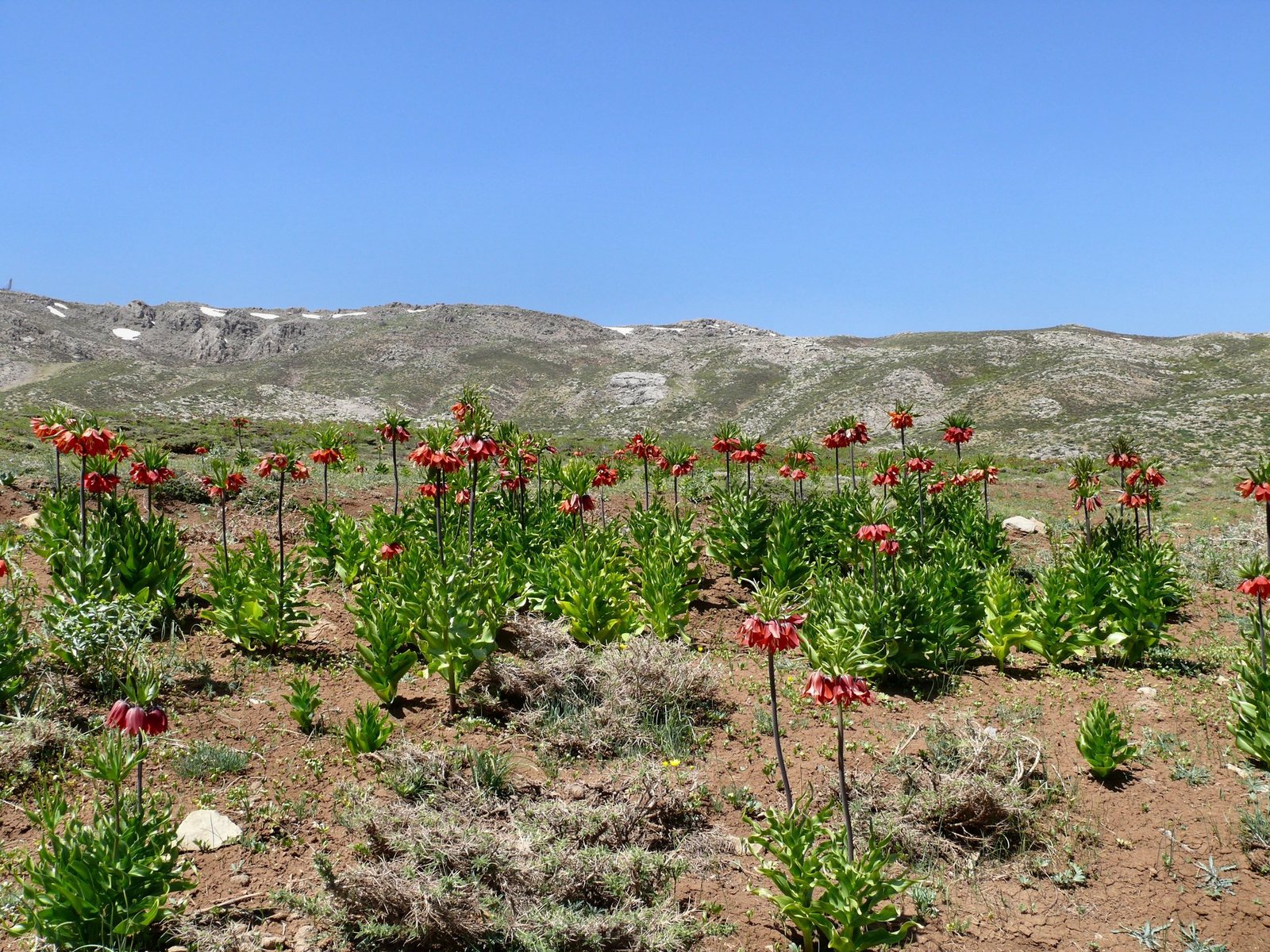
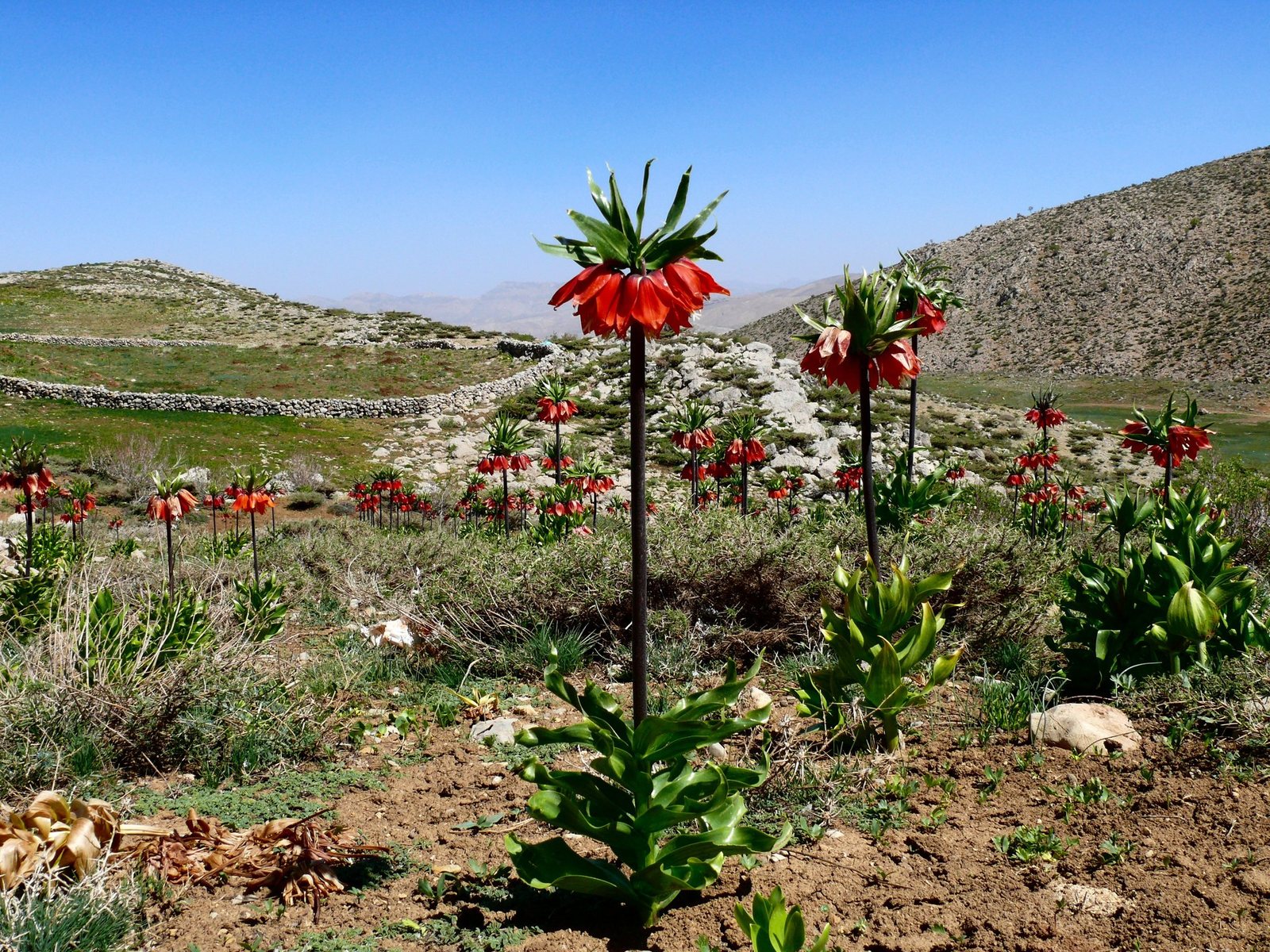
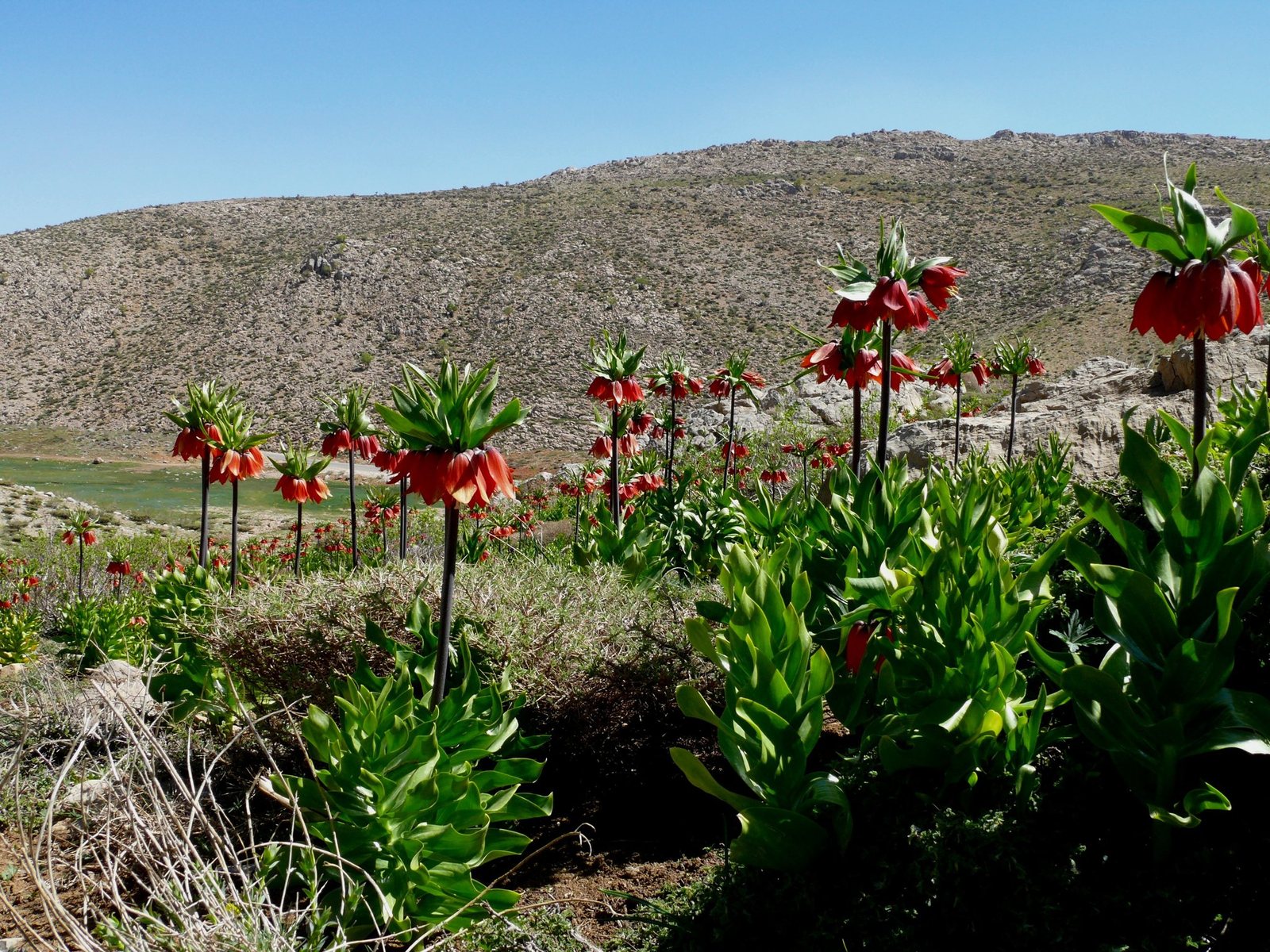
Crown imperial is a tall, spring-flowering bulb with a ring of hanging bells beneath a tuft of leaves. Gardeners grow it for its striking outline and orange, red or yellow flowers, but its bulbs and foliage have a strong, musky smell. It needs excellent drainage, especially during summer dormancy.
At a glance
- Sun
- Full sun to light partial shade; flowering is usually best in sun.
- Water
- Keep moderately moist during spring growth, then relatively dry once the leaves die back. Avoid waterlogged soil in any season.
- Soil
- Fertile, well-drained soil, preferably neutral to alkaline. Heavy clay needs substantial drainage improvement or a raised bed.
- Height
- 3-4 ft (0.9-1.2 m)
- Spread
- 1-1.5 ft (0.3-0.45 m)
- Flowers
- Mid to late spring; hanging orange, orange-red or yellow bells arranged around the top of the stem.
- Foliage
- Glossy, narrow green leaves cluster along the lower stem, with a separate leafy crown above the flowers. Foliage dies back in early summer.
- Growth
- Fast seasonal growth; bulbs multiply slowly.
- Care needed
- Medium
The year at a glance
- Pollinators
- Deer resistant
- Low allergen
| J | F | M | A | M | J | J | A | S | O | N | D | |
|---|---|---|---|---|---|---|---|---|---|---|---|---|
| Flowers | ||||||||||||
| Plant |
Northern hemisphere months. In Australia, shift them by six.
- Difficulty
- Moderate
- Toughness
- Fairly tough
Will it suit your garden?
Pick your zone, country, light and whether you have pets.
Full sun is 6 or more hours of direct sun a day, part shade 3 to 6 hours, shade under 3.
How it grows
Planting day
0.5 ft (0.15 m)
After 1 year
3 ft (1.1 m)
full size
About 1 years to full size.
From a typical nursery size, at an average rate for this kind of plant. A rule of thumb, not a forecast.
Good to know
- Cats and dogs
- Toxic
- Growth rate
- Moderate
Care
Jobs through the year
- WaterMar–May, every 7 days
- Water established bulbs only during dry spring weather; stop once foliage dies back.
- FeedMar
- Apply balanced bulb fertilizer as shoots emerge, following the label.
- ProtectMar–Apr
- Check emerging shoots for slugs and lily beetles; stake tall stems in exposed sites.
- DeadheadApr–May
- Remove spent flower heads unless seed is wanted, leaving green stems and leaves.
- PruneJun
- Cut stems and leaves to ground level only after they have fully yellowed.
- DivideJul–Aug
- Only lift crowded clumps when flowering declines; separate dormant bulbs and replant promptly.
- Plant fresh bulbs promptly in early autumn, about 6-8 in (15-20 cm) deep and 12 in (30 cm) apart; avoid shrivelled or soft bulbs.
- Water during dry spring weather while shoots and leaves are growing, but stop routine watering after the foliage dies back.
- Apply a balanced bulb fertiliser as shoots emerge, following the label rate.
- Keep winter mulch loose and away from emerging stems; do not bury the planting under wet, compacted material.
- Stake tall stems early if the site is exposed to strong winds.
- Lift and separate crowded bulbs only when flowering declines, after the foliage has died back; replant promptly.
Pruning. Remove spent flower heads unless you want seed. Leave the stem and leaves until fully yellow, then cut them off at ground level.
Through the year
- Early spring
- Apply bulb fertiliser as shoots emerge and check young growth for slugs and snails.
- Mid spring
- Water during prolonged dry spells and support stems in windy positions.
- Late spring
- Remove fading flower heads, leaving the green stem and foliage intact.
- Early summer
- Cut down yellowed stems and reduce watering as bulbs become dormant.
- Summer
- Divide crowded clumps while dormant, keeping bulbs out of the ground for as little time as possible.
- Early autumn
- Plant new bulbs in a sunny, freely drained position and mark their location.
In the garden
- Plant small groups through a spring border to raise orange or yellow flowers above tulips and daffodils.
- Use repeated groups in formal beds for a strong, upright rhythm.
- Place behind low spring flowers such as forget-me-nots so the tall stems remain visible.
- Combine with later-growing hardy geraniums or peonies that help conceal the dying foliage without heavily shading emerging shoots.
Garden styles it suits: Architectural minimal, Formal, English country, Cottage garden, Traditional and English manor.
Plant it with: Tulips, Daffodils, Forget-me-nots, Hardy geraniums, Peonies and Lady's mantle.
Wildlife: The nectar can attract bees and other spring insects. Deer and rabbits usually avoid it, but it is not a dependable repellent for protecting neighbouring plants.
Problems to watch for
- Bulb rot: wet soil, particularly during dormancy, can destroy bulbs. Improve drainage or move to a raised bed, and discard soft or rotting bulbs.
- Poor flowering: shade, shallow planting, immature bulbs or removing green leaves too soon can reduce bloom. Provide more sun, check planting depth and let foliage die naturally.
- Lily beetle: where present, red adults and dark, debris-covered larvae chew leaves. Inspect regularly and remove beetles, eggs and larvae by hand.
- Slugs and snails: young shoots may be eaten. Check emerging growth and use hand removal, barriers or locally approved slug controls.
Safety
Toxic if eaten by people, cats, dogs and horses. All parts should be treated as poisonous, especially the bulbs, which contain toxic alkaloids; ingestion can cause digestive upset and potentially serious poisoning. Keep bulbs away from children and animals, and seek medical or veterinary advice promptly after ingestion.
Easily confused with
Persian fritillary (Fritillaria persica)
Its many small bells run up a long flower spike, usually in dark purple, rather than forming a single ring beneath a leafy crown.
Pineapple lily (Eucomis comosa)
It also has a leafy tuft above its flowers, but these are small, star-shaped and packed along a thick summer-flowering spike above broad basal leaves.
The name
The epithet imperialis means 'imperial', and the common name refers to the crown-like tuft of leaves above the ring of flowers.
Propagation. Separate offsets from mature bulbs during summer dormancy and replant promptly; small offsets may take several years to flower. Seed can be sown fresh outdoors, but seedlings are slow to reach flowering size and may differ from the parent.
Checked against open data
- Accepted botanical name
- Fritillaria imperialis
- Native range
- Afghanistan, Iran, Iraq, Pakistan, Turkey and West Himalaya.
- Measured
- Average height 85 cm.
Sources: GBIF (CC BY 4.0) and Trefle (CC BY 4.0). The care and design notes are LandscapeGPT's own.
See it in your own yard.
Upload a photo of your yard and see it redesigned with plants that suit your climate, each checked against your zone.