Culver's root
Veronicastrum virginicum. Family Plantaginaceae. Perennial.
Also called Culver's physic.
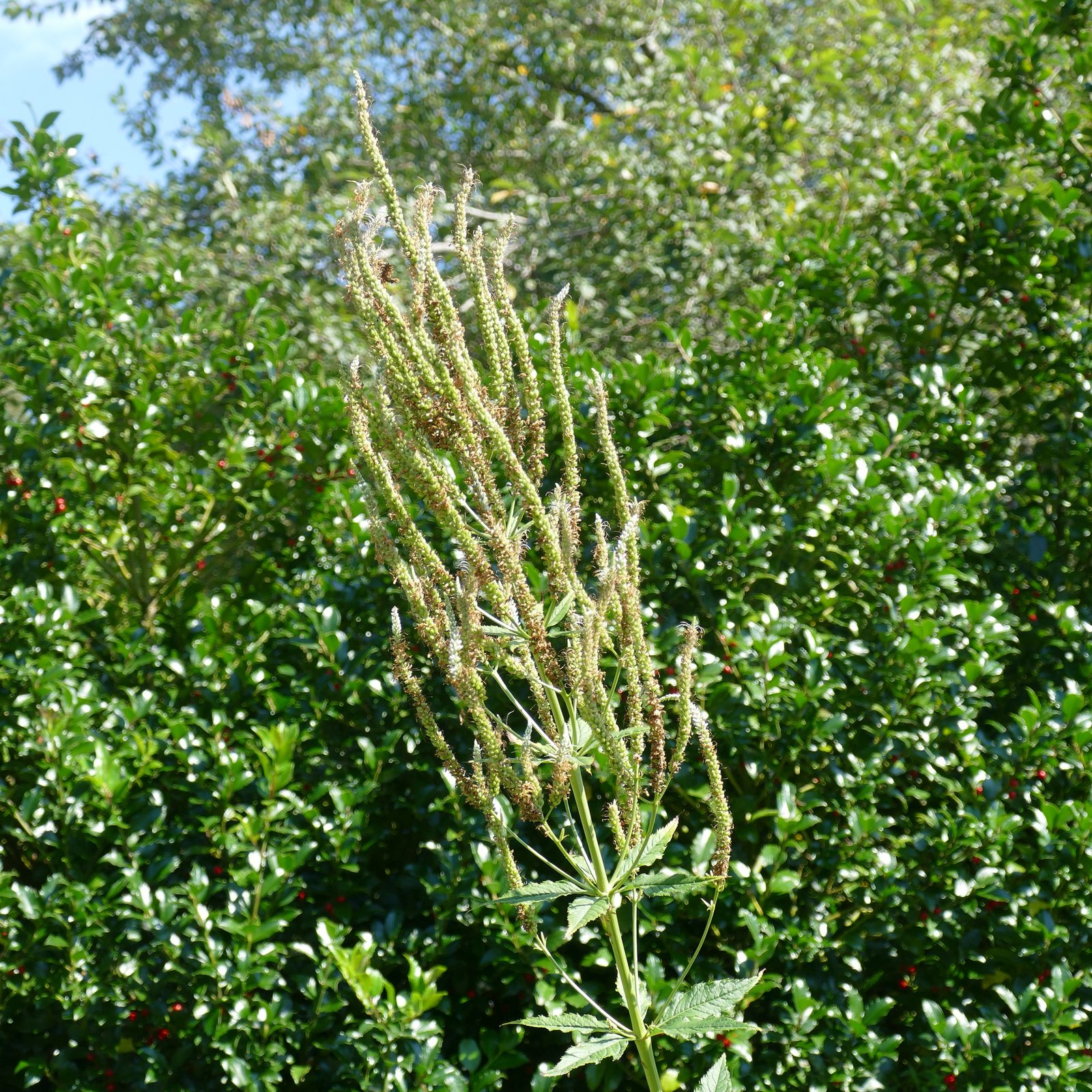
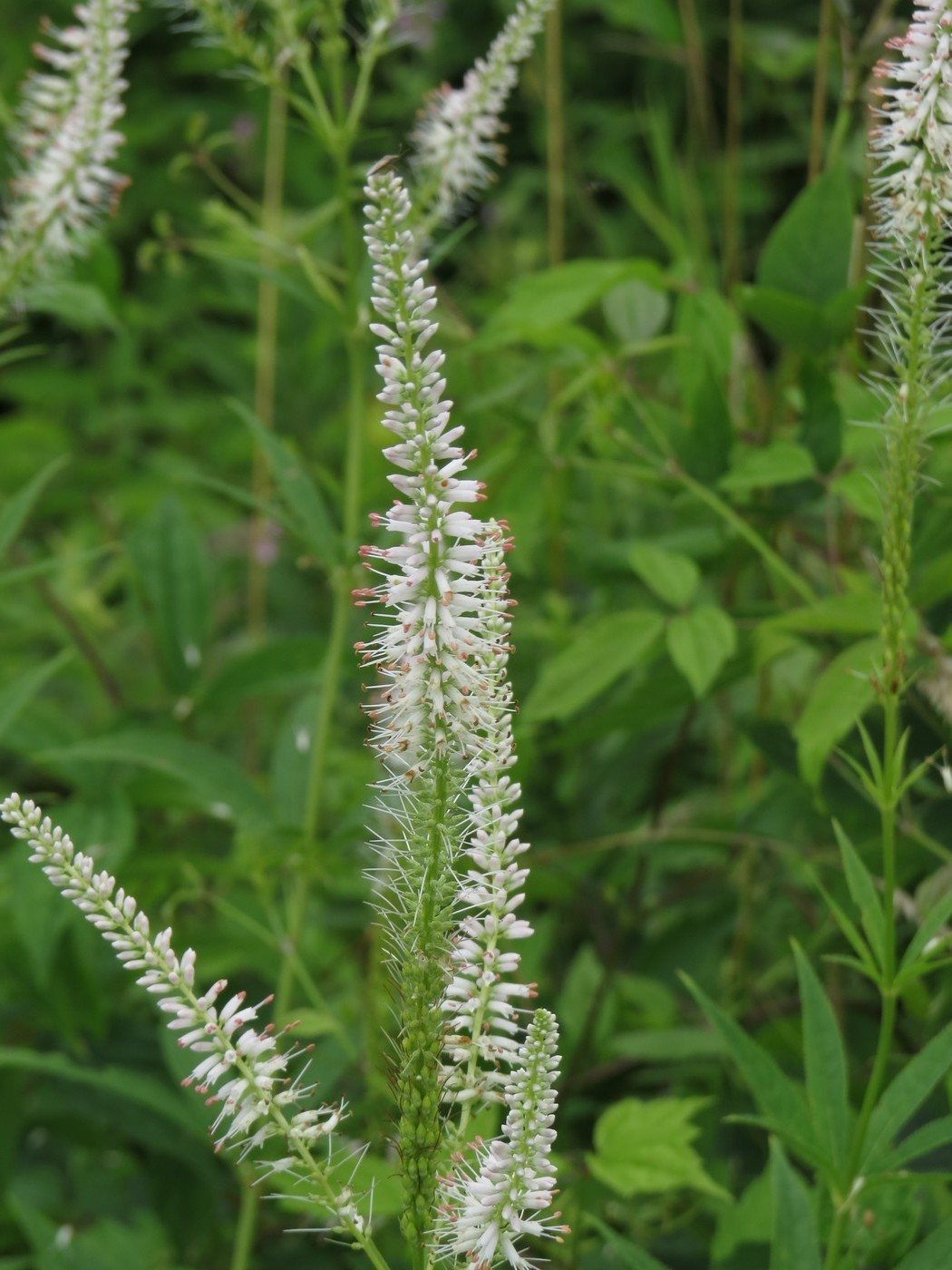
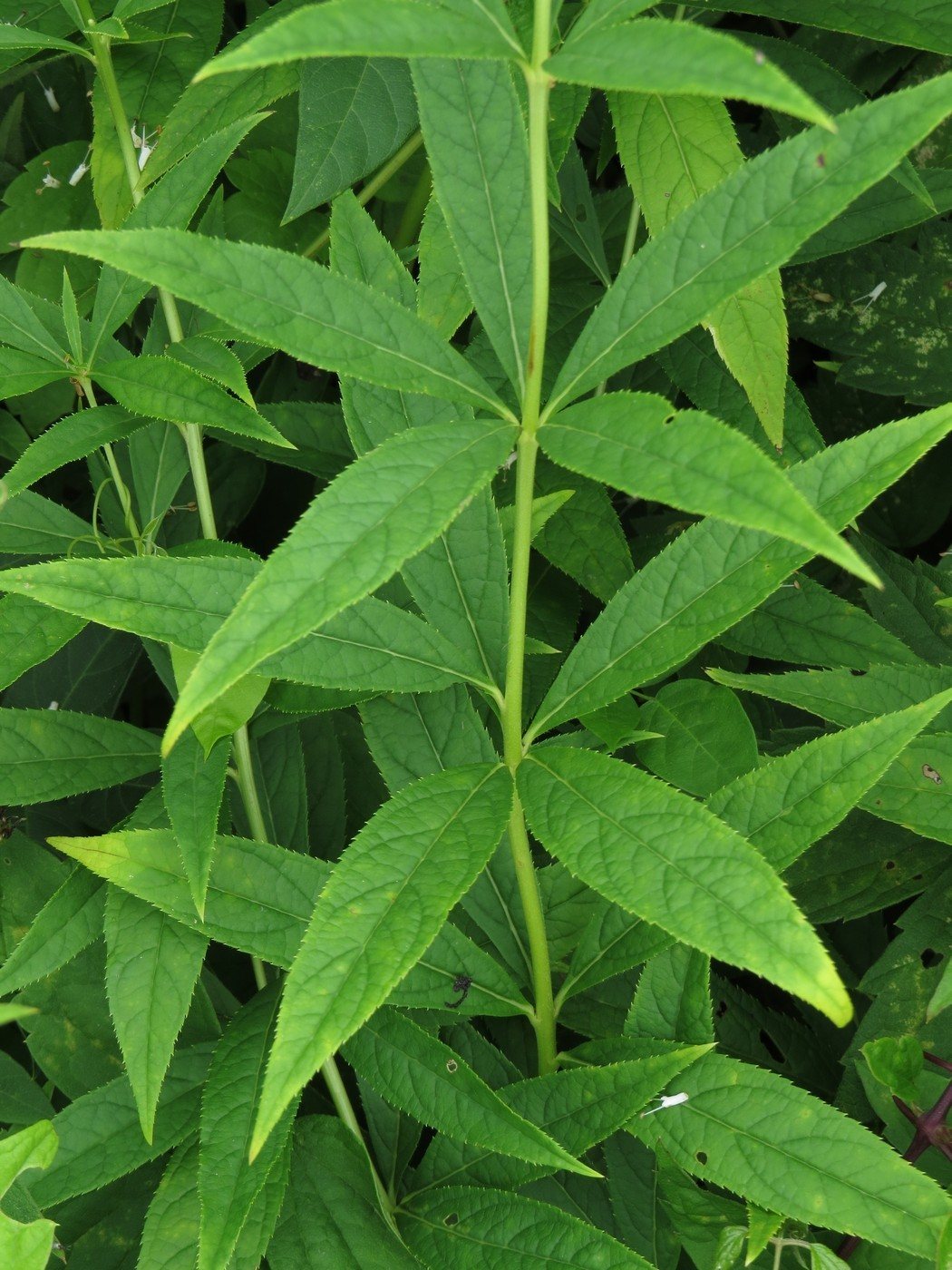
Culver's root is a tall, clump-forming perennial native to eastern and central North America, with whorled leaves and slender, branching spires of flowers. Gardeners grow it for its strong vertical shape, long summer display and value to pollinating insects.
At a glance
- Sun
- Full sun to partial shade; flowering and stem strength are usually best in full sun.
- Water
- Keep the soil evenly moist, especially during establishment and summer dry spells. Established plants tolerate brief dry periods but perform poorly in prolonged drought.
- Soil
- Moist, humus-rich soil that drains freely; tolerates clay and occasional wet conditions, but avoid persistently stagnant soil.
- Height
- 4-7 ft (1.2-2.1 m)
- Spread
- 2-3 ft (0.6-0.9 m)
- Flowers
- Summer into early autumn; the species has white to pale pinkish-white flowers. Cultivars may be pink or lavender.
- Foliage
- Narrow, pointed, dark green leaves arranged in tiers of whorls around upright stems; dies back in winter.
- Growth
- Moderate; may take two or three growing seasons to form a substantial clump.
- Care needed
- Low
The year at a glance
- Pollinators
- Deer resistant
- Cold hardy
- Low allergen
| J | F | M | A | M | J | J | A | S | O | N | D | |
|---|---|---|---|---|---|---|---|---|---|---|---|---|
| Flowers | ||||||||||||
| Fruit | ||||||||||||
| Plant |
Northern hemisphere months. In Australia, shift them by six.
- Difficulty
- Easy
- Toughness
- Fairly tough
Will it suit your garden?
Pick your zone, country, light and whether you have pets.
Full sun is 6 or more hours of direct sun a day, part shade 3 to 6 hours, shade under 3.
How it grows
Planting day
1 ft (0.3 m)
After 1 year
2.5 ft (0.75 m)
After 2 years
4 ft (1.2 m)
After 3 years
5 ft (1.7 m)
full size
About 3 years to full size.
From a typical nursery size, at an average rate for this kind of plant. A rule of thumb, not a forecast.
Good to know
- Cats and dogs
- Mildly toxic: may upset a stomach
- Native to
- the US and Canada
- Growth rate
- Moderate
Care
Jobs through the year
- WaterApr–May, Sep–Oct, every 7 days
- Water established clumps when rainfall is insufficient to keep soil moist; new plants need closer attention.
- WaterJun–Aug, every 4 days
- Check soil and water deeply if drying; keep evenly moist without waterlogging.
- PruneFeb–Mar
- Cut last year's stems to just above ground before new shoots lengthen.
- MulchMar–Apr
- Apply a light compost mulch to conserve moisture, keeping emerging shoots clear.
- DivideMar–Apr
- Divide established clumps only when crowded or when more plants are wanted.
- ProtectMay
- Install discreet supports where shade or exposure makes tall stems liable to flop.
- Water deeply during dry spells rather than allowing the root zone to dry out completely.
- Apply a light layer of compost in spring; avoid heavy nitrogen feeding, which can encourage floppy growth.
- Mulch to conserve moisture, keeping mulch clear of emerging shoots.
- Install discreet supports early if growing in partial shade or an exposed position.
- Divide established clumps in spring only when you need more plants or growth becomes crowded.
Pruning. Leave the seedheads standing through winter if you want their structure. Cut dead stems to just above ground level in late winter or early spring before new shoots lengthen.
Through the year
- Late winter
- Cut down last year's dead stems before new growth begins.
- Spring
- Plant or divide clumps, water thoroughly and apply compost and mulch.
- Late spring
- Add supports where needed, before stems become tall.
- Summer
- Water during dry spells, particularly while flower spikes are developing.
- Autumn
- Leave healthy stems and seedheads standing for winter structure.
In the garden
- Place toward the back of a mixed border, where its narrow spires rise above rounded flowers and foliage.
- Repeat small groups among ornamental grasses for a meadow-like or new-perennial planting.
- Combine with coneflowers and bee balm in a sunny pollinator border with moisture-retentive soil.
- Use beside a pond or along a moist woodland edge, keeping the crown out of standing water.
Garden styles it suits: New perennial (prairie), Native meadow, Midwest prairie, Cottage garden, Pollinator garden and White garden.
Plant it with: Purple coneflower, Bee balm, Joe-Pye weed, Switchgrass, Tufted hair grass and Garden phlox.
Wildlife: Flowers supply nectar and pollen to bees and other visiting insects, including butterflies. The plant is generally less attractive to browsing deer than many border perennials, though it is not deer-proof.
Problems to watch for
- Flopping stems: provide more sun, avoid rich feeding and fit supports before the stems lean.
- Scorched leaves or poor flowering during drought: water deeply and mulch to keep the root zone moist.
- Powdery mildew: improve airflow, avoid crowding and remove badly affected foliage.
- Root or crown rot in stagnant soil: improve drainage or move the plant to a site that stays moist without remaining waterlogged.
Safety
Do not eat it. The roots have strong purgative and emetic properties and can cause vomiting and diarrhoea in people. Reliable species-specific toxicity information for cats, dogs and horses is limited; keep roots and other plant material out of reach and seek veterinary advice after ingestion.
Easily confused with
Long-leaved speedwell (Veronica longifolia)
Usually shorter, with denser flower spikes and leaves mostly opposite or in whorls of three; Culver's root typically has conspicuous tiers of three to seven leaves and more slender, branching flower spires.
Dense blazing star (Liatris spicata)
Has grass-like leaves rather than broad, whorled leaves, and fluffy purple flower spikes that open from the top downward.
The name
Veronicastrum means resembling Veronica, while virginicum refers to Virginia.
Propagation. Divide established clumps in early spring, retaining several shoots and a good root system on each division. Sow seed on the surface of moist seed compost; a cold, moist period can improve germination. Seed-grown plants may take several years to flower, and cultivars do not reliably come true from seed.
Checked against open data
- Accepted botanical name
- Veronicastrum virginicum
- In the US and Canada
- Native in Canada and the lower 48 states.
- Native range
- Alabama, Arkansas, Connecticut, Delaware, District of Columbia, Florida, Georgia, Illinois, Indiana, Iowa, Kansas and Kentucky.
- Measured
- Average height 77 cm.
Sources: GBIF (CC BY 4.0), USDA PLANTS and Trefle (CC BY 4.0). The care and design notes are LandscapeGPT's own.
See it in your own yard.
Upload a photo of your yard and see it redesigned with plants that suit your climate, each checked against your zone.