Cup and saucer vine
Cobaea scandens. Family Polemoniaceae. Climber.
Also called Cathedral bells, Mexican ivy.
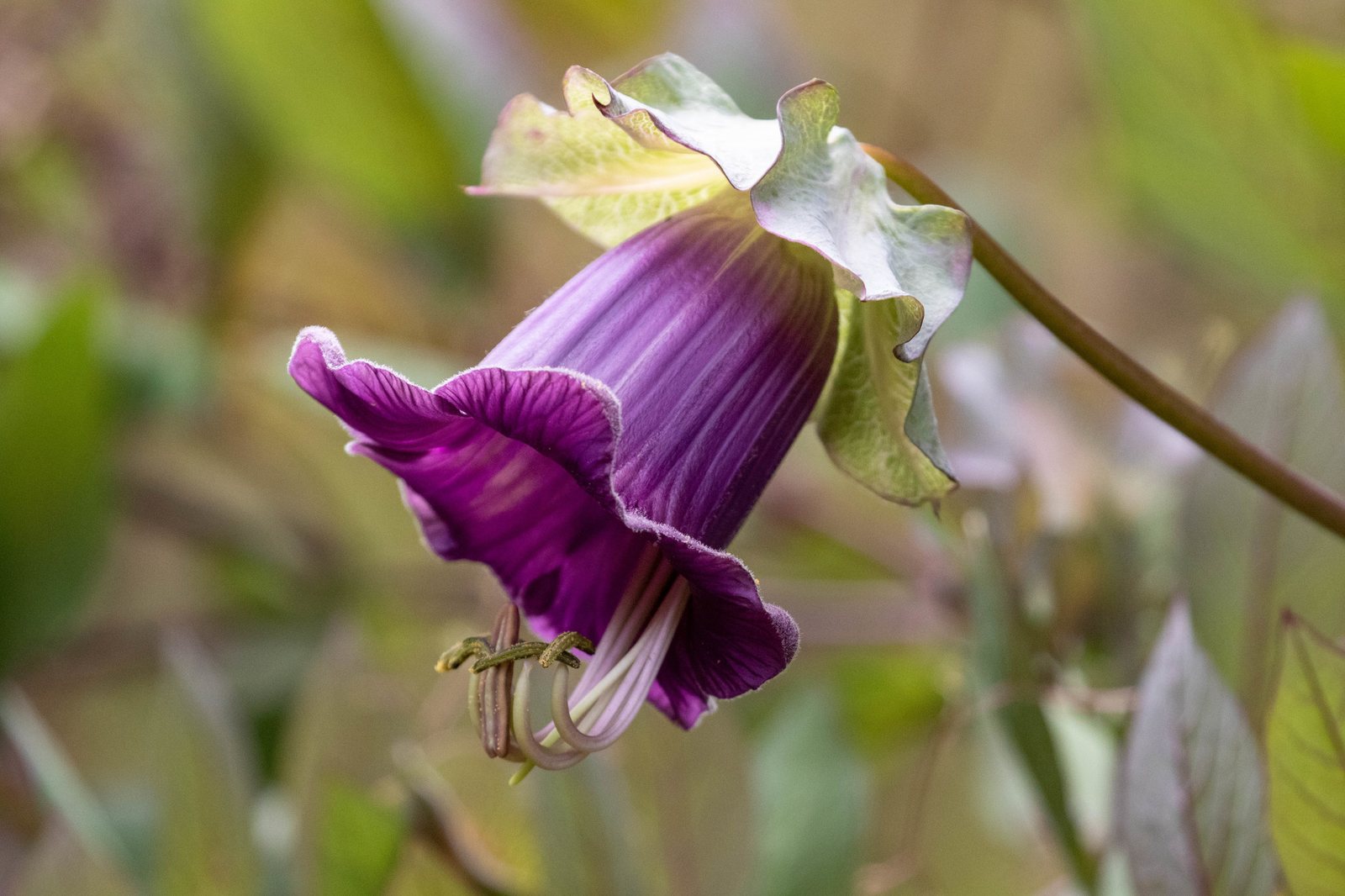
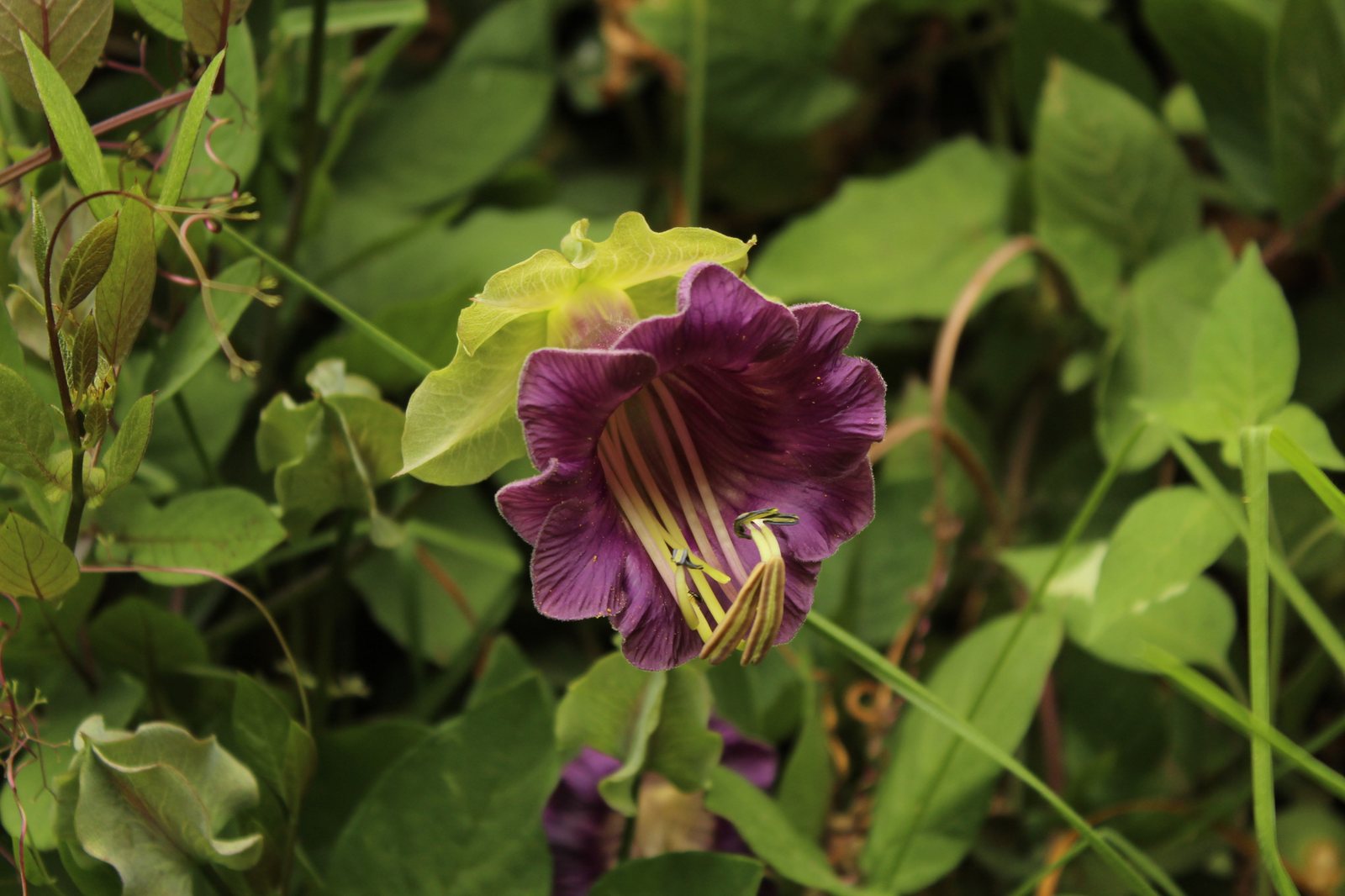
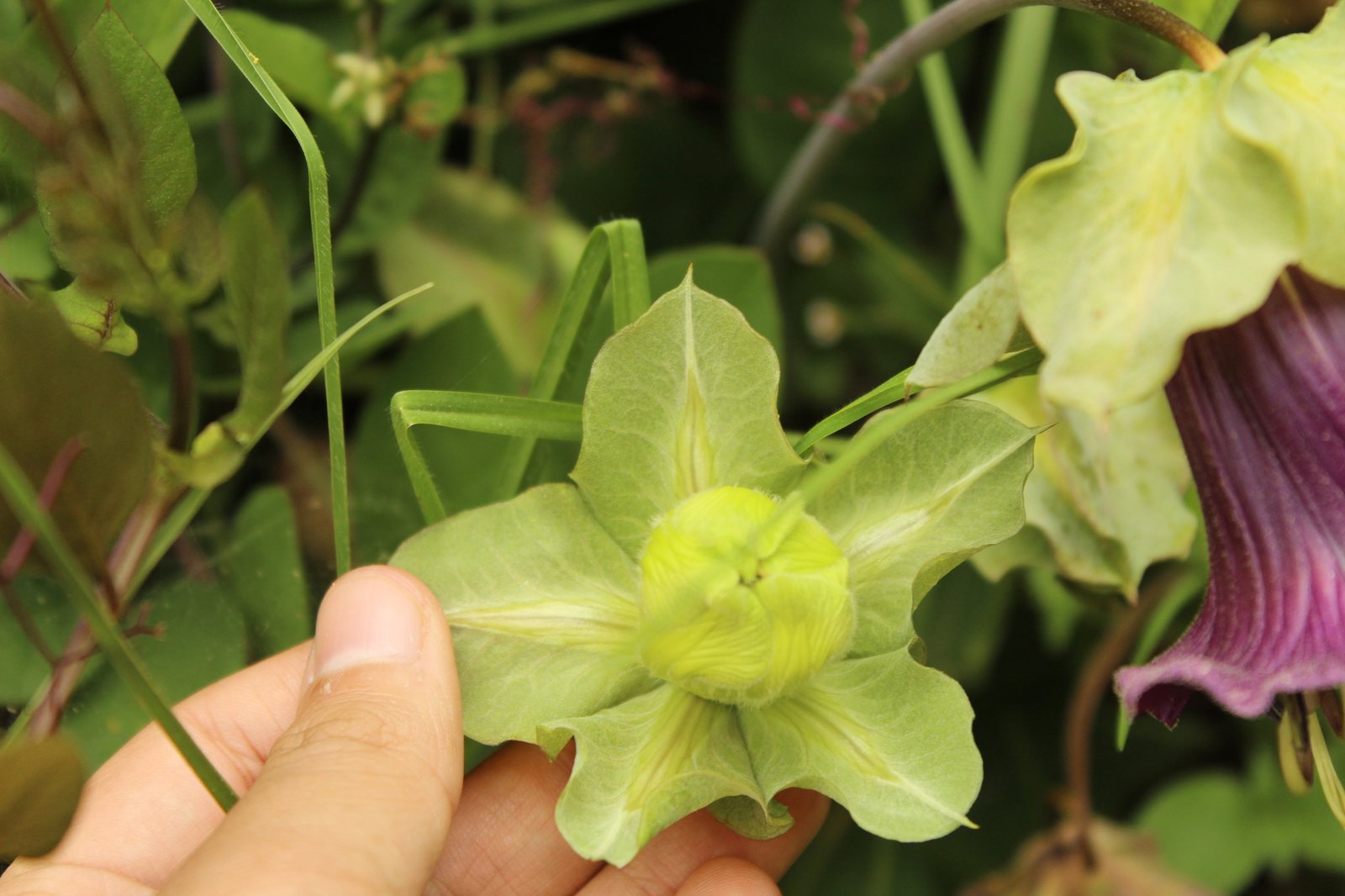
Cup and saucer vine is a fast-growing, tendril-climbing perennial from tropical America, grown as an annual in most of the United States, the United Kingdom and Canada, and in cooler parts of Australia. Gardeners grow it for its large bell-shaped flowers, each sitting above a broad green calyx, and for quick summer cover over substantial supports.
At a glance
- Sun
- Full sun for best flowering; tolerates light shade, especially in hot climates.
- Water
- Keep evenly moist while growing, but never waterlogged. Established plants in the ground tolerate brief dry spells better than plants in pots.
- Soil
- Fertile, moisture-retentive but well-drained soil; tolerates a range of soil pH.
- Height
- 10-20 ft (3-6 m) in one growing season; up to 40 ft (12 m) where perennial
- Spread
- 3-6 ft (0.9-1.8 m), potentially wider on established perennial plants
- Flowers
- Summer into autumn, often not until late summer in cool climates. Flowers open greenish cream and mature to violet-purple; white-flowered forms are also grown.
- Foliage
- Evergreen. Pinnate green leaves with oval leaflets and branching terminal tendrils that grip supports.
- Growth
- Fast
- Care needed
- Medium
The year at a glance
- Pollinators
- Heat tolerant
- Low allergen
| J | F | M | A | M | J | J | A | S | O | N | D | |
|---|---|---|---|---|---|---|---|---|---|---|---|---|
| Flowers | ||||||||||||
| Fruit | ||||||||||||
| Plant |
Northern hemisphere months. In Australia, shift them by six.
- Difficulty
- Moderate
- Toughness
- Fairly tough
Will it suit your garden?
Pick your zone, country, light and whether you have pets.
Full sun is 6 or more hours of direct sun a day, part shade 3 to 6 hours, shade under 3.
How it grows
Planting day
2 ft (0.6 m)
After 1 year
3 ft (1.1 m)
After 2 years
5 ft (1.5 m)
After 3 years
6 ft (1.8 m)
full size
About 3 years to full size.
From a typical nursery size, at an average rate for this kind of plant. A rule of thumb, not a forecast.
Good to know
- Cats and dogs
- Safe
- Invasive in
- Australia
- In the garden
- Spreads vigorously: plan to contain it.
- Growth rate
- Fast
Care
Jobs through the year
- WaterMay–Jun, Sep–Oct, every 7 days
- For established plants in the ground, water when the surface begins to dry; young plants need more.
- WaterJul–Aug, every 4 days
- Keep the root zone evenly moist in dry weather without waterlogging; skip after sufficient rain.
- ProtectMay–Jun
- Treat as an annual; harden off and plant beside sturdy support after frost and cold nights.
- PruneMay–Jun
- Pinch young shoot tips to encourage branching and guide shoots onto the support.
- PruneJul–Sep
- Shorten or redirect shoots before they smother nearby plants.
- PruneOct–Nov
- Remove frost-killed vines; outdoor plants do not overwinter reliably in this climate.
- Provide a sturdy trellis, wires or netting at planting; guide young shoots onto it.
- Water deeply when the surface soil begins to dry, checking containers frequently in warm weather.
- Mix compost into the planting area and avoid excessive nitrogen, which encourages leaves rather than flowers.
- Feed container plants regularly with a flowering-plant fertiliser according to the label.
- Plant outside only after frost danger has passed and nights are consistently mild.
- Keep it away from small shrubs and young trees that its vigorous growth could smother.
Pruning. Pinch young shoot tips to encourage branching, then shorten or redirect shoots that outgrow their support during summer. Where it survives as a perennial, cut back tangled growth in late winter or early spring and remove dead stems.
Through the year
- Late winter
- For annual growing, sow seeds indoors in warmth about 8-10 weeks before the last expected frost.
- Early spring
- Pot seedlings on before their roots become crowded and give each plant a small support.
- Late spring
- Harden off young plants, then plant out after frost danger has passed beside a sturdy climbing support.
- Summer
- Guide shoots, water during dry spells and feed container-grown plants.
- Late summer
- Keep watering to support flowering and remove unwanted seed capsules where escape is a concern.
- Late autumn
- Remove frost-killed annual plants. In mild regions, retain healthy plants only where they can be kept frost-free and contained.
In the garden
- Train over a strong arch or pergola for a leafy summer canopy with hanging bells.
- Cover trellis panels to make a seasonal screen around a patio or seating area.
- Grow in a large container with a securely anchored frame to add height to a paved courtyard.
- Use behind dahlias and other late-summer flowers, allowing enough space to prevent it engulfing its neighbours.
Garden styles it suits: Cottage garden, Romantic rose garden, Victorian, Tropical, Modern courtyard and Secret garden.
Plant it with: Dahlias, Cosmos, Salvias, Verbena bonariensis and Marigolds.
Wildlife: The flowers provide nectar for visiting insects; in its native range, bats also pollinate them. Dense growth can provide shelter, but do not let it overwhelm existing habitat plants.
Problems to watch for
- Late or absent flowers: start plants early, provide full sun and avoid high-nitrogen feeds; a short, cool summer may still limit flowering.
- Red spider mites under glass or in hot, dry positions: inspect leaf undersides, improve growing conditions and use suitable biological controls under cover.
- Aphids on soft shoots: wash off small colonies with water or use an insecticidal soap labelled for ornamental plants.
- Root rot in soggy soil: improve drainage, empty standing water from saucers and let the surface begin to dry between waterings.
Safety
Not known to be toxic to people, cats, dogs or horses. Specific animal-safety information is limited; it is not an edible plant, and eating plant material may cause stomach upset.
Where it spreads. Invasive in New Zealand and an environmental weed in parts of south-eastern Australia, including New South Wales and Victoria, where it can smother other vegetation. Check local restrictions before planting in mild climates, prevent seed escape and never dump garden waste in bushland.
Easily confused with
Canterbury bells (Campanula medium)
Some forms have a similar cup-and-saucer flower outline, but they grow on upright herbaceous stems rather than a tendril-climbing vine.
Balloon vine (Cardiospermum halicacabum)
Also climbs with tendrils, but has small white flowers and inflated papery seed capsules, not large purple bells surrounded by broad calyces.
The name
Cobaea honours the Spanish Jesuit naturalist Bernabé Cobo, scandens means climbing, and cup and saucer describes the bell-shaped flower sitting above its broad calyx.
Propagation. Sow seed indoors in late winter or early spring at about 65-75°F (18-24°C). Sow the large, flat seeds on edge in moist, free-draining seed compost; germination can be uneven. Softwood cuttings can also be taken during active growth.
Checked against open data
- Accepted botanical name
- Cobaea scandens
- Native range
- Mexico Central, Mexico Gulf, Mexico Northeast, Mexico Southeast and Mexico Southwest.
Sources: GBIF (CC BY 4.0) and Trefle (CC BY 4.0). The care and design notes are LandscapeGPT's own.
See it in your own yard.
Upload a photo of your yard and see it redesigned with plants that suit your climate, each checked against your zone.