Cup plant
Silphium perfoliatum. Family Asteraceae. Perennial.
Also called Cup rosinweed.
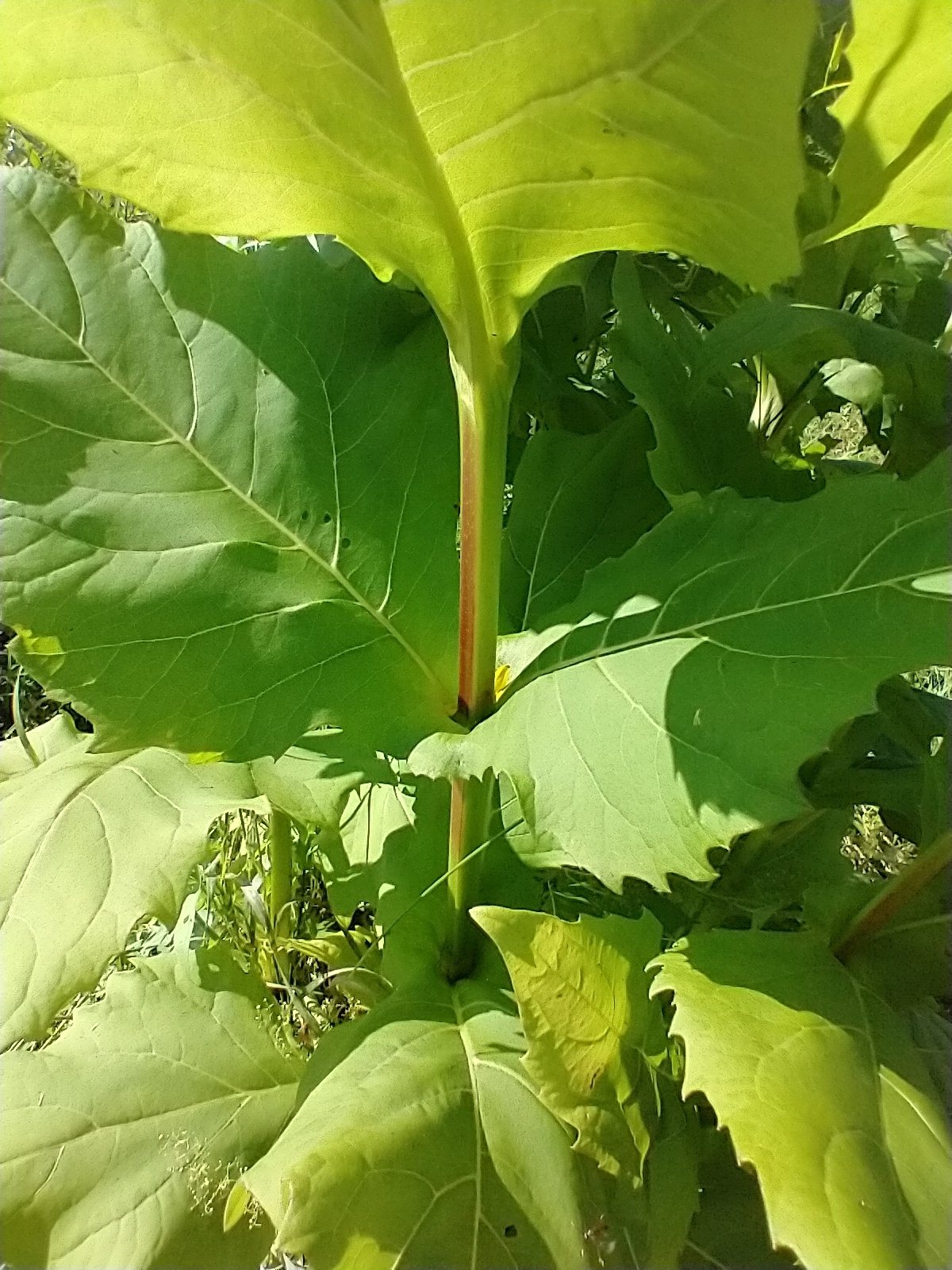
Cup plant is a tall, clump-forming perennial native to eastern and central North America, grown for its yellow summer flowers and bold foliage. Opposite leaves join around the square stems to form cups that collect rainwater. Give it generous space: it can spread by short rhizomes and abundant seedlings.
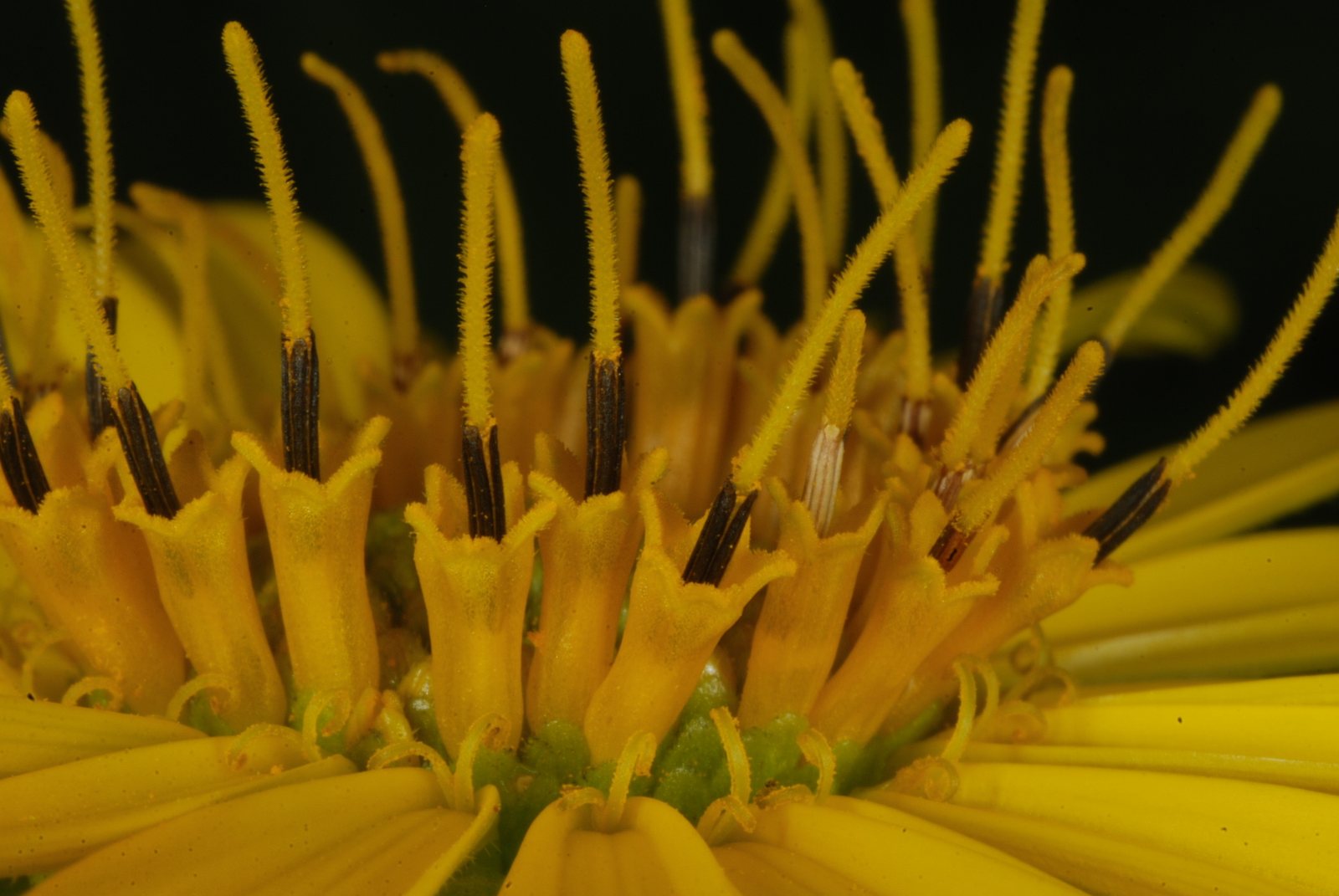
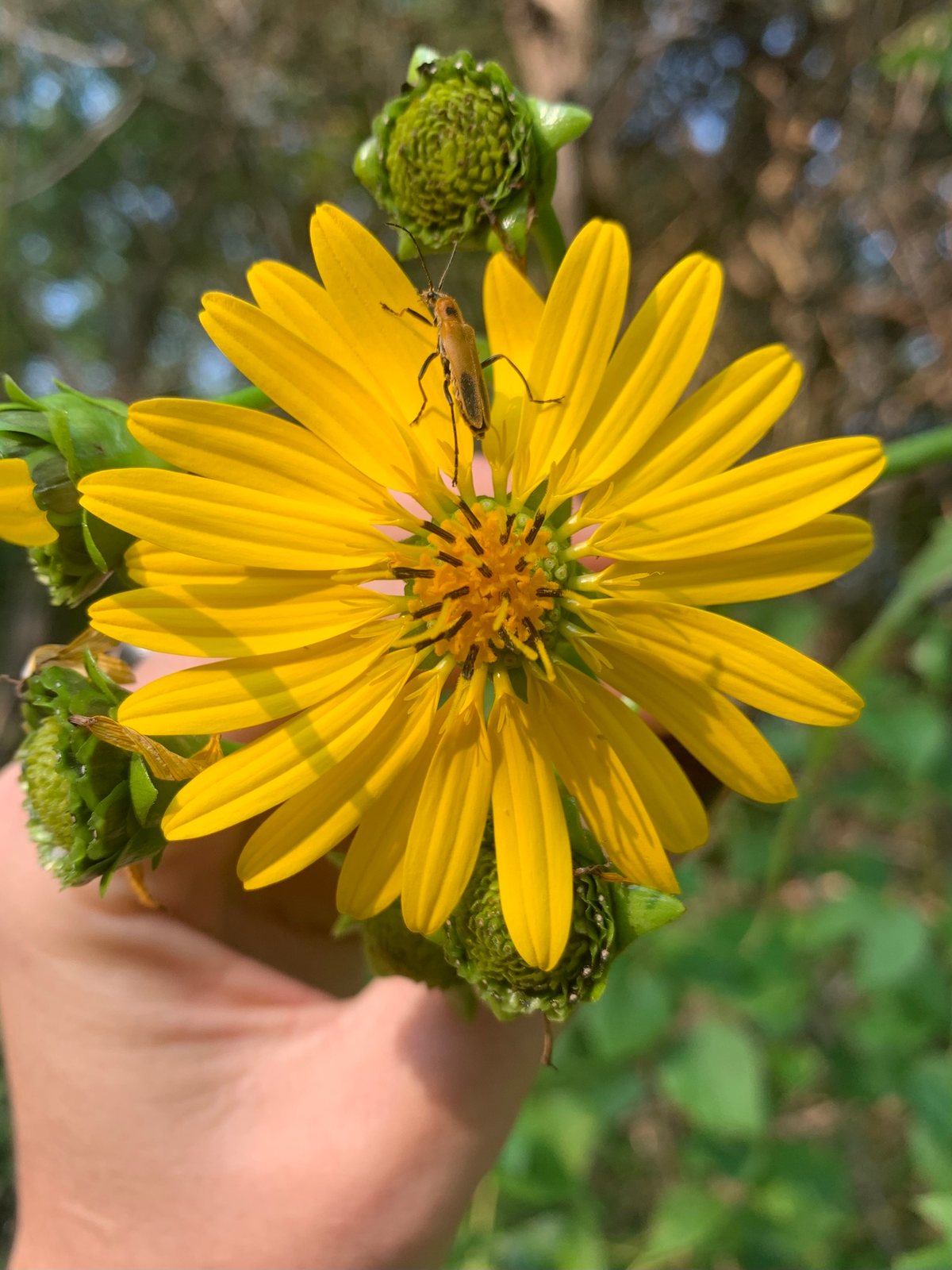
At a glance
- Sun
- Full sun is best; tolerates light shade, but stems may lean and flowering may decrease.
- Water
- Prefers consistently moist ground and tolerates occasional flooding. Established plants withstand short dry spells, but prolonged drought can scorch the lower leaves.
- Soil
- Moist, reasonably fertile soil, including clay; tolerates a broad range of soil pH. Avoid very dry, shallow soil.
- Height
- 4-8 ft (1.2-2.4 m)
- Spread
- 2-4 ft (0.6-1.2 m), gradually wider where allowed to spread
- Flowers
- Mid-summer to early autumn; branching clusters of yellow, daisy-like flowers.
- Foliage
- Large, rough-textured green leaves in opposite pairs, with upper pairs fused around sturdy, square stems.
- Growth
- Fast once established
- Care needed
- Medium
The year at a glance
- Pollinators
- Cold hardy
- Heat tolerant
- Wildlife
- Low allergen
| J | F | M | A | M | J | J | A | S | O | N | D | |
|---|---|---|---|---|---|---|---|---|---|---|---|---|
| Flowers | ||||||||||||
| Fruit | ||||||||||||
| Plant |
Northern hemisphere months. In Australia, shift them by six.
- Difficulty
- Moderate
- Toughness
- Very tough
Will it suit your garden?
Pick your zone, country, light and whether you have pets.
Full sun is 6 or more hours of direct sun a day, part shade 3 to 6 hours, shade under 3.
How it grows
Planting day
1 ft (0.3 m)
After 1 year
4 ft (1.1 m)
After 2 years
6 ft (1.8 m)
full size
About 2 years to full size.
From a typical nursery size, at an average rate for this kind of plant. A rule of thumb, not a forecast.
Good to know
- Cats and dogs
- Safe
- Native to
- the US and Canada
- In the garden
- Spreads vigorously: plan to contain it.
- Growth rate
- Fast
Care
Jobs through the year
- WaterApr–May, Oct, every 14 days
- Water established plants if rainfall fails to keep soil moist; water young plants more often.
- WaterJun–Sep, every 7 days
- Water established plants deeply in dry weather; do not let roots dry out for long.
- PruneFeb–Mar
- Cut standing dead stems near ground level before new growth starts.
- MulchApr
- Apply thin compost and moisture-conserving mulch, keeping emerging shoots uncovered.
- DivideMar–Apr
- Divide expanding clumps when necessary to contain their spread.
- ProtectMay–Jun
- Install stem supports if the site is exposed or partly shaded.
- DeadheadAug–Oct, every 14 days
- Remove fading heads before seeds ripen where spread is unwanted; otherwise leave for birds.
- Water deeply during the first growing season and during prolonged dry spells.
- Apply a thin layer of compost in spring; avoid heavy feeding, which encourages weak, floppy growth.
- Mulch around young plants to conserve moisture, keeping mulch clear of emerging shoots.
- Install supports in late spring if the site is exposed or partly shaded.
- Remove unwanted seedlings early and divide expanding clumps in spring when necessary.
Pruning. Leave stems standing through winter for structure and wildlife, then cut them to near ground level in late winter or early spring before new shoots develop. Where self-seeding is a concern, remove flower heads before the seeds ripen instead.
Through the year
- Late winter
- Cut down old stems before new growth starts, unless they were removed earlier to prevent seeding.
- Spring
- Plant or divide clumps, water thoroughly, and apply compost and mulch.
- Late spring
- Thin unwanted seedlings and install supports where needed.
- Summer
- Water during extended dry weather and check crowded foliage for mildew.
- Late summer
- Remove fading flower heads before seeds ripen if spread needs controlling.
- Autumn
- Where spreading is acceptable, leave seed heads for birds and standing stems for winter interest.
In the garden
- Place at the back of a large sunny border, where its height will not shade smaller plants.
- Combine with tall native grasses and late-flowering perennials for a prairie-style planting.
- Use in a spacious rain garden or beside a pond, above permanently submerged ground.
- Plant in broad groups to create a seasonal screen and a strong vertical backdrop.
Garden styles it suits: Native meadow, Midwest prairie, New perennial (prairie), Wildlife garden, Pollinator garden and Wildflower.
Plant it with: Joe-Pye weed, Swamp milkweed, New England aster, Switchgrass, Ironweed and Oxeye sunflower.
Wildlife: Flowers provide pollen and nectar for bees and other insects, and the seeds feed birds, including finches. Leaf cups hold temporary pools of rainwater used by insects and sometimes birds.
Problems to watch for
- Powdery mildew can affect crowded or drought-stressed plants; improve air circulation and water the soil during dry spells.
- Rust may cause orange-brown spots on leaves; remove badly affected foliage and clear infected debris.
- Aphids sometimes cluster on young growth; wash them off with water and encourage natural predators.
- Stems may flop in shade or overfed soil; provide more sun, avoid rich feeding, and support stems early.
Safety
Not known to be toxic to people, cats, dogs or horses, and no particular poisonous part is established. Species-specific safety information is limited; it is not a food plant, so discourage eating it.
Where it spreads. Can spread aggressively by seed and short rhizomes in moist, fertile gardens. It is listed as invasive and prohibited in Connecticut and New York, outside its native range; check local restrictions before planting.
Easily confused with
Rosinweed (Silphium integrifolium)
Also has yellow flowers and opposite leaves, but the leaf bases do not join around the stem to make water-holding cups.
Compass plant (Silphium laciniatum)
Has deeply divided leaves, especially near the base, rather than broad opposite leaves fused around the stems.
Prairie dock (Silphium terebinthinaceum)
Has very large basal leaves and tall, mostly leafless flower stalks, rather than leafy stems with paired cups.
The name
The common name refers to the rain-catching cups formed by joined leaf bases, while perfoliatum describes the appearance of stems passing through the leaves.
Propagation. Divide clumps in early spring, retaining roots and several shoots on each division. Sow seed outdoors in autumn for natural winter chilling, or cold-moist stratify seed before spring sowing; seedlings may take several years to flower.
Checked against open data
- Accepted botanical name
- Silphium perfoliatum
- In the US and Canada
- Native in Canada and the lower 48 states.
- Native range
- Alabama, Arkansas, Connecticut, Illinois, Indiana, Iowa, Kansas, Kentucky, Louisiana, Masachusettes, Michigan and Minnesota.
- Measured
- Soil pH 4.5 to 7.5. Average height 178 cm.
Sources: GBIF (CC BY 4.0), USDA PLANTS and Trefle (CC BY 4.0). The care and design notes are LandscapeGPT's own.
See it in your own yard.
Upload a photo of your yard and see it redesigned with plants that suit your climate, each checked against your zone.