Curry plant
Helichrysum italicum. Family Asteraceae. Shrub.
Also called Italian everlasting, Immortelle.
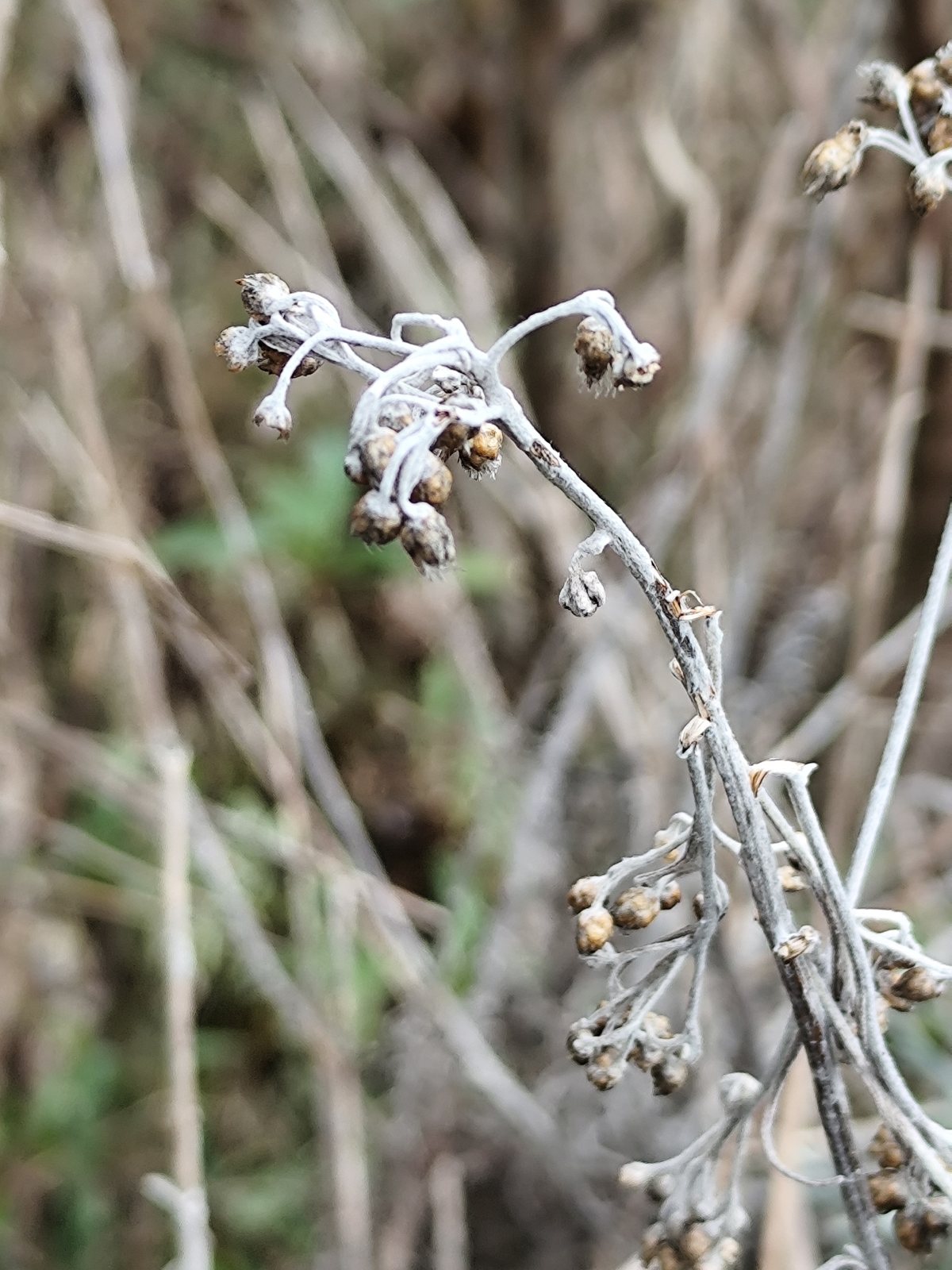
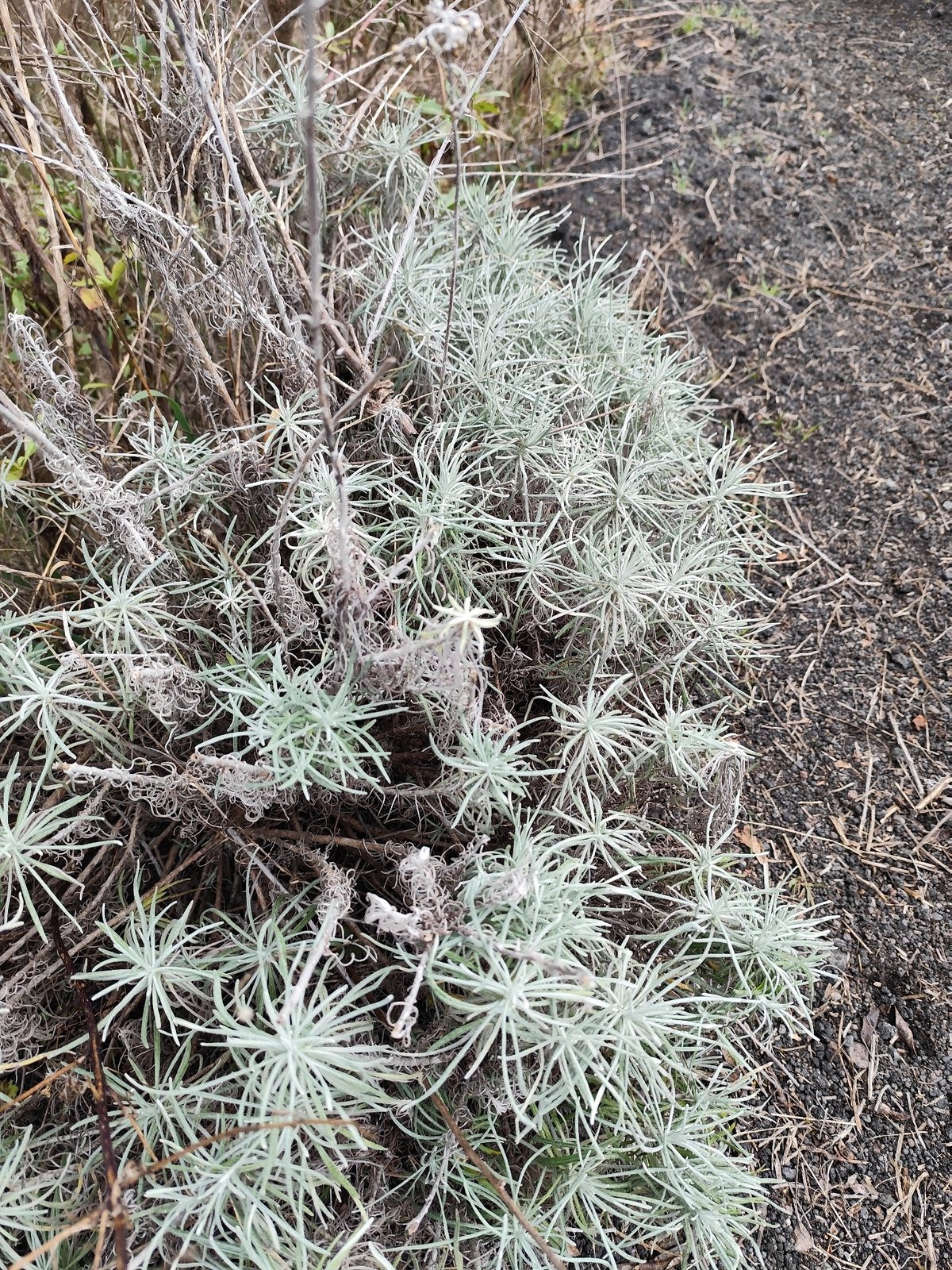
Curry plant is a small evergreen Mediterranean shrub with narrow silver leaves that smell strongly of curry, especially in warm weather. Gardeners grow it for its aromatic foliage, rounded shape and clusters of yellow flowers; it is not the curry leaf tree used in Indian cooking.

At a glance
- Sun
- Full sun; shade produces looser growth and less silver foliage.
- Water
- Low once established. Water young plants regularly while roots develop, then let the soil dry between waterings.
- Soil
- Very well-drained, sandy, gritty or stony soil; tolerates poor soil and neutral to alkaline conditions. Avoid wet clay and winter waterlogging.
- Height
- 1-2 ft (0.3-0.6 m)
- Spread
- 2-3 ft (0.6-0.9 m)
- Flowers
- Small mustard-yellow flowers in flat-topped clusters in summer; flower heads retain their colour when dried.
- Foliage
- Evergreen. Narrow, silvery-grey, softly hairy leaves with a strong curry-like scent.
- Growth
- Moderate
- Care needed
- Low
The year at a glance
- Pollinators
- Deer resistant
- Drought tolerant
- Heat tolerant
- Low allergen
- Fragrant
| J | F | M | A | M | J | J | A | S | O | N | D | |
|---|---|---|---|---|---|---|---|---|---|---|---|---|
| Flowers | ||||||||||||
| Fruit | ||||||||||||
| Plant |
Northern hemisphere months. In Australia, shift them by six.
- Difficulty
- Moderate
- Toughness
- Needs looking after
Will it suit your garden?
Pick your zone, country, light and whether you have pets.
Full sun is 6 or more hours of direct sun a day, part shade 3 to 6 hours, shade under 3.
How it grows
Planting day
1.5 ft (0.45 m)
full size
About 5 years to full size.
From a typical nursery size, at an average rate for this kind of plant. A rule of thumb, not a forecast.
Good to know
- Cats and dogs
- Safe
- Growth rate
- Moderate
Care
Jobs through the year
- WaterMay, Sep, every 21 days
- Water established in-ground plants only in prolonged drought; young plants need more frequent watering as soil dries.
- WaterJun–Aug, every 14 days
- Water established in-ground plants only when very dry; allow soil to dry between soakings and check pots more often.
- WaterJan–Apr, Oct–Dec, every 21 days
- For frost-free overwintered pots only, water sparingly if compost is dry; keep barely moist.
- MulchMay
- Use a thin gravel mulch rather than moisture-holding organic material around the crown.
- PruneApr–May
- After hard frosts, remove winter damage and lightly shape leafy shoots without cutting into bare old wood.
- PruneAug–Sep
- If needed, trim spent flowers and lightly shape leafy growth, avoiding bare woody stems.
- ProtectJan–Apr, Oct–Dec
- Not reliably hardy in zones 6–7; move pots to bright, cool, frost-free shelter before autumn frost.
- Plant in spring in colder regions, choosing a sunny site protected from cold, drying winds.
- Water at soil level and allow the root zone to dry between soakings.
- Avoid routine feeding; rich soil encourages soft, floppy growth.
- Use gravel rather than moisture-holding organic mulch around the crown.
- Grow in a pot with drainage holes where winters are too cold, and overwinter in a bright, cool, frost-free place.
Pruning. Lightly trim leafy shoots in spring once hard frosts have passed, removing dead or damaged growth. Trim again after flowering if needed, but avoid cutting into bare old wood, which may not regrow.
Harvest
For occasional culinary use, snip a few healthy leafy sprigs during active growth, preferably before flowering. Use them sparingly to infuse soups or stews and remove before serving; the leaves are tough and can taste bitter, and they are not a substitute for curry leaves.
Through the year
- Spring
- Plant after hard frosts, or move overwintered pots outdoors gradually.
- Spring
- Remove winter damage and lightly trim leafy growth to maintain a compact shape.
- Early summer
- Take softwood cuttings from healthy, non-flowering shoots.
- Summer
- Harvest small amounts of foliage; cut flowering stems for drying as the flowers open.
- Late summer
- Trim spent flowers without cutting back into bare woody stems.
- Autumn
- Move pots under cover before damaging frosts and check that outdoor plants drain freely.
- Winter
- Keep sheltered pots barely moist and avoid leaving them standing in saucers of water.
In the garden
- Edge sunny gravel paths with silver mounds that release scent when brushed.
- Combine with lavender, sage and rosemary in a dry Mediterranean border.
- Use as a silver contrast beside purple flowers or dark foliage.
- Plant in terracotta pots for sunny patios where drainage and winter shelter are easy to manage.
Garden styles it suits: Mediterranean, Dry gravel garden, Coastal, Sensory garden, Herb parterre and Desert / xeriscape.
Plant it with: Lavender, Rosemary, Common sage, Santolina, Rock rose and Yarrow.
Wildlife: The summer flowers provide pollen and nectar for bees and other insects.
Problems to watch for
- Root and crown rot in wet soil: improve drainage or grow in a raised bed or free-draining container.
- Frost damage: shelter from cold winds and overwinter containers under cover in colder regions.
- Leggy, open growth: provide full sun, avoid rich feeding and trim lightly each year.
- Aphids on young shoots: dislodge with water or remove heavily affected shoot tips.
Safety
Not known to be toxic to people, cats, dogs or horses, although species-specific animal safety information is limited. Concentrated essential oil is not equivalent to the foliage and should not be swallowed or applied to pets.
Easily confused with
Curry leaf tree (Murraya koenigii)
A frost-tender shrub or tree with glossy green compound leaves, rather than narrow silver leaves; this is the plant commonly used for curry leaves.
Lavender cotton (Santolina chamaecyparissus)
Has finely divided, bead-like silver foliage and separate yellow button flowers on long stalks, rather than clusters of tiny flower heads.
Lavender (Lavandula angustifolia)
Has a lavender scent and upright spikes of usually purple flowers, rather than a curry scent and yellow flower clusters.
The name
Helichrysum comes from Greek words for sun and gold, italicum means Italian, and curry plant refers to the scent of its foliage.
Propagation. Take softwood cuttings in early summer or semi-ripe cuttings later in summer, rooting them in a gritty, free-draining medium. Seed is another option, but cuttings preserve the parent plant's characteristics.
Checked against open data
- Accepted botanical name
- Helichrysum italicum
- Native range
- Algeria, Baleares, Corse, Cyprus, East Aegean Is., France, Greece, Italy, Kriti, Morocco, Portugal and Sardegna.
- Measured
- Soil pH 7 to 7.5. Average height 26 cm.
Sources: GBIF (CC BY 4.0) and Trefle (CC BY 4.0). The care and design notes are LandscapeGPT's own.
See it in your own yard.
Upload a photo of your yard and see it redesigned with plants that suit your climate, each checked against your zone.