Cushion bush
Leucophyta brownii. Family Asteraceae. Shrub.
Also called Silver bush, Silver cushion bush, Calocephalus brownii.
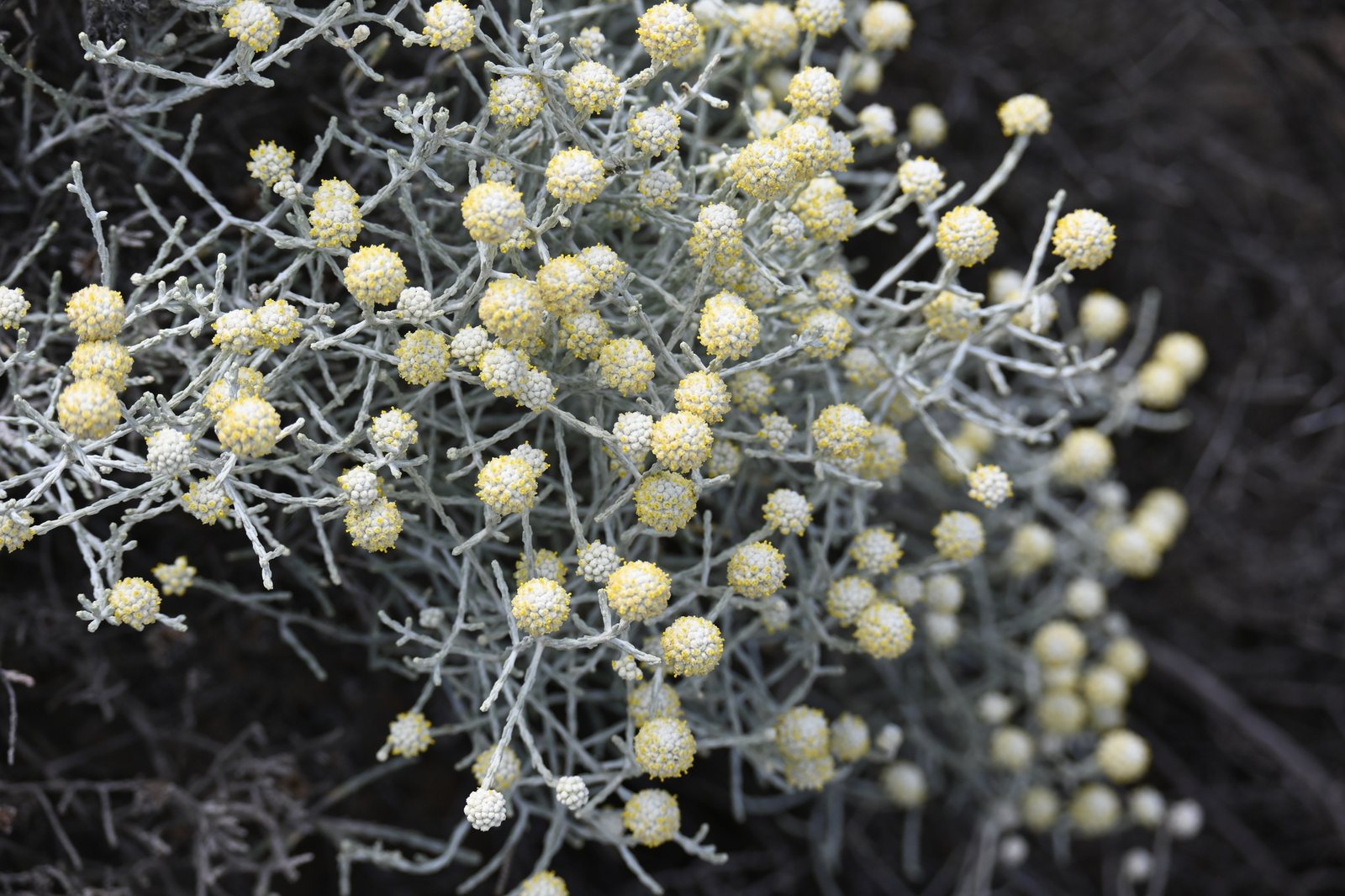
Cushion bush is a small evergreen shrub from southern Australia, grown for its rounded outline and densely branched, silvery-white stems. It suits sunny coastal gardens, gravel beds and containers where drainage is excellent. In colder climates it is often grown as an annual or overwintered under cover.
At a glance
- Sun
- Full sun.
- Water
- Low once established; water young plants regularly while roots develop, then let the soil dry between waterings. Containers need more frequent checks.
- Soil
- Very well-drained sandy, gritty or gravelly soil; tolerates poor soil and coastal conditions but not prolonged winter wet.
- Height
- 1-3 ft (0.3-0.9 m)
- Spread
- 1-3 ft (0.3-0.9 m)
- Flowers
- Small, rounded cream to pale yellow flower heads in summer; less conspicuous than the silver stems.
- Foliage
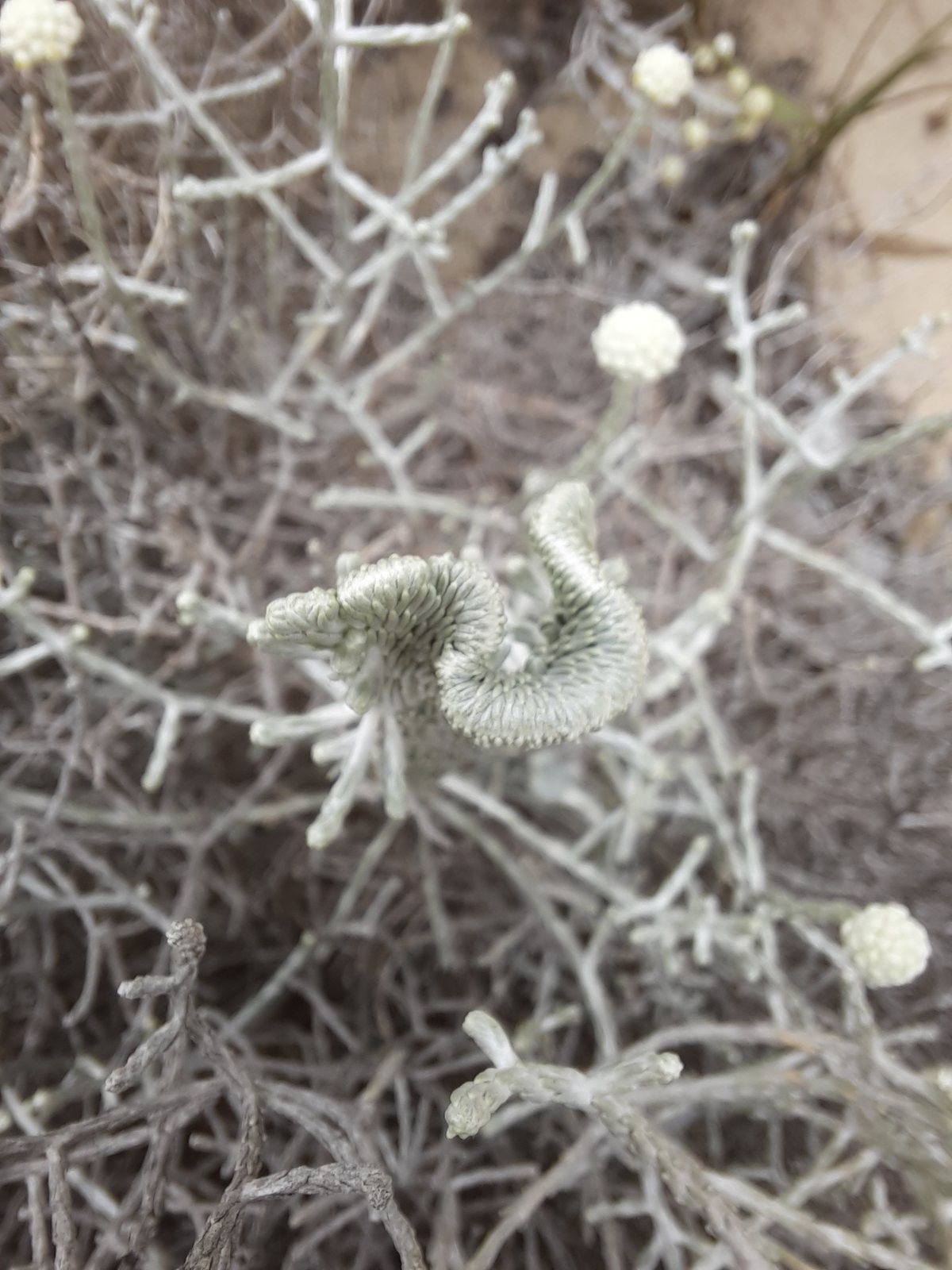
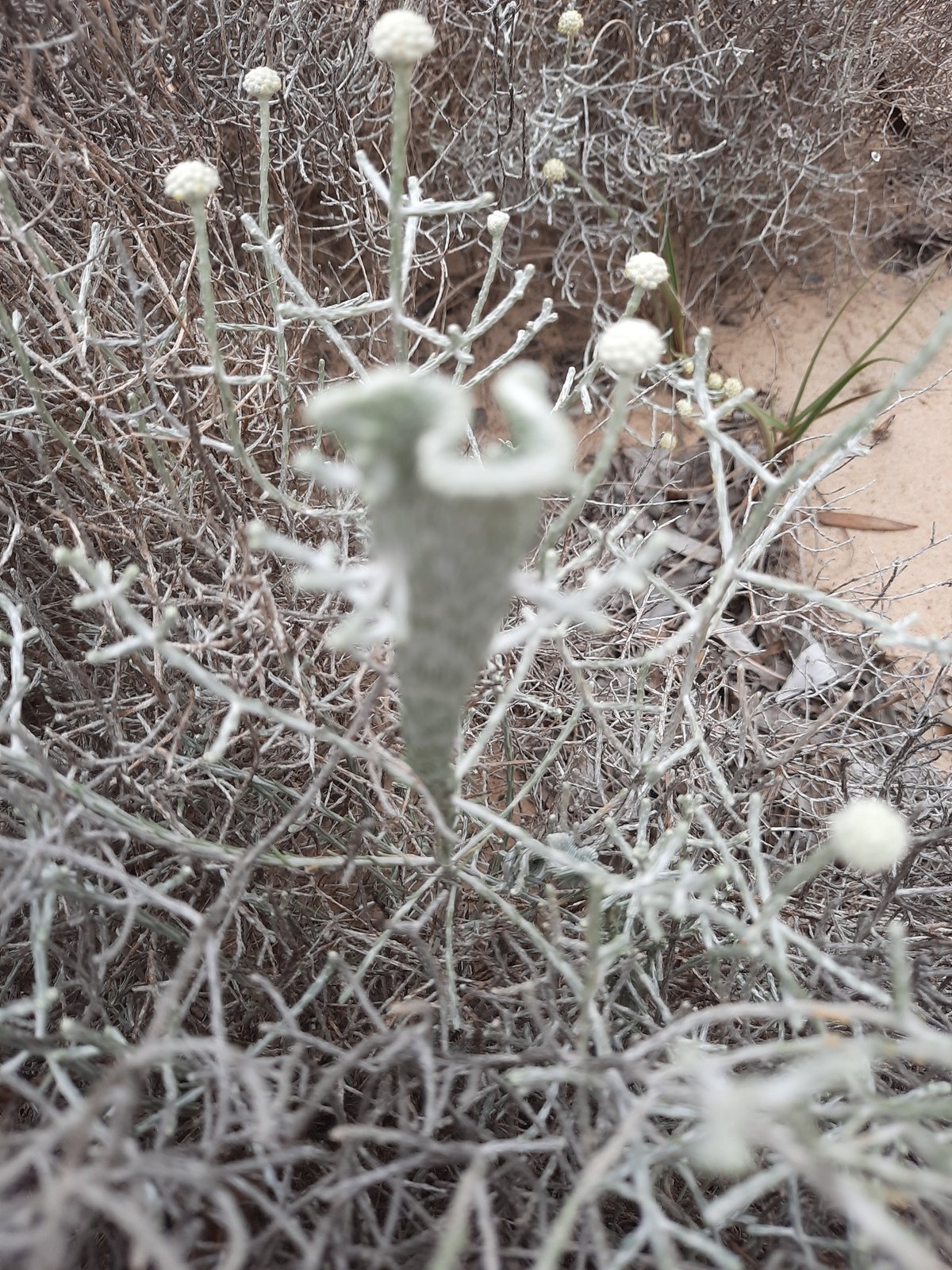
- Evergreen. Tiny, scale-like silver leaves pressed closely against a fine network of silvery-white stems.
- Growth
- Moderate.
- Care needed
- Low
The year at a glance
- Pollinators
- Drought tolerant
- Heat tolerant
- Low allergen
| J | F | M | A | M | J | J | A | S | O | N | D | |
|---|---|---|---|---|---|---|---|---|---|---|---|---|
| Flowers | ||||||||||||
| Plant |
Northern hemisphere months. In Australia, shift them by six.
- Difficulty
- Moderate
- Toughness
- Fairly tough
Will it suit your garden?
Pick your zone, country, light and whether you have pets.
Full sun is 6 or more hours of direct sun a day, part shade 3 to 6 hours, shade under 3.
How it grows
Planting day
1.6 ft (0.5 m)
After 1 year
1.7 ft (0.52 m)
After 2 years
1.8 ft (0.54 m)
After 3 years
1.8 ft (0.56 m)
After 5 years
2 ft (0.6 m)
full size
About 5 years to full size.
From a typical nursery size, at an average rate for this kind of plant. A rule of thumb, not a forecast.
Good to know
- Cats and dogs
- Safe
- Growth rate
- Moderate
Care
Jobs through the year
- WaterApr–May, Sep–Oct, every 21 days
- Water established ground plants only if soil is dry; young plants and pots need more frequent checks.
- WaterJun–Aug, every 14 days
- Water deeply only during prolonged drought, allowing soil to dry between soakings.
- WaterJan–Mar, Nov–Dec, every 30 days
- Under frost-free cover, water sparingly only when the mix has dried.
- PruneMay
- Lightly trim soft tips after frost risk passes; never cut into bare old wood.
- MulchMay
- Apply a thin gravel mulch, keeping the crown clear.
- ProtectJan–Apr, Sep–Dec
- Not winter-hardy locally; grow in a movable pot and overwinter in bright, frost-free shelter.
- Plant in full sun with the crown at soil level, avoiding low spots where water collects.
- Water thoroughly after planting, then allow the soil to dry between waterings.
- Use a gritty container mix and a pot with unobstructed drainage holes; empty standing water from saucers.
- Feed sparingly; plants in the ground usually need no fertilizer.
- Keep organic mulch away from the crown; a thin gravel mulch is better suited to its dry-growing needs.
- In cold or persistently wet winters, move pots into a bright, frost-free place and water sparingly.
Pruning. Lightly trim the soft outer growth in spring, after frost risk has passed, to maintain a compact mound. Avoid hard cuts into old, bare wood, which may not regrow.
Through the year
- Spring
- Plant once frost risk has passed, choosing a sunny site with excellent drainage.
- Late spring
- Lightly trim uneven growth without cutting into bare woody stems.
- Summer
- Check containers regularly and water when the mix has dried; water established garden plants only during prolonged dry spells.
- Late summer
- Take semi-ripe cuttings from healthy, non-flowering shoots.
- Autumn
- Move container plants under bright, frost-free cover where winters are cold or very wet.
- Winter
- Keep sheltered plants on the dry side and check that outdoor plants are not sitting in saturated soil.
In the garden
- Repeat rounded plants along a gravel path for a low, silver edging.
- Pair with lavender and other drought-tolerant plants in a sunny Mediterranean-style border.
- Use in simple containers against dark walls or paving to emphasize its pale, wiry structure.
- Plant among rocks and low coastal shrubs where its compact form contrasts with coarser foliage.
Garden styles it suits: Coastal, Australian native, Dry gravel garden, Mediterranean, Contemporary minimal and Moon garden.
Plant it with: Lavender, Rosemary, Blue fescue, Sea thrift, Rock rose and Kangaroo paw.
Wildlife: The small flower heads can attract small pollinating insects, but this is primarily a foliage plant rather than a major wildlife resource.
Problems to watch for
- Root and crown rot in wet soil: improve drainage, reduce watering and keep the crown clear of damp mulch; replace badly affected plants.
- Frost damage: protect containers before freezing weather and delay trimming damaged tips until spring growth shows what is alive.
- Open, leggy growth in shade or rich soil: move to full sun, stop unnecessary feeding and trim lightly while stems are still leafy.
Safety
Not known to be toxic to people, cats, dogs or horses. Species-specific toxicity information is limited, so do not treat the stems, leaves or flowers as edible or allow pets to chew large amounts.
Easily confused with
Lavender cotton (Santolina chamaecyparissus)
Has obvious, finely divided aromatic leaves and bright yellow button flowers on longer stalks; cushion bush has tiny, tightly pressed leaves and a wiry silver framework.
Dusty miller (Jacobaea maritima)
Has broad, deeply lobed, felted silver leaves rather than cushion bush's nearly leafless-looking network of fine stems.
The name
Leucophyta comes from Greek words meaning white plant, brownii honours botanist Robert Brown, and cushion bush describes its rounded habit.
Propagation. Take semi-ripe cuttings in late summer and root them in a gritty, free-draining medium with bright light out of strong direct sun. Keep the medium lightly moist, not wet.
Checked against open data
- Accepted botanical name
- Calocephalus brownii Leucophyta brownii is an older name for Calocephalus brownii.
Sources: GBIF (CC BY 4.0). The care and design notes are LandscapeGPT's own.
See it in your own yard.
Upload a photo of your yard and see it redesigned with plants that suit your climate, each checked against your zone.