Daisy bush
Olearia × haastii. Family Asteraceae. Shrub.
Also called Haast's daisy bush.
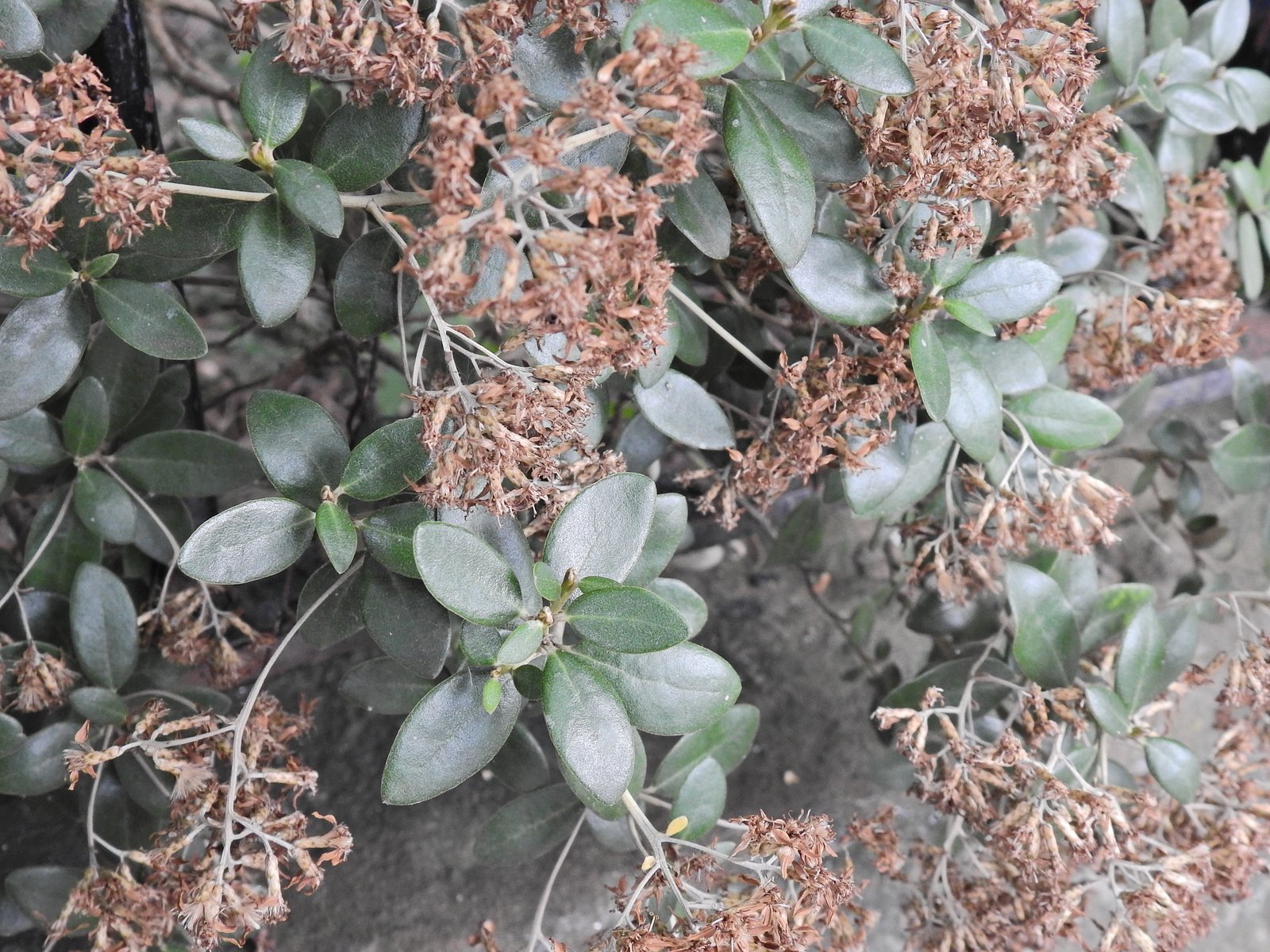
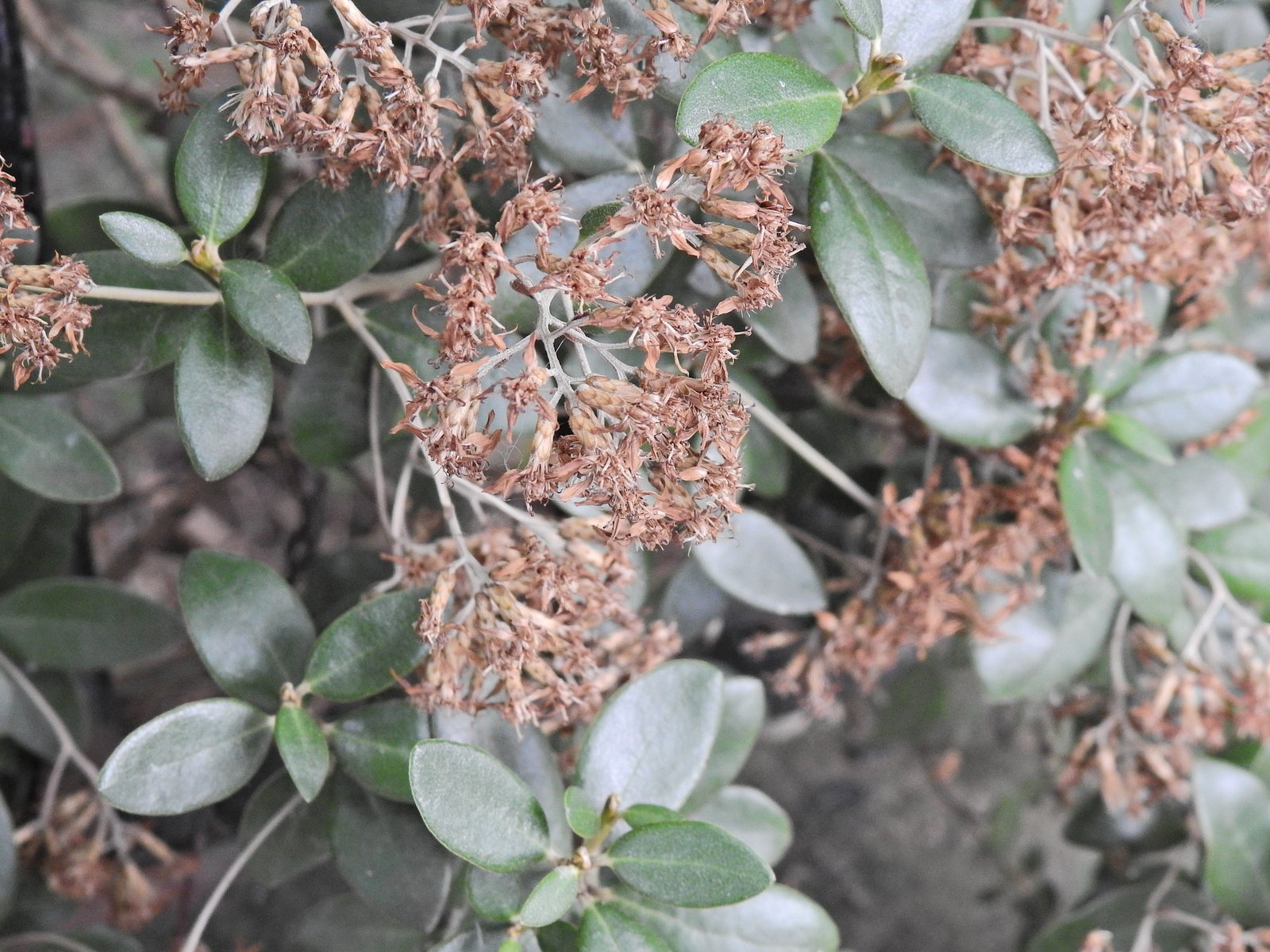
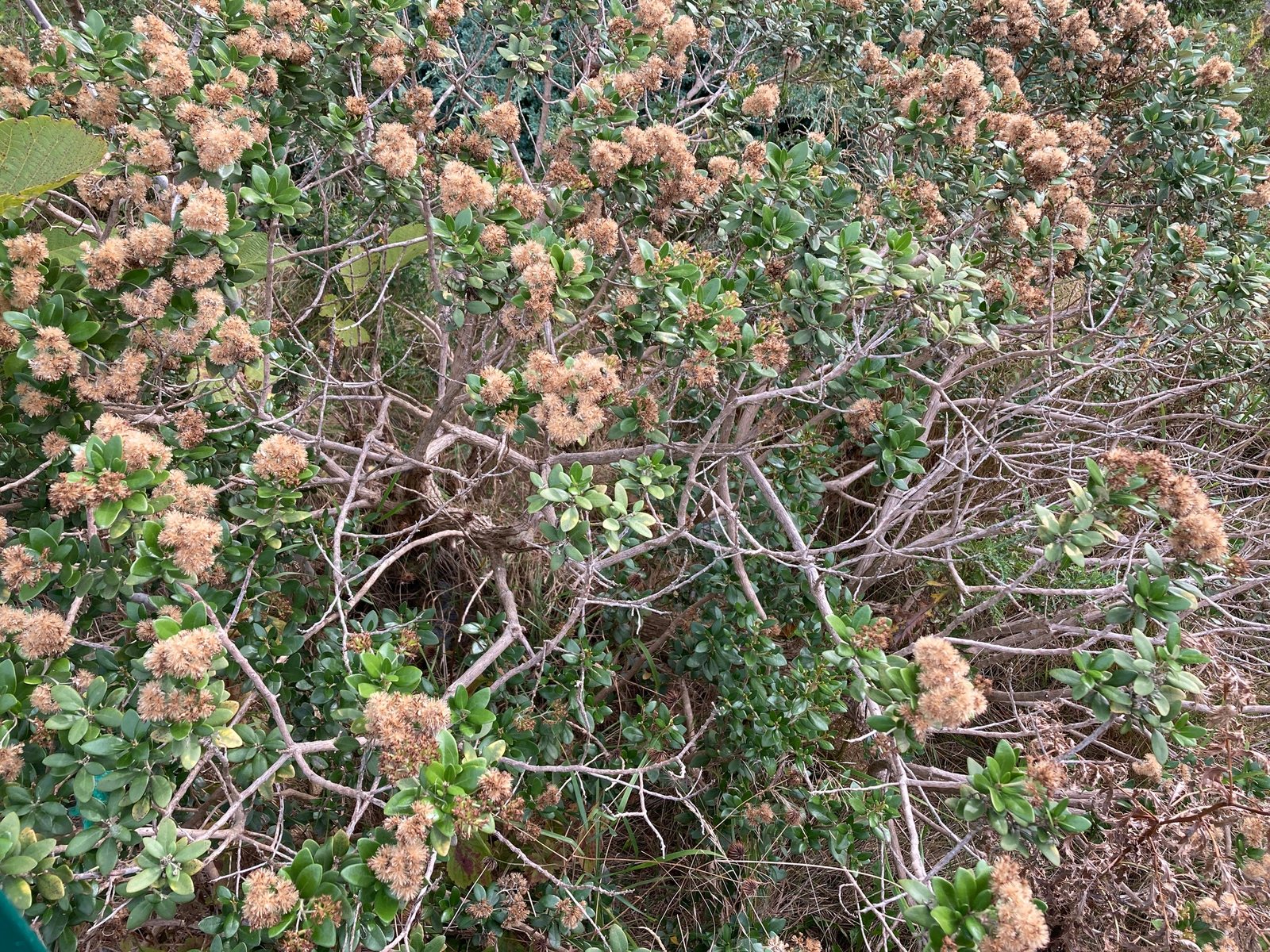
A rounded evergreen shrub from New Zealand, grown for its small, leathery leaves and clusters of fragrant white daisies in summer. It makes a useful informal hedge or flowering backdrop in mild coastal gardens, but needs shelter from severe frost and cold, drying winds.
At a glance
- Sun
- Full sun; tolerates light shade, but flowers less freely.
- Water
- Water regularly while establishing. Once rooted, it tolerates short dry spells, but benefits from deep watering during prolonged drought.
- Soil
- Well-drained soil, including sandy, chalky or stony ground. Avoid heavy soil that stays wet in winter.
- Height
- 5-8 ft (1.5-2.4 m)
- Spread
- 5-8 ft (1.5-2.4 m)
- Flowers
- Midsummer to late summer; clusters of small white daisies with yellow centres, often fragrant.
- Foliage
- Evergreen. Small, opposite, oval leaves with dark green upper surfaces and pale, felted undersides.
- Growth
- Moderate
- Care needed
- Low
The year at a glance
- Pollinators
- Drought tolerant
- Wildlife
- Low allergen
- Fragrant
| J | F | M | A | M | J | J | A | S | O | N | D | |
|---|---|---|---|---|---|---|---|---|---|---|---|---|
| Flowers | ||||||||||||
| Plant |
Northern hemisphere months. In Australia, shift them by six.
- Difficulty
- Moderate
- Toughness
- Fairly tough
Will it suit your garden?
Pick your zone, country, light and whether you have pets.
Full sun is 6 or more hours of direct sun a day, part shade 3 to 6 hours, shade under 3.
How it grows
Planting day
1.6 ft (0.5 m)
After 1 year
2.6 ft (0.79 m)
After 2 years
4 ft (1.1 m)
After 3 years
4 ft (1.4 m)
After 5 years
6 ft (2 m)
full size
About 5 years to full size.
From a typical nursery size, at an average rate for this kind of plant. A rule of thumb, not a forecast.
Good to know
- Cats and dogs
- Safe
- Growth rate
- Moderate
Care
Jobs through the year
- WaterApr–May, Sep–Oct, every 14 days
- Established plants: water deeply only if prolonged dry weather dries the root zone; young plants need more.
- WaterJun–Aug, every 14 days
- Established plants: give a deep soak during prolonged drought; skip watering when soil remains moist.
- FeedApr
- Apply a light balanced feed only if growth is weak; avoid heavy nitrogen feeding.
- MulchMay
- Renew a light organic mulch over the roots, leaving stems clear.
- PruneApr–May
- Remove winter-damaged shoots once new buds reveal living wood.
- PruneAug–Sep
- Lightly trim after flowering, cutting within leafy growth; check for active bird nests first.
- ProtectJan–Mar, Nov–Dec
- Shelter from cold winds and winter wet; in zones 6–7, use movable containers with frost-protected winter shelter.
- Plant in spring in colder areas, or in autumn where winters are mild.
- Water deeply during the first growing season, letting the surface soil dry between waterings.
- Mulch over the root area, keeping mulch clear of the stems.
- Use a light spring feed only if growth is weak; avoid heavy nitrogen feeding.
- Choose a sheltered position near its cold limit, away from frost pockets and waterlogged ground.
Pruning. Lightly trim after flowering to keep the shrub dense, cutting back leafy shoots rather than into bare old wood. Remove frost-damaged growth in spring once new buds show where stems are alive.
Through the year
- Spring
- Plant in colder regions and water thoroughly; remove winter-damaged shoots once growth resumes.
- Late spring
- Renew mulch and check young plants for aphids.
- Summer
- Water establishing plants during dry weather; give mature shrubs a deep soak during prolonged drought.
- Late summer
- After flowering, lightly trim straggly shoots and take semi-ripe cuttings.
- Autumn
- Plant in mild-winter areas while the soil is warm; check that winter rain can drain away.
- Winter
- Protect young plants during severe cold and avoid pruning while frost is likely.
In the garden
- Grow as an informal evergreen hedge in a mild coastal garden.
- Place at the back of a sunny mixed border, where its dark foliage provides a backdrop for flowering perennials.
- Combine with lavender, rock roses and silver-leaved shrubs in a well-drained gravel garden.
- Use beside a path or seating area where the summer flower scent can be noticed.
Garden styles it suits: Coastal, Cottage garden, Dry gravel garden, Low-maintenance, Pollinator garden and White garden.
Plant it with: Lavender, Rock rose, Santolina, Hebes, Agapanthus and Sea holly.
Wildlife: The open flowers provide pollen and nectar for bees, hoverflies and other visiting insects. Dense evergreen growth offers shelter for small birds.
Problems to watch for
- Winter root rot: avoid poorly drained ground and persistent winter saturation; improve drainage before planting.
- Frost scorch or dieback: provide shelter and protect young plants during severe freezes; prune damaged shoots in spring.
- Aphids on soft shoots: wash off small colonies with water and encourage ladybirds and other predators.
- Scale insects: inspect stems and leaf undersides, remove small infestations by hand, and use a labelled treatment if needed.
Safety
Not known to be toxic to people, cats, dogs or horses. Species-specific information is limited, so do not treat any part as edible or allow pets or livestock to browse it heavily.
Easily confused with
New Zealand holly (Olearia macrodonta)
Has much larger, conspicuously toothed, holly-like leaves and usually becomes a larger shrub or small tree.
Daisy bush (Olearia × scilloniensis)
Usually flowers in spring rather than midsummer and has narrower leaves with more noticeably wavy margins.
Daisy bush (Olearia lepidophylla)
Has very small, scale-like leaves pressed close to fine stems, giving a much more twiggy appearance.
The name
The name haastii commemorates Julius von Haast, a nineteenth-century geologist and naturalist who worked in New Zealand.
Propagation. Take semi-ripe cuttings from healthy, non-flowering shoots in late summer and root them in a free-draining medium under cover. As a hybrid, it is best propagated from cuttings rather than seed.
Checked against open data
- Accepted botanical name
- Olearia haastii
- Native range
- New Zealand South.
Sources: GBIF (CC BY 4.0) and Trefle (CC BY 4.0). The care and design notes are LandscapeGPT's own.
See it in your own yard.
Upload a photo of your yard and see it redesigned with plants that suit your climate, each checked against your zone.