Dappled willow
Salix integra 'Hakuro-nishiki'. Family Salicaceae. Shrub.
Also called Japanese dappled willow, Tricolour willow, Salix integra 'Hakuro-nishiki'.
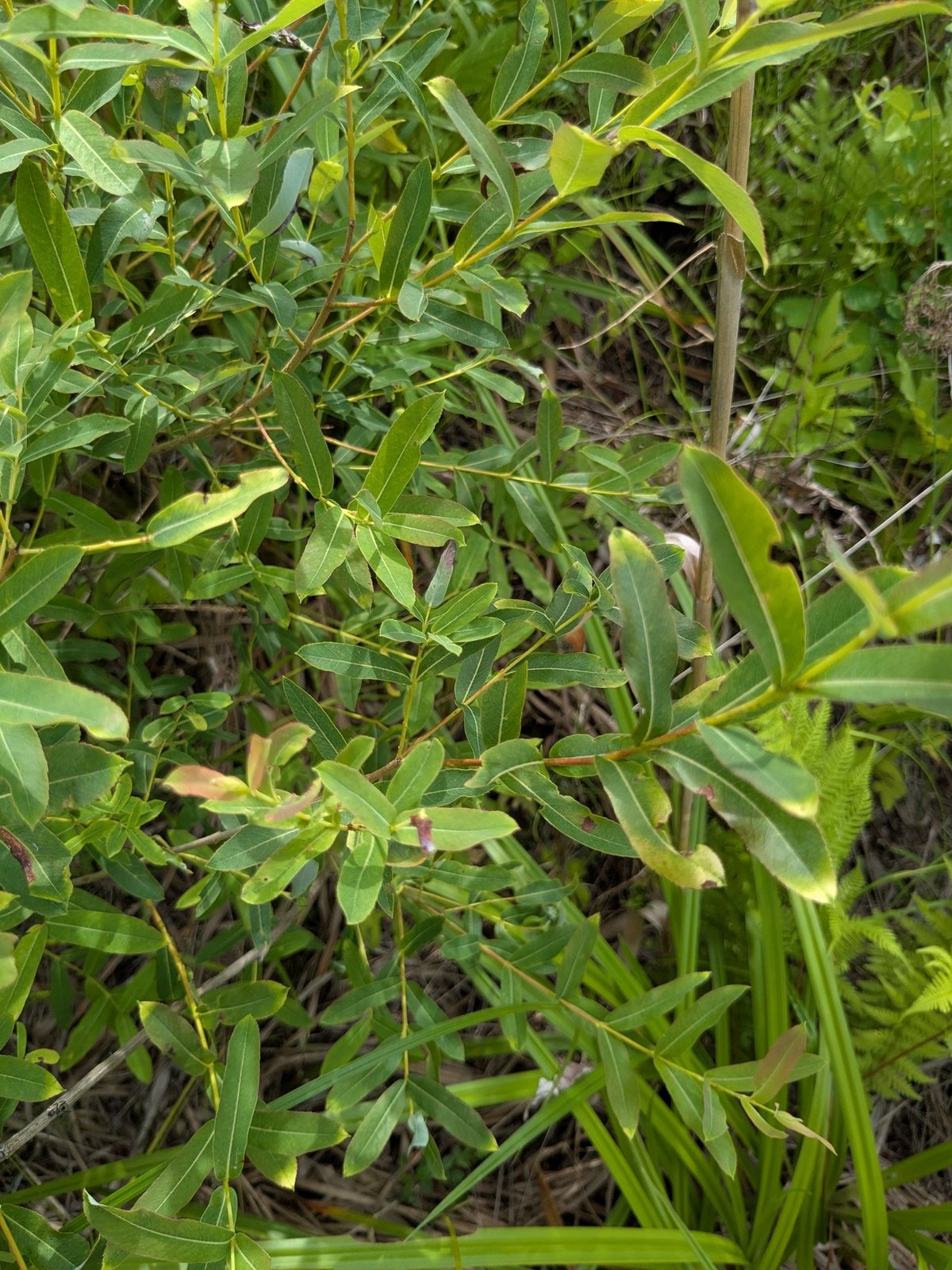
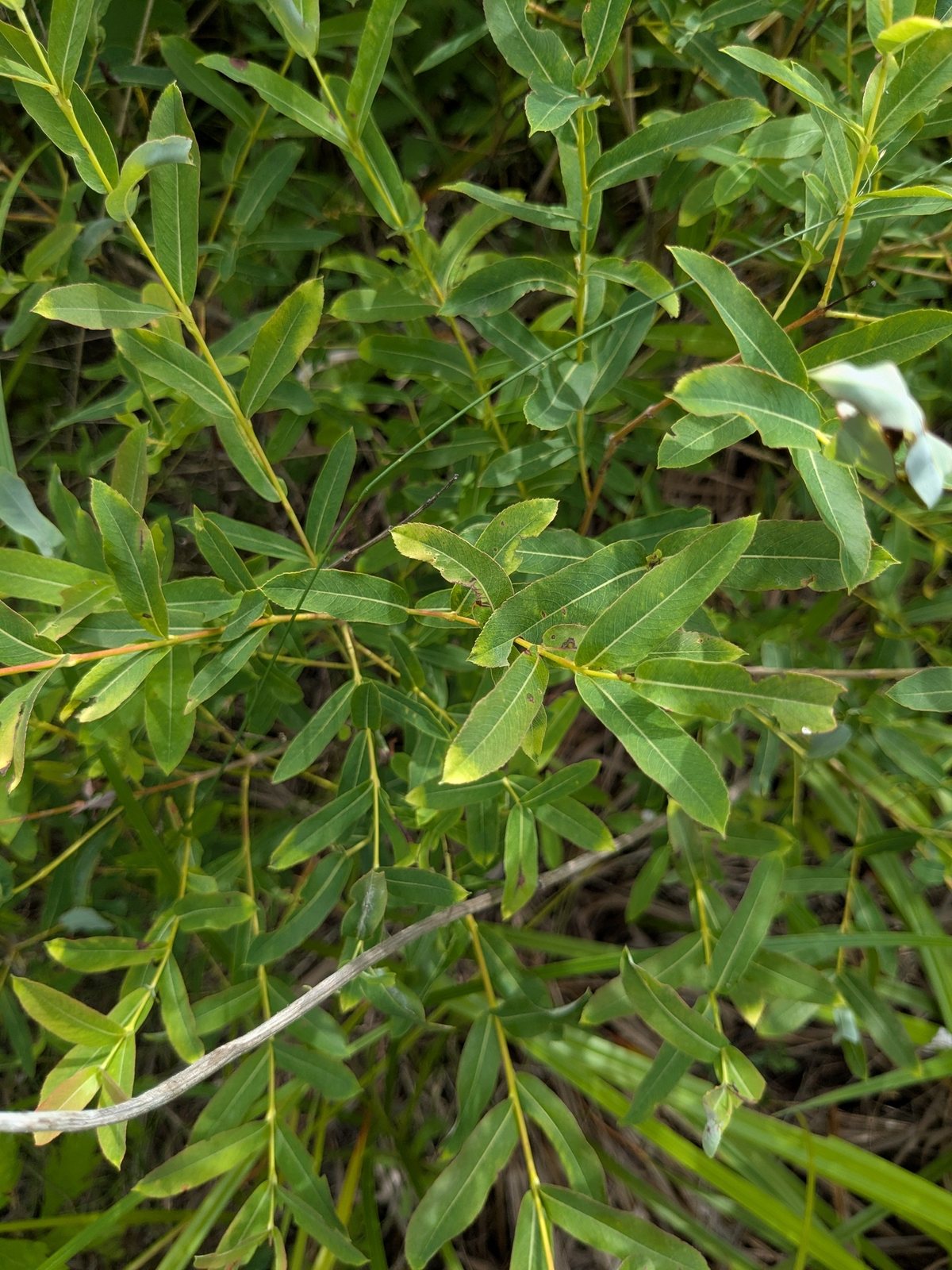
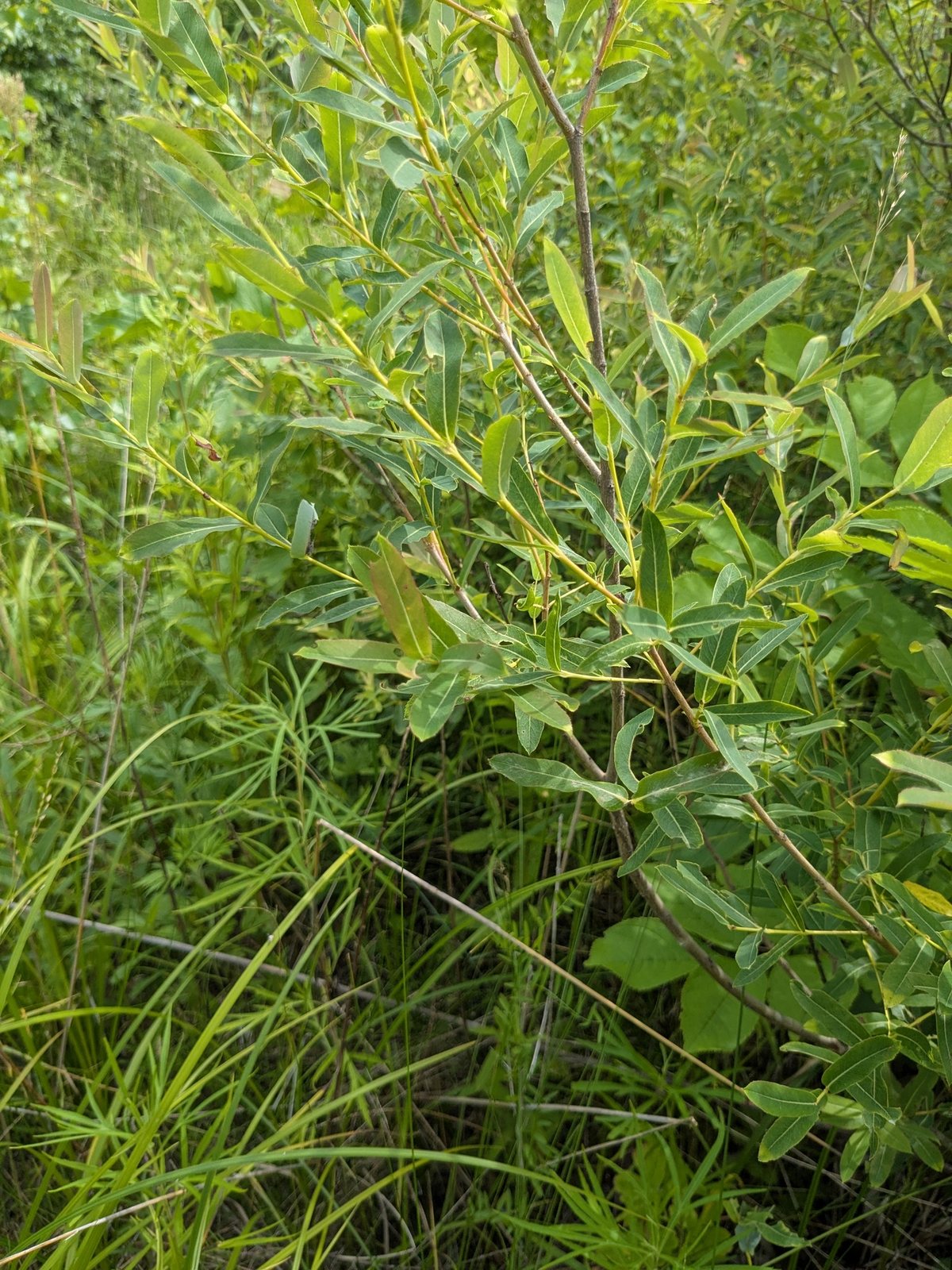
A fast-growing deciduous willow grown for young leaves mottled pink, cream and green, with reddish stems visible in winter. It naturally forms a broad shrub but is also sold grafted onto a clear trunk as a small standard tree. It needs dependable moisture and regular pruning to keep its size manageable and encourage colourful new growth.
At a glance
- Sun
- Full sun to partial shade; afternoon shade helps prevent leaf scorch in hot climates.
- Water
- Keep the root zone consistently moist, especially during establishment and hot weather. Poor drought tolerance.
- Soil
- Moist, fertile soil, including moisture-retentive clay; tolerates occasional waterlogging. Avoid dry, shallow soils.
- Height
- 6-10 ft (1.8-3 m) unpruned; grafted standards vary with trunk height.
- Spread
- 6-10 ft (1.8-3 m) unpruned.
- Foliage
- Narrow leaves emerge pink, becoming cream-and-green mottled, then greener as they mature. Colour is strongest on fresh growth; leaves fall in autumn.
- Growth
- Fast
- Care needed
- Medium
The year at a glance
- Pollinators
- Heat tolerant
- Wildlife
| J | F | M | A | M | J | J | A | S | O | N | D | |
|---|---|---|---|---|---|---|---|---|---|---|---|---|
| Plant |
Northern hemisphere months. In Australia, shift them by six.
- Difficulty
- Moderate
- Toughness
- Fairly tough
Will it suit your garden?
Pick your zone, country, light and whether you have pets.
Full sun is 6 or more hours of direct sun a day, part shade 3 to 6 hours, shade under 3.
How it grows
Planting day
1.6 ft (0.5 m)
After 1 year
4 ft (1.1 m)
After 2 years
5 ft (1.7 m)
After 3 years
7 ft (2.3 m)
After 5 years
8 ft (2.4 m)
full size
About 3 years to full size.
From a typical nursery size, at an average rate for this kind of plant. A rule of thumb, not a forecast.
Good to know
- Cats and dogs
- Mildly toxic: may upset a stomach
- Growth rate
- Fast
Care
Jobs through the year
- WaterMar–May, Sep–Oct, every 7 days
- Water established plants deeply if soil begins drying; young plants need more frequent checks.
- WaterJun–Aug, every 3 days
- In dry weather, water established plants deeply to keep roots consistently moist; skip if rain suffices.
- PruneFeb–Mar
- Before bud break, shorten last year's shoots by one-half to two-thirds; keep standard-tree cuts above the graft.
- PruneJun
- Optionally lightly shorten faded shoots to encourage fresh pink-and-cream growth.
- PruneApr–Sep, every 30 days
- Remove wholly green reverted shoots and any growth below a graft at their origin.
- MulchMar–Apr
- Refresh organic mulch to 5–8 cm deep, keeping it clear of stems and trunk.
- FeedMar–Apr
- Top-dress with compost; add balanced fertilizer only if growth is weak.
- Water deeply whenever the root zone begins to dry; check newly planted shrubs frequently during their first two growing seasons.
- Apply 2-3 in (5-8 cm) of organic mulch, keeping it clear of stems and the trunk.
- Top-dress with compost in spring; use a balanced fertiliser only if growth is weak.
- Remove shoots arising below the graft on standard trees as soon as they appear.
- Plant away from drains, septic systems and underground pipes, particularly where leaks could attract roots.
Pruning. In late winter or early spring, shorten the previous year's shoots by one-half to two-thirds; established own-root shrubs can be cut harder for compact, colourful growth. On grafted standards, prune only the crown above the graft, and lightly trim faded shoots in early summer if another flush of colour is wanted.
Through the year
- Late winter
- Prune before leaf growth begins, removing dead, damaged and crossing branches.
- Spring
- Refresh mulch and top-dress with compost.
- Late spring
- Check tender shoots for aphids and remove any rootstock suckers or wholly green reverted shoots.
- Early summer
- Lightly shorten faded growth if you want a fresh flush of pink-and-cream leaves.
- Summer
- Water deeply during dry spells and check for scorched leaves.
- Autumn
- Plant while the soil is moist, or take hardwood cuttings after leaf fall.
In the garden
- Use a regularly pruned shrub as a pale focal point against dark evergreen foliage.
- Plant beside a pond or in a moisture-retentive border, allowing room for its broad crown.
- Use grafted standards to give height and repetition along a path or within a formal border.
- Combine with hostas, ferns and astilbes in a moist, lightly shaded planting.
Garden styles it suits: Japanese, Cottage garden, Formal, Bog garden, Pastel border and Winter interest.
Plant it with: Hosta, Astilbe, Siberian iris, Japanese forest grass, Lady fern and Red-stemmed dogwood.
Wildlife: Its small spring catkins can provide pollen or nectar for early insects, though hard annual pruning reduces flowering. Foliage can support insect larvae, and a mature crown offers cover for small birds.
Problems to watch for
- Leaf scorch and premature leaf drop: keep soil moist, mulch the roots and provide afternoon shade in hot locations.
- Aphids on young shoots: wash small colonies off with water; encourage ladybirds and other predators.
- Willow rust or leaf spots: collect fallen diseased leaves, avoid overhead watering and thin crowded growth to improve airflow.
- Loss of variegation or vigorous green shoots: remove wholly green reverted branches at their origin and remove all shoots below a graft.
Safety
Not generally regarded as a highly poisonous garden plant for people, dogs, cats or horses. Leaves and bark contain salicylates, so substantial ingestion may cause digestive upset or other adverse effects; cats are particularly sensitive to salicylates. Do not use it as a home remedy or encourage pets to chew the bark.
Easily confused with
Flamingo willow (Salix integra 'Flamingo')
A closely related cultivar selected for strong pink new growth and red stems. Appearance overlaps considerably with 'Hakuro-nishiki', so a reliable nursery label is the best guide.
Variegated red-twig dogwood (Cornus alba 'Elegantissima')
Has much broader, opposite leaves with cream margins and conspicuous arching veins; dappled willow has narrow leaves with irregular mottling.
The name
Salix is the Latin name for willow, integra refers to the leaves' unbroken margins, and the Japanese cultivar name 'Hakuro-nishiki' is commonly translated as 'white-dew brocade'.
Propagation. Take hardwood cuttings after leaf fall or before spring growth; willow usually roots readily in moist soil. Cuttings produce own-root shrubs, not clear-trunk standards, which are normally created by grafting.
Checked against open data
- Accepted botanical name
- Salix integra
- Native range
- Inner Mongolia, Japan, Korea and Primorye.
- Measured
- Average height 247 cm.
Sources: GBIF (CC BY 4.0) and Trefle (CC BY 4.0). The care and design notes are LandscapeGPT's own.
See it in your own yard.
Upload a photo of your yard and see it redesigned with plants that suit your climate, each checked against your zone.