Dark Knight bluebeard
Caryopteris × clandonensis 'Dark Knight'. Family Lamiaceae. Shrub.
Also called Dark Knight blue mist shrub, Dark Knight caryopteris.
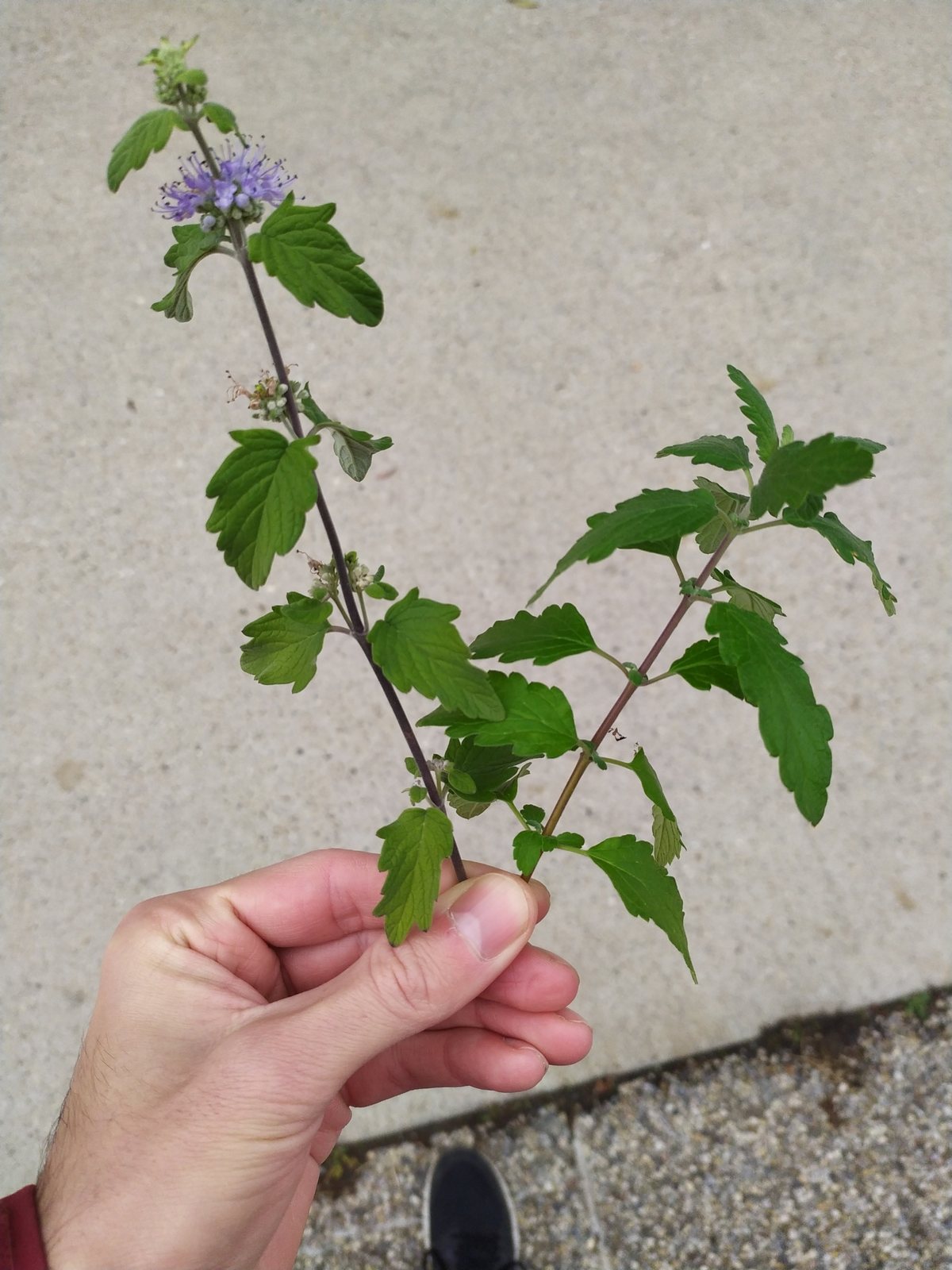
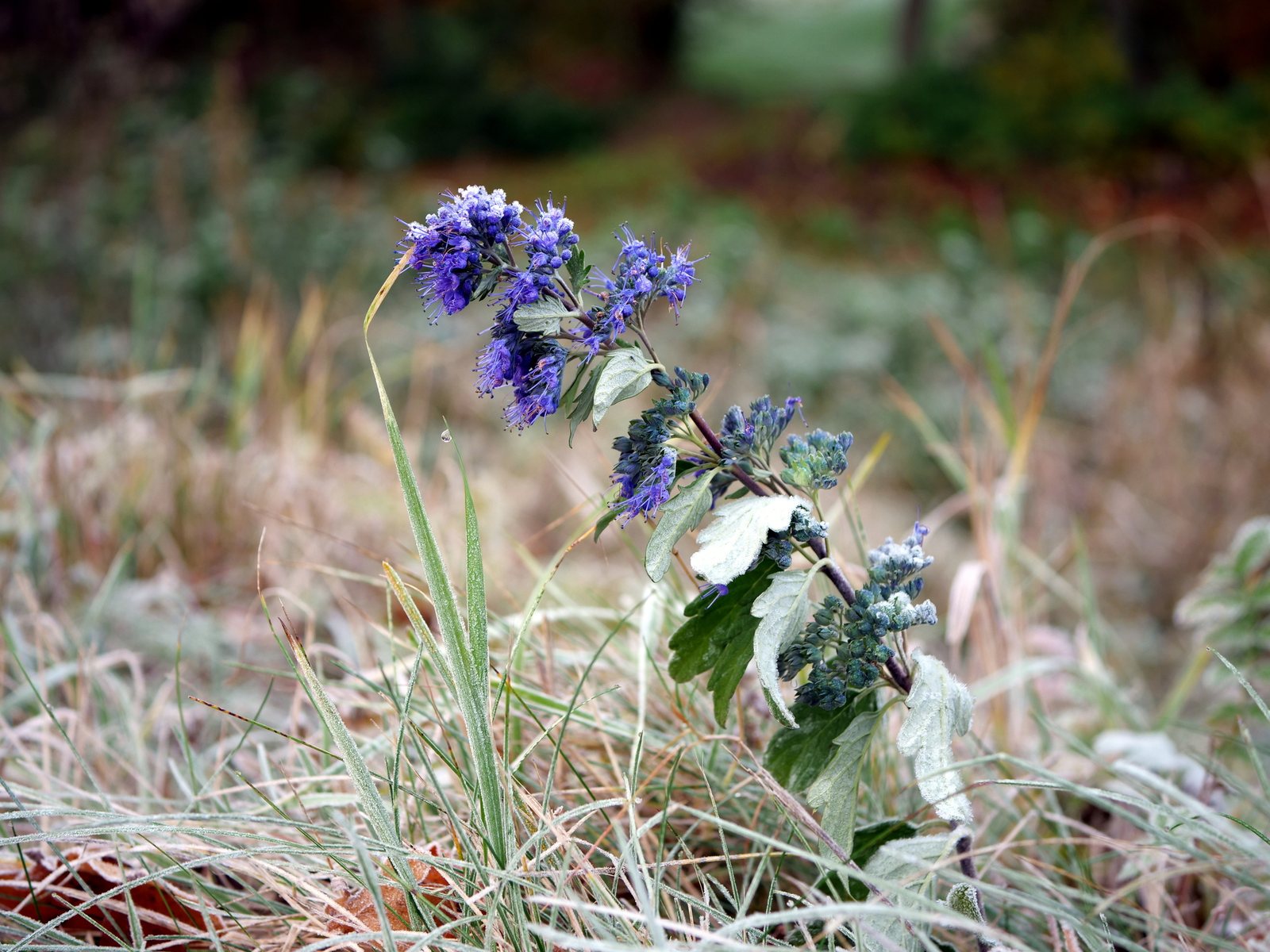
Caryopteris × clandonensis 'Dark Knight' is a small deciduous shrub grown for its deep violet-blue flowers in late summer and early autumn. Its aromatic grey-green leaves and rounded shape suit sunny borders and gravel gardens, and its flowers attract bees. In colder areas, the stems may die back over winter while the roots survive.
At a glance
- Sun
- Full sun; flowering and growth are weaker in shade.
- Water
- Water regularly during the first growing season, allowing the soil surface to dry between waterings. Once established, water during prolonged dry spells; avoid persistently wet soil.
- Soil
- Well-drained soil, preferably light or sandy, with average to low fertility. Tolerates a range of pH levels but struggles in wet, heavy clay, especially in winter.
- Height
- 2-3 ft (0.6-0.9 m)
- Spread
- 2-3 ft (0.6-0.9 m)
- Flowers
- Late summer to early autumn; deep violet-blue flowers in clusters along the upper stems.
- Foliage
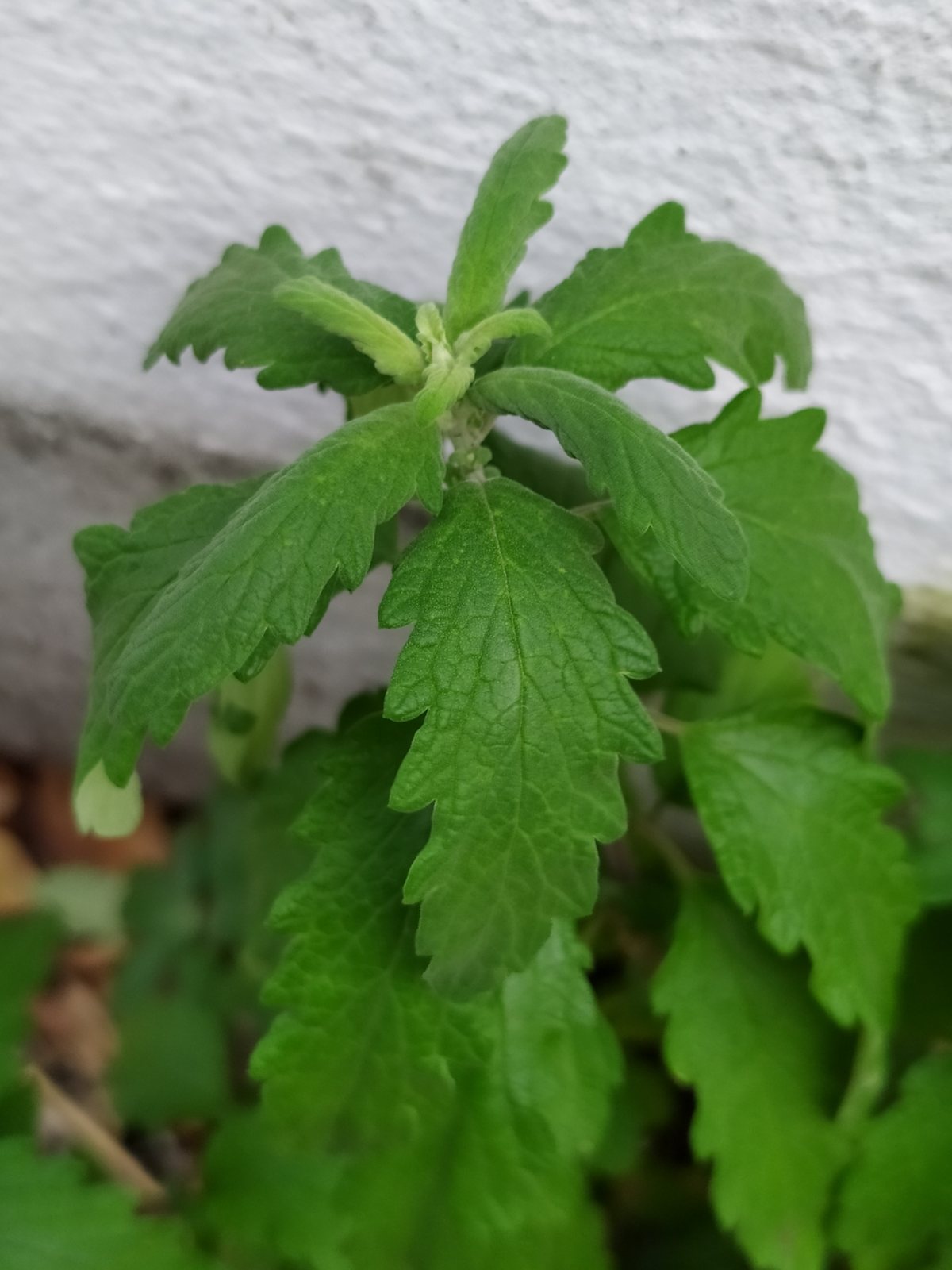
- Deciduous, narrow, lightly toothed grey-green leaves with a noticeable scent when rubbed.
- Growth
- Moderate; produces substantial new growth each spring after pruning.
- Care needed
- Low
The year at a glance
- Pollinators
- Deer resistant
- Drought tolerant
- Heat tolerant
- Low allergen
- Fragrant
| J | F | M | A | M | J | J | A | S | O | N | D | |
|---|---|---|---|---|---|---|---|---|---|---|---|---|
| Flowers | ||||||||||||
| Plant |
Northern hemisphere months. In Australia, shift them by six.
- Difficulty
- Easy
- Toughness
- Very tough
Will it suit your garden?
Pick your zone, country, light and whether you have pets.
Full sun is 6 or more hours of direct sun a day, part shade 3 to 6 hours, shade under 3.
How it grows
Planting day
1.6 ft (0.5 m)
After 1 year
1.8 ft (0.55 m)
After 2 years
2 ft (0.6 m)
After 3 years
2.1 ft (0.65 m)
After 5 years
2.5 ft (0.75 m)
full size
About 5 years to full size.
From a typical nursery size, at an average rate for this kind of plant. A rule of thumb, not a forecast.
Good to know
- Cats and dogs
- Safe
- Growth rate
- Moderate
Care
Jobs through the year
- WaterApr–May, Sep, every 21 days
- Water established plants only during extended dry spells; young plants need more frequent watering.
- WaterJun–Aug, every 14 days
- Water established plants deeply during prolonged drought, allowing soil to dry between waterings.
- PruneMar–Apr
- Once live buds show and severe frost has passed, cut stems to healthy buds 15–30 cm above ground.
- ProtectJan–Feb, Oct–Dec
- Leave stems standing and clear wet leaves or mulch from the crown to prevent winter rot.
- Plant in full sun with free-draining soil; use a raised bed if winter drainage is poor.
- Water deeply through the first growing season, then mainly during extended drought.
- Avoid rich feeding; excess nitrogen encourages soft growth at the expense of flowers.
- Keep mulch clear of the stem bases and crown.
- In colder gardens, choose a sheltered site and leave the stems standing over winter.
Pruning. In early to mid-spring, once live buds are visible and severe frost is unlikely, cut the previous year's stems back to a low framework, usually 6-12 in (15-30 cm), just above healthy buds. Remove dead stems at the base; flowers form on the new season's growth.
Through the year
- Spring
- Plant after severe frost has passed, choosing a sunny position with good drainage.
- Early to mid-spring
- Prune back to healthy low buds and remove winter-killed stems.
- Late spring
- Take softwood cuttings from healthy, non-flowering shoots.
- Summer
- Water young plants deeply during dry weather; avoid frequent shallow watering.
- Late summer
- Enjoy the flowers and leave flowering stems available to visiting bees.
- Autumn
- Leave hard pruning until spring and check that fallen leaves or mulch are not trapping moisture around the crown.
In the garden
- Plant in small groups near the front or middle of a sunny border for blue flowers after many summer perennials have finished.
- Combine with ornamental grasses and coneflowers for a late-season planting with contrasting flower shapes.
- Use beside gravel paths with lavender and stonecrops, where drainage is good and the foliage softens hard edges.
- Repeat along a sunny path as a loose, low edging rather than a tightly clipped hedge.
Garden styles it suits: Cottage garden, Pollinator garden, Dry gravel garden, Low-maintenance, New perennial (prairie) and Mediterranean.
Plant it with: Lavender, Purple coneflower, Autumn stonecrop, Feather reed grass, Yarrow and Russian sage.
Wildlife: The late-season flowers provide nectar and pollen for bees and also attract butterflies and other pollinating insects.
Problems to watch for
- Root or crown rot in wet soil: improve drainage or move the plant to a raised bed; avoid winter waterlogging.
- Winter stem dieback: wait for spring buds before pruning, then remove dead wood; protect the root zone from prolonged wet conditions.
- Sparse flowers and floppy growth: provide full sun, stop high-nitrogen feeding and prune in spring.
- Capsid bugs can leave small holes and distorted young leaves: tolerate minor damage and encourage predatory insects; treatment is rarely necessary.
Safety
Not known to be toxic to people, cats, dogs or horses. No part is generally identified as poisonous, but it is not a food plant and species-specific safety information is limited; discourage pets and children from eating it.
Easily confused with
Longwood Blue bluebeard (Caryopteris × clandonensis 'Longwood Blue')
Usually taller and more upright, with lighter blue flowers; 'Dark Knight' has deeper violet-blue flowers. Labels are more reliable than appearance alone when plants are not flowering.
Russian sage (Salvia yangii)
Usually taller and airier, with silvery stems, more divided leaves and long, open sprays of small lavender-blue flowers rather than dense clusters close to the stems.
The name
Caryopteris comes from Greek words meaning nut and wing, referring to the winged fruits, while bluebeard describes the blue flowers with their projecting stamens.
Propagation. Take softwood cuttings in late spring or semi-ripe cuttings in summer and root them in a free-draining medium. Seedlings will not reliably retain the characteristics of 'Dark Knight'.
Checked against open data
- Accepted botanical name
- Caryopteris clandonensis
Sources: GBIF (CC BY 4.0) and Trefle (CC BY 4.0). The care and design notes are LandscapeGPT's own.
See it in your own yard.
Upload a photo of your yard and see it redesigned with plants that suit your climate, each checked against your zone.