Darley Dale heath
Erica × darleyensis. Family Ericaceae. Shrub.
Also called Darley heath, Winter heath.
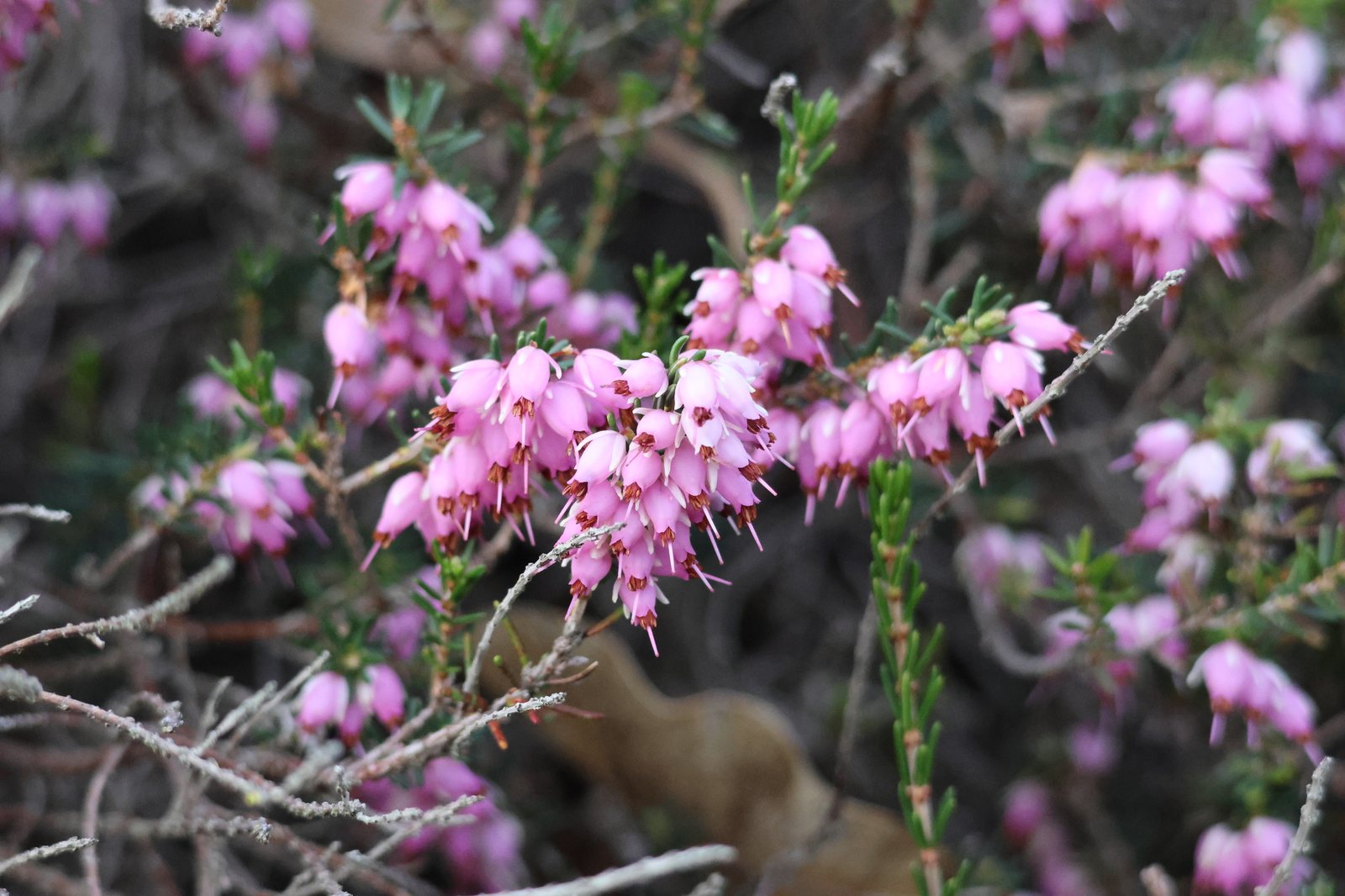
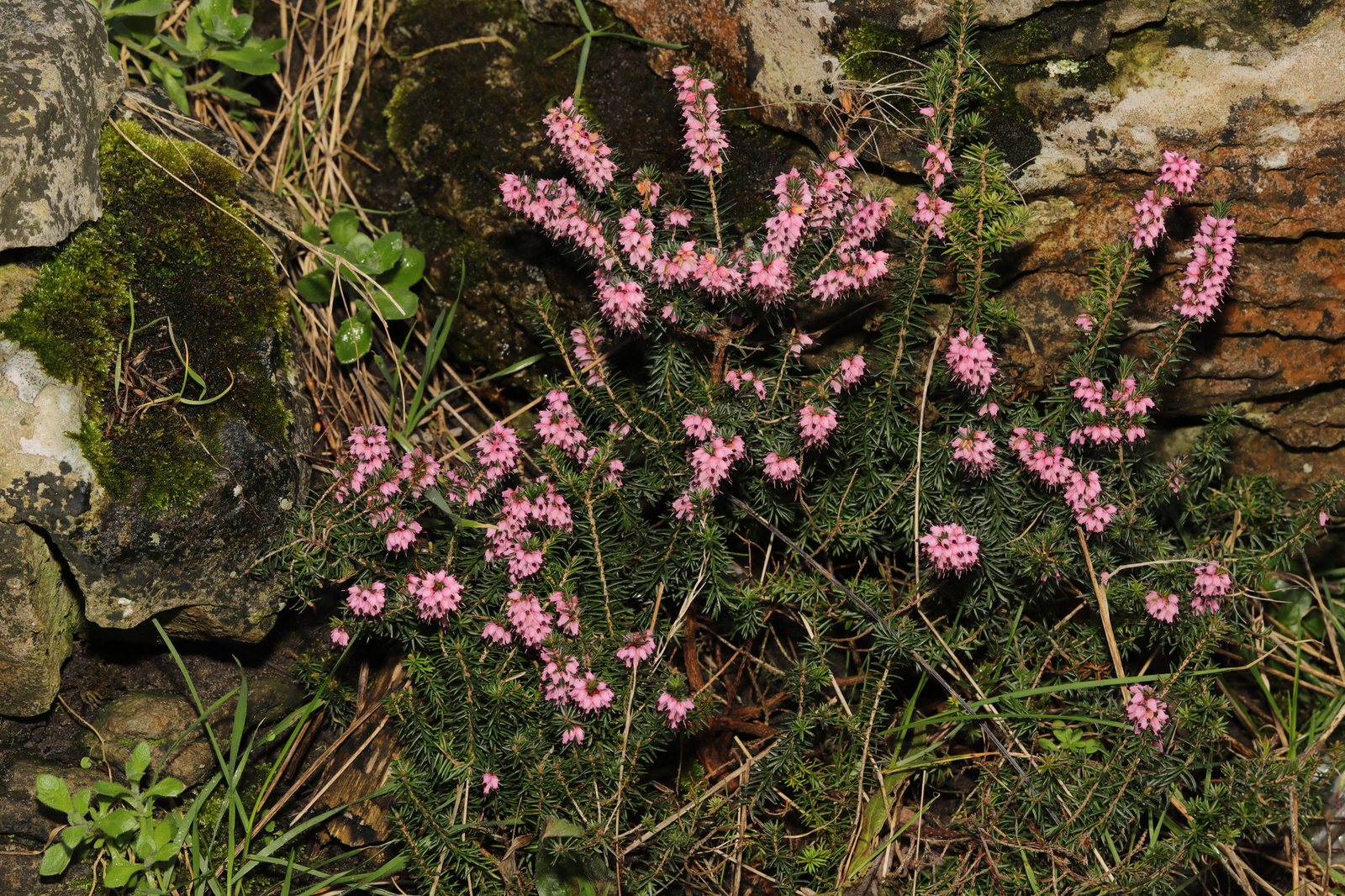
Darley Dale heath is a low, spreading evergreen shrub grown for its small bell-shaped flowers through winter and early spring. A hybrid of winter heath and Irish heath, it provides colour when few other shrubs are flowering and suits borders, banks and containers.
At a glance
- Sun
- Full sun to light partial shade; flowering is best with plenty of sun. Afternoon shade helps in warmer areas.
- Water
- Keep evenly moist while establishing. Established plants tolerate short dry spells, but need watering during prolonged drought; never leave the roots waterlogged.
- Soil
- Well-drained, moisture-retentive soil, preferably acidic to neutral. More tolerant of mildly alkaline soil than many heathers, but poorly suited to strongly alkaline ground or wet clay.
- Height
- 1-2 ft (0.3-0.6 m)
- Spread
- 2-3 ft (0.6-0.9 m)
- Flowers
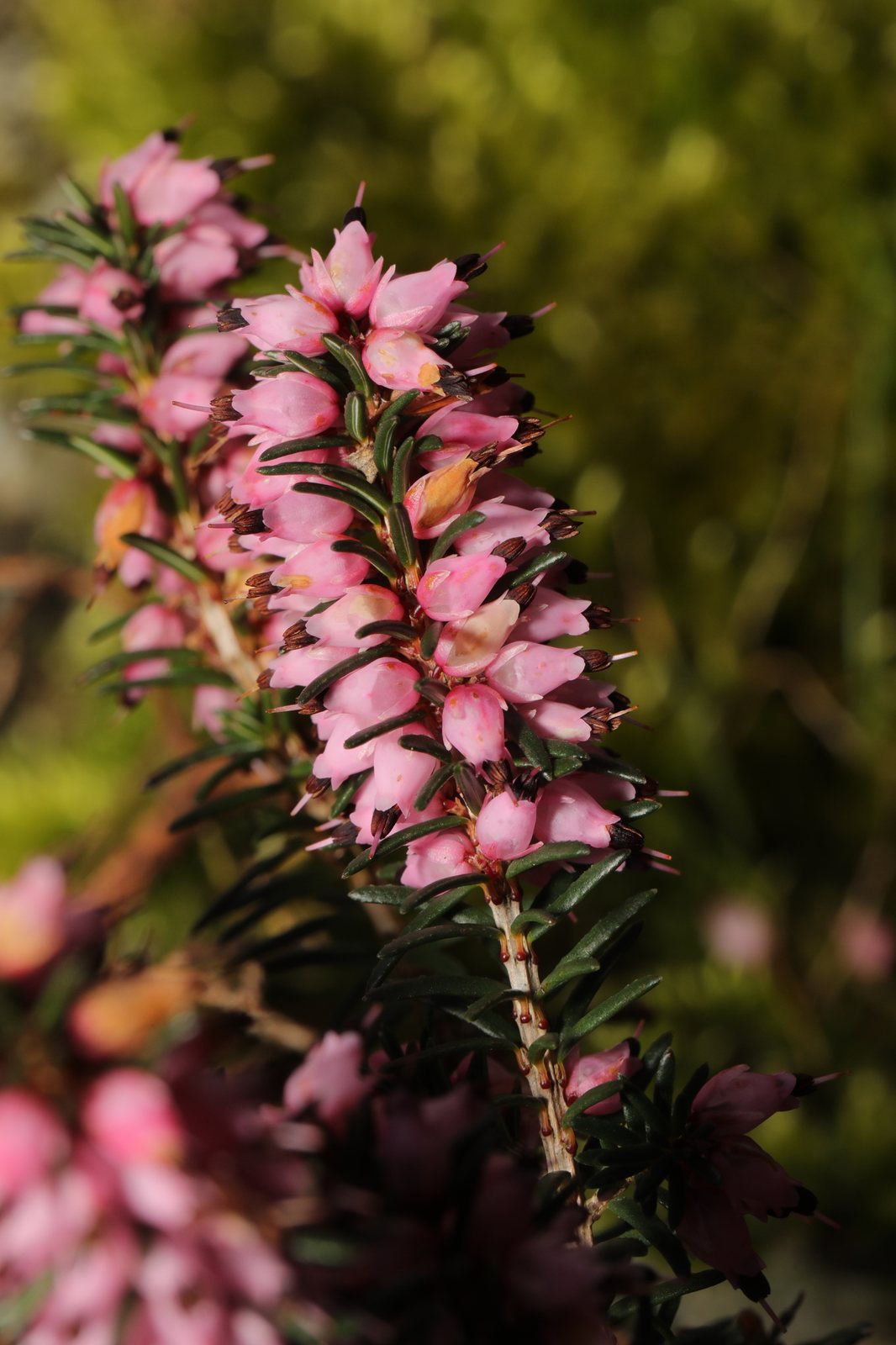
- Small white, pink or mauve-pink bells, depending on cultivar, mainly from winter into spring; some cultivars begin in autumn.
- Foliage
- Small, needle-like evergreen leaves in whorls; usually dark green, with gold-leaved and bronze-tinted cultivars available.
- Growth
- Moderate
- Care needed
- Low
The year at a glance
- Pollinators
- Deer resistant
- Low allergen
| J | F | M | A | M | J | J | A | S | O | N | D | |
|---|---|---|---|---|---|---|---|---|---|---|---|---|
| Flowers | ||||||||||||
| Plant |
Northern hemisphere months. In Australia, shift them by six.
- Difficulty
- Easy
- Toughness
- Fairly tough
Will it suit your garden?
Pick your zone, country, light and whether you have pets.
Full sun is 6 or more hours of direct sun a day, part shade 3 to 6 hours, shade under 3.
How it grows
Planting day
1.5 ft (0.45 m)
full size
About 5 years to full size.
From a typical nursery size, at an average rate for this kind of plant. A rule of thumb, not a forecast.
Good to know
- Cats and dogs
- Safe
- Growth rate
- Moderate
Care
Jobs through the year
- WaterMar–May, Sep–Oct, every 14 days
- Water established shrubs during prolonged dry spells; newly planted shrubs need more frequent watering.
- WaterJun–Aug, every 7 days
- Water during prolonged drought, allowing drainage rather than leaving roots saturated.
- WaterJan–Feb, Nov–Dec, every 21 days
- Water only if soil is dry and unfrozen, especially after persistent drying winds.
- MulchApr–May
- Apply a thin composted-bark mulch, keeping it away from stems.
- FeedApr–May
- Feed lightly only if growth is weak; use ericaceous fertiliser on acidic soil.
- PruneApr–May
- Trim just after flowering, removing spent spikes without cutting into bare old wood.
- Water deeply during dry weather in the first growing season, keeping the root zone moist rather than saturated.
- Apply a thin mulch of composted bark in spring, keeping it clear of the stems.
- Feed lightly in spring only if growth is weak; use an ericaceous fertiliser where soil is acidic.
- Use pots with drainage holes and a free-draining, ericaceous potting mix.
- Protect container roots from prolonged freezing in colder climates.
Pruning. Trim lightly as soon as flowering finishes, removing spent flower spikes and a little leafy growth to keep the plant compact. Do not cut back into bare old wood, which may not regrow.
Through the year
- Winter
- Enjoy the flowers and check that pots and planting sites are draining freely.
- Spring
- After flowering, lightly trim spent blooms without cutting into leafless wood.
- Spring
- Plant new shrubs, water them thoroughly and apply a thin bark mulch.
- Summer
- Water during prolonged dry spells, especially newly planted shrubs and containers.
- Late summer
- Take semi-ripe cuttings from healthy, non-flowering shoots.
- Autumn
- Plant in mild climates while the soil is still warm; check container drainage before winter.
In the garden
- Plant in broad groups along a sunny border edge for a low evergreen carpet with winter flowers.
- Combine with dwarf conifers and small evergreen shrubs for contrasting textures in winter.
- Underplant an open, sunny shrub border with winter-flowering bulbs for colour close to ground level.
- Use on well-drained banks to cover soil and reduce bare patches.
- Grow in containers near an entrance where the winter flowers can be seen easily.
Garden styles it suits: Cottage garden, Winter interest, Low-maintenance, Pollinator garden, Alpine rock garden and Pacific Northwest woodland.
Plant it with: Dwarf conifers, Snowdrops, Crocuses, Hellebores, Winter-flowering heaths and Japanese pieris.
Wildlife: Flowers provide nectar and pollen for bees active during mild winter days and early spring. The dense evergreen growth also gives small invertebrates shelter.
Problems to watch for
- Root rot in waterlogged soil: improve drainage or replant in a raised bed; remove plants with extensively rotted roots.
- Yellow leaves on strongly alkaline soil: check soil pH and grow in an ericaceous container mix if the ground is unsuitable.
- Brown foliage after drought or winter drying winds: water during dry spells when the ground is unfrozen and choose a more sheltered position.
- Leggy growth with bare centres: trim lightly after flowering each year; replace old, woody plants rather than cutting them back hard.
Safety
Not known to be toxic to people, cats, dogs or horses. No particular part is recognised as poisonous, although it is not a food plant and eating substantial amounts may cause stomach upset.
Easily confused with
Winter heath (Erica carnea)
Usually lower and more mat-forming, with shorter shoots. Its winter-to-spring flowers are very similar, so a nursery label is often the most reliable way to distinguish it.
Irish heath (Erica erigena)
Generally taller and more upright, with longer leaves and flowers concentrated in late winter and spring. Darley Dale heath usually has a lower, broader habit.
Heather (Calluna vulgaris)
Has tiny, overlapping scale-like leaves rather than obvious needle-like leaves in whorls, and usually flowers in summer or autumn.
The name
The hybrid name darleyensis refers to Darley Dale in Derbyshire, England, where it was first recorded in cultivation.
Propagation. Take semi-ripe cuttings in mid- to late summer and root them in a moist, free-draining medium. Low shoots can also be layered. Use vegetative propagation to retain cultivar characteristics.
Checked against open data
- Accepted botanical name
- Erica darleyensis
Sources: GBIF (CC BY 4.0). The care and design notes are LandscapeGPT's own.
See it in your own yard.
Upload a photo of your yard and see it redesigned with plants that suit your climate, each checked against your zone.