Dawn redwood
Metasequoia glyptostroboides. Family Cupressaceae. Tree.
Also called Water fir.
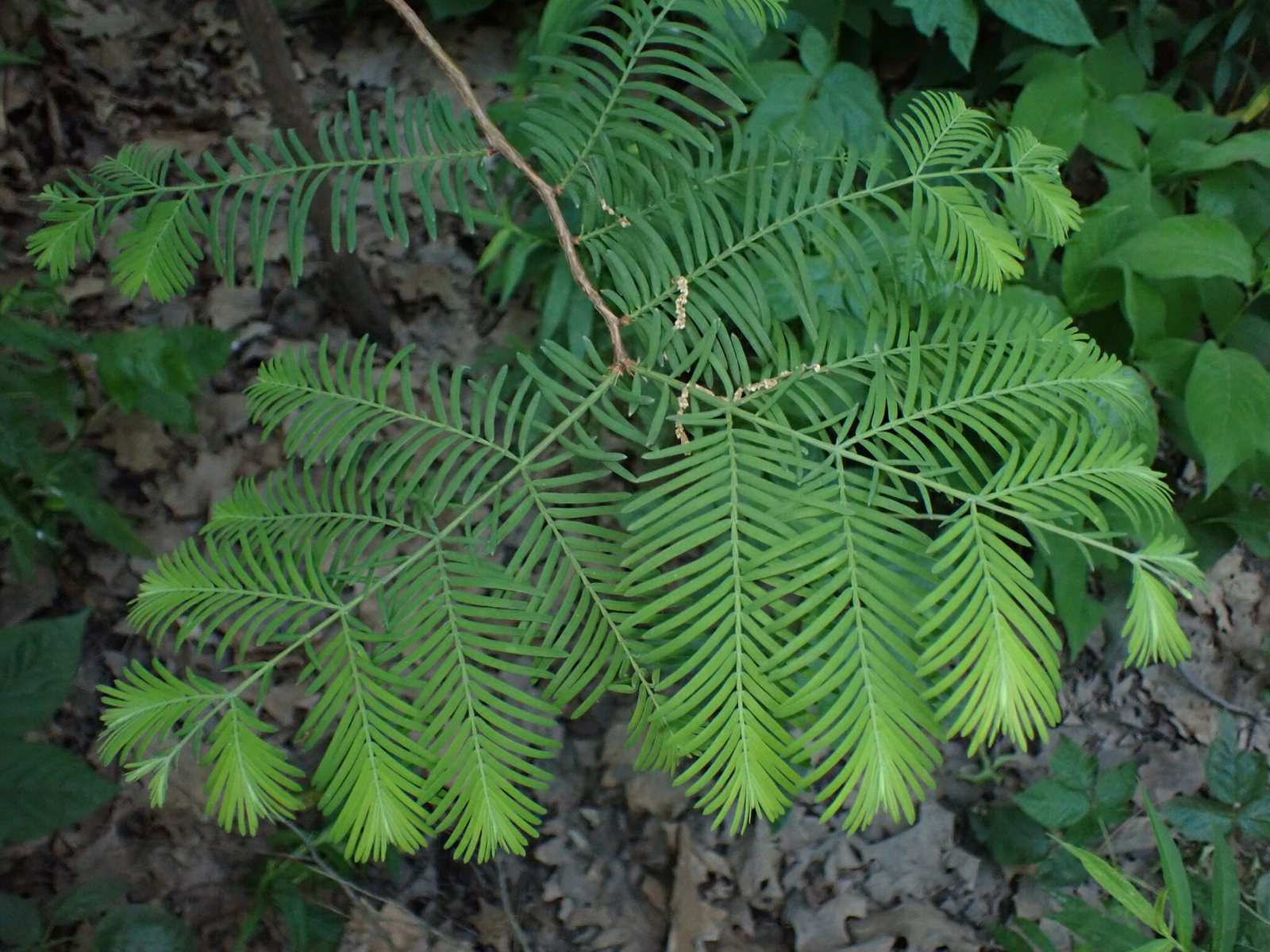
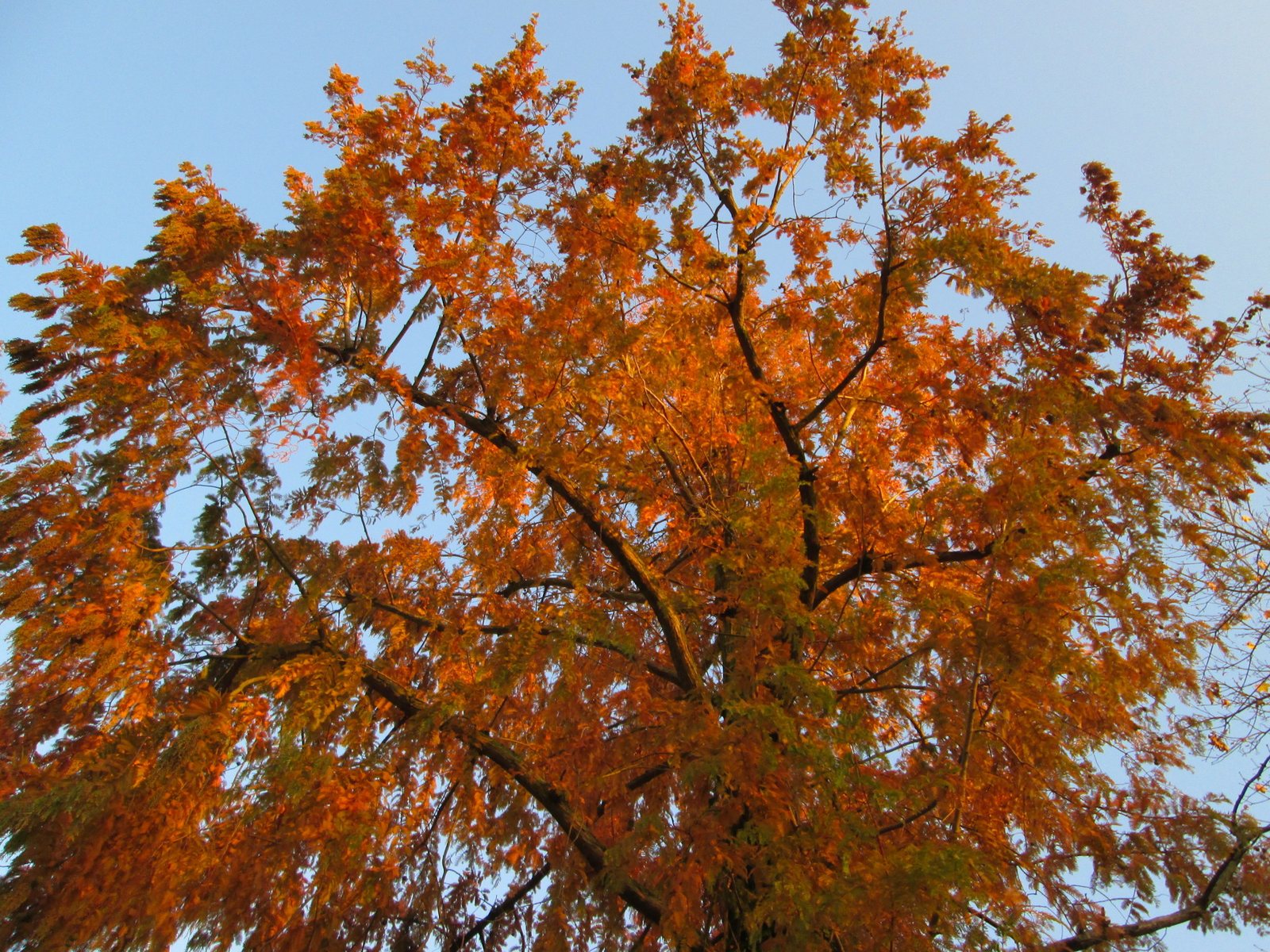
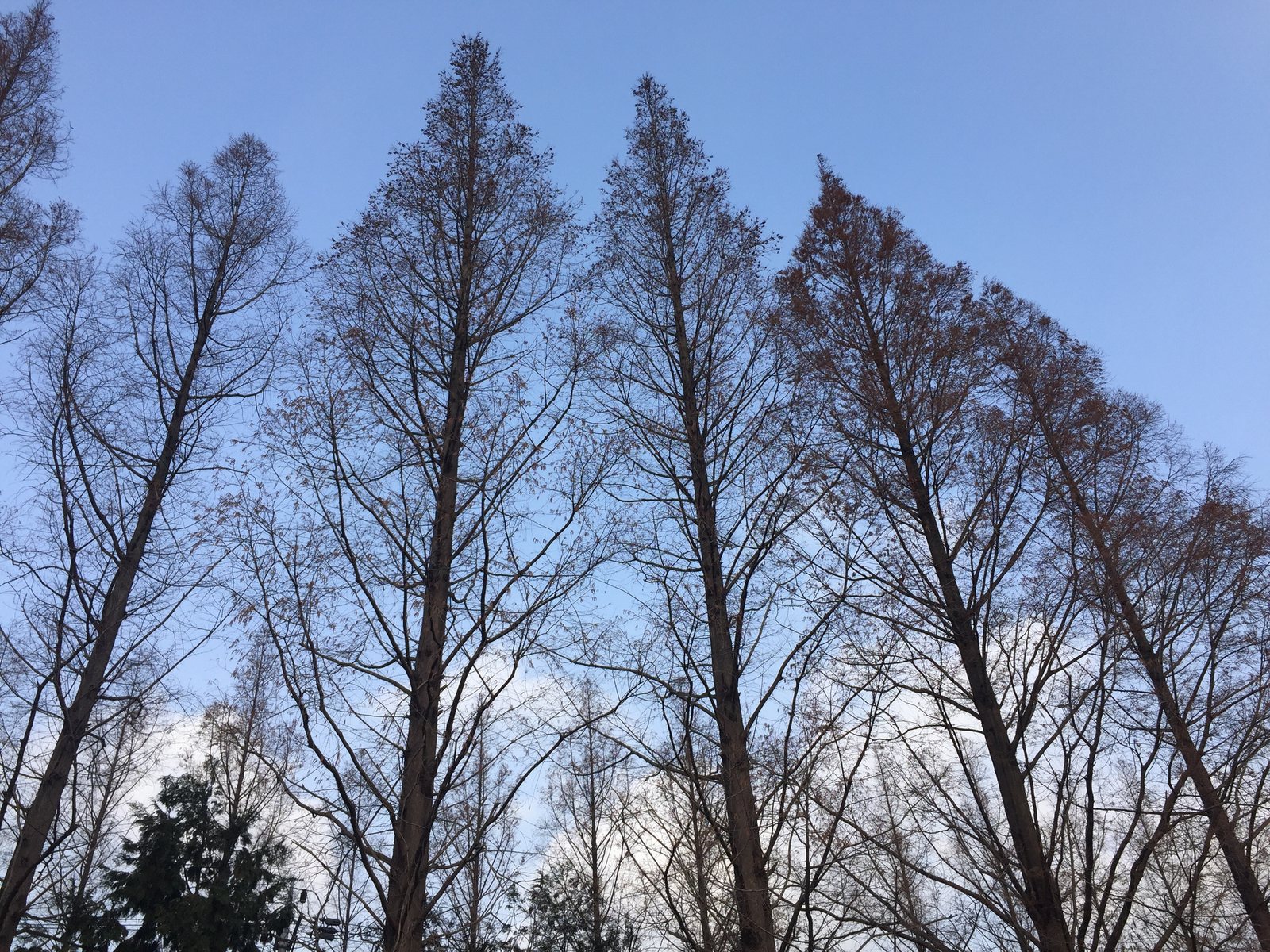
Dawn redwood is a fast-growing, deciduous conifer from China, with a straight trunk, a pyramidal crown and soft foliage that turns coppery brown before falling. Grow it for its graceful outline, autumn colour and reddish, fluted trunk, but allow space for a very large tree.
At a glance
- Sun
- Full sun; tolerates light shade but develops its best shape in an open position.
- Water
- Keep the root zone consistently moist, especially while establishing. Established trees tolerate brief wet periods, but drought and hot, drying winds can scorch the foliage.
- Soil
- Deep, moist, humus-rich soil, preferably slightly acidic to neutral. Tolerates clay and seasonal waterlogging; avoid shallow, dry ground.
- Height
- 70-100 ft (21-30 m), sometimes taller with age
- Spread
- 25-40 ft (7.6-12 m)
- Foliage
- Soft, flat, bright green needles arranged in opposite pairs on slender branchlets. Foliage turns orange-brown to copper in autumn, and the leafy branchlets fall for winter.
- Growth
- Fast; young trees can grow 2-3 ft (0.6-0.9 m) a year in favourable conditions.
- Care needed
- Low
The year at a glance
- Cold hardy
- Wildlife
| J | F | M | A | M | J | J | A | S | O | N | D | |
|---|---|---|---|---|---|---|---|---|---|---|---|---|
| Fruit | ||||||||||||
| Plant |
Northern hemisphere months. In Australia, shift them by six.
- Difficulty
- Easy
- Toughness
- Fairly tough
Will it suit your garden?
Pick your zone, country, light and whether you have pets.
Full sun is 6 or more hours of direct sun a day, part shade 3 to 6 hours, shade under 3.
How it grows
Planting day
10 ft (3.1 m)
After 1 year
16 ft (4.8 m)
After 2 years
21 ft (6.5 m)
After 3 years
27 ft (8.2 m)
After 5 years
38 ft (11.7 m)
About 13 years to full size.
From a typical nursery size, at an average rate for this kind of plant. A rule of thumb, not a forecast.
Good to know
- Cats and dogs
- Safe
- Growth rate
- Fast
Care
Jobs through the year
- WaterApr–May, Sep–Oct, every 14 days
- Deep-water established trees if rain is insufficient; keep young root balls from drying out.
- WaterJun–Aug, every 7 days
- Water deeply during dry weather to maintain moist soil; young trees may need more frequent watering.
- MulchMar–Apr
- Apply 5–8 cm of organic mulch over roots, keeping the trunk flare clear.
- PruneFeb
- Remove damaged or competing shoots, retaining one main leader; never top.
- FeedMar–Apr
- Feed only if poor growth and a soil test indicate a nutrient shortage.
- Water deeply during dry spells for the first two or three growing seasons; do not let the root ball dry out.
- Spread a 2-3 in (5-8 cm) layer of organic mulch over the root zone, keeping it clear of the trunk.
- Choose a site well away from buildings, overhead wires and confined paving, allowing for the mature crown and broad trunk base.
- Feed only if growth is poor and a soil test indicates a nutrient shortage.
- Stake only if the root ball moves in the wind, and remove supports after establishment.
Pruning. Prune in late winter while dormant, removing dead, damaged or crossing branches and retaining one main leader. Avoid topping or routinely shortening branches; remove unwanted low branches gradually while the tree is young.
Through the year
- Autumn
- Plant while the soil is workable and moist in mild climates; water thoroughly and mulch.
- Late winter
- Check the young tree's leader and remove damaged or competing shoots.
- Spring
- Plant in colder climates once the ground is workable; check ties and refresh mulch without covering the trunk flare.
- Summer
- Water deeply during dry weather and check for browning caused by dry soil or drying winds.
- Late autumn
- Clear fallen branchlets from paths and drains; leave them as litter beneath the tree where practical.
In the garden
- Use as a specimen on a large lawn where its symmetrical crown and autumn colour can be seen clearly.
- Plant beside a large pond or on moist ground, leaving room for the spreading root system and trunk base.
- Group several trees in park-like grounds to create a tall, airy grove.
- Combine with moisture-loving ferns, sedges and hostas beneath the developing canopy.
Garden styles it suits: Architectural minimal, Grand estate, Woodland, Autumn colour, Chinese scholar garden and Pacific Northwest woodland.
Plant it with: Royal fern, Ostrich fern, Hosta, Japanese forest grass, Japanese iris and Red-twig dogwood.
Wildlife: Provides shelter and potential nesting sites as it matures. It is wind-pollinated rather than a significant nectar source, and its wildlife value outside its native range is less well documented than that of locally native trees.
Problems to watch for
- Drought scorch: needles brown or drop early when roots dry out; water deeply and maintain mulch.
- Spider mites: hot, dry conditions can cause fine stippling and bronzing; rinse accessible foliage and avoid unnecessary insecticides that kill predatory mites.
- Cankers and branch dieback: remove affected branches in dry weather, clean pruning tools between cuts and correct drought stress; seek an arborist's advice if the trunk is affected.
Safety
Not known to be toxic to people, cats, dogs or horses. No part is recognised as a serious poisoning hazard, although species-specific information for horses is limited and the foliage and cones are not food.
Easily confused with
Bald cypress (Taxodium distichum)
Both lose their needles in autumn, but bald cypress has alternate leaves and branchlets; dawn redwood has opposite pairs. Bald cypress may also form woody knees in wet ground.
Coast redwood (Sequoia sempervirens)
Coast redwood is evergreen, with firmer needles arranged alternately along the shoots. Dawn redwood has soft, opposite needles that turn coppery brown and fall in autumn.
The name
The species name glyptostroboides means resembling Glyptostrobus, the related Chinese swamp cypress.
Propagation. Grow from seed sown in a sheltered outdoor seedbed or cold frame; cold, moist stratification can improve germination. Softwood cuttings taken in early summer can also root. Propagate named cultivars vegetatively to preserve their characteristics.
Checked against open data
- Accepted botanical name
- Metasequoia glyptostroboides
- In the US and Canada
- Introduced in the lower 48 states.
- Native range
- China South-Central and China Southeast.
- Measured
- Soil pH 6.2 to 8.4. Average height 1640 cm.
Sources: GBIF (CC BY 4.0), USDA PLANTS and Trefle (CC BY 4.0). The care and design notes are LandscapeGPT's own.
See it in your own yard.
Upload a photo of your yard and see it redesigned with plants that suit your climate, each checked against your zone.