D.D. Blanchard magnolia
Magnolia grandiflora 'D.D. Blanchard'. Family Magnoliaceae. Tree.
Also called D.D. Blanchard southern magnolia, D.D. Blanchard evergreen magnolia.
This large evergreen magnolia has a broadly pyramidal crown, glossy dark green leaves and conspicuous rusty-brown leaf undersides. Gardeners grow it for its year-round structure and large, fragrant white flowers; give it room, as it is not a compact magnolia.
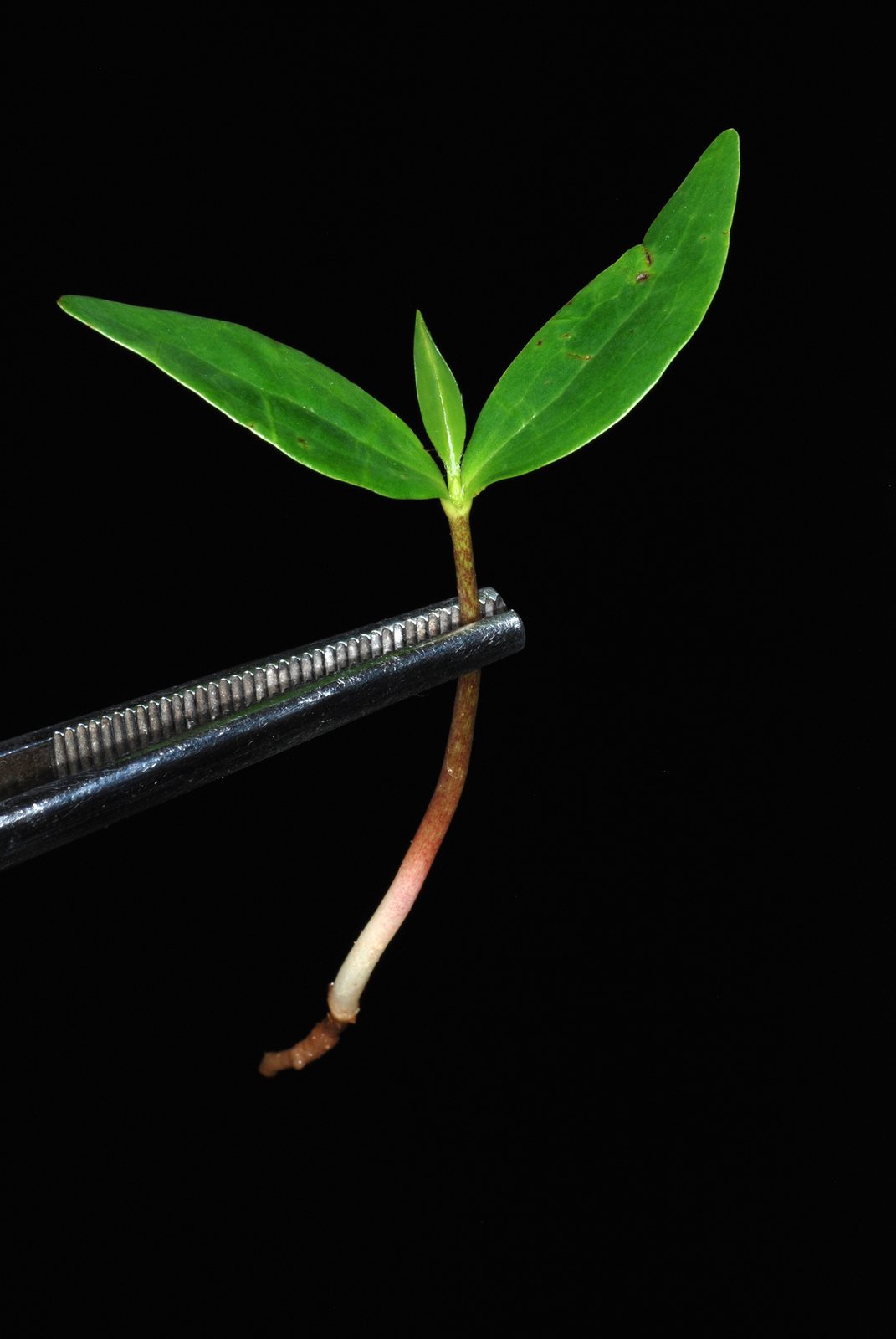
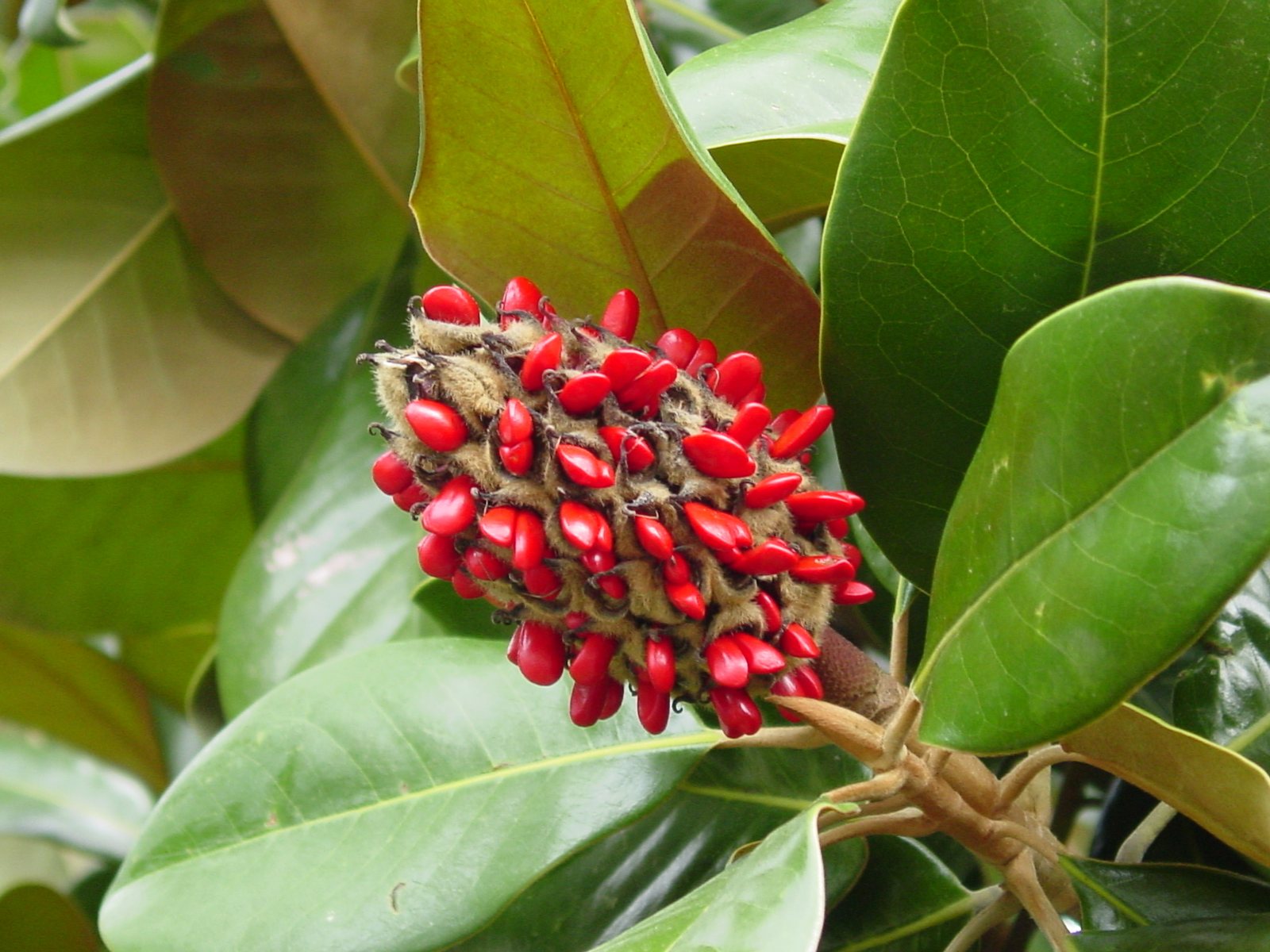
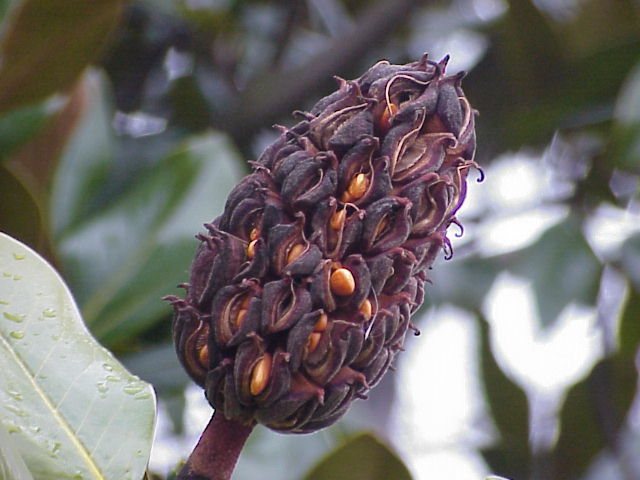
At a glance
- Sun
- Full sun to partial shade; flowering and crown density are best in good light. Shelter from cold, drying winds.
- Water
- Water deeply during establishment and during prolonged dry spells. Established trees tolerate some drought, but grow better with consistent moisture.
- Soil
- Deep, moist but well-drained, acidic to neutral soil. Avoid waterlogged ground and very chalky soil.
- Height
- 40-60 ft (12-18 m)
- Spread
- 25-35 ft (7.6-10.7 m)
- Flowers
- Large, fragrant, creamy-white flowers from late spring through summer, with occasional later blooms in warm climates.
- Foliage
- Evergreen. Large, leathery, glossy dark green leaves with dense rusty-brown felt underneath. Older leaves shed throughout the year, particularly in spring.
- Growth
- Moderate; faster in warm climates with adequate moisture.
- Care needed
- Medium
The year at a glance
- Pollinators
- Heat tolerant
- Wildlife
- Low allergen
- Fragrant
| J | F | M | A | M | J | J | A | S | O | N | D | |
|---|---|---|---|---|---|---|---|---|---|---|---|---|
| Flowers | ||||||||||||
| Fruit | ||||||||||||
| Plant |
Northern hemisphere months. In Australia, shift them by six.
- Difficulty
- Moderate
- Toughness
- Fairly tough
Will it suit your garden?
Pick your zone, country, light and whether you have pets.
Full sun is 6 or more hours of direct sun a day, part shade 3 to 6 hours, shade under 3.
How it grows
Planting day
7 ft (2 m)
After 1 year
9 ft (2.8 m)
After 2 years
12 ft (3.6 m)
After 3 years
15 ft (4.4 m)
After 5 years
20 ft (6.1 m)
About 16 years to full size.
From a typical nursery size, at an average rate for this kind of plant. A rule of thumb, not a forecast.
Good to know
- Cats and dogs
- Safe
- Native to
- the US
- Growth rate
- Fast
Care
Jobs through the year
- WaterApr–May, Sep–Oct, every 14 days
- Deep-water established trees when soil is drying; young trees need closer moisture checks for two years.
- WaterJun–Aug, every 7 days
- During dry weather, soak the established root zone; skip watering if rainfall maintains moisture.
- MulchApr
- Maintain 5–8 cm of organic mulch, clear of the trunk; avoid digging around shallow roots.
- FeedApr
- Feed only for weak growth or a confirmed deficiency; avoid heavy nitrogen applications.
- PruneAug–Sep
- After the main flowering flush, remove damaged or crossing branches lightly; avoid large cuts.
- ProtectJan–Mar, Nov–Dec
- Shelter young trees from severe cold and drying winds; zone 6 sites are marginal for this cultivar.
- Plant with the root flare at soil level, allowing enough space for the mature crown and spreading roots.
- Water deeply through the first two growing seasons whenever the root zone begins to dry.
- Apply 2-3 in (5-8 cm) of organic mulch over the root zone, keeping it clear of the trunk.
- Keep grass and digging away from the shallow roots; fallen leaves can remain as mulch in a broad planting bed.
- Feed in spring only if growth is weak or a soil test indicates a deficiency; avoid heavy nitrogen feeding.
- Stake only if the root ball moves in wind, and remove supports once the tree is firmly rooted.
Pruning. Prune lightly after the main flowering flush, removing dead, damaged or crossing branches. Train a young tree gradually if clearance is needed; avoid topping or cutting large limbs on mature trees.
Through the year
- Spring
- Plant in colder areas once the soil is workable, keeping the root flare exposed.
- Spring
- Refresh mulch and check for yellowing leaves or poor growth before deciding whether to feed.
- Late spring
- Check new shoots and leaf undersides for scale insects, especially if foliage becomes sticky.
- Summer
- Water young trees deeply during dry weather and prune lightly after the main flowering flush if needed.
- Autumn
- Plant in mild climates while the soil is warm, and water thoroughly after planting.
- Winter
- Check young trees after storms and protect exposed young plants from severe cold winds.
In the garden
- Use as a specimen in a large lawn or broad mulched bed where its low branches can remain.
- Plant as a tall evergreen screen where there is room for its full width.
- Use the dense, dark crown as a backdrop to pale flowers and lighter foliage.
- Place in a large entrance garden or courtyard with open soil and generous clearance from buildings and paving.
Garden styles it suits: Southern, Traditional, Grand estate, Architectural minimal, White garden and Winter interest.
Plant it with: Camellias, Azaleas, Oakleaf hydrangeas, Cast-iron plants, Liriope and Christmas ferns.
Wildlife: Flowers attract beetles and other pollen-feeding insects. Birds and small mammals eat the red-coated seeds, and the dense evergreen crown provides shelter and nesting cover.
Problems to watch for
- Scale insects can cause sticky honeydew and black sooty mould. Inspect twigs and leaf undersides; treat a confirmed infestation with horticultural oil at the appropriate stage, following the label.
- Yellow leaves with green veins can indicate iron deficiency in alkaline soil. Test the soil, correct drainage problems and use an appropriate chelated iron treatment if needed.
- Poor drainage can cause root rot, wilting and dieback. Avoid waterlogged sites and keep mulch away from the trunk; seek professional assessment if decline continues.
- Cold, drying winds can scorch leaves or damage young shoots. Choose a sheltered position, maintain moisture before the soil freezes and remove dead growth once new growth reveals the damage.
Safety
Not known to be toxic to cats, dogs, horses or people. No part is generally recognized as poisonous, but leaves, bark and seeds are not intended as food; eating plant material can cause digestive upset.
Easily confused with
Southern magnolia (Magnolia grandiflora)
Seed-grown trees vary considerably in shape and leaf backing. 'D.D. Blanchard' is selected for a dense, upright crown and strongly rusty-brown leaf undersides, but a nursery label is needed for reliable cultivar identif…
Little Gem magnolia (Magnolia grandiflora 'Little Gem')
Little Gem is much smaller and narrower, with smaller leaves and flowers; it is better suited to restricted spaces.
Sweetbay magnolia (Magnolia virginiana)
Sweetbay has smaller leaves with silvery rather than rusty-brown undersides, smaller flowers and often a looser, multi-stemmed habit. It may lose its leaves in colder climates.
The name
Magnolia honours the French botanist Pierre Magnol, and grandiflora means large-flowered.
Propagation. Named plants must be propagated vegetatively to retain the cultivar's characteristics. Nurseries use leafy cuttings or grafting; rooting can be difficult at home. Seedlings will not reliably resemble 'D.D. Blanchard'.
Checked against open data
- Accepted botanical name
- Magnolia grandiflora
- In the US and Canada
- Native in the lower 48 states. Introduced in Puerto Rico.
- Native range
- Alabama, Florida, Georgia, Louisiana, Mississippi, North Carolina, South Carolina and Texas.
- Measured
- Soil pH 4.5 to 6.5. Average height 2450 cm.
Sources: GBIF (CC BY 4.0), USDA PLANTS and Trefle (CC BY 4.0). The care and design notes are LandscapeGPT's own.
See it in your own yard.
Upload a photo of your yard and see it redesigned with plants that suit your climate, each checked against your zone.