Deer fern
Blechnum spicant. Family Blechnaceae. Fern.
Also called Hard fern, Struthiopteris spicant.
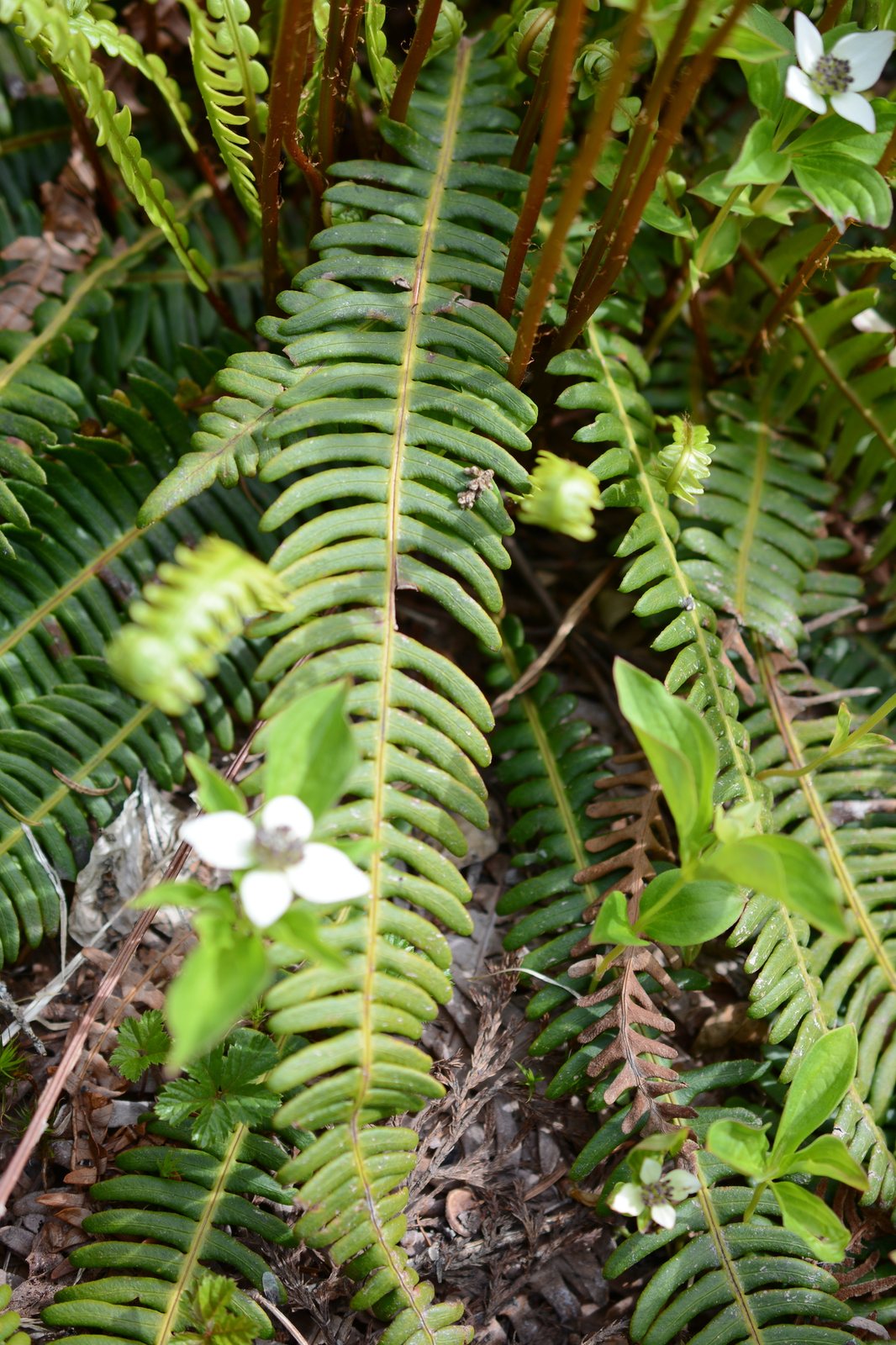
Deer fern is a compact, evergreen woodland fern grown for its neat rosettes of dark green fronds. Broad, arching sterile fronds surround narrower, upright fertile fronds, giving it two distinct textures. It suits cool, shaded gardens with moist, acidic soil but struggles in hot, dry conditions.
At a glance
- Sun
- Partial to full shade; protect from strong afternoon sun and drying winds.
- Water
- Keep consistently moist, especially during establishment and dry weather, without leaving the roots waterlogged.
- Soil
- Humus-rich, acidic to neutral soil that holds moisture but drains freely; avoid chalky or strongly alkaline soil.
- Height
- 1-2 ft (0.3-0.6 m)
- Spread
- 1-2 ft (0.3-0.6 m)
- Foliage
- Evergreen. Glossy, dark green, leathery sterile fronds form low, spreading rosettes. Narrower fertile fronds stand upright in the centre and usually die back over winter.
- Growth
- Slow to moderate
- Care needed
- Low
The year at a glance
- Deer resistant
- Wildlife
- Low allergen
| J | F | M | A | M | J | J | A | S | O | N | D | |
|---|---|---|---|---|---|---|---|---|---|---|---|---|
| Plant |
Northern hemisphere months. In Australia, shift them by six.
- Difficulty
- Easy
- Toughness
- Fairly tough
Will it suit your garden?
Pick your zone, country, light and whether you have pets.
Full sun is 6 or more hours of direct sun a day, part shade 3 to 6 hours, shade under 3.
How it grows
Planting day
1 ft (0.3 m)
After 1 year
1.1 ft (0.34 m)
After 2 years
1.2 ft (0.38 m)
After 3 years
1.4 ft (0.42 m)
After 5 years
1.5 ft (0.45 m)
full size
About 4 years to full size.
From a typical nursery size, at an average rate for this kind of plant. A rule of thumb, not a forecast.
Good to know
- Cats and dogs
- Safe
- Native to
- the US, Canada and the UK
- Growth rate
- Slow
Care
Jobs through the year
- WaterApr–May, Sep–Oct, every 14 days
- Water established clumps if soil is drying; young plants need more frequent checks.
- WaterJun–Aug, every 7 days
- Water established clumps deeply during dry spells, keeping soil moist but not waterlogged.
- MulchMar–Apr
- Apply leaf mould or composted bark around the roots, leaving the crown exposed.
- PruneFeb–Mar
- Cut only dead or badly damaged fronds at their bases before new fronds expand.
- Plant with the crown at soil level in a sheltered, shaded position.
- Water deeply during dry spells; do not let newly planted roots dry out.
- Apply leaf mould or composted bark each spring, keeping it clear of the crown.
- Avoid heavy feeding; an annual layer of leaf mould is usually sufficient.
- Leave established clumps undisturbed unless division is needed.
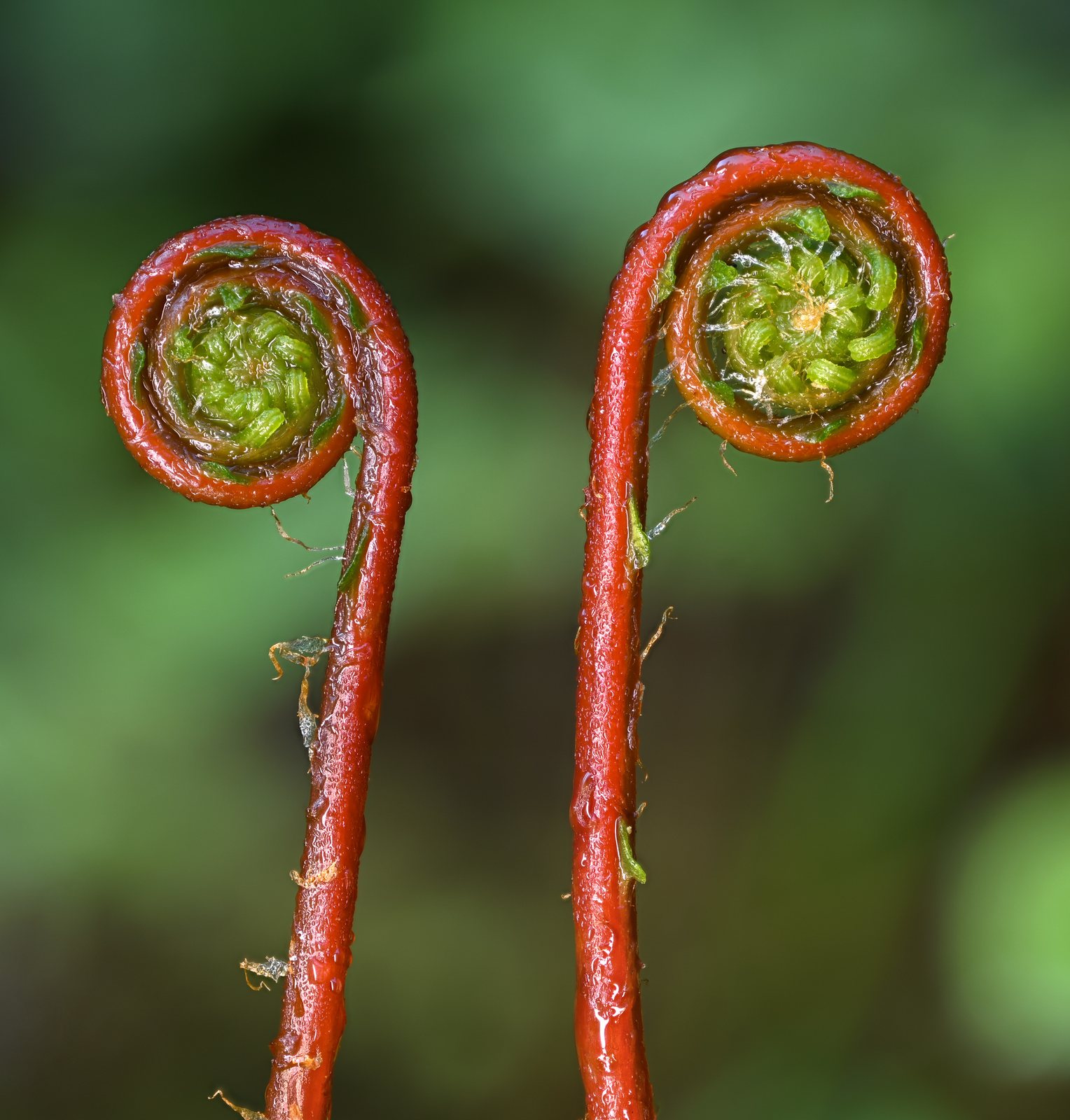
Pruning. In late winter or early spring, cut dead or badly damaged fronds at their bases before new growth expands. Keep healthy evergreen fronds and take care not to damage the tightly curled new fronds.
Through the year
- Early spring
- Remove dead and winter-damaged fronds before the new fronds unfurl.
- Spring
- Plant new ferns and apply a thin mulch of leaf mould, leaving the crown exposed.
- Late spring
- Check new growth for slug and snail damage, particularly on recently planted ferns.
- Summer
- Water during dry spells and check that nearby tree roots are not leaving the soil dry.
- Autumn
- Plant in mild regions while the soil is moist; remove heavy piles of leaves that bury the crown.
- Winter
- Leave healthy evergreen fronds in place and check that water drains away from the crown.
In the garden
- Plant in small groups beneath deciduous trees where the soil stays moist, creating a low evergreen woodland layer.
- Edge shaded paths with its tidy rosettes, allowing room for the arching fronds.
- Combine with hostas and woodland flowers for contrasts in leaf shape and seasonal growth.
- Use beside shaded rocks or a pond margin above the waterline, where drainage remains good.
Garden styles it suits: Woodland, Pacific Northwest woodland, Moss and fern garden, Japanese, Green on green and Winter interest.
Plant it with: Hosta, Barrenwort, Foamflower, Japanese painted fern, Rhododendron and Wood sorrel.
Wildlife: Dense fronds and accumulated leaf litter provide shelter for small invertebrates. As a fern, it has no flowers, nectar or pollen for pollinators.
Problems to watch for
- Brown, crisp frond edges usually indicate dry soil, hot sun or drying wind; water thoroughly, mulch and provide deeper shade.
- Yellowing and weak growth on alkaline soil may indicate unsuitable soil chemistry; move to an acidic, humus-rich bed rather than repeatedly feeding.
- Crown or root rot can develop in stagnant, waterlogged soil; improve drainage and keep mulch away from the crown.
- Slugs and snails may damage emerging fronds; inspect in damp weather, remove pests by hand and use wildlife-conscious controls if needed.
Safety
Not known to be toxic to people, cats, dogs or horses, but species-specific safety information is limited. Do not treat the fronds, fiddleheads or rhizomes as edible, and discourage pets or children from chewing them.
Easily confused with
Western sword fern (Polystichum munitum)
Usually much larger, with toothed leaflets that have a small thumb-like lobe at the base. It does not produce deer fern's sharply contrasting narrow, upright fertile fronds.
Alpine water fern (Austroblechnum penna-marina)
Also has separate fertile and sterile fronds, but is generally smaller and spreads by creeping rhizomes to make a carpet rather than a distinct upright clump.
Lady fern (Athyrium filix-femina)
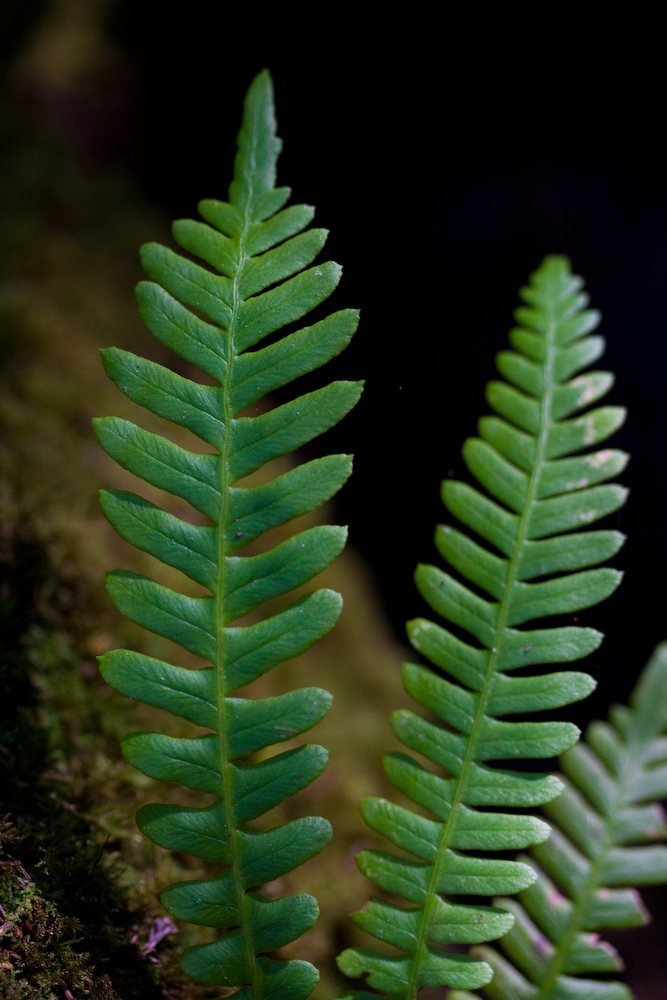
Has soft, finely divided, lacy fronds and loses its foliage in winter; deer fern has leathery fronds with simple, narrow segments.
The name
The species name spicant means spike-bearing, referring to the narrow, upright fertile fronds.
Propagation. Raise from spores on a moist, clean propagation medium under humid, shaded conditions; growth is slow. Large clumps with several crowns can sometimes be divided in early spring, keeping roots attached to each division.
Checked against open data
- Accepted botanical name
- Blechnum spicant
- In the US and Canada
- Native in Alaska, Canada and the lower 48 states.
- Native range
- Alaska, Albania, Algeria, Austria, Azores, Baltic States, Belgium, British Columbia, Bulgaria, California, Canary Is. and Corse.
- Measured
- Average height 71 cm.
Sources: GBIF (CC BY 4.0), USDA PLANTS and Trefle (CC BY 4.0). The care and design notes are LandscapeGPT's own.
See it in your own yard.
Upload a photo of your yard and see it redesigned with plants that suit your climate, each checked against your zone.