Delavay osmanthus
Osmanthus delavayi. Family Oleaceae. Shrub.
Also called Delavay's sweet olive.
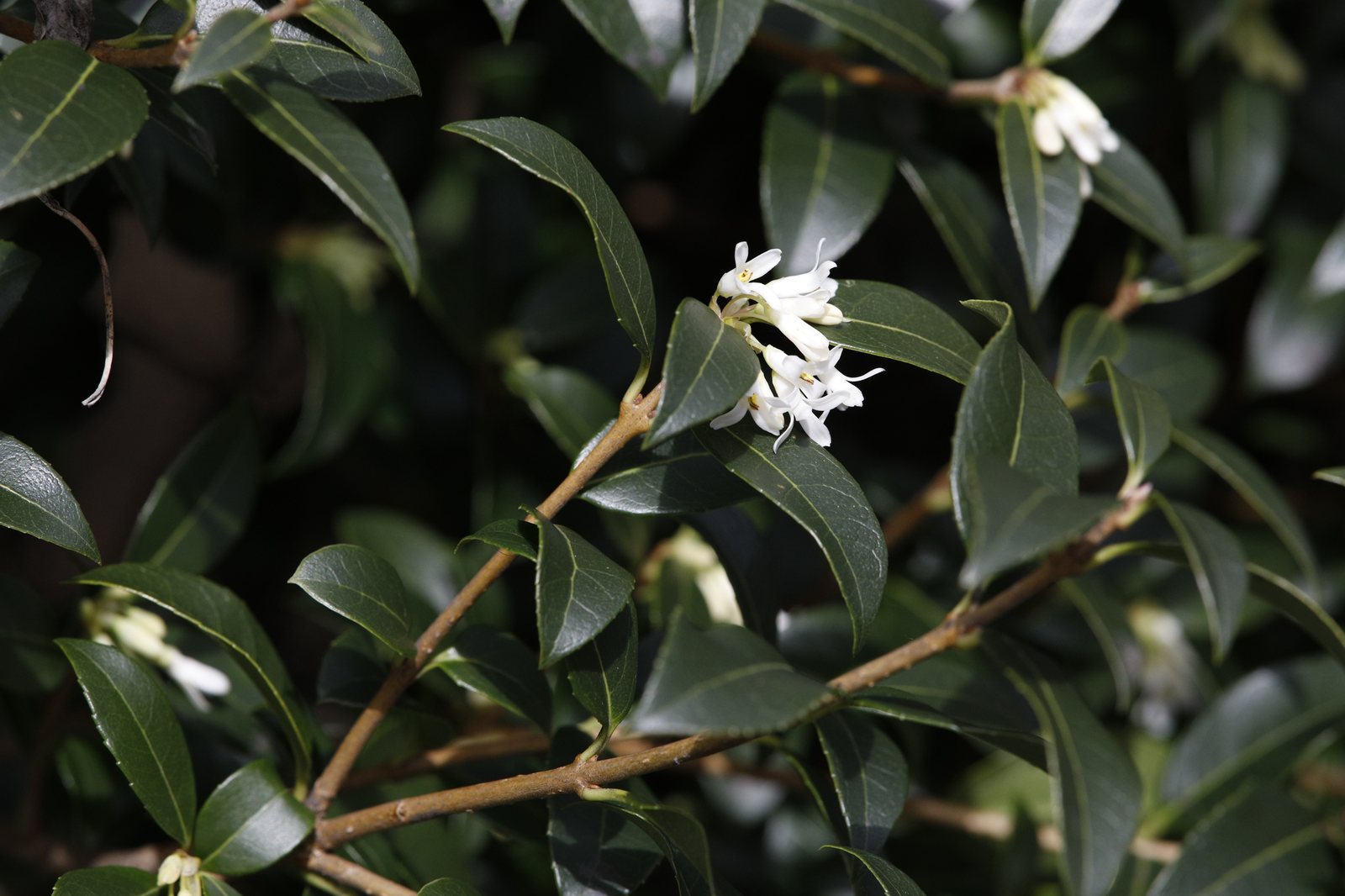
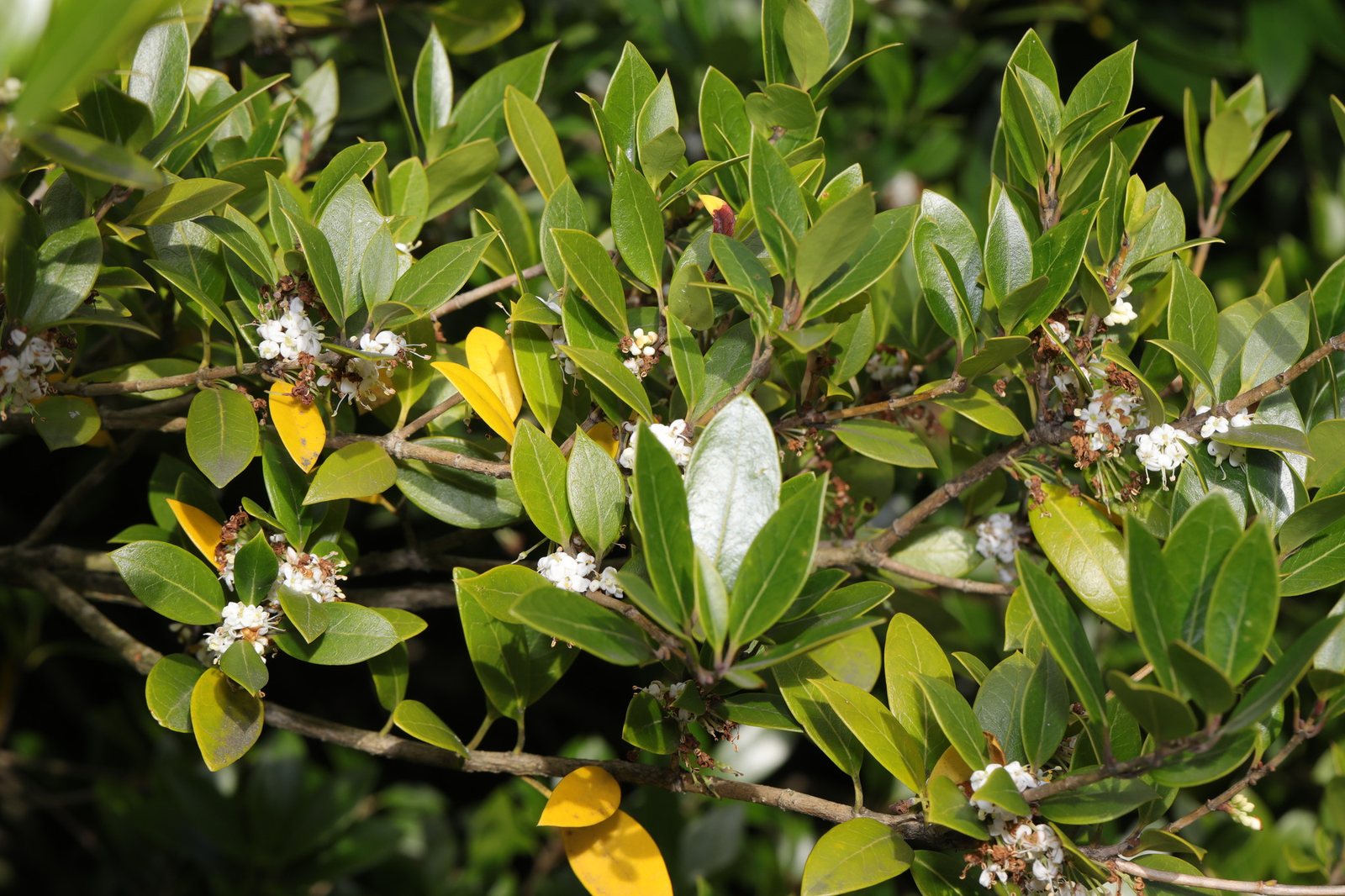
Delavay osmanthus is a dense evergreen shrub with small, dark green leaves and clusters of fragrant white flowers in spring. Grow it near a path or doorway for its scent, or use it as an informal hedge that provides year-round screening.
At a glance
- Sun
- Full sun to partial shade; afternoon shade is helpful in hot climates. Shelter from cold, drying winds.
- Water
- Water regularly while establishing. Once established, it tolerates short dry spells, but benefits from deep watering during prolonged drought.
- Soil
- Fertile, well-drained soil that retains some moisture; tolerates acidic, neutral and mildly alkaline conditions.
- Height
- 6-13 ft (1.8-4 m)
- Spread
- 6-13 ft (1.8-4 m)
- Flowers
- Spring; clusters of small, fragrant white tubular flowers.
- Foliage
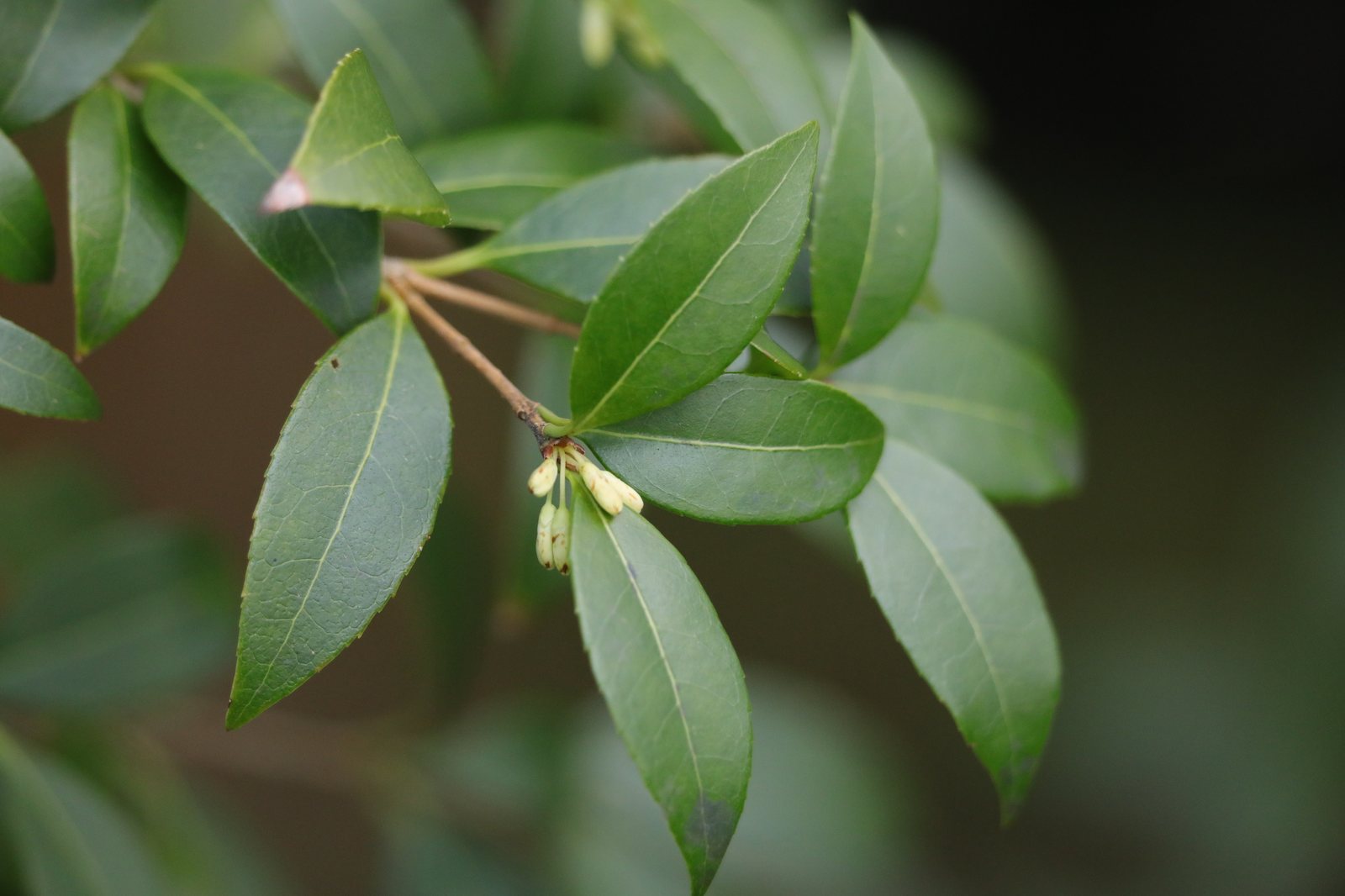
- Evergreen. Small, opposite, leathery dark green leaves with finely toothed edges.
- Growth
- Slow to moderate; allow room for its broad, arching mature shape.
- Care needed
- Low
The year at a glance
- Pollinators
- Deer resistant
- Drought tolerant
- Heat tolerant
- Wildlife
- Low allergen
- Fragrant
| J | F | M | A | M | J | J | A | S | O | N | D | |
|---|---|---|---|---|---|---|---|---|---|---|---|---|
| Flowers | ||||||||||||
| Fruit | ||||||||||||
| Plant |
Northern hemisphere months. In Australia, shift them by six.
- Difficulty
- Moderate
- Toughness
- Fairly tough
Will it suit your garden?
Pick your zone, country, light and whether you have pets.
Full sun is 6 or more hours of direct sun a day, part shade 3 to 6 hours, shade under 3.
How it grows
Planting day
1.6 ft (0.5 m)
After 1 year
2.9 ft (0.87 m)
After 2 years
4 ft (1.2 m)
After 3 years
5 ft (1.6 m)
After 5 years
8 ft (2.3 m)
About 7 years to full size.
From a typical nursery size, at an average rate for this kind of plant. A rule of thumb, not a forecast.
Good to know
- Cats and dogs
- Safe
- Growth rate
- Slow
Care
Jobs through the year
- WaterMar–May, Sep–Oct, every 21 days
- Water established shrubs during prolonged dry spells; young plants need more frequent watering.
- WaterJun–Aug, every 14 days
- Water established shrubs deeply in prolonged drought, especially while flower buds develop.
- MulchMar–Apr
- Apply 5–8 cm of compost or organic mulch, keeping it clear of stems.
- FeedMar–Apr
- Use balanced shrub feed only if growth is weak or the soil is poor.
- PruneMay
- Lightly shape immediately after flowering and remove dead or damaged wood.
- ProtectJan–Mar, Nov–Dec
- Shelter from cold, drying winds; in zone 6, use a container overwintered cool and frost-free.
- Water deeply during dry weather through the first two growing seasons.
- Apply 2-3 in (5-8 cm) of organic mulch in spring, keeping it clear of the stems.
- Add compost in spring; use a balanced shrub feed only if growth is weak or the soil is poor.
- Water established plants during prolonged drought, especially while flower buds are developing.
- Protect young plants from cold, drying winds and avoid frost pockets.
Pruning. Prune just after flowering, shortening wayward shoots and removing dead or damaged branches. For a hedge, trim lightly at the same time; repeated summer clipping reduces the following spring's flowers.
Through the year
- Spring
- Plant when the soil is workable, water thoroughly and mulch.
- Late spring
- After flowering, lightly shape the shrub or trim the hedge.
- Summer
- Check soil moisture during dry spells and water deeply when needed.
- Late summer
- Take semi-ripe cuttings from healthy, non-flowering shoots.
- Autumn
- Plant in mild regions while the soil is still warm; avoid late planting in colder districts.
- Winter
- Check young plants for wind loosening and protect them from severe drying winds.
In the garden
- Plant beside a doorway, terrace or frequently used path where the spring fragrance can be enjoyed.
- Use as an informal evergreen hedge or screen, allowing space for its spreading branches.
- Place behind hellebores and spring bulbs for a dark evergreen backdrop.
- Combine with camellias and ferns in a sheltered, lightly shaded shrub border.
Garden styles it suits: English country, Traditional, Woodland, Sensory garden, White garden and Low-maintenance.
Plant it with: Camellias, Hellebores, Japanese anemones, Epimediums, Soft shield ferns and Snowdrops.
Wildlife: The flowers provide food for visiting bees and other insects. Dense evergreen branches offer shelter for small birds.
Problems to watch for
- Leaf scorch or winter browning: shelter from cold winds, maintain mulch and water during dry periods when the ground is not frozen.
- Root rot in waterlogged soil: improve drainage before planting or move the shrub to a better-drained position.
- Scale insects: inspect stems and leaf undersides; remove small infestations by hand or use a locally approved horticultural oil according to its label.
- Few flowers: avoid pruning after the post-flowering period and move plants out of deep shade if practical.
Safety
Not known to be toxic to people, cats, dogs or horses. No particular part is established as poisonous, but species-specific information is limited; treat it as an ornamental rather than a food plant.
Easily confused with
Burkwood osmanthus (Osmanthus × burkwoodii)
Also has fragrant white spring flowers, but usually has larger, broader leaves and a more vigorous habit; Delavay osmanthus has noticeably smaller, finely toothed leaves.
Holly osmanthus (Osmanthus heterophyllus)
Typically has larger leaves with conspicuous holly-like spines, especially on young growth, and flowers mainly in autumn rather than spring.
The name
Osmanthus comes from Greek words meaning fragrant flower, and delavayi honours the French missionary and plant collector Jean-Marie Delavay.
Propagation. Take semi-ripe cuttings in late summer and root them in a sheltered propagator with a free-draining medium. Rooting can be slow.
Checked against open data
- Accepted botanical name
- Osmanthus delavayi
- Native range
- China South-Central.
Sources: GBIF (CC BY 4.0) and Trefle (CC BY 4.0). The care and design notes are LandscapeGPT's own.
See it in your own yard.
Upload a photo of your yard and see it redesigned with plants that suit your climate, each checked against your zone.