Dense spreading yew
Taxus × media 'Densiformis'. Family Taxaceae. Shrub.
Also called Densiformis yew, Spreading Anglo-Japanese yew.
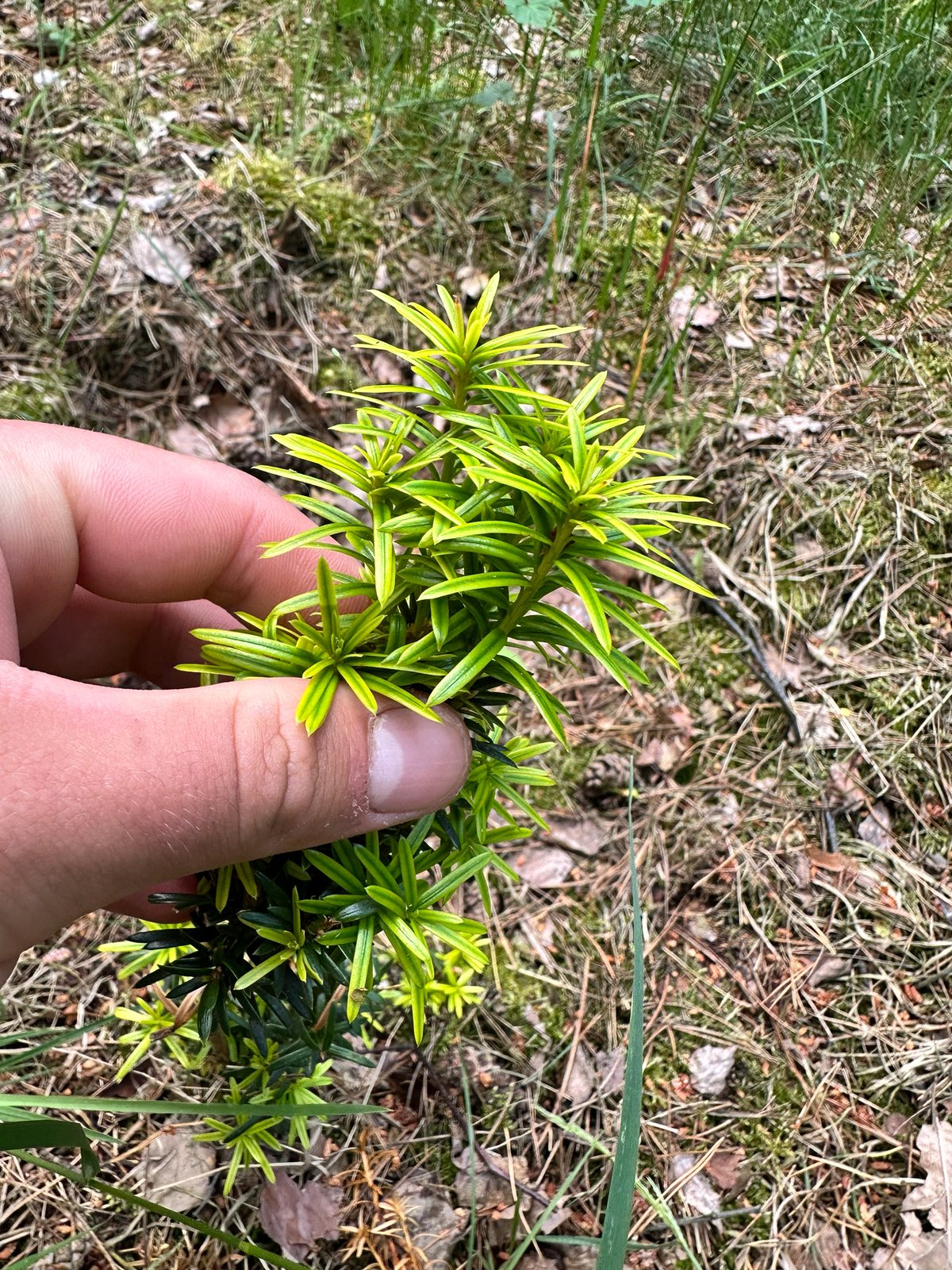
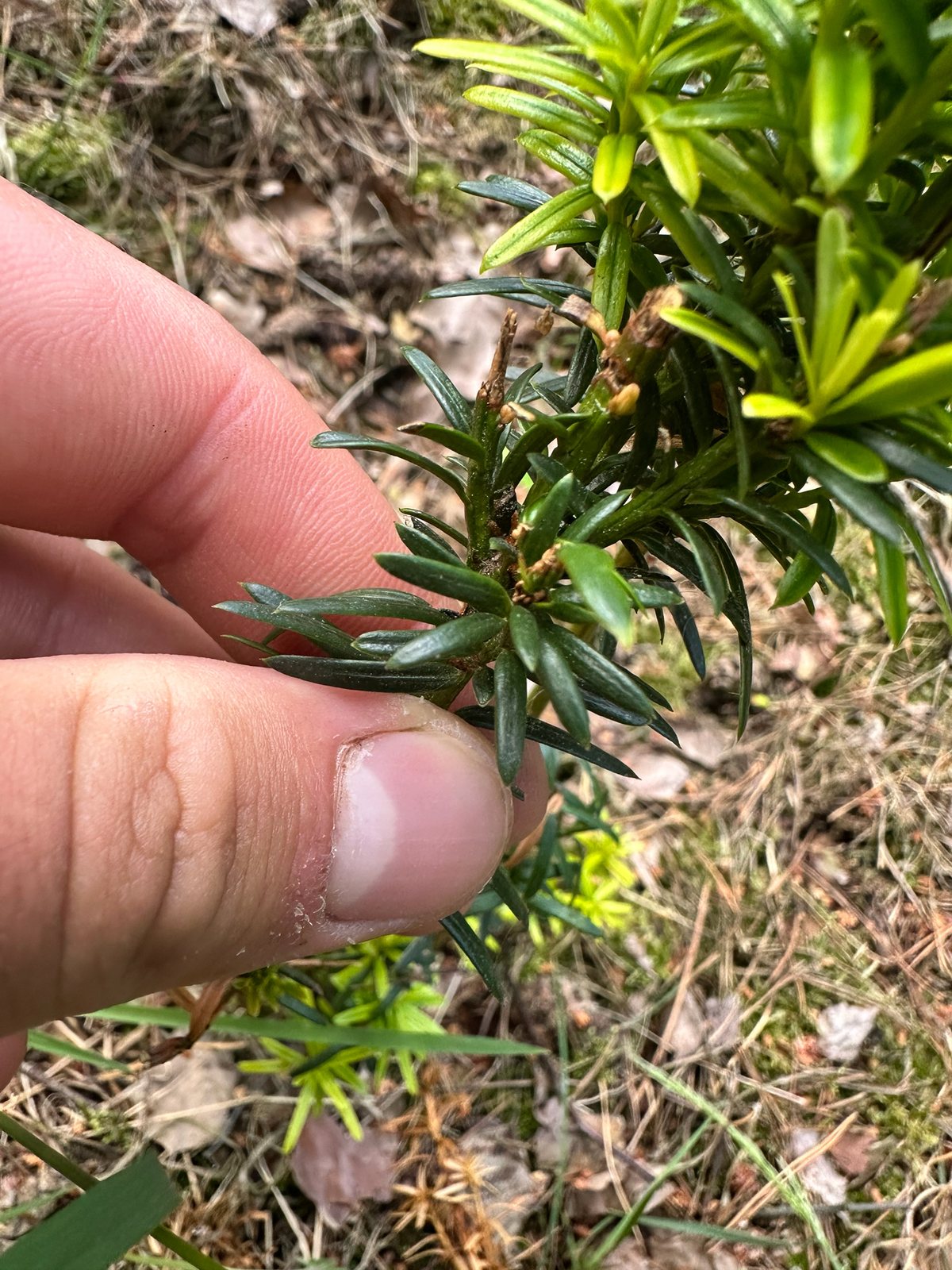
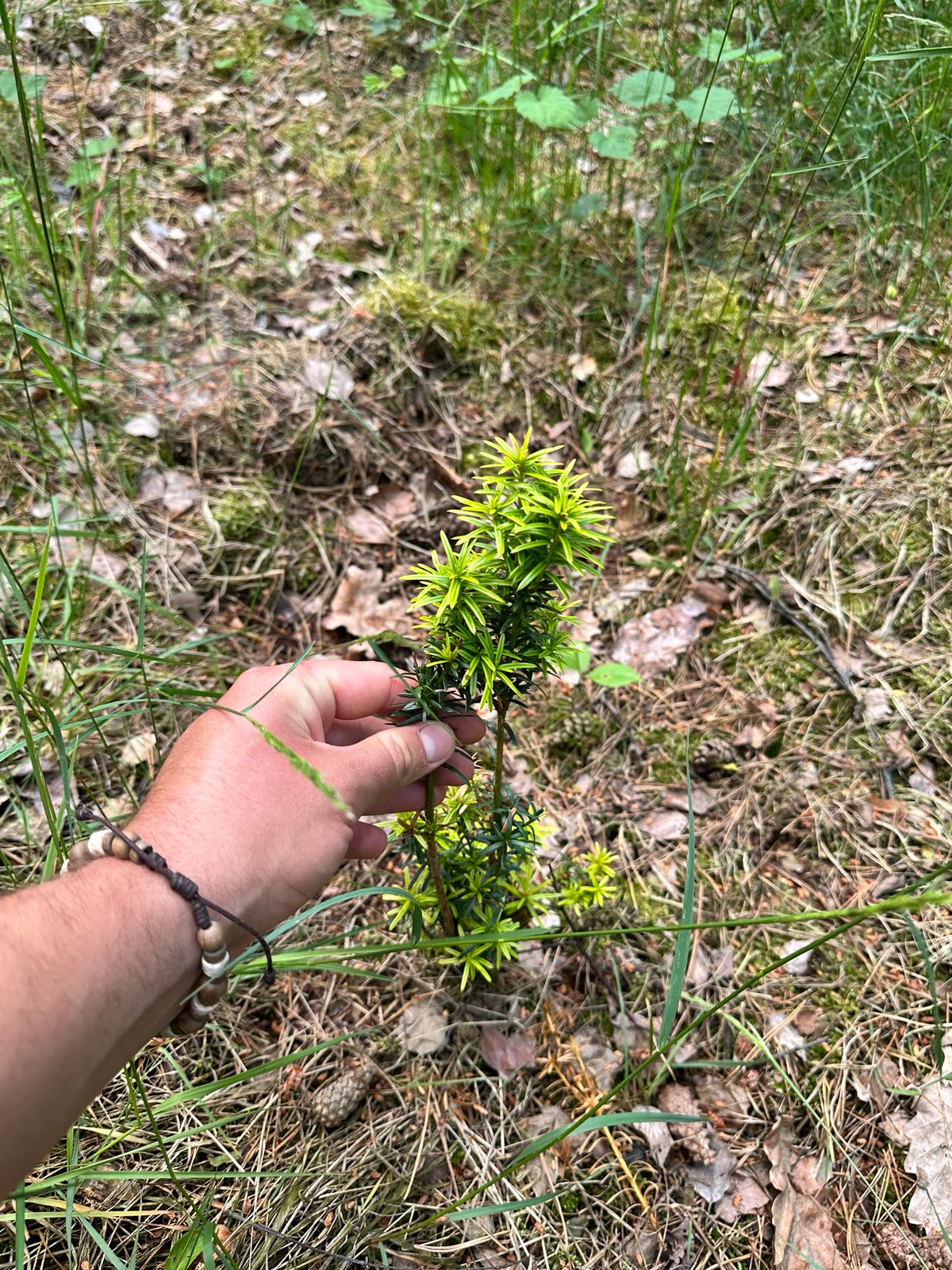
A dense, spreading evergreen yew with dark green needles and a broad, low outline. Gardeners grow it for foundation planting, low hedges and year-round structure in sun or shade; it tolerates clipping but needs well-drained soil.
At a glance
- Sun
- Full sun to full shade; growth is usually denser with some direct sunlight.
- Water
- Water regularly during establishment. Once established, water during prolonged dry spells, allowing the soil surface to dry between soakings; avoid constantly wet roots.
- Soil
- Well-drained loam, sandy loam or clay improved for drainage; tolerates mildly acidic to alkaline soil. Avoid waterlogged ground.
- Height
- 3-4 ft (0.9-1.2 m), potentially taller with age if left unpruned
- Spread
- 4-6 ft (1.2-1.8 m), potentially wider with age
- Foliage
- Short, flat, dark green evergreen needles on densely branched, spreading stems. This female cultivar can bear red, fleshy seed coverings called arils when a compatible male yew is nearby.
- Growth
- Slow to moderate
- Care needed
- Low
The year at a glance
- Drought tolerant
- Cold hardy
- Wildlife
- Low allergen
| J | F | M | A | M | J | J | A | S | O | N | D | |
|---|---|---|---|---|---|---|---|---|---|---|---|---|
| Fruit | ||||||||||||
| Plant |
Northern hemisphere months. In Australia, shift them by six.
- Difficulty
- Easy
- Toughness
- Very tough
Will it suit your garden?
Pick your zone, country, light and whether you have pets.
Full sun is 6 or more hours of direct sun a day, part shade 3 to 6 hours, shade under 3.
How it grows
Planting day
1.6 ft (0.5 m)
After 1 year
1.9 ft (0.58 m)
After 2 years
2.2 ft (0.67 m)
After 3 years
2.5 ft (0.75 m)
After 5 years
3 ft (0.92 m)
About 7 years to full size.
From a typical nursery size, at an average rate for this kind of plant. A rule of thumb, not a forecast.
Good to know
- Cats and dogs
- Toxic
- Growth rate
- Slow
Care
Jobs through the year
- WaterApr–May, Sep–Nov, every 21 days
- Water established shrubs only if dry and soil is unfrozen; check new plants more often.
- WaterJun–Aug, every 14 days
- Soak during prolonged dry spells, letting surface soil dry between waterings; young plants need more.
- MulchMar–Apr
- Maintain 5–8 cm of organic mulch without burying stems or the root flare.
- PruneFeb–Mar
- Shape before new growth, checking for nests; spread major renovation over several years.
- ProtectJan–Feb, Nov–Dec
- Shield exposed young plants from drying winds and road salt; fence where deer browse.
- Plant with the root flare at soil level, not buried beneath soil or mulch.
- Water deeply through the first growing season whenever the root zone begins to dry.
- Apply 2-3 in (5-8 cm) of organic mulch, keeping it clear of the stems.
- Feed lightly in spring only if growth is weak and a soil test indicates a need.
- Leave room for its mature width rather than relying on repeated hard clipping.
- Keep plants and clippings away from livestock, pets and children who might chew them.
Pruning. Prune in late winter or early spring before new growth, shortening branches selectively or clipping a hedge slightly narrower at the top than at the base. Yew can regrow from old wood, but spread major renovation over several years and avoid pruning during active bird nesting.
Through the year
- Late winter
- Remove broken branches and carry out structural pruning before new growth begins.
- Spring
- Plant while the soil is workable, refresh mulch and check that drainage is adequate.
- Early summer
- Lightly trim new growth if a formal outline is wanted, after checking for nesting birds.
- Summer
- Water young plants during dry weather and inspect inner stems for scale insects.
- Autumn
- Water during dry spells before the ground freezes, especially on recently planted shrubs.
- Winter
- Keep de-icing salt away and protect exposed young plants from drying winds in cold climates.
In the garden
- Plant as a low evergreen hedge to define paths or divide garden spaces.
- Use beneath windows where its broad habit fits without frequent height reduction.
- Mass along a shaded boundary as a dark green backdrop for hostas and ferns.
- Repeat rounded, lightly clipped shrubs among flowering perennials for winter structure.
Garden styles it suits: Formal, Traditional, Woodland, Japanese, Low-maintenance and Winter interest.
Plant it with: Hostas, Hellebores, Japanese painted fern, Oakleaf hydrangea, Siberian bugloss and Epimedium.
Wildlife: Dense branches provide shelter and nesting cover for small birds. Birds eat the red arils and may disperse the seeds; its flowers offer little value to pollinators.
Problems to watch for
- Root rot: yellowing, thinning and dieback often follow waterlogging; improve drainage before planting and avoid overwatering.
- Taxus scale: small brown scales on stems can weaken growth; prune heavily infested shoots and use a labelled horticultural oil or crawler treatment at the appropriate local timing.
- Winter burn and salt injury: exposed foliage browns in cold, drying weather or near treated roads; water before freezing weather and reduce wind and salt exposure.
- Deer browsing: deer may strip foliage despite its toxicity; use a suitable fence where browsing pressure is high.
Safety
Highly toxic to people, cats, dogs and horses if eaten, with potentially fatal effects on the heart. Needles, bark, wood and seeds are poisonous, and dried clippings remain dangerous. The red fleshy aril itself is not toxic, but the seed inside is; do not treat the fruit as edible. Seek urgent medical or veterinary advice after suspected ingestion.
Easily confused with
Hicks yew (Taxus × media 'Hicksii')
Has a strongly upright, columnar habit rather than the low, broad spread of 'Densiformis'; clipped young plants can be difficult to distinguish.
Japanese plum yew (Cephalotaxus harringtonia)
Has noticeably longer, broader needles with conspicuous pale bands beneath, and plum-like seeds rather than seeds held in open red arils.
The name
Taxus is the Latin name for yew, while 'Densiformis' refers to this cultivar's dense growth habit.
Propagation. Root semi-ripe cuttings in late summer or early autumn, usually with rooting hormone and a free-draining medium; rooting can be slow. Seed does not reliably reproduce this cultivar.
Checked against open data
- Accepted botanical name
- Taxus media
Sources: GBIF (CC BY 4.0). The care and design notes are LandscapeGPT's own.
See it in your own yard.
Upload a photo of your yard and see it redesigned with plants that suit your climate, each checked against your zone.