Deodar cedar
Cedrus deodara. Family Pinaceae. Tree.
Also called Himalayan cedar, Deodar.
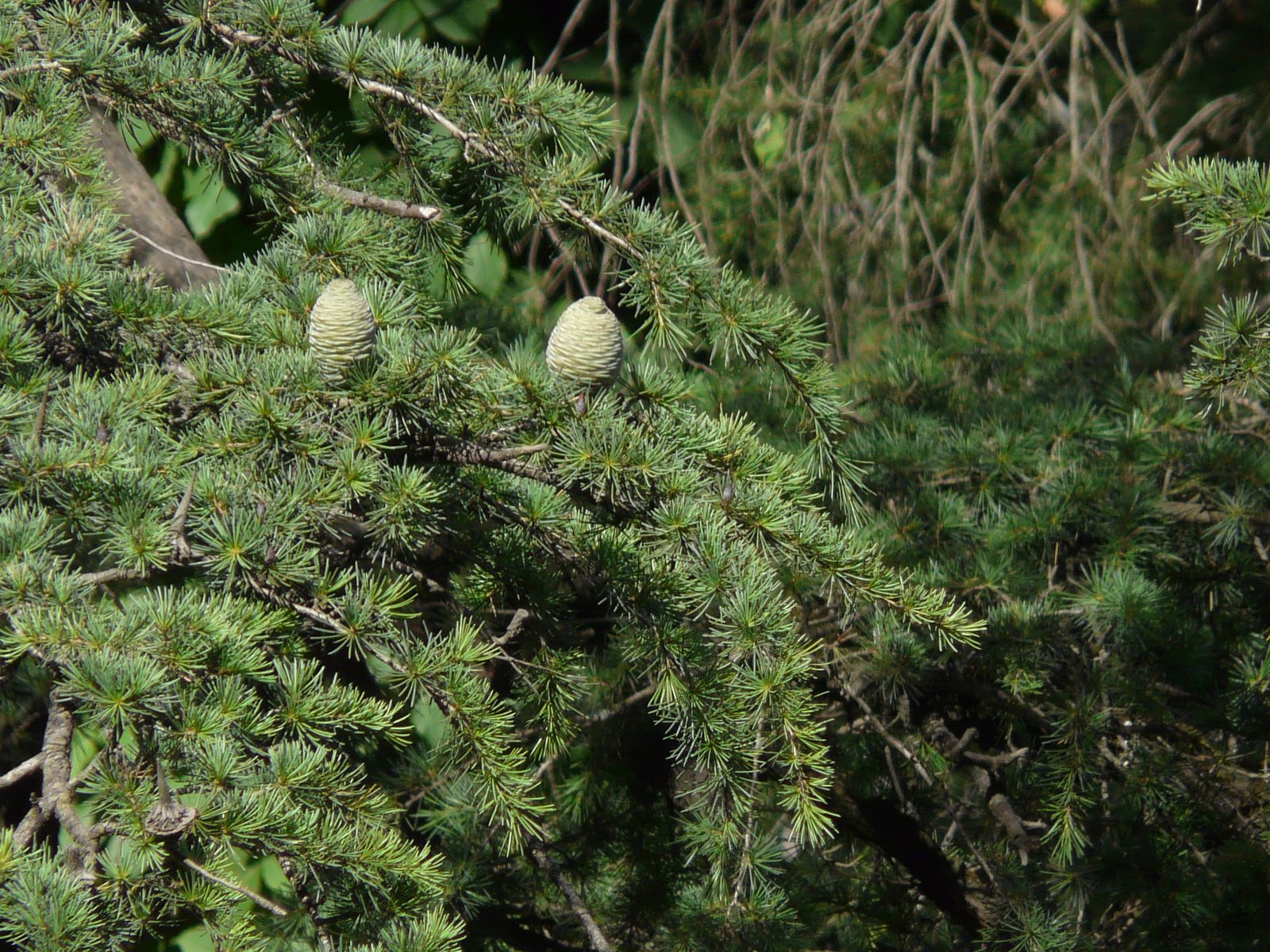
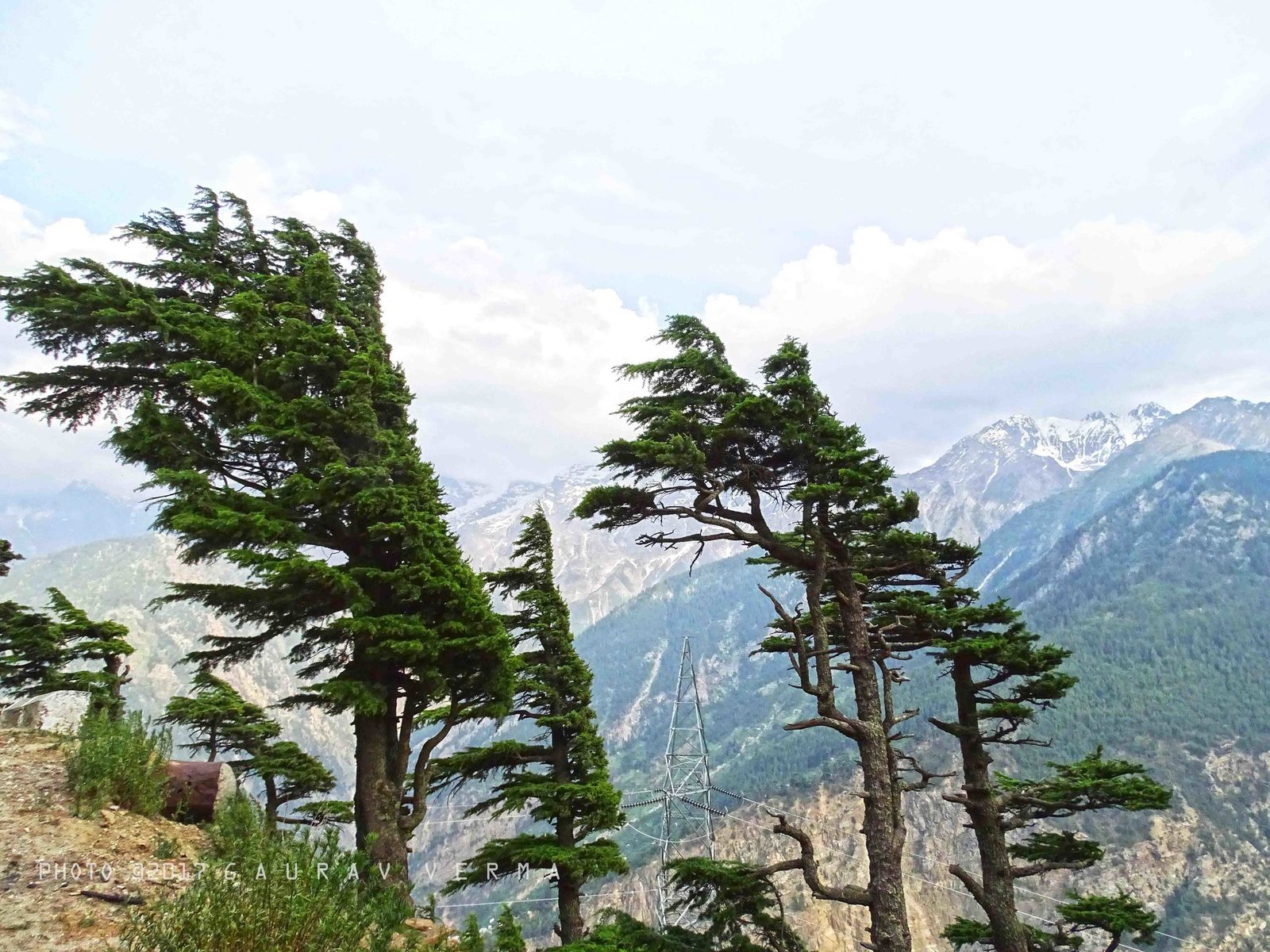
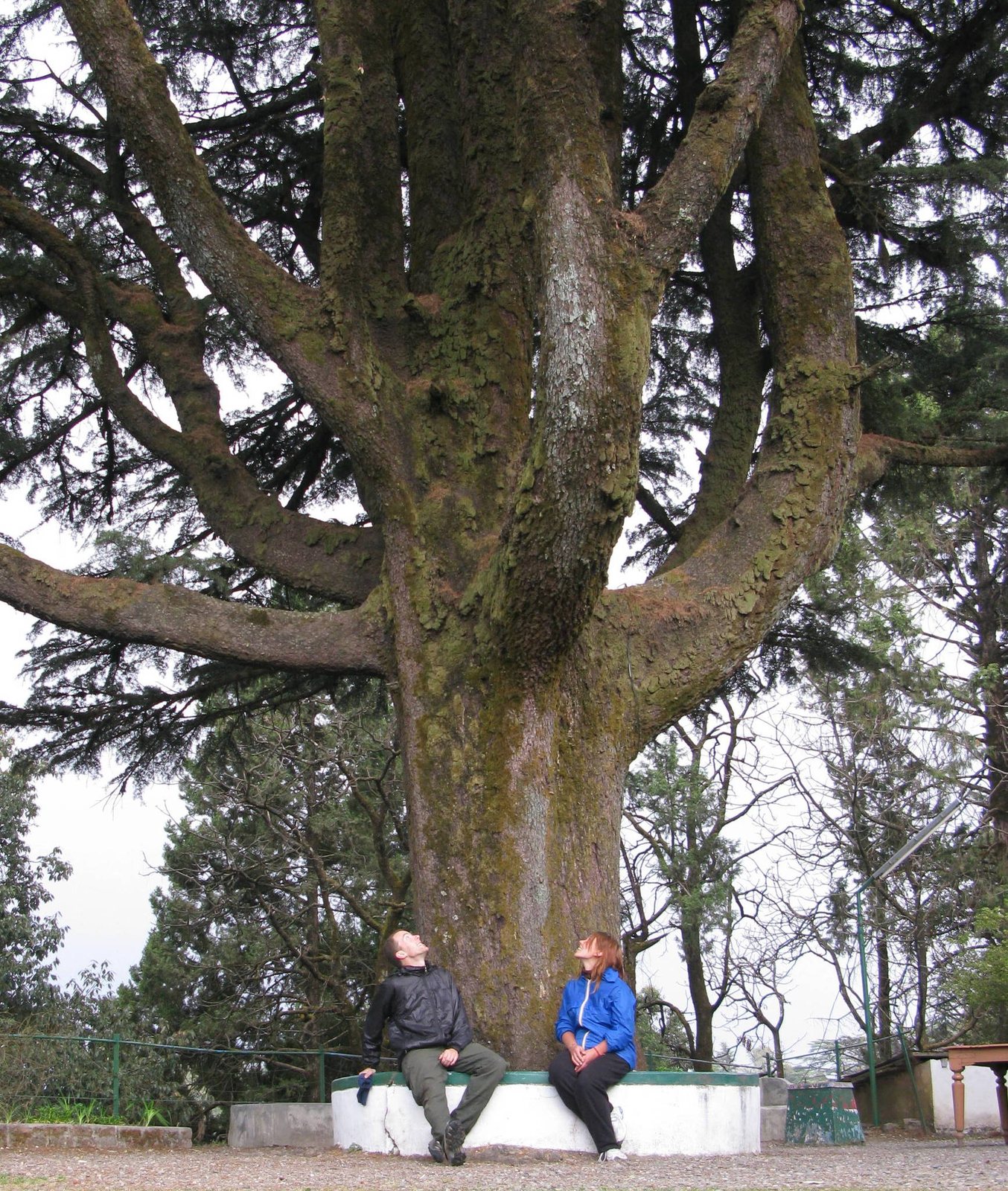
Deodar cedar is a large evergreen conifer native to the western Himalayas, grown for its soft-looking needles, sweeping branches and gracefully drooping leading shoot. It makes a striking specimen where there is room for its broad lower branches, but it is unsuitable for small gardens or sites close to buildings.
At a glance
- Sun
- Full sun; tolerates light shade but develops a denser, more balanced crown in good light.
- Water
- Water regularly while establishing. Moderately drought-tolerant once established, but benefits from deep watering during prolonged drought.
- Soil
- Deep, well-drained soil, preferably slightly acidic to neutral. Tolerates several soil types, including clay where drainage is good; avoid waterlogged ground.
- Height
- 40-70 ft (12-21 m), potentially taller with age
- Spread
- 25-40 ft (7.6-12 m)
- Foliage
- Evergreen green to blue-green needles, borne singly on long shoots and in dense clusters on short shoots. Young branch tips and the leading shoot droop.
- Growth
- Moderate to fast when young, often 1-2 ft (0.3-0.6 m) per year in suitable conditions.
- Care needed
- Low
The year at a glance
- Deer resistant
- Drought tolerant
- Heat tolerant
- Wildlife
| J | F | M | A | M | J | J | A | S | O | N | D | |
|---|---|---|---|---|---|---|---|---|---|---|---|---|
| Fruit | ||||||||||||
| Plant |
Northern hemisphere months. In Australia, shift them by six.
- Difficulty
- Moderate
- Toughness
- Fairly tough
Will it suit your garden?
Pick your zone, country, light and whether you have pets.
Full sun is 6 or more hours of direct sun a day, part shade 3 to 6 hours, shade under 3.
How it grows
Planting day
7 ft (2 m)
After 1 year
10 ft (2.9 m)
After 2 years
13 ft (3.8 m)
After 3 years
15 ft (4.7 m)
After 5 years
21 ft (6.5 m)
About 16 years to full size.
From a typical nursery size, at an average rate for this kind of plant. A rule of thumb, not a forecast.
Good to know
- Cats and dogs
- Mildly toxic: may upset a stomach
- Growth rate
- Fast
Care
Jobs through the year
- WaterApr–May, Sep–Oct, every 21 days
- Water established trees only during prolonged dry spells; young trees need more for two or three years.
- WaterJun–Aug, every 14 days
- During prolonged drought, water deeply and allow the soil to drain between soakings.
- MulchApr–May
- Maintain 5–8 cm of organic mulch over the root zone, clear of the trunk.
- PruneFeb–Mar
- Remove dead, damaged or crossing branches sparingly; preserve the leader and avoid bare wood.
- ProtectJan–Feb, Nov–Dec
- Shelter young trees from cold winds; unsuitable for exposed zone 6 sites without a hardier cultivar.
- Choose a permanent position with room for the mature crown, well away from buildings and overhead wires.
- Water deeply through the first two or three growing seasons whenever the root zone begins to dry.
- Spread organic mulch 2-3 in (5-8 cm) deep over the root zone, keeping it clear of the trunk.
- Feed only if growth is poor and a soil test indicates a deficiency; avoid heavy nitrogen feeding.
- Stake only if the root ball moves in wind, and remove supports once the tree is securely rooted.
Pruning. Prune sparingly in late winter or early spring to remove dead, damaged or crossing branches. Preserve the naturally drooping leader, never top the tree, and avoid cutting into bare old wood because it rarely produces replacement growth.
Through the year
- Spring
- Plant container-grown trees once the soil is workable, especially in colder regions.
- Late winter
- Inspect the crown for storm damage and arrange professional removal of large damaged branches.
- Late spring
- Refresh mulch and check that stakes or ties are not rubbing or constricting the trunk.
- Summer
- Check soil moisture around young trees and water deeply during dry spells.
- Autumn
- Plant in mild climates while the soil remains warm, and water thoroughly after planting.
- Winter
- Check young trees after strong winds; avoid knocking or shaking frozen, snow-covered branches.
In the garden
- Use as a solitary specimen in a large lawn, leaving the lower branches intact to show its natural outline.
- Place toward the back of a spacious mixed planting as a permanent evergreen framework.
- Use on a large estate or parkland slope, where its tiered branches can be viewed from below.
- Pair with low, drought-tolerant planting beyond the crown edge to contrast fine needles with rounded shrubs and grasses.
Garden styles it suits: Architectural minimal, Grand estate, English manor, Woodland, Winter interest and Mediterranean.
Plant it with: Bergenia, Epimedium, Ivy-leaved cyclamen, Bigroot geranium and English lavender.
Wildlife: Dense branches provide shelter and potential nesting sites for birds. Seeds may be eaten by birds and small mammals; it does not provide nectar for pollinators.
Problems to watch for
- Root rot in wet ground: prevent it with good drainage and avoid frequent shallow irrigation; obtain an arborist's assessment if the crown declines or the tree becomes unstable.
- Aphids or scale insects causing honeydew and sooty mould: inspect affected shoots, encourage natural predators and use a labelled treatment only when infestation warrants it.
- Tip blight or shoot dieback: remove affected small shoots in dry weather, clean tools and seek a diagnosis if dieback spreads.
- Winter scorch or frost damage to young growth: choose a sheltered position near the colder end of its range and keep young trees adequately watered before the ground freezes.
Safety
Not known to be toxic to people, cats, dogs or horses. Needles, cones and resin are not food; chewing them may cause mouth irritation or stomach upset.
Easily confused with
Atlas cedar (Cedrus atlantica)
Usually has shorter, stiffer needles and more upright branch tips; deodar cedar has longer, softer-looking needles and a conspicuously drooping leader.
Cedar of Lebanon (Cedrus libani)
Typically develops a broad, flat-topped crown with age and has shorter needles and less pendulous young shoots.
Himalayan pine (Pinus wallichiana)
Has much longer needles grouped in bundles of five and long, hanging cones; deodar cedar has short-shoot needle clusters and upright, barrel-shaped cones.
The name
Deodara comes from the Sanskrit devadāru, meaning 'wood of the gods', while Cedrus is the classical Latin name for cedar.
Propagation. Grow the species from seed, usually sown in spring after a period of cold, moist stratification. Named cultivars are generally grafted by specialist nurseries and do not come true from seed.
Checked against open data
- Accepted botanical name
- Cedrus deodara
- In the US and Canada
- Introduced in the lower 48 states.
- Native range
- Afghanistan, India, Nepal, Pakistan, Tibet and West Himalaya.
- Measured
- Soil pH 6 to 7.5. Average height 2110 cm.
Sources: GBIF (CC BY 4.0), USDA PLANTS and Trefle (CC BY 4.0). The care and design notes are LandscapeGPT's own.
See it in your own yard.
Upload a photo of your yard and see it redesigned with plants that suit your climate, each checked against your zone.