Diamond Frost euphorbia
Euphorbia hypericifolia 'Diamond Frost'. Family Euphorbiaceae. Annual.
Also called Diamond Frost spurge, Euphorbia hypericifolia 'Inneuphdia'.
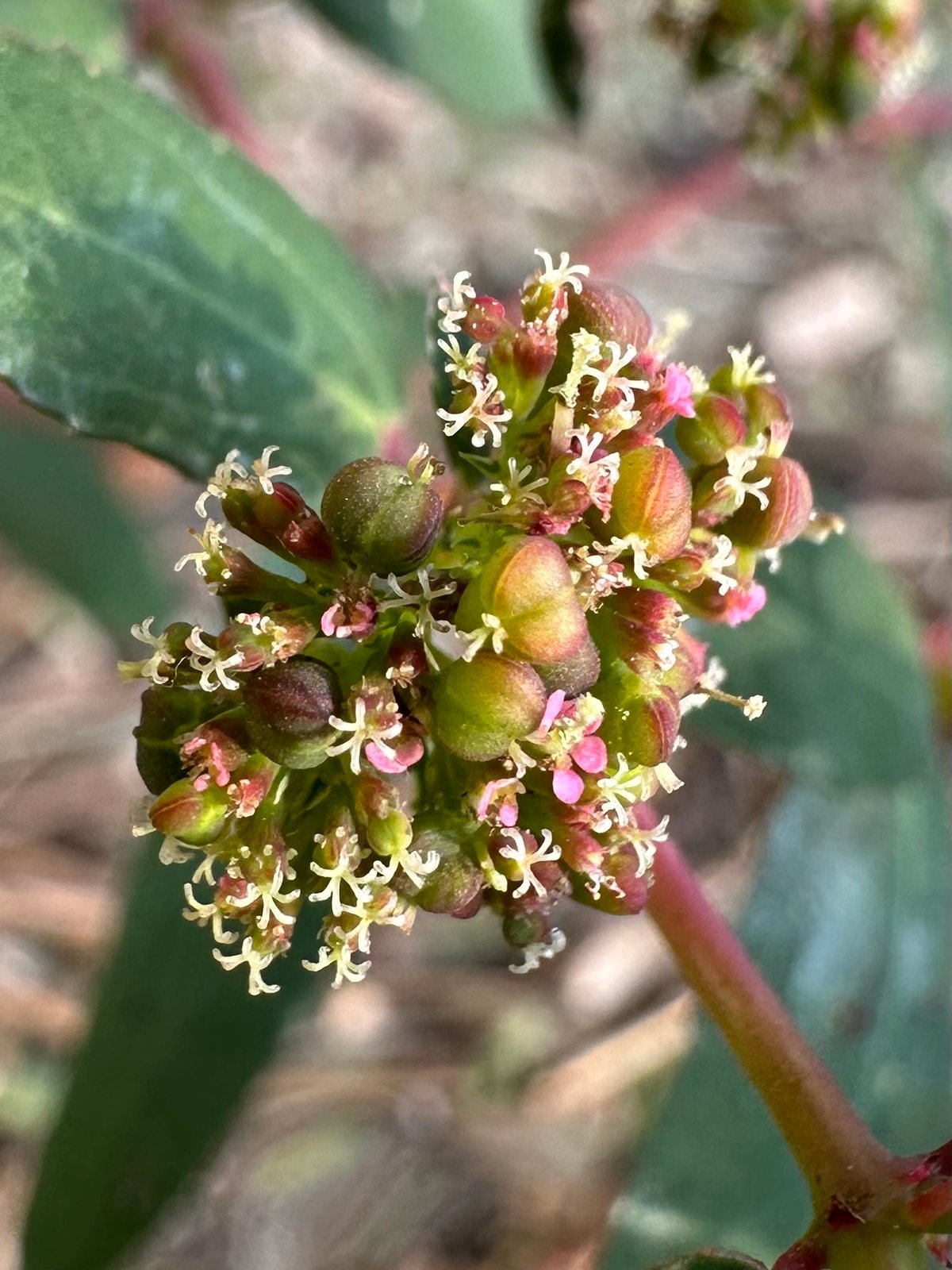
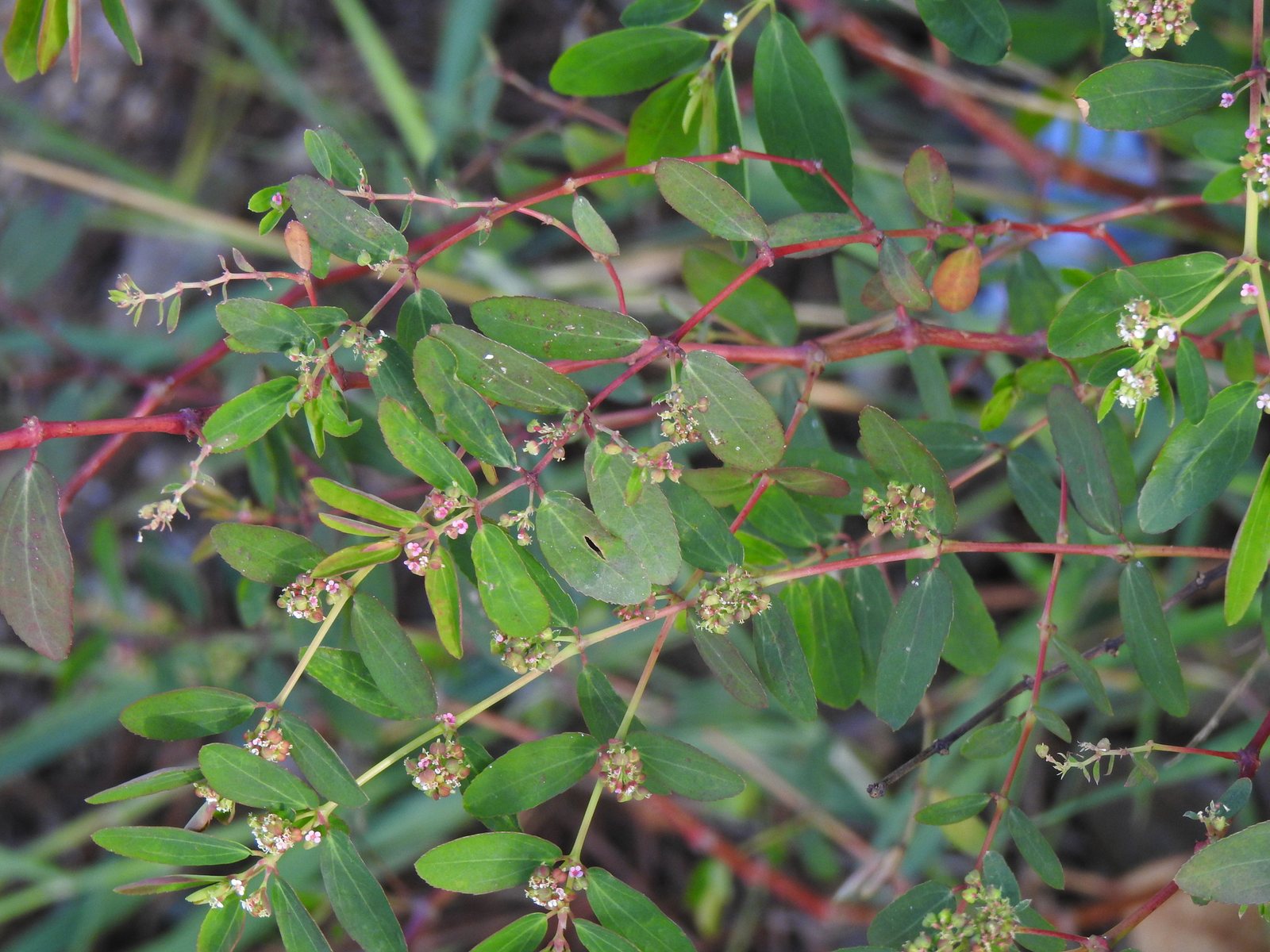
Diamond Frost is a frost-tender perennial usually grown as an annual, forming a loose mound covered with tiny white, flower-like bracts. Gardeners use its airy growth to soften containers and weave between larger flowers; it flowers for months without deadheading.
At a glance
- Sun
- Full sun to partial shade; flowering is usually strongest with at least four to six hours of direct sun.
- Water
- Water moderately, letting the soil surface dry slightly between waterings. Established plants tolerate brief dry spells, but containers need more frequent checks.
- Soil
- Well-drained garden soil or a free-draining container mix; avoid soil that stays wet.
- Height
- 1-1.5 ft (0.3-0.45 m)
- Spread
- 1-1.5 ft (0.3-0.45 m)
- Flowers
- White bracts surrounding tiny flowers from late spring until frost; flowering can continue longer in frost-free conditions.
- Foliage
- Evergreen. Small, oval to narrow green leaves on slender, branching stems.
- Growth
- Fast during warm weather.
- Care needed
- Low
The year at a glance
- Deer resistant
- Drought tolerant
- Heat tolerant
- Low allergen
| J | F | M | A | M | J | J | A | S | O | N | D | |
|---|---|---|---|---|---|---|---|---|---|---|---|---|
| Flowers | ||||||||||||
| Plant |
Northern hemisphere months. In Australia, shift them by six.
- Difficulty
- Easy
- Toughness
- Very tough
Will it suit your garden?
Pick your zone, country, light and whether you have pets.
Full sun is 6 or more hours of direct sun a day, part shade 3 to 6 hours, shade under 3.
How it grows
Planting day
0.5 ft (0.15 m)
After 1 year
1.2 ft (0.38 m)
full size
Full size in one season.
From a typical nursery size, at an average rate for this kind of plant. A rule of thumb, not a forecast.
Good to know
- Cats and dogs
- Toxic
- Native to
- the US
- Growth rate
- Fast
Care
Jobs through the year
- WaterMay–Jun, every 7 days
- Water established bedding plants if surface soil is dry; new transplants need closer checks.
- WaterJul–Aug, every 7 days
- Water established plants at soil level during dry weather; check containers more frequently.
- WaterSep–Oct, every 14 days
- Water established outdoor plants only when surface soil dries, until frost ends growth.
- FeedJun–Sep, every 14 days
- For containers only, apply balanced liquid feed at the label rate; fertile garden soil rarely needs feeding.
- PruneJul–Aug
- Lightly shorten sprawling stems only if needed; wear gloves to avoid irritating sap.
- ProtectSep–Oct
- Treat as an annual, or pot up before frost and keep bright and preferably above 10°C.
- Plant outdoors after frost danger has passed and the soil has warmed.
- Water at soil level when the surface begins to dry; never leave pots standing in water.
- Feed containers with a balanced liquid fertilizer at the label rate during active growth; garden plants generally need less.
- Keep mulch clear of the stems to reduce persistent dampness around the crown.
- Wear gloves when handling broken stems because the milky sap is irritating.
Pruning. Deadheading is unnecessary. If growth becomes straggly in summer, lightly trim the longest stems to restore the mound, wearing gloves and avoiding contact with the sap.
Through the year
- Early spring
- If keeping a plant indoors over winter, move it into brighter light and gradually increase watering as new growth appears.
- Late spring
- Harden off plants and plant outside after the last frost.
- Summer
- Check containers regularly for dryness and feed while plants are actively growing.
- Midsummer
- Lightly trim any sprawling stems; leave spent flowers alone.
- Autumn
- Before frost, bring a potted plant into bright, frost-free shelter if you want to keep it.
- Winter
- Keep overwintered plants bright and preferably above 50°F (10°C), watering sparingly without letting the root ball dry out completely.
In the garden
- Thread through mixed containers with petunias or calibrachoas to soften large flowers with a fine white haze.
- Plant along sunny border edges to soften the transition between taller bedding plants and paving.
- Use in hanging baskets, where its loose stems mingle with trailing plants.
- Repeat through white or pastel seasonal planting to link stronger shapes and colours.
Garden styles it suits: Cottage garden, White garden, Romantic rose garden, Modern courtyard, Small-space and Low-maintenance.
Plant it with: Petunias, Calibrachoas, Pelargoniums, Angelonias, Coleus and Sweet potato vine.
Wildlife: Do not rely on this cultivar as a major source of nectar or pollen; combine it with locally suitable flowering plants known to support pollinators.
Problems to watch for
- Root rot in waterlogged soil: improve drainage, empty saucers and allow the soil surface to dry slightly before watering again.
- Whiteflies, especially under cover: inspect leaf undersides and treat infestations with insecticidal soap according to the label.
- Spider mites in hot, dry, sheltered conditions: check for fine webbing and stippled leaves, then use a labelled insecticidal soap if needed.
- Cold damage or collapse after frost: delay spring planting and move plants under cover before autumn frosts.
Safety
Treat all parts as toxic to people, cats, dogs and horses. The milky sap can irritate skin and cause serious eye irritation; chewing or swallowing the plant can irritate the mouth and cause vomiting or diarrhoea. Severe poisoning is uncommon, but seek medical or veterinary advice after ingestion, and urgent advice for eye exposure.
Easily confused with
Baby's breath (Gypsophila paniculata)
Baby's breath has distinct five-petalled white flowers and narrow, often grey-green leaves; Diamond Frost has tiny flowers framed by white bracts and releases milky sap when damaged.
Breathless White euphorbia (Euphorbia hypericifolia 'Balbrewite')
This similar bedding cultivar has a denser habit and darker foliage, often with reddish tones. Labels are more dependable than appearance when identifying young plants.
The name
The species name hypericifolia means having leaves like Hypericum, the genus that includes St John's wort.
Propagation. Propagate from soft stem-tip cuttings in warm conditions, subject to any local plant breeders' rights restrictions. Wear gloves when taking cuttings. This cultivar is generally sterile and is not reliably raised from seed.
Checked against open data
- Accepted botanical name
- Euphorbia hypericifolia
- In the US and Canada
- Native in the lower 48 states, Navassa Island, Puerto Rico and US Virgin Islands. Introduced in Hawaii and Pacific Basin.
- Native range
- Alabama, Argentina Northeast, Argentina Northwest, Argentina South, Aruba, Bahamas, Belize, Bolivia, Brazil North, Brazil Northeast, Brazil South and Brazil Southeast.
Sources: GBIF (CC BY 4.0), USDA PLANTS and Trefle (CC BY 4.0). The care and design notes are LandscapeGPT's own.
See it in your own yard.
Upload a photo of your yard and see it redesigned with plants that suit your climate, each checked against your zone.