Dill
Anethum graveolens. Family Apiaceae. Annual.
Also called Dill weed.
Dill is an aromatic herb grown as an annual for its feathery leaves and edible seeds. Its airy foliage and flat heads of yellow flowers fit among vegetables and flowers, attracting pollinating insects and other beneficial insects. Plants often self-seed if you leave the seed heads to ripen.
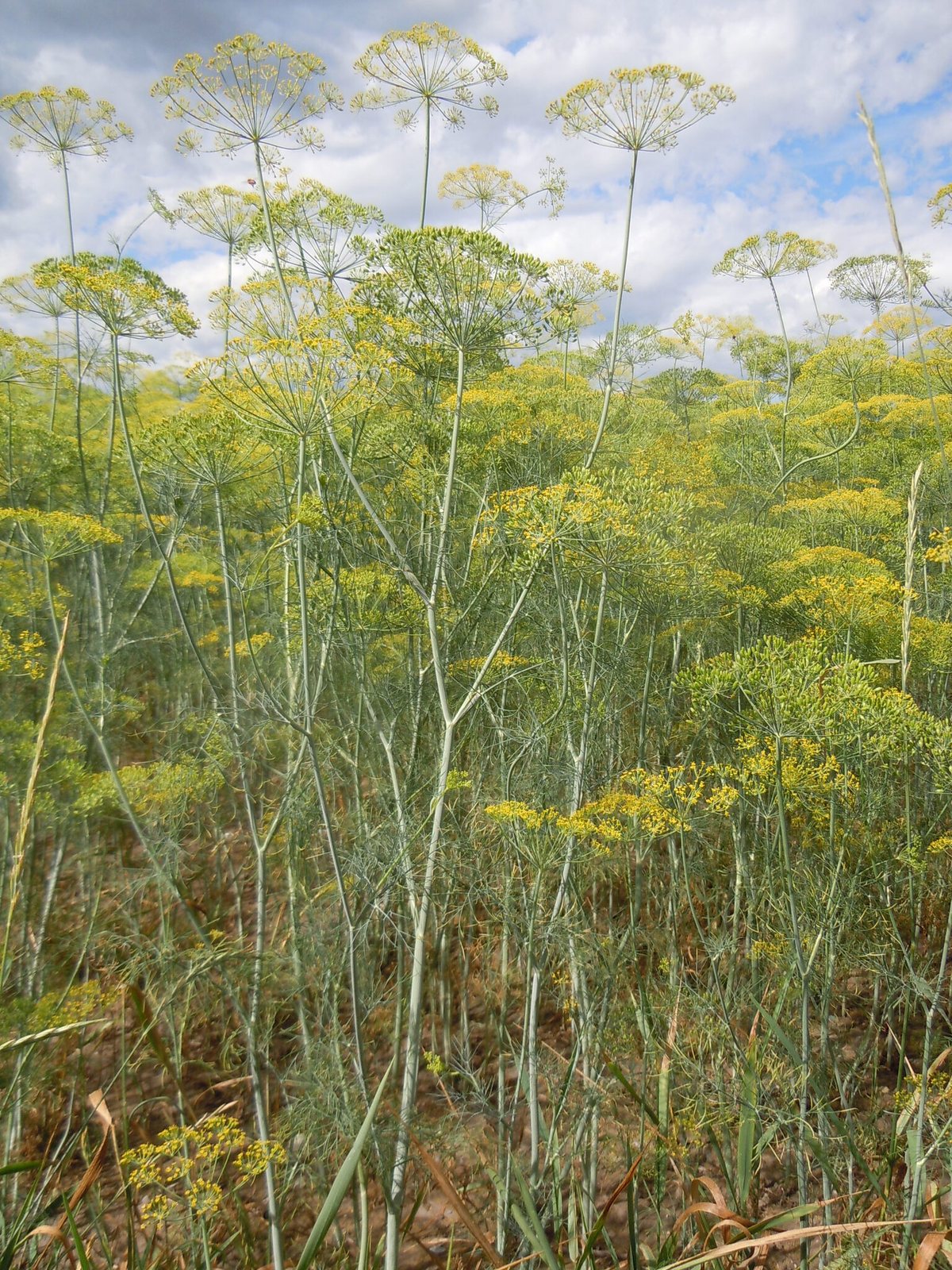
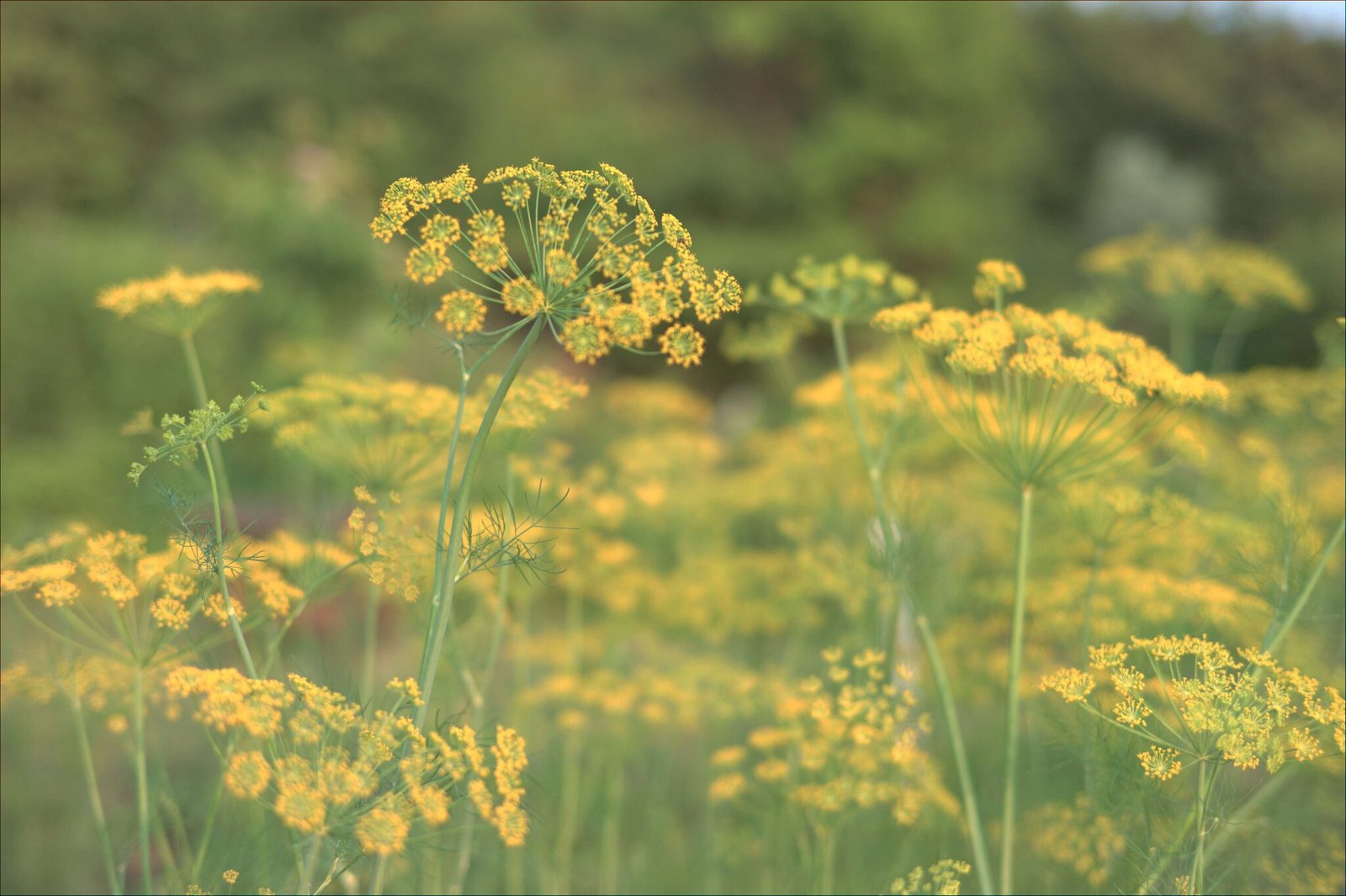
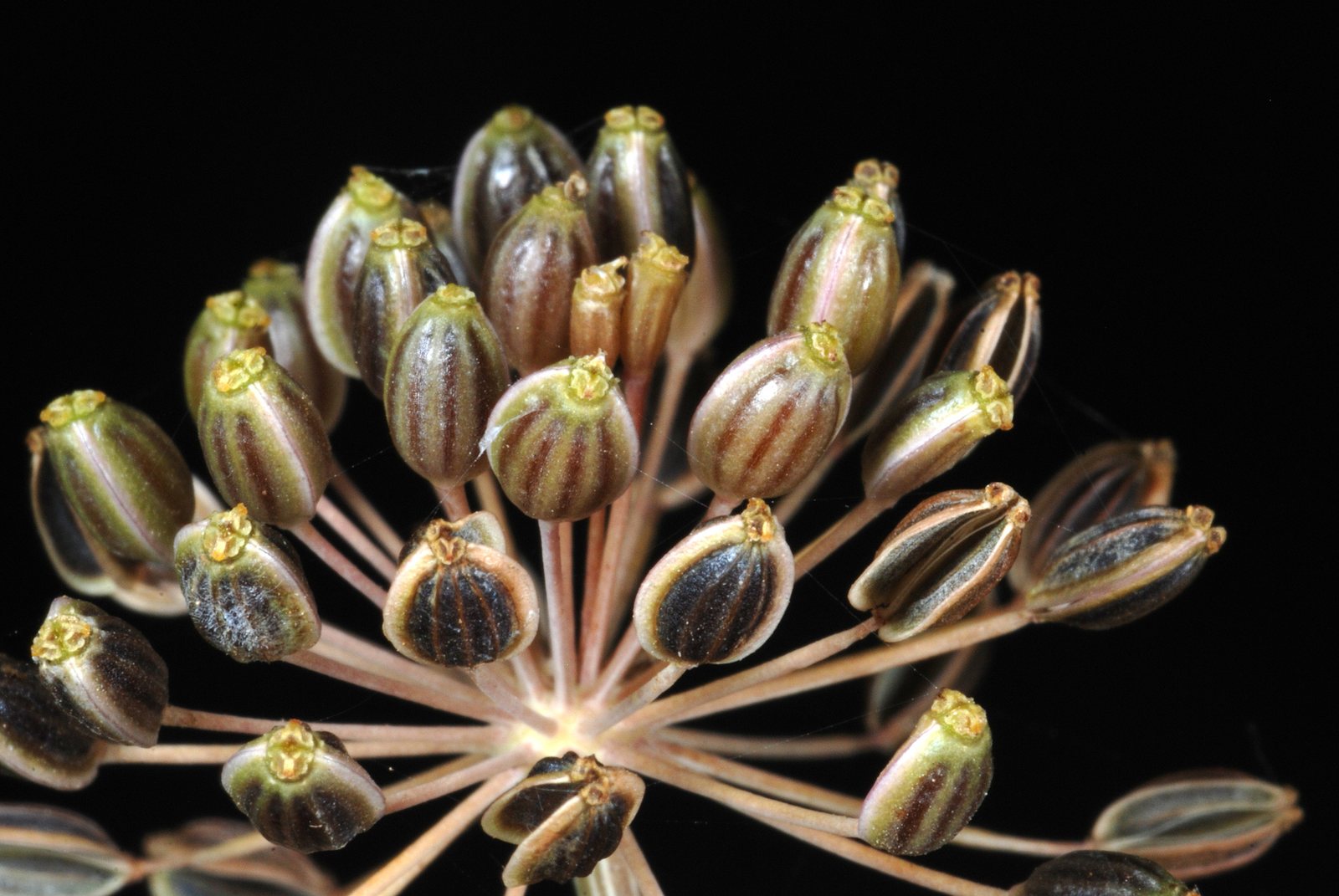
At a glance
- Sun
- Full sun; light afternoon shade can help in very hot climates.
- Water
- Water regularly while seedlings establish, then water when the surface soil dries. Avoid prolonged drought and waterlogged soil.
- Soil
- Well-drained soil with moderate fertility; tolerates sandy or loamy soil and a broad pH range.
- Height
- 2-4 ft (0.6-1.2 m)
- Spread
- 1-2 ft (0.3-0.6 m)
- Flowers
- Summer into early autumn; small yellow flowers in broad, flat-topped clusters.
- Foliage
- Fine, threadlike, blue-green leaves with a distinctive aromatic scent.
- Growth
- Fast; leaves are usually ready for light picking about 6-8 weeks after sowing.
- Care needed
- Low
The year at a glance
- Pollinators
- Wildlife
- Low allergen
- Fragrant
- Edible
| J | F | M | A | M | J | J | A | S | O | N | D | |
|---|---|---|---|---|---|---|---|---|---|---|---|---|
| Flowers | ||||||||||||
| Fruit | ||||||||||||
| Plant |
Northern hemisphere months. In Australia, shift them by six.
- Difficulty
- Easy
- Toughness
- Fairly tough
Will it suit your garden?
Pick your zone, country, light and whether you have pets.
Full sun is 6 or more hours of direct sun a day, part shade 3 to 6 hours, shade under 3.
How it grows
Planting day
0.5 ft (0.15 m)
After 1 year
3 ft (0.9 m)
full size
Full size in one season.
From a typical nursery size, at an average rate for this kind of plant. A rule of thumb, not a forecast.
Good to know
- Cats and dogs
- Safe
- Growth rate
- Fast
Care
Jobs through the year
- WaterMar–May, Sep, every 7 days
- Water established plants when the surface dries; check seedlings more frequently.
- WaterJun–Aug, every 5 days
- Water deeply if soil is drying; avoid prolonged drought and waterlogging.
- ProtectMar–Apr
- Protect emerging seedlings from hard frost and slugs.
- ProtectMay–Jun
- Support tall plants with twiggy stakes in exposed positions.
- PruneJun–Aug
- Remove developing flower heads for longer leaf production; retain some for insects or seed.
- HarvestMay–Sep, every 7 days
- Snip outer leafy sprigs once plants reach 15–20 cm, leaving the central growing tip.
- HarvestJun–Oct, every 7 days
- Cut flowering or green-seeded heads for pickling, or tan-brown heads for drying before seeds shed.
- Sow directly where it will grow; its taproot makes established plants difficult to transplant.
- Thin seedlings to about 8-12 in (20-30 cm) apart.
- Water during dry spells, especially while plants are young or grown in containers.
- Mix a little compost into poor soil before sowing; avoid heavy nitrogen feeding.
- Give tall plants a sheltered position or support them with twiggy stakes.
Pruning. Pick small amounts of foliage once plants are well established, leaving plenty of leaves for further growth. Remove developing flower heads to extend leaf production, or leave them for insects and seed; cut ripe seed heads before they shed if you want to limit self-sowing.
Harvest
Snip leaves as needed once plants are about 15–20 cm (6–8 in) tall, taking outer sprigs and leaving the central growing tip; leaves are best before flowering. For pickling, cut flower heads when the yellow flowers open or while the developing seeds are still green. For dried seed, cut heads when the seeds turn tan-brown but before they fall, then hang them upside down in a paper bag somewhere dry and airy.
Through the year
- Spring
- Direct-sow when soil is workable and warming; protect emerging seedlings from hard frost.
- Late spring
- Thin seedlings and begin light leaf harvesting once plants are established.
- Early summer
- Sow another small batch to replace plants that are starting to flower.
- Summer
- Water during dry weather and leave some flower heads for beneficial insects.
- Late summer
- Cut seed heads as the seeds turn brown; finish drying them in a paper bag in an airy place.
- Autumn
- Remove spent plants, leaving a few seed heads if you want volunteers. In frost-free climates with hot summers, sow for a cool-season crop.
In the garden
- Thread through a vegetable garden for edible foliage and flowers that attract beneficial insects.
- Plant in loose groups among calendulas and cosmos for fine texture and airy yellow flower heads.
- Use behind low herbs in a sunny herb bed, where its height adds a light seasonal backdrop.
- Grow in a deep container near the kitchen, choosing a compact variety and a sheltered spot.
Garden styles it suits: Cottage garden, Potager (kitchen garden), Herb parterre, Edible landscape, Pollinator garden and Sensory garden.
Plant it with: Lettuce, Cabbage, Calendula, Nasturtium, Cosmos and Chives.
Wildlife: Flowers feed hoverflies, small bees and parasitic wasps. In North America, the foliage is a host food for black swallowtail caterpillars; leave spare plants for them rather than spraying.
Problems to watch for
- Aphids cluster on soft growth: rinse them off with water and preserve ladybirds, hoverflies and other predators.
- Slugs and snails eat young seedlings: check after dark, remove hiding places and protect new sowings.
- Seedlings collapse in wet soil: improve drainage, avoid crowding and do not keep the seedbed saturated.
- Plants flower early and produce fewer leaves in heat or drought: keep moisture steady and sow small batches through the suitable growing season.
Safety
Dill is not known to be toxic to cats, dogs, horses or people. The leaves and seeds are edible for people in normal culinary amounts; uncommon allergic reactions can occur. Concentrated essential oil is not equivalent to eating the herb and should be kept away from pets.
Easily confused with
Fennel (Foeniculum vulgare)
Fennel also has threadlike foliage and yellow flower heads, but usually becomes taller and more robust, with a pronounced anise scent.
Poison hemlock (Conium maculatum)
Poison hemlock has white rather than yellow flowers, broader fernlike leaf divisions and often purple-blotched stems. It is dangerously poisonous;
The name
The botanical epithet graveolens means strong-smelling, referring to the plant's aromatic foliage and seeds.
Propagation. Propagate by seed, sown directly about 1/4 in (6 mm) deep. Sow small batches every 2-3 weeks during mild growing weather for a longer leaf harvest; seedlings usually emerge within 1-3 weeks.
Checked against open data
- Accepted botanical name
- Anethum graveolens
- In the US and Canada
- Introduced in Canada, Hawaii, the lower 48 states, Pacific Basin, Puerto Rico and US Virgin Islands.
- Native range
- Algeria, Chad, Cyprus, Gulf States, Iran, Lebanon-Syria, Libya, Morocco, Oman, Saudi Arabia and Tunisia.
- Measured
- Average height 59 cm.
Sources: GBIF (CC BY 4.0), USDA PLANTS and Trefle (CC BY 4.0). The care and design notes are LandscapeGPT's own.
See it in your own yard.
Upload a photo of your yard and see it redesigned with plants that suit your climate, each checked against your zone.