Donkey-tail spurge
Euphorbia myrsinites. Family Euphorbiaceae. Perennial.
Also called Myrtle spurge, Creeping spurge, Blue spurge.
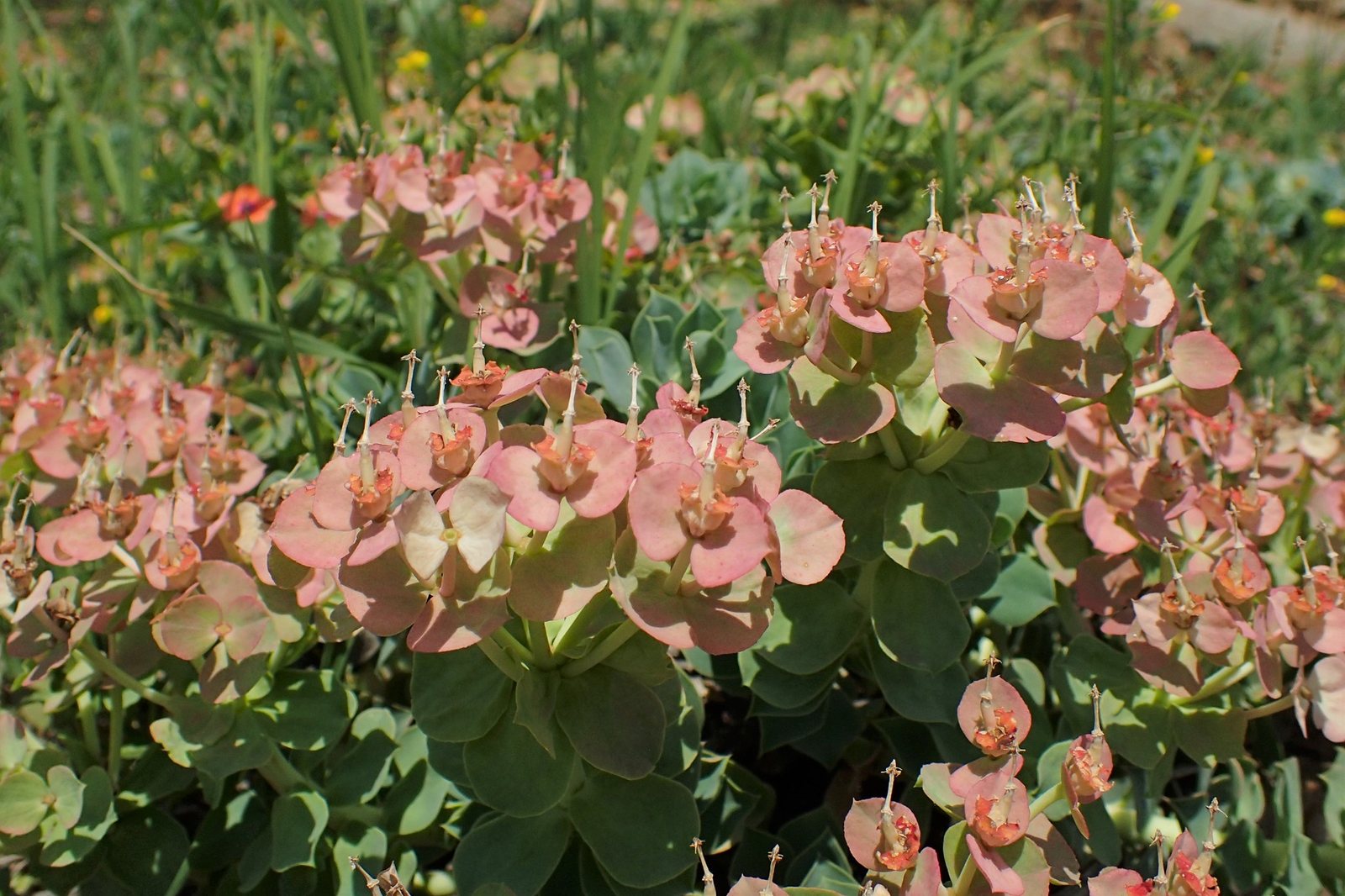
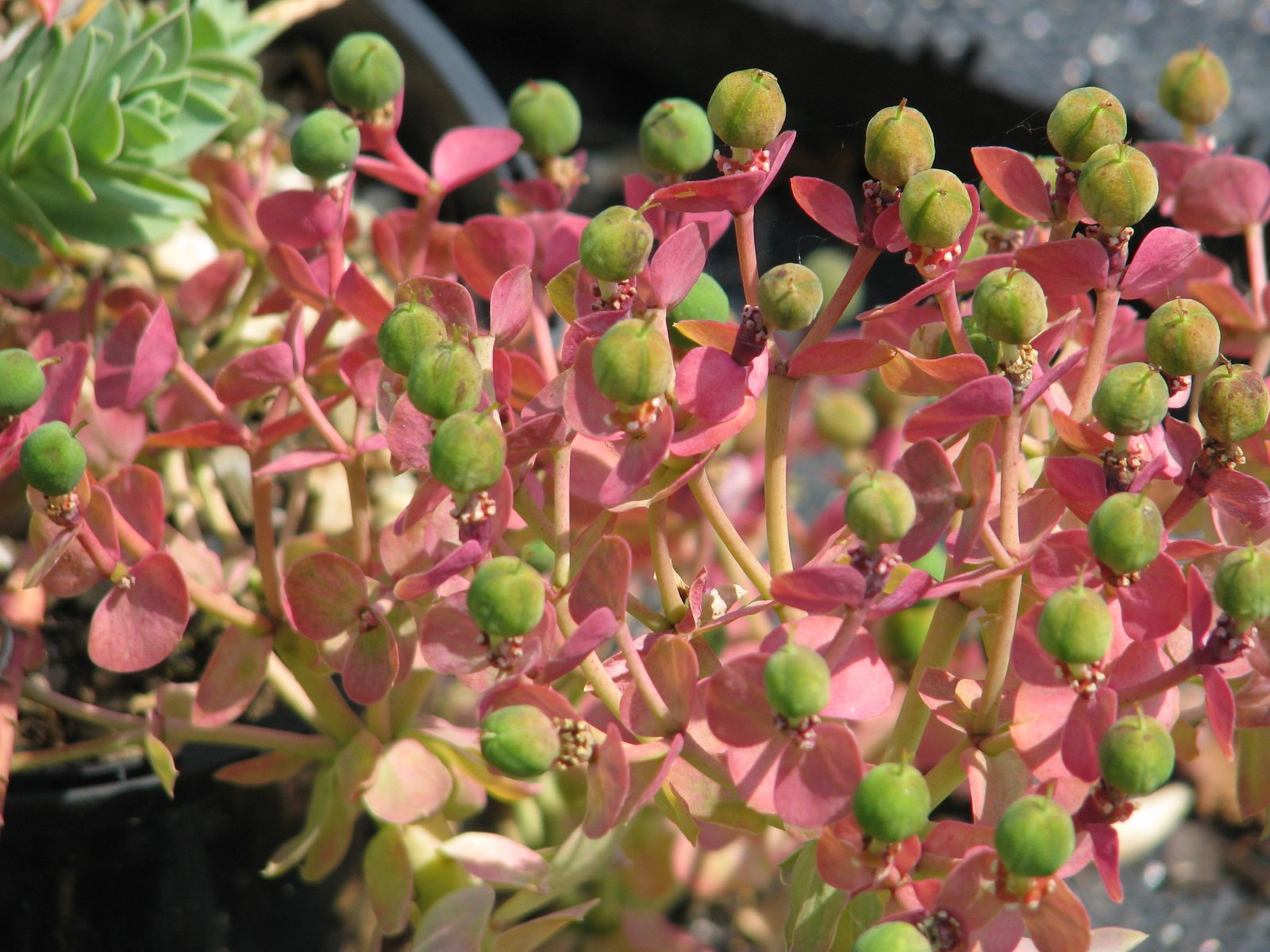
Donkey-tail spurge is a low, spreading perennial with trailing stems wrapped in fleshy blue-grey leaves and topped by lime-yellow flower bracts in spring. Gardeners grow it for drought tolerance, evergreen structure and its ability to spill over stone edges, but its irritating sap and invasive behaviour make it unsuitable for some gardens.
At a glance
- Sun
- Full sun; tolerates light shade but grows less compactly.
- Water
- Low once established. Water new plants during dry spells, then let the soil dry between waterings; avoid persistently damp winter conditions.
- Soil
- Sharply drained sandy, gravelly or stony soil, including alkaline soil. Avoid waterlogged ground and rich, heavily amended planting pockets.
- Height
- 0.5-1 ft (0.15-0.3 m)
- Spread
- 1-2 ft (0.3-0.6 m), with seedlings spreading farther
- Flowers
- Spring to early summer; small yellow-green flowers surrounded by conspicuous lime-yellow bracts.
- Foliage
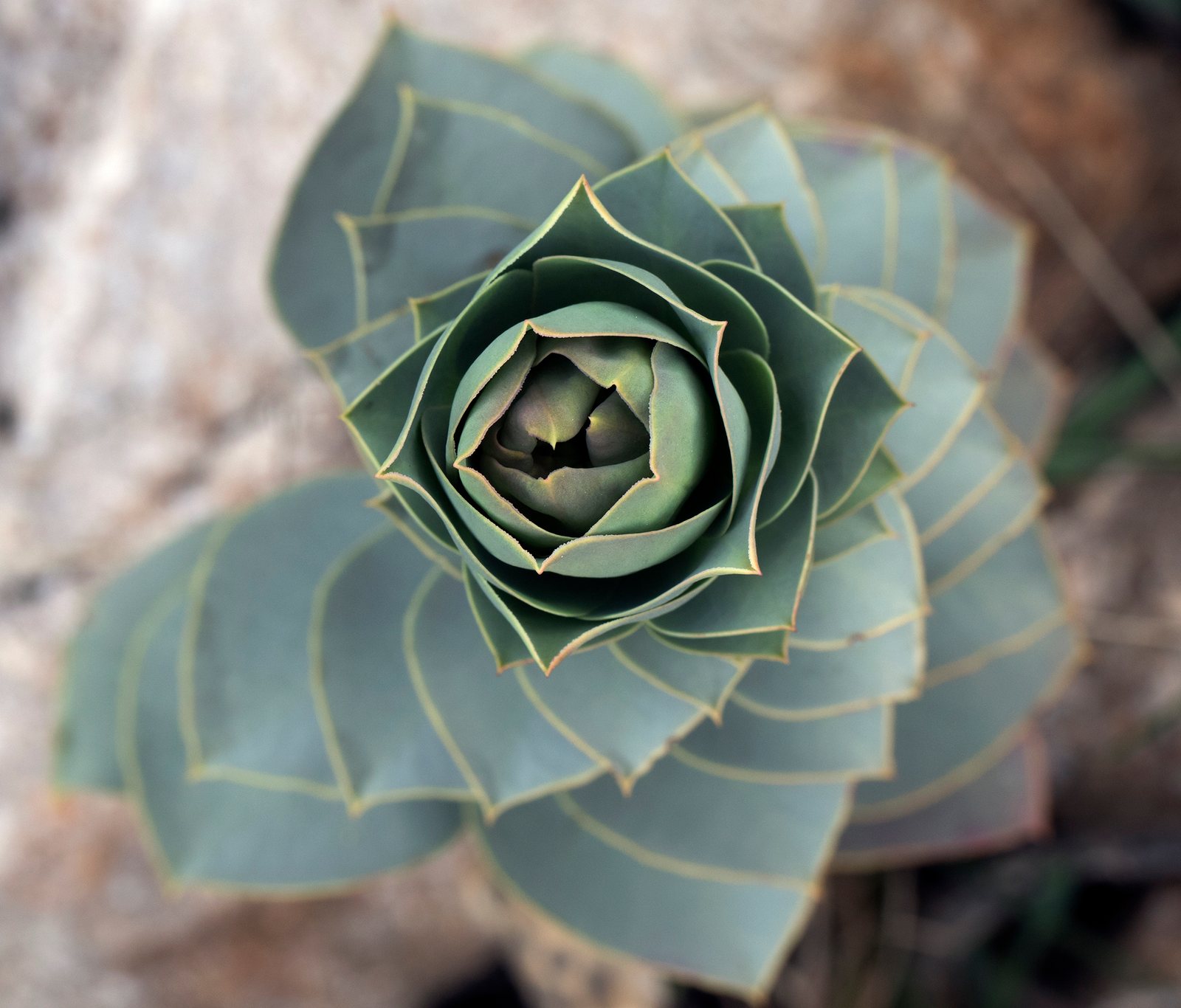
- Evergreen. Fleshy, pointed blue-grey leaves arranged in tight spirals along sprawling stems; often takes on pinkish tones in cold weather.
- Growth
- Moderate
- Care needed
- Medium
The year at a glance
- Pollinators
- Deer resistant
- Drought tolerant
- Heat tolerant
- Low allergen
| J | F | M | A | M | J | J | A | S | O | N | D | |
|---|---|---|---|---|---|---|---|---|---|---|---|---|
| Flowers | ||||||||||||
| Plant |
Northern hemisphere months. In Australia, shift them by six.
- Difficulty
- Moderate
- Toughness
- Very tough
Will it suit your garden?
Pick your zone, country, light and whether you have pets.
Full sun is 6 or more hours of direct sun a day, part shade 3 to 6 hours, shade under 3.
How it grows
Planting day
0.7 ft (0.22 m)
full size
About 3 years to full size.
From a typical nursery size, at an average rate for this kind of plant. A rule of thumb, not a forecast.
Good to know
- Cats and dogs
- Toxic
- Invasive in
- the US
- In the garden
- Spreads vigorously: plan to contain it.
- Growth rate
- Moderate
Care
Jobs through the year
- WaterApr–May, Sep, every 28 days
- Water established plants only during prolonged drought; water new plants more often, allowing soil to dry.
- WaterJun–Aug, every 21 days
- Water established plants only in prolonged drought and only when soil is dry.
- MulchApr
- Use a thin gravel mulch rather than moisture-holding material against the stems.
- PruneMar–Apr
- Remove winter-damaged stems; wear waterproof gloves, long sleeves and eye protection against irritant sap.
- PruneMay–Jun
- Wearing waterproof gloves, sleeves and eye protection, cut spent flowering stems to their bases before seed ripens; retain new shoots.
- ProtectMar–Sep, every 30 days
- Remove seedlings with waterproof gloves; grow only where permitted and keep irritant sap away from skin and eyes.
- ProtectOct–Nov
- Clear fallen leaves and maintain sharp drainage to prevent winter rot.
- Check local invasive-plant restrictions before buying or planting.
- Water at soil level during establishment, then water only during prolonged dry weather.
- Do not routinely feed; rich soil encourages loose growth.
- Use a thin gravel mulch rather than moisture-holding mulch against the stems.
- Remove spent flowering stems before seed ripens and pull unwanted seedlings promptly.
- Wear waterproof gloves, long sleeves and eye protection when handling or cutting it.
Pruning. After flowering, cut the spent flowering stems back to their bases before seed capsules mature, leaving healthy new non-flowering shoots. Remove winter-damaged stems in spring, taking care to avoid contact with the milky sap.
Through the year
- Early spring
- Remove damaged stems with protective clothing and check for unwanted seedlings.
- Spring
- Where planting is permitted, plant in full sun and sharply drained soil; water until established.
- Late spring
- Cut off fading flowering stems before seed capsules ripen and scatter seed.
- Summer
- Water established plants only during prolonged drought and remove seedlings beyond the planting area.
- Autumn
- Clear fallen leaves from the crown and check that drainage channels remain open.
- Winter
- Keep container plants out of standing water and avoid watering while the compost remains wet.
In the garden
- Allow stems to spill over a low stone wall away from paths and seating.
- Use in a sunny gravel garden for blue-grey foliage and lime-yellow spring colour.
- Combine with upright drought-tolerant perennials to contrast their vertical growth with its trailing stems.
- Grow in a sharply drained container where its spiral foliage can be seen closely, but keep it away from children and pets.
Garden styles it suits: Dry gravel garden, Mediterranean, Desert / xeriscape, Architectural minimal, Alpine rock garden and Modern Mediterranean.
Plant it with: English lavender, Bearded iris, Creeping thyme, Rock rose, Blue fescue and Upright stonecrop.
Wildlife: The flowers provide nectar and pollen for visiting insects. Deer and rabbits usually avoid the plant, but it should not be treated as safe forage.
Problems to watch for
- Root and crown rot in wet soil: improve drainage or move the plant to a raised gravel bed; discard badly rotted plants.
- Excessive self-seeding: remove flower stems before seeds mature and pull seedlings while small.
- Loose, stretched growth in shade or rich soil: move to full sun and stop feeding.
- Cold-weather foliage damage: wait until spring, then remove dead stems; avoid cutting healthy evergreen growth unnecessarily.
Safety
Toxic to people, cats, dogs and horses. All parts contain irritating milky sap; skin contact can cause severe irritation or blistering, and eye contact can cause serious injury. Eating it can irritate the mouth and digestive tract, causing drooling, vomiting or diarrhoea. Keep it away from children, pets and grazing animals; seek urgent medical advice for eye exposure and veterinary advice if an animal eats it.
Where it spreads. Spreads by seed, with ripe capsules ejecting seeds beyond the parent plant. It is listed as a noxious weed in Colorado, Utah, Oregon and Washington, with restrictions varying by jurisdiction. It can escape into dry grassland and rocky habitats in the western United States; do not plant where prohibited, and check current local rules before purchasing.
Easily confused with
Upright myrtle spurge (Euphorbia rigida)
Has taller, more upright stems and longer, narrower pointed leaves; donkey-tail spurge stays low with broader leaves on trailing stems.
Donkey's tail (Sedum morganianum)
Has hanging stems packed with plump, rounded succulent leaves rather than flat, pointed leaves; it is frost-tender and does not produce spurge's milky sap.
The name
The name myrsinites refers to myrtle-like foliage, while donkey-tail describes the trailing, densely leaf-covered stems.
Propagation. Where cultivation is permitted, propagate by division in spring or from seed. Self-sown seedlings are common, but avoid sharing plants or seed in regions where it is invasive; wear protection when dividing or handling damaged stems.
Checked against open data
- Accepted botanical name
- Euphorbia myrsinites
- In the US and Canada
- Introduced in Canada and the lower 48 states.
- Native range
- Albania, Baleares, Bulgaria, Corse, Greece, Iran, Italy, Kriti, Krym, North Caucasus, Romania and Sicilia.
- Measured
- Average height 18 cm.
Sources: GBIF (CC BY 4.0), USDA PLANTS and Trefle (CC BY 4.0). The care and design notes are LandscapeGPT's own.
See it in your own yard.
Upload a photo of your yard and see it redesigned with plants that suit your climate, each checked against your zone.