Double Knock Out rose
Rosa 'Radtko'. Family Rosaceae. Shrub.
Also called Rosa 'Radtko', Double Knock Out shrub rose.
A repeat-flowering shrub rose with full, cherry-red flowers and glossy green leaves. Gardeners grow it for a long flowering season and better resistance to black spot than many traditional roses, though it is not disease-proof. It has little fragrance and usually needs no deadheading to keep flowering.
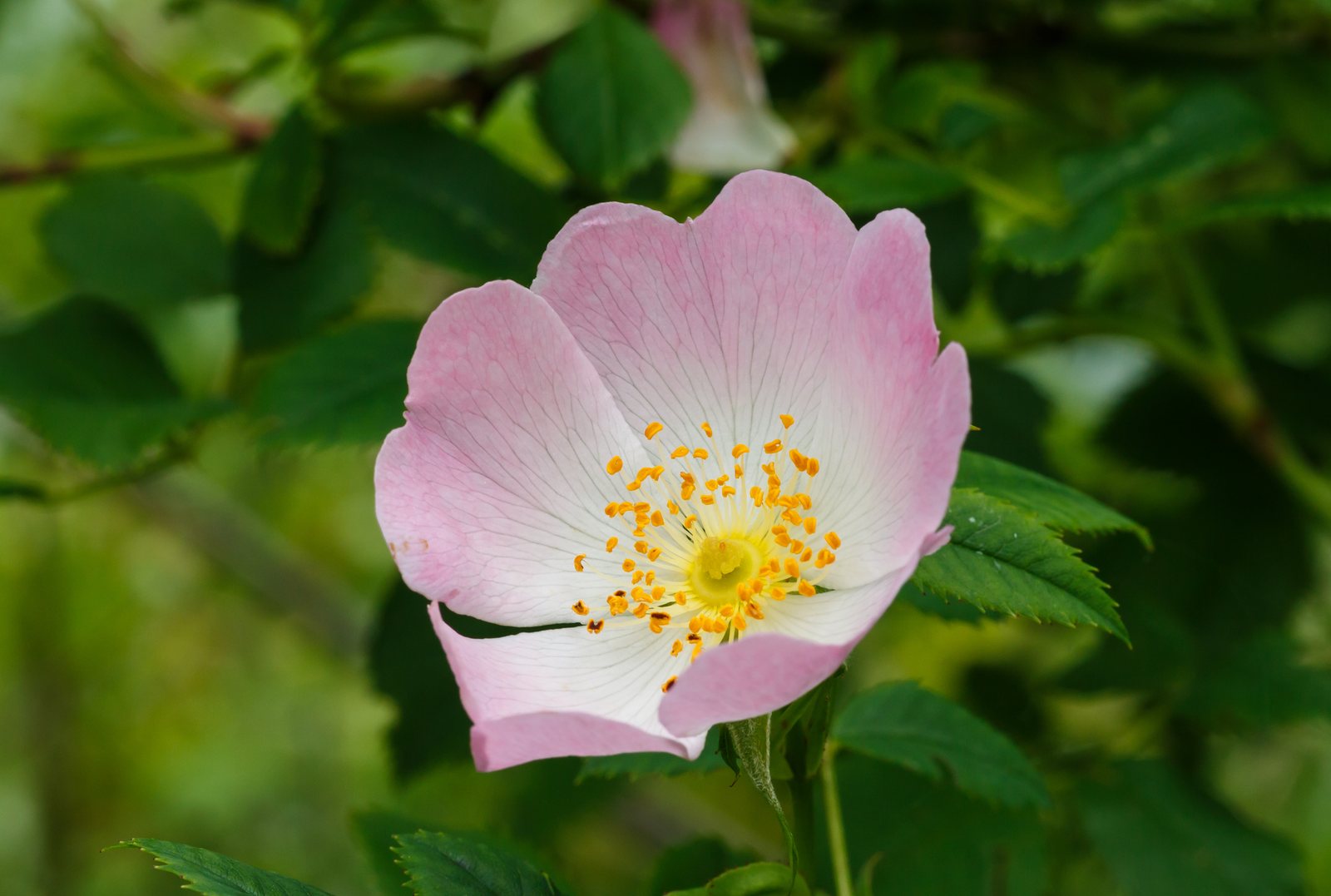
At a glance
- Sun
- Full sun, ideally at least 6 hours daily; light afternoon shade can help in very hot climates.
- Water
- Water deeply during establishment and prolonged dry spells, letting the soil surface dry slightly between waterings. Avoid constantly wet roots.
- Soil
- Fertile, well-drained soil, ideally slightly acidic to neutral; tolerates clay if drainage is adequate.
- Height
- 3-4 ft (0.9-1.2 m), sometimes taller if left unpruned
- Spread
- 3-4 ft (0.9-1.2 m)
- Flowers
- Repeated flushes of double cherry-red flowers from late spring into autumn, often until frost.
- Foliage
- Glossy, dark green, compound leaves with toothed leaflets; young growth often has reddish tones. Stems bear sharp prickles.
- Growth
- Moderate to fast once established.
- Care needed
- Low
The year at a glance
- Heat tolerant
- Disease resistant
- Wildlife
- Low allergen
| J | F | M | A | M | J | J | A | S | O | N | D | |
|---|---|---|---|---|---|---|---|---|---|---|---|---|
| Flowers | ||||||||||||
| Plant |
Northern hemisphere months. In Australia, shift them by six.
- Difficulty
- Easy
- Toughness
- Fairly tough
Will it suit your garden?
Pick your zone, country, light and whether you have pets.
Full sun is 6 or more hours of direct sun a day, part shade 3 to 6 hours, shade under 3.
How it grows
Planting day
1.6 ft (0.5 m)
After 1 year
2.1 ft (0.64 m)
After 2 years
2.5 ft (0.78 m)
After 3 years
3 ft (0.91 m)
After 5 years
3 ft (1.1 m)
full size
About 4 years to full size.
From a typical nursery size, at an average rate for this kind of plant. A rule of thumb, not a forecast.
Good to know
- Cats and dogs
- Safe
- Growth rate
- Fast
Care
Jobs through the year
- WaterApr–May, Sep–Oct, every 14 days
- Soak established roots when soil is drying, allowing for rain; water new roses more often.
- WaterJun–Aug, every 7 days
- Water established roses deeply at soil level during dry weather; skip after soaking rain.
- PruneFeb–Mar
- As buds swell, remove damaged and crossing stems and reduce remaining growth by one-third to one-half.
- FeedApr
- Apply rose fertiliser as leafy growth begins, following the label.
- MulchMar–Apr
- Spread 5–8 cm of organic mulch, keeping it away from stems.
- ProtectOct–Nov
- Remove fallen diseased leaves to reduce overwintering infection.
- Water at soil level, soaking the root zone rather than frequently sprinkling the surface.
- Spread 2-3 in (5-8 cm) of organic mulch over the root area, keeping it clear of the stems.
- Apply a rose fertiliser in spring as growth begins, following the label; avoid late-season nitrogen in cold climates.
- Space plants for their mature width so air can move through the foliage.
- In exposed zone 5 gardens, protect the crown with an insulating mulch after the ground begins to freeze.
Pruning. In late winter or early spring, as buds swell, remove dead, damaged and crossing stems, then reduce the remaining growth by about one-third to one-half to maintain a compact shape. Deadheading is optional; use clean tools and wear thorn-resistant gloves.
Through the year
- Late winter
- In mild climates, prune before strong new growth; in colder areas, wait until early spring.
- Spring
- Plant into workable, well-drained soil, water thoroughly and renew mulch.
- Mid-spring
- Feed established plants as leafy growth develops.
- Summer
- Water deeply during dry weather and inspect new growth for aphids, mites and unusual distortion.
- Early autumn
- Avoid hard pruning and stop nitrogen feeding in cold-winter regions so growth can mature.
- Late autumn
- Remove fallen diseased leaves; add crown protection in exposed cold sites once the soil starts freezing.
In the garden
- Plant in groups along a sunny front boundary for repeated red colour through the growing season.
- Use as an informal flowering hedge, allowing enough width for mature plants rather than clipping tightly.
- Combine with catmint, salvia or lavender to soften its outline with blue-purple flowers.
- Place among evergreen shrubs in a mixed border for summer colour against a permanent green backdrop.
Garden styles it suits: Traditional, Cottage garden, English country, Low-maintenance, Farmhouse and Hot border.
Plant it with: Catmint, Hardy salvia, Lavender, Cranesbill geranium, Lady's mantle and Ornamental onion.
Wildlife: The dense double flowers offer less accessible pollen than single roses, so this is not a strong choice for pollinator planting. Foliage can support insects, and the branching shrub provides some cover for small birds.
Problems to watch for
- Black spot: dark leaf spots and yellowing can occur despite its resistance. Water at soil level, improve airflow and remove infected fallen leaves.
- Rose rosette disease: in affected parts of North America, persistent distorted red growth, excessive prickles and witches'-broom shoots need prompt assessment. There is no cure; remove infected plants, including roots, rather than pruning out individual shoots.
- Aphids: clusters on soft shoots can distort buds. Dislodge with water and encourage natural predators; use insecticidal soap if necessary, following the label.
- Japanese beetles: where present in North America, adults chew flowers and skeletonise leaves. Hand-pick into soapy water; avoid placing beetle traps beside the roses.
Safety
Not known to be toxic to cats, dogs, horses or people. Chewing leaves or flowers may cause mild stomach upset, while sharp stem prickles can injure mouths, skin and eyes; pesticide-treated plants should not be eaten.
Easily confused with
Knock Out rose (Rosa 'Radrazz')
The original Knock Out has open, single cherry-red flowers with visible yellow stamens, rather than the fuller double flowers of 'Radtko'.
Pink Double Knock Out rose (Rosa 'Radtkopink')
It has a similar double flower shape and shrub habit, but the flowers are bright pink rather than cherry-red.
The name
Double Knock Out refers to its fuller, double flowers within the Knock Out rose series; 'Radtko' is its registered cultivar name.
Propagation. Softwood or semi-ripe stem cuttings preserve the cultivar; seedlings will not reliably match it. Check local plant breeders' rights or patent restrictions before propagating.
Checked against open data
- Accepted botanical name
- Rosa
Sources: GBIF (CC BY 4.0). The care and design notes are LandscapeGPT's own.
See it in your own yard.
Upload a photo of your yard and see it redesigned with plants that suit your climate, each checked against your zone.