Duke Gardens plum yew
Cephalotaxus harringtonia 'Duke Gardens'. Family Cephalotaxaceae. Shrub.
Also called Duke Gardens Japanese plum yew, Cephalotaxus harringtonia 'Duke Gardens'.
A slow-growing evergreen conifer with a dense, spreading habit and soft-looking, dark green needles. Gardeners grow it for year-round structure in shaded borders, especially where a low shrub is needed beneath trees or beside a building.
At a glance
- Sun
- Partial to full shade; tolerates more sun in cool climates if the soil stays moist. Protect from strong afternoon sun in hot regions.
- Water
- Keep evenly moist while establishing. Established plants tolerate short dry spells, but need deep watering during prolonged drought.
- Soil
- Well-drained soil with organic matter; acidic to neutral soil is ideal. Avoid persistently wet ground.
- Height
- 2-3 ft (0.6-0.9 m), potentially taller with age
- Spread
- 3-4 ft (0.9-1.2 m), potentially wider with age
- Foliage
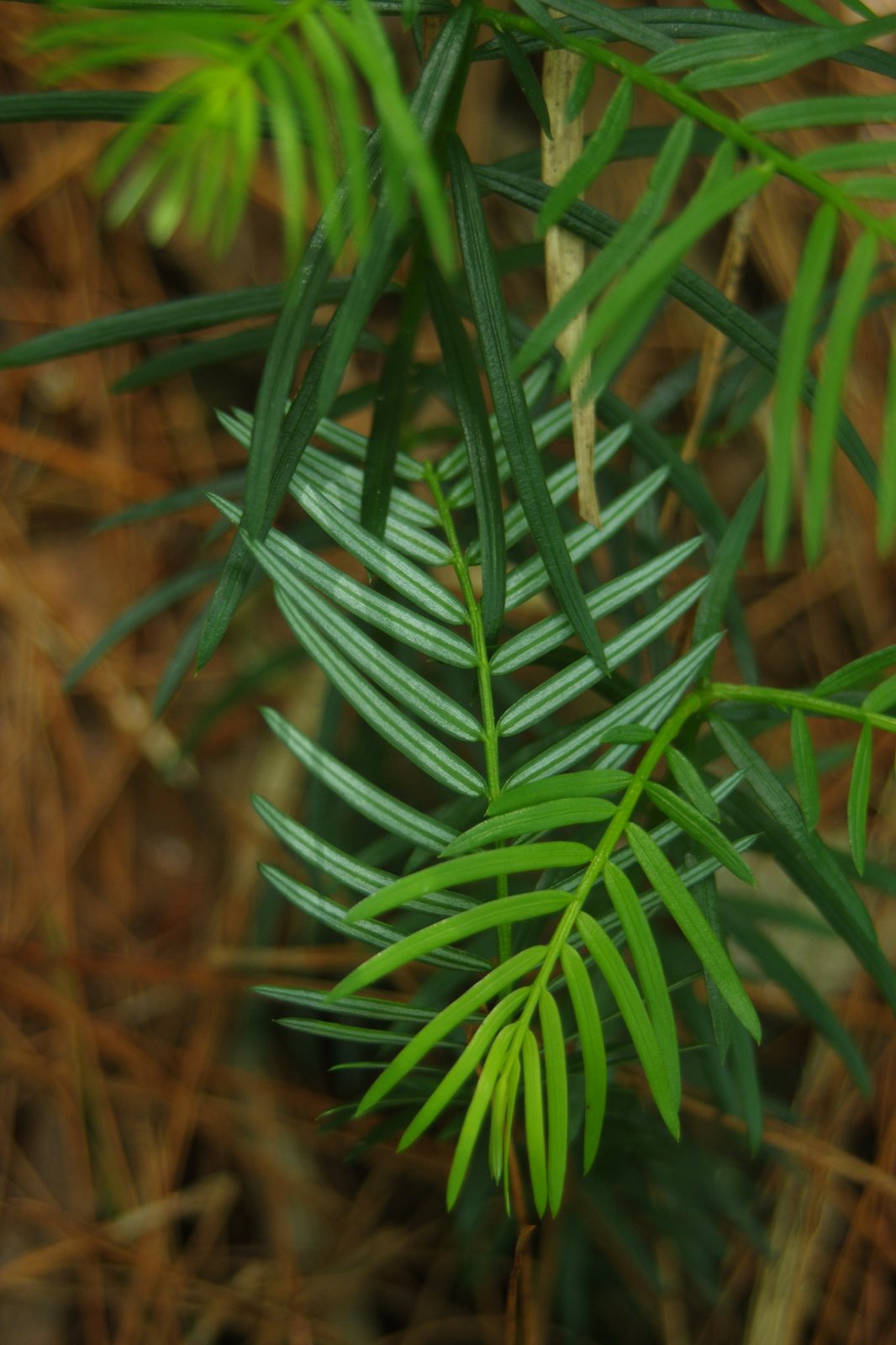
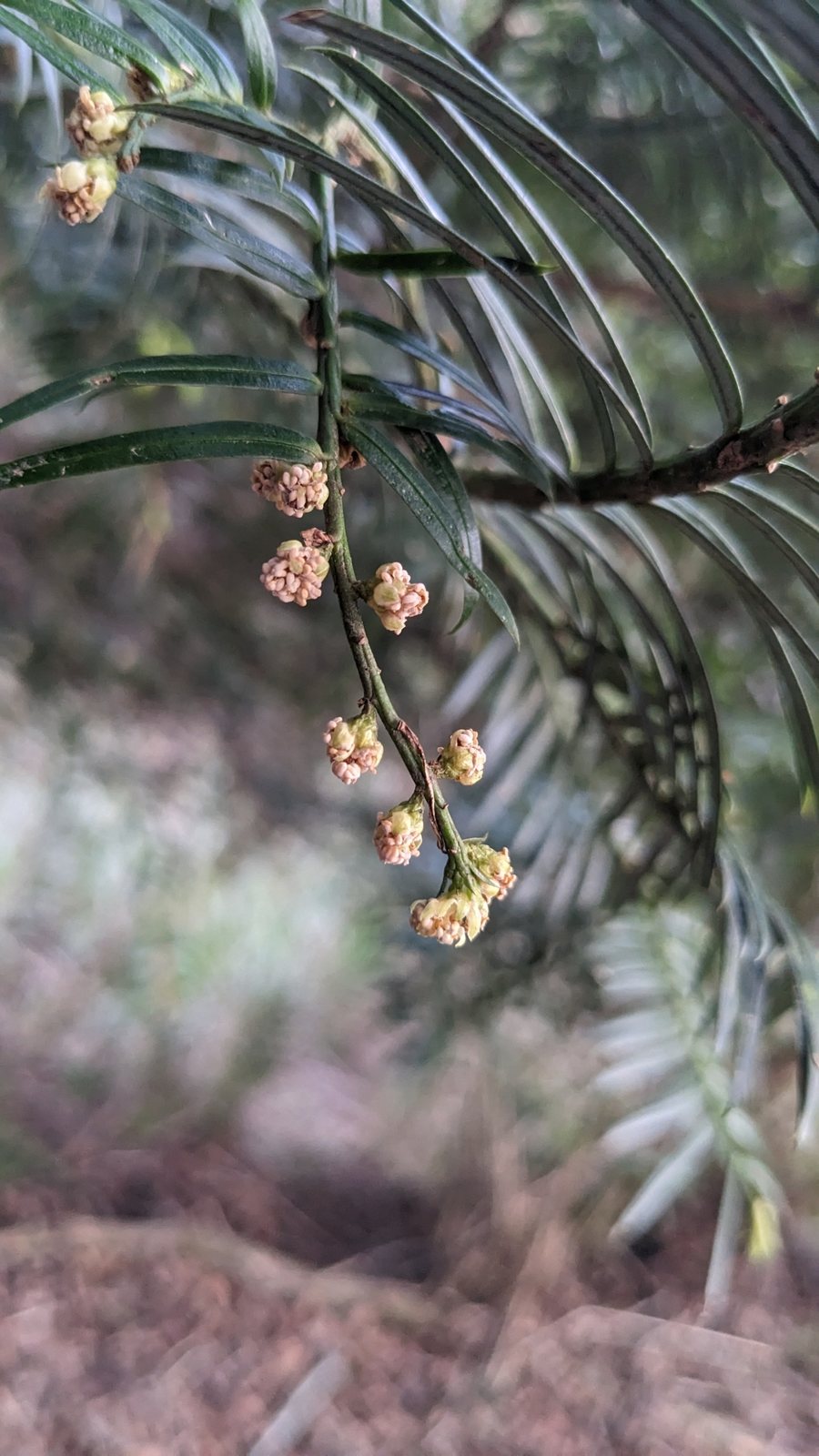
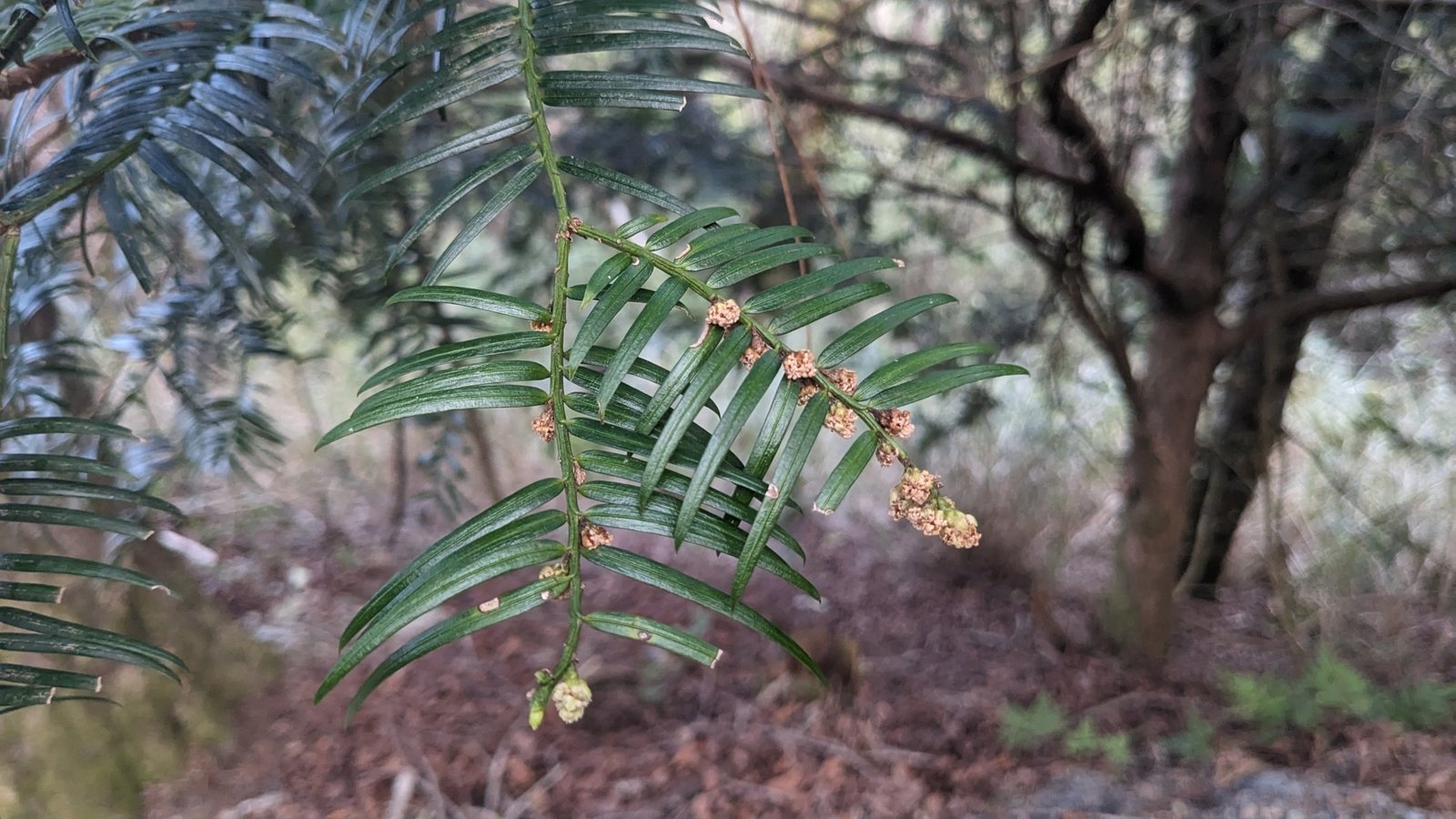
- Evergreen. Flattened, glossy, dark green needles arranged in two ranks along the shoots, giving the branches a fern-like appearance.
- Growth
- Slow
- Care needed
- Low
The year at a glance
- Deer resistant
- Heat tolerant
- Wildlife
| J | F | M | A | M | J | J | A | S | O | N | D | |
|---|---|---|---|---|---|---|---|---|---|---|---|---|
| Plant |
Northern hemisphere months. In Australia, shift them by six.
- Difficulty
- Easy
- Toughness
- Very tough
Will it suit your garden?
Pick your zone, country, light and whether you have pets.
Full sun is 6 or more hours of direct sun a day, part shade 3 to 6 hours, shade under 3.
How it grows
Planting day
1.6 ft (0.5 m)
After 1 year
1.7 ft (0.53 m)
After 2 years
1.8 ft (0.56 m)
After 3 years
1.9 ft (0.59 m)
After 5 years
2.2 ft (0.66 m)
About 8 years to full size.
From a typical nursery size, at an average rate for this kind of plant. A rule of thumb, not a forecast.
Good to know
- Cats and dogs
- Toxic
- Growth rate
- Slow
Care
Jobs through the year
- WaterApr–May, Sep–Oct, every 14 days
- Water established shrubs if dry; check young plants and soil beneath tree canopies more often.
- WaterJun–Aug, every 10 days
- Soak deeply during extended dry spells; keep establishing shrubs evenly moist for two years.
- MulchMay
- Top up organic mulch to 5–8 cm, keeping it clear of stems.
- PruneFeb–Mar
- Remove winter-damaged branches and stray shoots before new growth; avoid routine shearing.
- ProtectJan–Feb, Nov–Dec
- Shelter exposed plants from drying winter winds and gently brush off heavy loose snow.
- Water deeply during dry weather for the first two growing seasons; check moisture beneath tree canopies.
- Apply 2-3 in (5-8 cm) of organic mulch, keeping it clear of the stems.
- Water established plants during prolonged drought rather than giving frequent light sprinkles.
- Feed lightly in spring only if growth is weak or a soil test indicates a deficiency.
- Shelter plants from drying winter winds near the cold end of their range.
Pruning. Prune in late winter or early spring before new growth begins, removing dead or damaged branches and shortening stray shoots selectively. Routine shearing is unnecessary and hides its naturally layered branching.
Through the year
- Early spring
- Check for winter damage and selectively prune dead or misplaced shoots.
- Spring
- Plant when the soil is workable, setting the root flare at ground level and watering thoroughly.
- Late spring
- Renew organic mulch and check moisture around newly planted shrubs.
- Summer
- Water deeply during extended dry spells and watch exposed foliage for scorching.
- Autumn
- Plant in mild regions while the soil is still warm; water established shrubs if autumn is dry.
- Winter
- Check that drainage remains clear and gently remove heavy snow that is bending branches.
In the garden
- Use as a low evergreen foundation shrub on the shaded side of a house.
- Repeat along a woodland path for a consistent dark green outline.
- Pair with ferns, hostas and hellebores to contrast needle-like foliage with broader leaves.
- Plant beneath open-canopied trees where there is enough soil moisture and space for its spreading branches.
Garden styles it suits: Woodland, Japanese, Traditional, Low-maintenance, Green on green and Winter interest.
Plant it with: Hostas, Hellebores, Japanese painted ferns, Epimediums, Japanese forest grass and Camellias.
Wildlife: Dense evergreen branches provide cover for small birds and other garden wildlife. Deer usually leave plum yews alone, although browsing is still possible.
Problems to watch for
- Root rot in waterlogged soil: improve drainage or move the shrub to a better-drained site; do not keep watering saturated roots.
- Brown or scorched needles in hot sun or drought: provide afternoon shade, mulch and water deeply when the root zone becomes dry.
- Winter browning from cold, drying winds: choose a sheltered position and avoid letting the soil dry out before freezing weather.
- Scale insects: inspect stems and needle undersides; remove small infestations by hand or use a horticultural oil labelled for the plant and pest.
Safety
Published toxicity information for plum yews is limited and inconsistent. Do not eat the foliage or seeds, and do not assume they are safe for cats, dogs or horses; the severity of poisoning in these animals is not well established. Plum yews are not true yews (Taxus), whose potentially fatal toxicity is well documented.
Easily confused with
English yew (Taxus baccata)
English yew generally has shorter needles without the plum yew's conspicuous paired pale bands underneath. Female yews bear red, open-ended fleshy cups rather than plum-like fruits.
Prostrate Japanese plum yew (Cephalotaxus harringtonia 'Prostrata')
Usually flatter and more ground-hugging, with longer spreading branches; 'Duke Gardens' forms a denser, more upright mound. Young plants can be difficult to distinguish without a reliable label.
Japanese yew (Taxus cuspidata)
Typically has shorter, more abruptly pointed needles and lacks the two broad pale bands beneath plum yew needles. Fruiting female plants carry red fleshy cups, not plum-like fruits.
The name
The cultivar name refers to Sarah P. Duke Gardens in North Carolina, where it was selected, while 'plum yew' describes its yew-like foliage and plum-like fruits.
Propagation. Root semi-ripe cuttings in late summer with rooting hormone and gentle bottom heat; rooting can be slow. Use cuttings rather than seed to preserve the cultivar.
Checked against open data
- Accepted botanical name
- Cephalotaxus harringtonia
- Native range
- China North-Central, China South-Central, China Southeast, Hainan, Japan, Korea and Taiwan.
- Measured
- Soil pH 5.4 to 7.3.
Sources: GBIF (CC BY 4.0) and Trefle (CC BY 4.0). The care and design notes are LandscapeGPT's own.
See it in your own yard.
Upload a photo of your yard and see it redesigned with plants that suit your climate, each checked against your zone.