Dusky cranesbill
Geranium phaeum. Family Geraniaceae. Perennial.
Also called Mourning widow, Black widow, Dusky-flowered cranesbill.
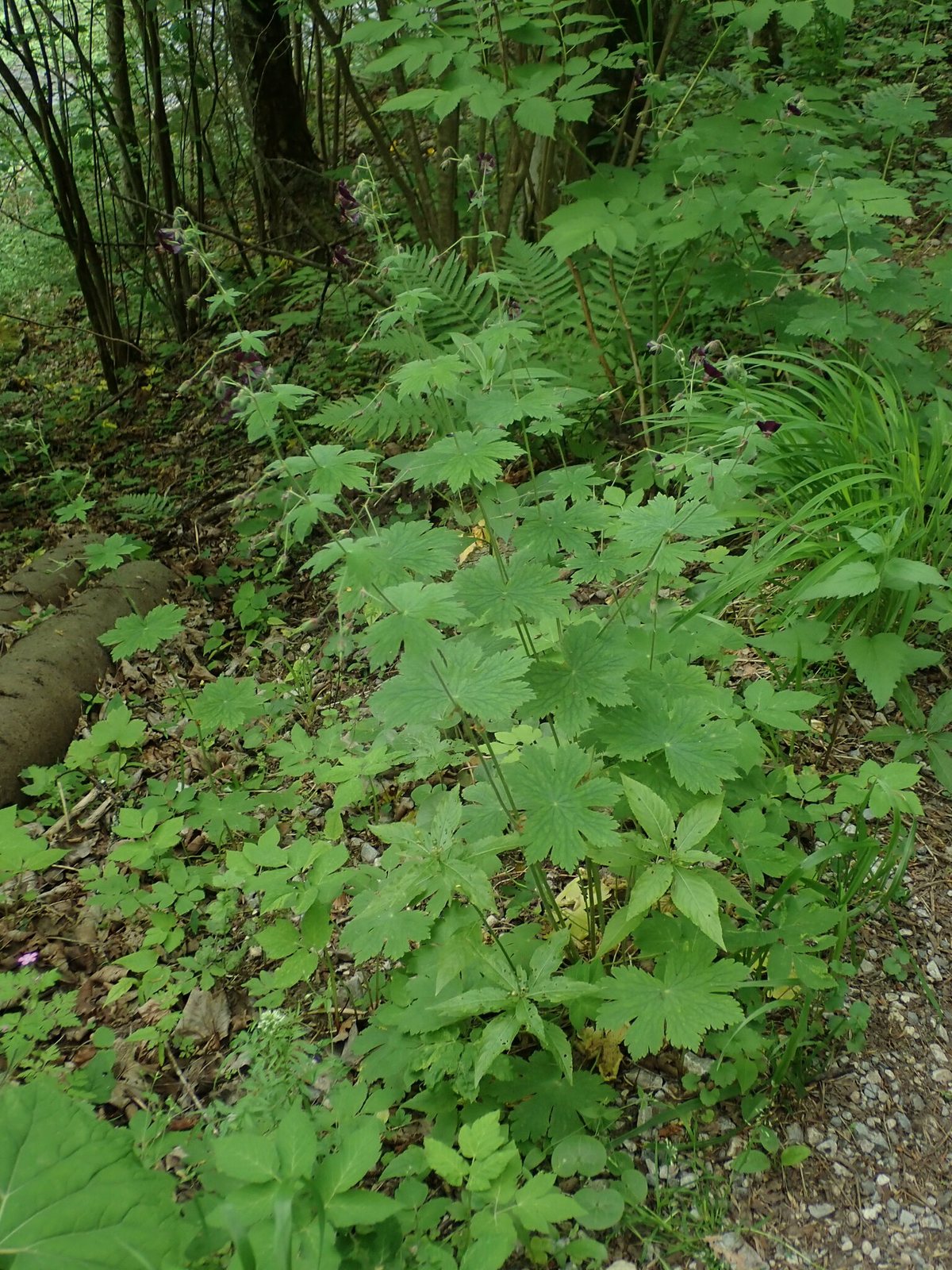
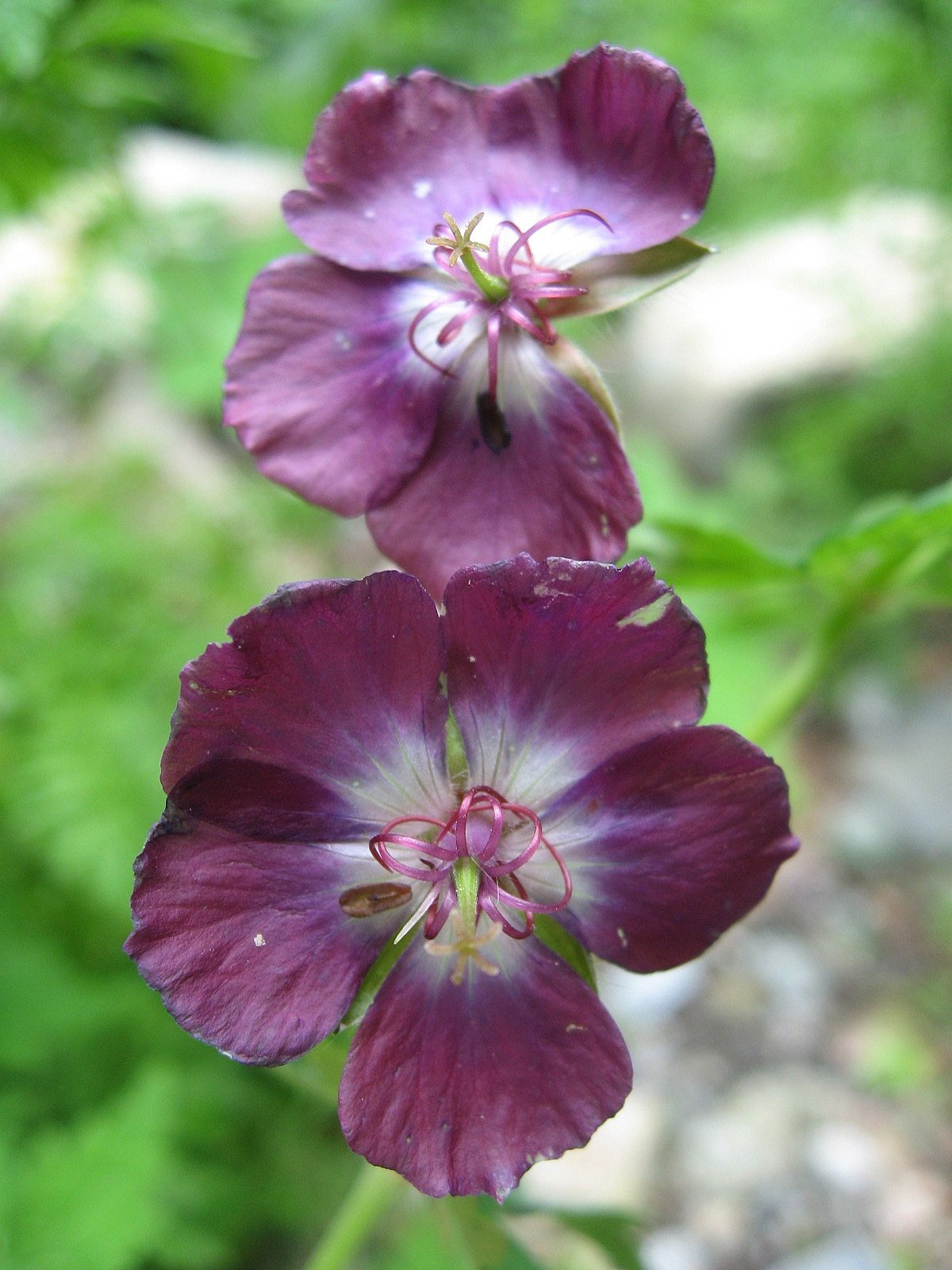
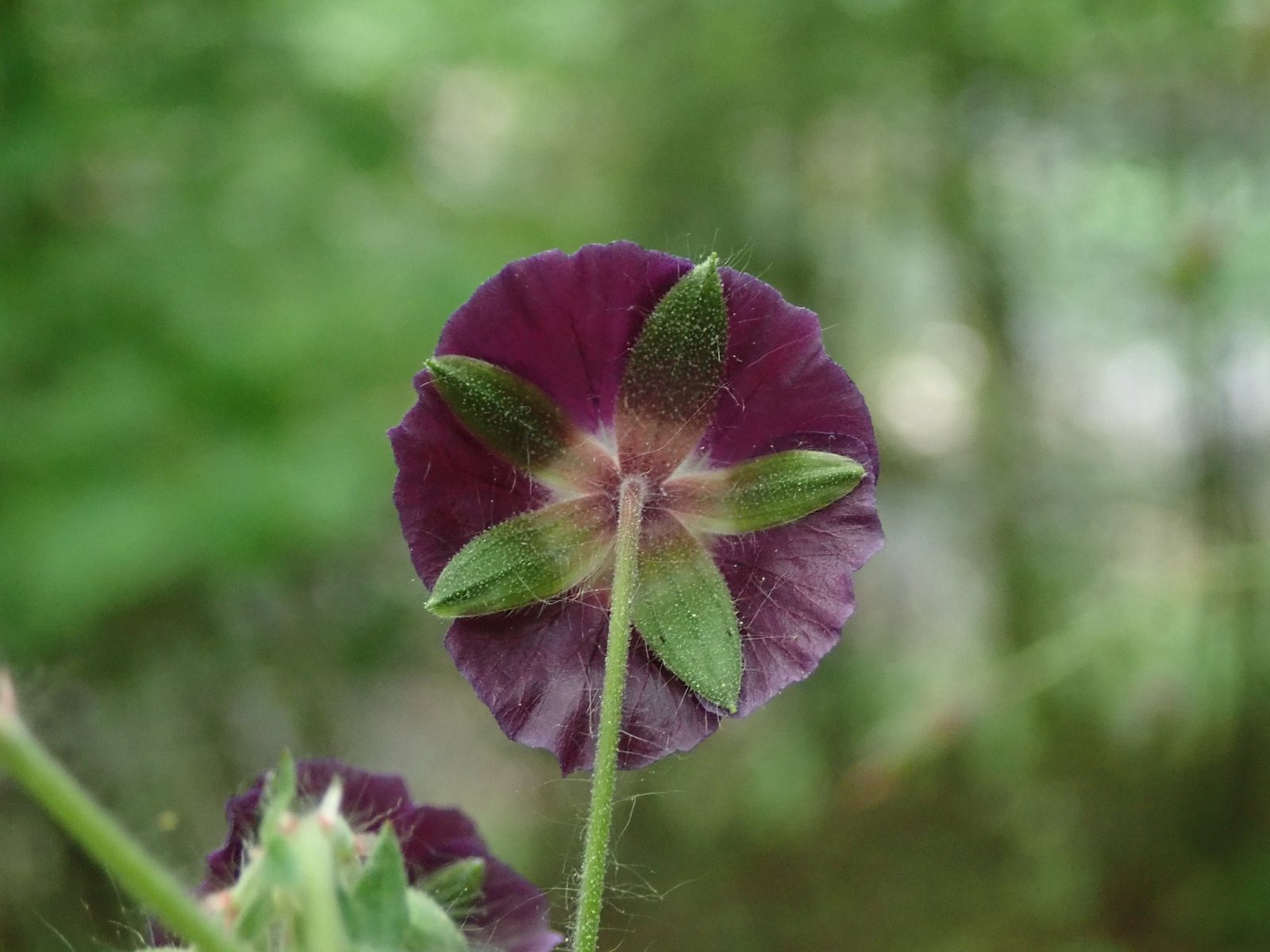
Dusky cranesbill is a clump-forming perennial with lobed leaves and small, nodding, dark maroon flowers held on slender stems. Gardeners grow it for its early flowers and leafy cover in partly shaded borders, including relatively dry shade once established.
At a glance
- Sun
- Partial shade is ideal; tolerates full shade with fewer flowers, or full sun where the soil stays moist.
- Water
- Water regularly during establishment. Established plants tolerate some dry shade, but prolonged drought can make the foliage deteriorate.
- Soil
- Moist but well-drained soil enriched with organic matter; tolerates clay, loam and a wide range of soil pH.
- Height
- 2-3 ft (0.6-0.9 m)
- Spread
- 1-1.5 ft (0.3-0.45 m)
- Flowers
- Late spring to early summer; usually deep maroon-purple, with white, pink and paler purple forms available.
- Foliage
- Rounded, deeply lobed green leaves; some forms have conspicuous brown-purple blotches.
- Growth
- Moderate; forms leafy clumps and can spread farther by self-seeding.
- Care needed
- Low
The year at a glance
- Pollinators
- Deer resistant
- Drought tolerant
- Cold hardy
- Wildlife
- Low allergen
| J | F | M | A | M | J | J | A | S | O | N | D | |
|---|---|---|---|---|---|---|---|---|---|---|---|---|
| Flowers | ||||||||||||
| Plant |
Northern hemisphere months. In Australia, shift them by six.
- Difficulty
- Easy
- Toughness
- Very tough
Will it suit your garden?
Pick your zone, country, light and whether you have pets.
Full sun is 6 or more hours of direct sun a day, part shade 3 to 6 hours, shade under 3.
How it grows
Planting day
1 ft (0.3 m)
After 1 year
1.5 ft (0.45 m)
After 2 years
2 ft (0.6 m)
After 3 years
2.5 ft (0.75 m)
full size
About 3 years to full size.
From a typical nursery size, at an average rate for this kind of plant. A rule of thumb, not a forecast.
Good to know
- Cats and dogs
- Safe
- Growth rate
- Moderate
Care
Jobs through the year
- WaterApr–May, Sep–Oct, every 14 days
- Water established clumps if soil is dry; new plants need more frequent watering.
- WaterJun–Aug, every 7 days
- Water during prolonged drought, especially beneath trees; young plants need closer attention.
- MulchMar–Apr
- Apply a thin compost or leaf-mould mulch without covering the crown.
- DivideMar–Apr, Sep
- Divide crowded clumps when needed and water divisions until established.
- PruneFeb–Mar
- Remove dead leaves and stems before new growth begins.
- DeadheadMay–Jul, every 14 days
- Cut spent flower stems to the base before seed ripens if seedlings are unwanted.
- PruneJun–Jul
- After flowering, shear shabby foliage and water if the soil is dry.
- ProtectMar–May
- Inspect emerging shoots for slugs and hand-pick pests where necessary.
- Water during the first growing season whenever the soil begins to dry.
- In later years, water during prolonged drought, especially beneath thirsty trees.
- Apply a thin layer of compost or leaf mould in spring, keeping it clear of the crown.
- Avoid heavy feeding, which encourages floppy growth.
- Divide crowded clumps in spring or early autumn.
- Remove unwanted seedlings while small; deadhead if you want to limit their numbers.
Pruning. Cut spent flowering stems to the base before seed ripens if self-seeding is unwanted. After flowering, shear tired foliage back and water to encourage fresh leaves; remove remaining dead growth in late winter.
Through the year
- Late winter
- Remove dead stems and leaves before new growth develops.
- Spring
- Plant or divide clumps and apply compost or leaf mould.
- Late spring
- Check moisture around newly planted clumps and those growing beneath trees.
- Early summer
- Remove spent flower stems before seed ripens, or leave a few for naturalising.
- Summer
- Cut back shabby foliage after flowering and water if the soil is dry.
- Early autumn
- Move seedlings or divide established clumps while the soil is still warm and moist.
In the garden
- Plant in loose groups beneath deciduous trees, where the flowers rise above a leafy ground layer.
- Combine with ferns and hostas in shaded borders for contrasting leaf shapes.
- Thread through cottage borders with foxgloves and columbines for an informal late-spring display.
- Use pale-flowered forms to brighten shady paths, or dark-flowered forms against light green foliage.
Garden styles it suits: Woodland, Cottage garden, English country, Wildlife garden, Low-maintenance and Arts and Crafts.
Plant it with: Hostas, Lady ferns, Foxgloves, Columbines, Hellebores and Siberian bugloss.
Wildlife: Flowers provide nectar and pollen for bees and other visiting insects. Dense foliage offers shelter for small garden invertebrates.
Problems to watch for
- Powdery mildew can coat leaves in dry, crowded conditions: improve airflow, water the soil during drought and remove badly affected foliage.
- Slugs and snails may damage young shoots: inspect at dusk, hand-pick and protect emerging growth where necessary.
- Leaves may brown or collapse in prolonged drought: water deeply and cut away damaged foliage.
- Excess seedlings can crowd nearby plants: remove flower stems before seed ripens and weed out seedlings promptly.
Safety
Not known to be toxic to people, cats, dogs or horses; no part is recognised as a significant poisoning hazard. It is not a food plant, and eating substantial quantities may still cause digestive upset. Do not confuse hardy Geranium species with Pelargonium, which has different toxicity risks.
Easily confused with
Wood cranesbill (Geranium sylvaticum)
Usually has more open, outward- or upward-facing violet-purple flowers; dusky cranesbill typically has nodding, dark maroon flowers with petals swept back.
Knotted cranesbill (Geranium nodosum)
Has glossy, usually three- to five-lobed leaves and open lilac-pink flowers with darker veins, rather than the usually dark, nodding flowers of dusky cranesbill.
The name
Geranium comes from the Greek for crane, referring to the beak-like seed capsule, while phaeum means dusky or dark, describing the flowers.
Propagation. Divide clumps in spring or early autumn. Sow fresh ripe seed in pots outdoors; germination can be irregular and may follow a cold period. Seedlings can differ from the parent, so divide named cultivars to preserve their characteristics.
Checked against open data
- Accepted botanical name
- Geranium phaeum
- Native range
- Albania, Austria, Belarus, Bulgaria, Czechoslovakia, France, Germany, Hungary, Italy, Northwest European R, Poland and Romania.
- Measured
- Soil pH 6.5 to 7. Average height 45 cm.
Sources: GBIF (CC BY 4.0) and Trefle (CC BY 4.0). The care and design notes are LandscapeGPT's own.
See it in your own yard.
Upload a photo of your yard and see it redesigned with plants that suit your climate, each checked against your zone.