Dusty daisy bush
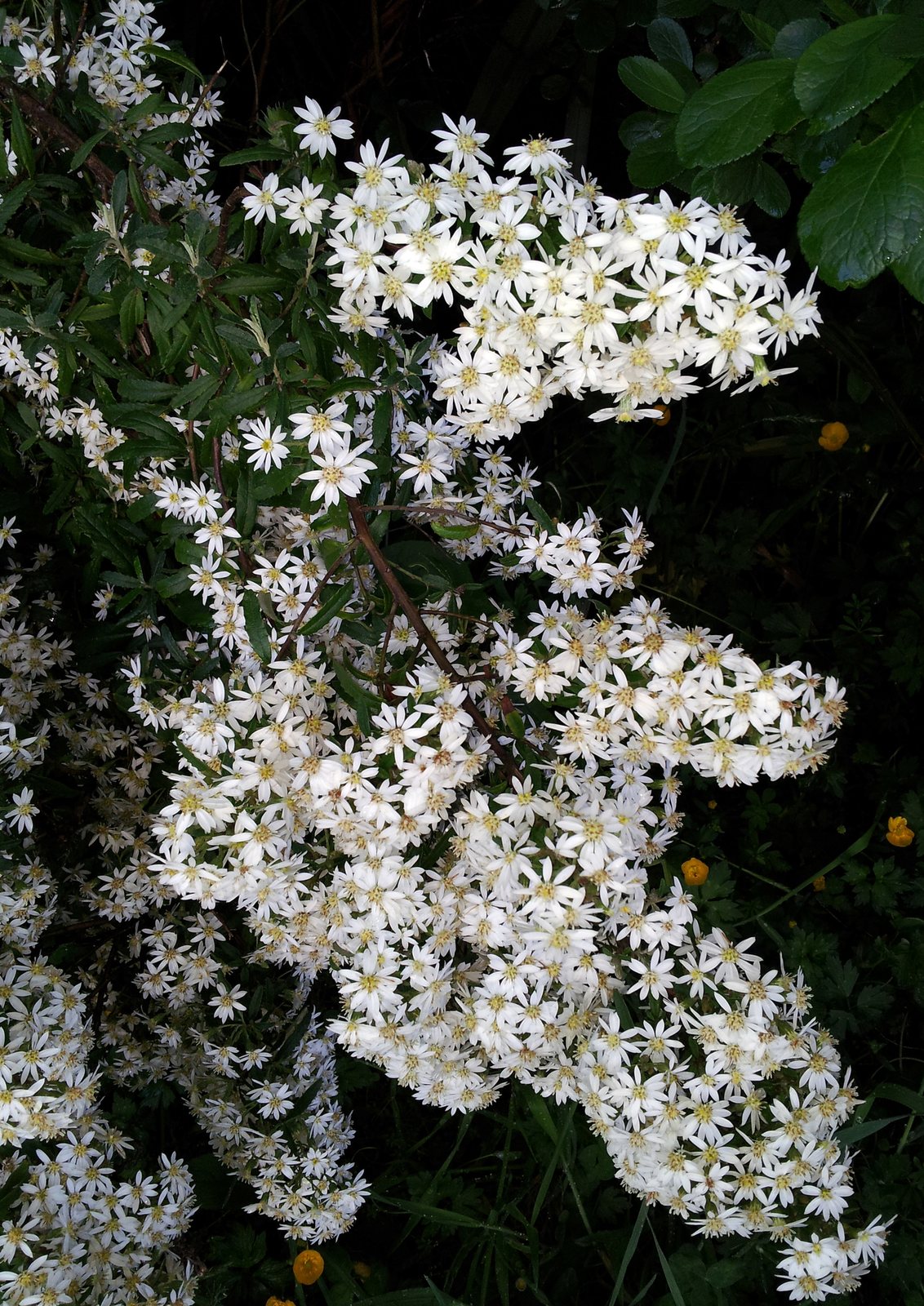
Olearia phlogopappa. Family Asteraceae. Shrub.
Also called Dusty daisy-bush.
An evergreen shrub from southeastern Australia, including Tasmania, grown for its masses of daisy flowers and grey-backed, aromatic leaves. It suits mild coastal and cool-temperate gardens, but needs good drainage and shelter from severe frost and cold, drying winds.
At a glance
- Sun
- Full sun; tolerates light partial shade, usually with fewer flowers.
- Water
- Water regularly while establishing. Once rooted, water during prolonged dry spells; avoid persistently wet soil.
- Soil
- Well-drained sandy or loamy soil, preferably slightly acidic to neutral. Heavy clay needs drainage improvement or a raised planting position.
- Height
- 4-10 ft (1.2-3 m)
- Spread
- 3-7 ft (0.9-2.1 m)
- Flowers
- Spring to early summer; usually white daisies with yellow centres, with pink or mauve flowers in some forms and cultivars.
- Foliage
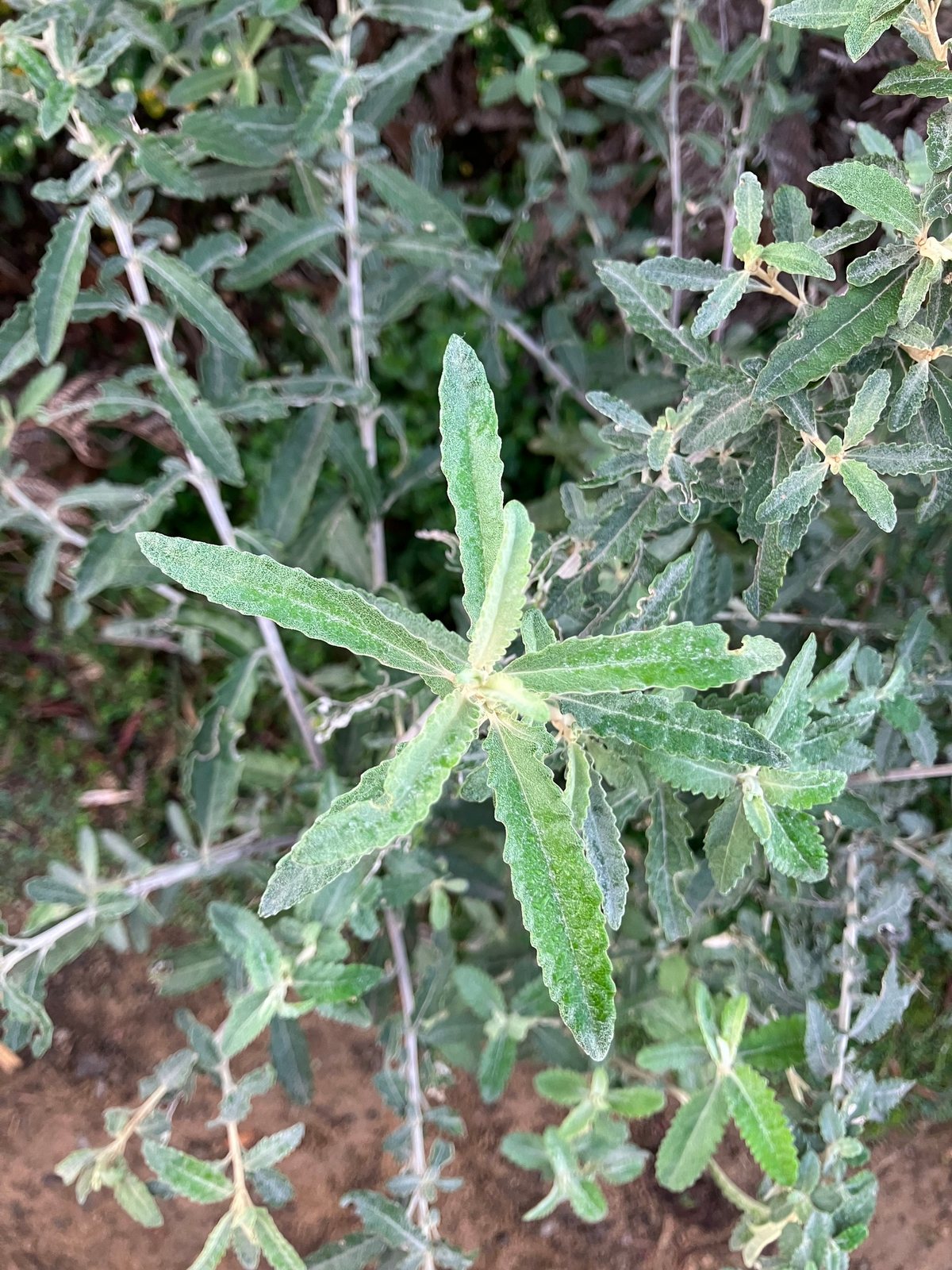
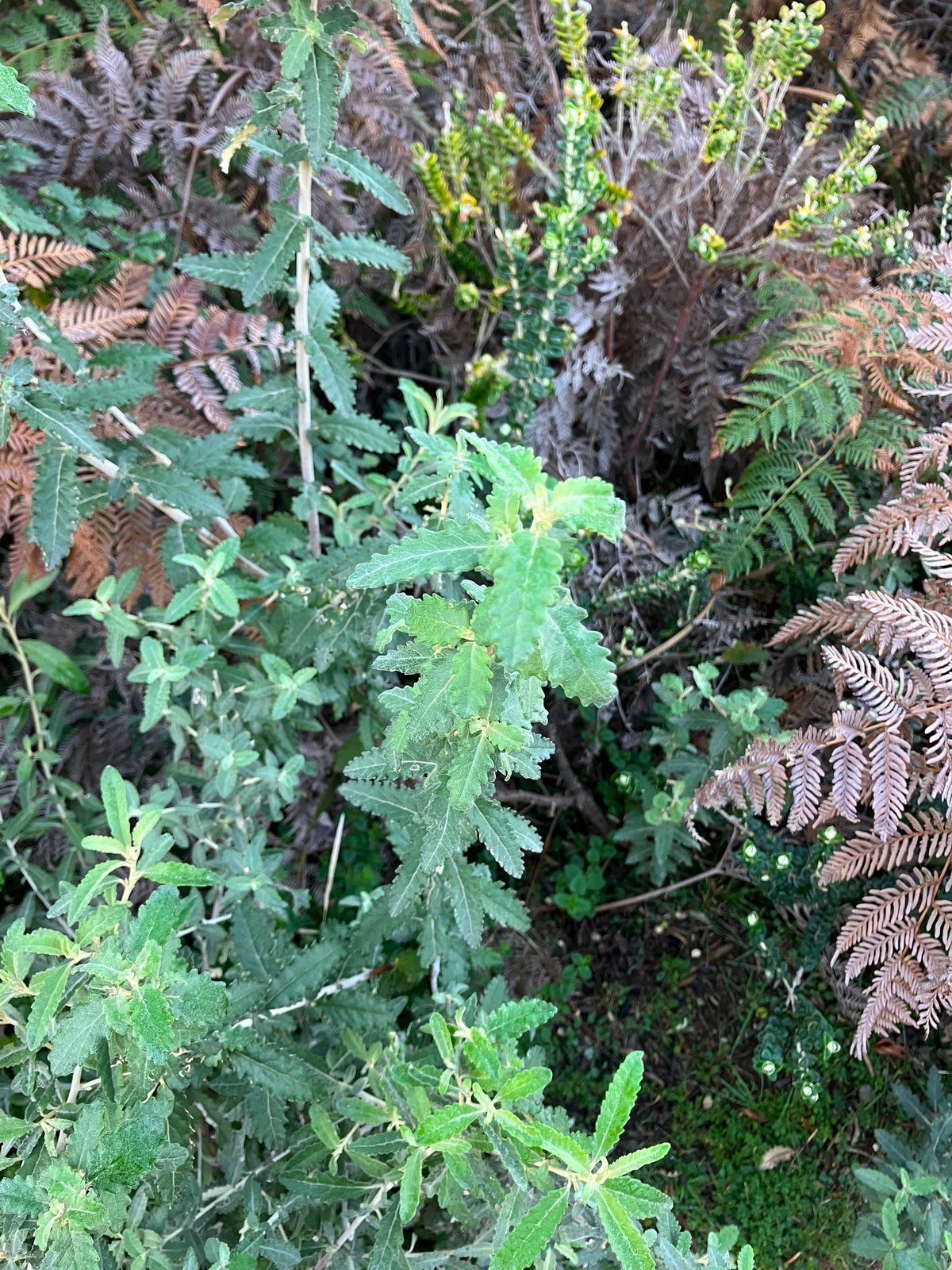
- Evergreen. Small, often toothed, grey-green to dark green leaves with pale, felted undersides; aromatic when rubbed.
- Growth
- Moderate to fast in suitable conditions.
- Care needed
- Medium
The year at a glance
- Pollinators
- Drought tolerant
- Heat tolerant
- Wildlife
- Low allergen
| J | F | M | A | M | J | J | A | S | O | N | D | |
|---|---|---|---|---|---|---|---|---|---|---|---|---|
| Flowers | ||||||||||||
| Plant |
Northern hemisphere months. In Australia, shift them by six.
- Difficulty
- Moderate
- Toughness
- Fairly tough
Will it suit your garden?
Pick your zone, country, light and whether you have pets.
Full sun is 6 or more hours of direct sun a day, part shade 3 to 6 hours, shade under 3.
How it grows
Planting day
1.6 ft (0.5 m)
After 1 year
3 ft (0.9 m)
After 2 years
4 ft (1.3 m)
After 3 years
6 ft (1.7 m)
After 5 years
7 ft (2.1 m)
full size
About 4 years to full size.
From a typical nursery size, at an average rate for this kind of plant. A rule of thumb, not a forecast.
Good to know
- Cats and dogs
- Safe
- Native to
- Australia
- Growth rate
- Fast
Care
Jobs through the year
- WaterApr–May, Sep–Oct, every 14 days
- Water established ground shrubs only if soil is dry; water new plantings and containers more often.
- WaterJun–Aug, every 14 days
- Deep-water established ground shrubs during prolonged dry spells; avoid persistently wet soil.
- WaterJan–Mar, Nov–Dec, every 21 days
- Check overwintered pots and water sparingly if drying; established outdoor plants usually need no winter irrigation.
- FeedApr
- Feed lightly only on poor soil or where growth is weak; avoid heavy nitrogen feeding.
- MulchApr–May
- Apply a light mulch, keeping it clear of the stems.
- PruneApr–May
- Remove dead or frost-damaged shoots once new growth shows what has survived.
- PruneJun–Jul
- Trim flowered shoots immediately after flowering; do not cut deeply into bare old wood.
- ProtectJan–Apr, Oct–Dec
- Overwinter pots frost-free in zone 6–7; mild UK sites may suit outdoor plants with excellent drainage and cold-wind shelter.
- Water deeply during the first growing season, letting the soil surface dry slightly between waterings.
- Plant where winter rain drains away readily; do not leave the roots sitting in water.
- Apply a light mulch in spring, keeping it clear of the stems.
- Feed lightly in spring only if growth is weak or the soil is poor; avoid heavy nitrogen feeding.
- Protect young plants from cold, drying winds and severe frost.
Pruning. Trim lightly immediately after flowering to keep the shrub dense, shortening flowered shoots without cutting deeply into bare old wood. Remove dead or frost-damaged growth in spring once new growth shows what has survived.
Through the year
- Spring
- Plant after severe frost has passed, and water thoroughly.
- Spring
- Check for winter damage, remove dead shoots and refresh mulch.
- Late spring
- Watch new shoots for aphids and wash off small colonies.
- Early summer
- Trim after flowering to maintain a compact shape.
- Late summer
- Take semi-ripe cuttings from healthy, non-flowering shoots.
- Winter
- Check drainage and protect young plants during severe cold.
In the garden
- Use as an informal flowering hedge in a mild, sheltered garden.
- Place behind lower perennials so its pale-backed foliage provides a quiet backdrop after flowering.
- Combine with grasses and silver-leaved shrubs in a sunny coastal border away from the harshest wind.
- Include in an Australian native mixed border for spring flowers and evergreen structure.
Garden styles it suits: Australian native, Coastal, Cottage garden, Pollinator garden, Dry gravel garden and Pacific Northwest woodland.
Plant it with: Westringia, Bottlebrush, Lomandra, Kangaroo grass, Lavender and Catmint.
Wildlife: The open flowers provide pollen and nectar for bees, hoverflies and other visiting insects; dense growth can offer shelter for small birds.
Problems to watch for
- Root rot and dieback in waterlogged soil: improve drainage or move the plant to a raised position; avoid frequent watering of established plants.
- Frost scorch: choose a sheltered site and use temporary frost fleece on young plants; delay removing damaged growth until spring.
- Aphids on soft shoots: wash them off with water and encourage natural predators; use insecticidal soap if colonies persist.
- Sparse, woody growth: trim lightly after flowering each year; replace badly neglected plants rather than relying on hard pruning into bare wood.
Safety
Not known to be toxic to people, cats, dogs or horses. Species-specific information is limited, and no part should be treated as edible.
Easily confused with
New Zealand daisy bush (Olearia × haastii)
Usually has smaller, leathery, oval leaves with smooth edges and flowers later in summer; dusty daisy bush generally has more noticeably toothed leaves.
New Zealand holly (Olearia macrodonta)
Has much larger, holly-like leaves with conspicuous sharp teeth and develops into a larger shrub or small tree.
The name
The epithet phlogopappa refers to the flame-coloured pappus hairs on the fruits, while 'dusty' describes the pale, felted appearance of the foliage.
Propagation. Take semi-ripe cuttings in late summer and root them in a free-draining propagation mix under cover. Seed can be sown in spring, but seedlings may vary; use cuttings to preserve a named cultivar.
Checked against open data
- Accepted botanical name
- Olearia phlogopappa
- Native range
- New South Wales, Tasmania, Victoria and Western Australia.
- Measured
- Average height 140 cm.
Sources: GBIF (CC BY 4.0) and Trefle (CC BY 4.0). The care and design notes are LandscapeGPT's own.
See it in your own yard.
Upload a photo of your yard and see it redesigned with plants that suit your climate, each checked against your zone.