Dwarf Alberta spruce
Picea glauca 'Conica'. Family Pinaceae. Tree.
Also called Dwarf white spruce, Alberta spruce.
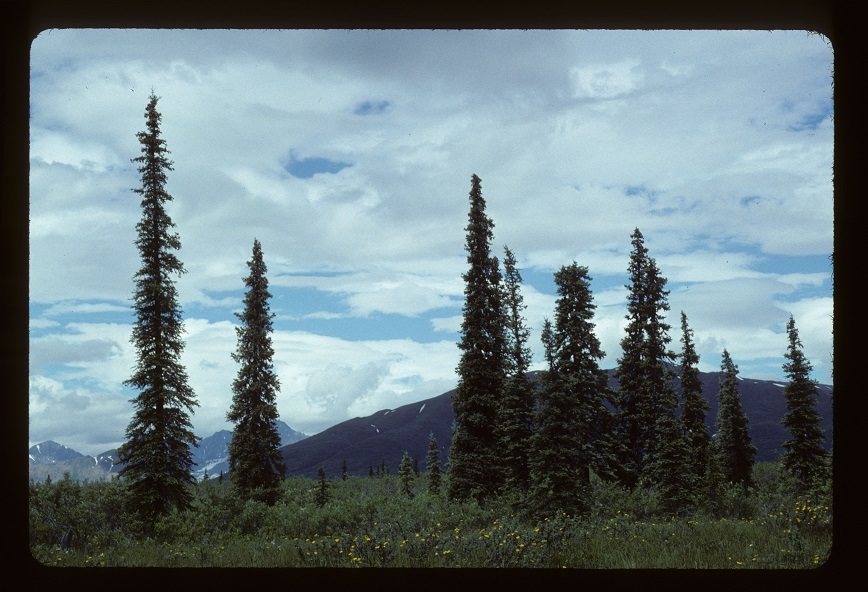
A slow-growing evergreen conifer with a naturally dense, pointed cone shape and fine green needles. Gardeners grow it for year-round structure in small gardens, formal beds and containers. It performs best in cool climates and struggles with prolonged heat, humidity or dry soil.
At a glance
- Sun
- Full sun to light partial shade; afternoon shade helps in warmer locations. Shelter from drying winds and reflected heat.
- Water
- Keep the root zone evenly moist but not waterlogged, especially during establishment. Established plants still need deep watering during dry spells; containers need more frequent checks.
- Soil
- Moist, well-drained, slightly acidic to neutral soil. Avoid waterlogged ground, severely compacted soil and very dry sites.
- Height
- 10-13 ft (3-4 m), eventually
- Spread
- 5-7 ft (1.5-2.1 m), eventually
- Foliage
- Evergreen. Short, densely packed green needles, with softer, brighter green new growth in spring. Branches form a tight, regular cone.
- Growth
- Slow, usually about 2-4 in (5-10 cm) a year; takes several decades to reach its eventual size.
- Care needed
- Medium
The year at a glance
- Cold hardy
- Wildlife
| J | F | M | A | M | J | J | A | S | O | N | D | |
|---|---|---|---|---|---|---|---|---|---|---|---|---|
| Plant |
Northern hemisphere months. In Australia, shift them by six.
- Difficulty
- Moderate
- Toughness
- Fairly tough
Will it suit your garden?
Pick your zone, country, light and whether you have pets.
Full sun is 6 or more hours of direct sun a day, part shade 3 to 6 hours, shade under 3.
How it grows
Planting day
7 ft (2 m)
After 1 year
7 ft (2 m)
After 2 years
7 ft (2.1 m)
After 3 years
7 ft (2.1 m)
After 5 years
7 ft (2.2 m)
About 32 years to full size.
From a typical nursery size, at an average rate for this kind of plant. A rule of thumb, not a forecast.
Good to know
- Cats and dogs
- Safe
- Native to
- the US and Canada
- Growth rate
- Slow
Care
Jobs through the year
- WaterMar–May, Sep–Nov, every 14 days
- Water established trees deeply in dry weather on unfrozen soil; young trees need more.
- WaterJun–Aug, every 7 days
- Soak the root zone in dry weather; avoid both drying out and waterlogging.
- MulchMar–Apr
- Refresh a 5–8 cm organic mulch layer, keeping trunk and root flare uncovered.
- PruneMar–Apr
- Remove confirmed dead or damaged shoots without cutting into bare old wood.
- PruneMay–Sep
- Remove any vigorous, coarse-needled reverted shoot completely at its origin.
- ProtectJun–Aug, every 7 days
- Check foliage for mites and shelter from reflected heat, especially in zone 7.
- ProtectJan–Feb, Nov–Dec
- Shelter from drying winter winds; insulate containers against severe root freezing.
- Plant with the root flare at soil level and water deeply through the first two growing seasons.
- Check soil moisture during dry spells and water the root zone thoroughly rather than sprinkling lightly.
- Apply 2-3 in (5-8 cm) of organic mulch, keeping it clear of the trunk.
- Feed lightly in spring only if growth is poor or a soil test indicates a deficiency.
- Check inner foliage regularly for spider mites, especially during dry weather.
- Use a large, freely draining container and protect its roots from severe freezing and summer overheating.
Pruning. Usually needs no shaping; remove dead or damaged shoots in late winter or early spring, without cutting into bare old wood. Cut out any vigorous, coarse growth that reverts to ordinary white spruce as soon as it appears, taking it back to its point of origin.
Through the year
- Late winter
- Check for broken branches and winter browning; wait for new growth before deciding whether browned shoots are dead.
- Spring
- Plant while conditions are cool, refresh mulch and check that the root flare remains uncovered.
- Late spring
- Inspect new growth and remove any unusually vigorous shoots with coarser needles.
- Summer
- Monitor soil moisture and check for spider mites by tapping branches over white paper.
- Autumn
- Water thoroughly during dry weather before the ground freezes; avoid late feeding.
- Winter
- Shelter exposed container plants from drying winds and insulate pots where roots could freeze severely.
In the garden
- Place a matching pair beside a path or entrance for formal symmetry, allowing room for their eventual width.
- Use as an evergreen focal point among low perennials and spring bulbs.
- Combine with rounded shrubs and spreading groundcovers to contrast with its upright cone.
- Grow in large containers in cool locations for year-round structure, rather than treating it as a permanent small pot plant.
Garden styles it suits: Formal, Traditional, English country, Winter interest, Small-space and Alpine rock garden.
Plant it with: Heathers, Dwarf rhododendrons, Hostas, Coral bells, Snowdrops and Crocuses.
Wildlife: Dense branches offer small birds shelter and occasional nesting sites. Its limited flowering and cone production provide less food than a full-sized white spruce.
Problems to watch for
- Spruce spider mites cause fine stippling, bronzing and sometimes webbing. Confirm by tapping foliage over white paper; rinse foliage thoroughly and use a locally approved miticide or horticultural oil if needed, following temperature and plant-sensitivity precautions.
- Winter burn causes browning on exposed sides when roots cannot replace moisture lost from needles. Water before freezing weather, mulch and provide shelter from drying winds.
- Root rot and decline occur in persistently wet soil. Improve drainage or relocate the plant; do not try to correct waterlogging with more feeding.
- Reversion produces fast-growing branches with larger, coarser needles. Remove the entire reverted shoot promptly at its origin.
Safety
Not known to be toxic to cats, dogs, horses or people. Chewing needles or twigs may irritate the mouth or stomach, and resin can irritate sensitive skin; it is not an edible plant.
Easily confused with
Dwarf Serbian spruce (Picea omorika 'Nana')
Usually broader and less sharply conical, with flatter needles showing conspicuous silvery-white undersides.
Dwarf Norway spruce (Picea abies 'Will's Zwerg')
Also forms a compact cone, but generally has darker, stiffer needles and more visibly defined branches rather than the fine, tightly packed surface of 'Conica'.
White spruce (Picea glauca)
The ordinary species grows much faster into a large tree, with longer needles and a more open branching pattern.
The name
The name 'Conica' describes its cone-shaped habit, while Alberta refers to the Canadian province where the original dwarf plant was discovered.
Propagation. Propagate from semi-ripe cuttings in late summer under controlled humidity; rooting can be slow and uneven. Grafting is another specialist method. Seed will not reliably produce plants true to 'Conica'.
Checked against open data
- Accepted botanical name
- Picea glauca
- In the US and Canada
- Native in Alaska, Canada, the lower 48 states and St. Pierre and Miquelon.
Sources: GBIF (CC BY 4.0) and USDA PLANTS. The care and design notes are LandscapeGPT's own.
See it in your own yard.
Upload a photo of your yard and see it redesigned with plants that suit your climate, each checked against your zone.