Dwarf Hinoki cypress
Chamaecyparis obtusa 'Nana Gracilis'. Family Cupressaceae. Shrub.
Also called Hinoki cypress 'Nana Gracilis', Dwarf Japanese cypress.
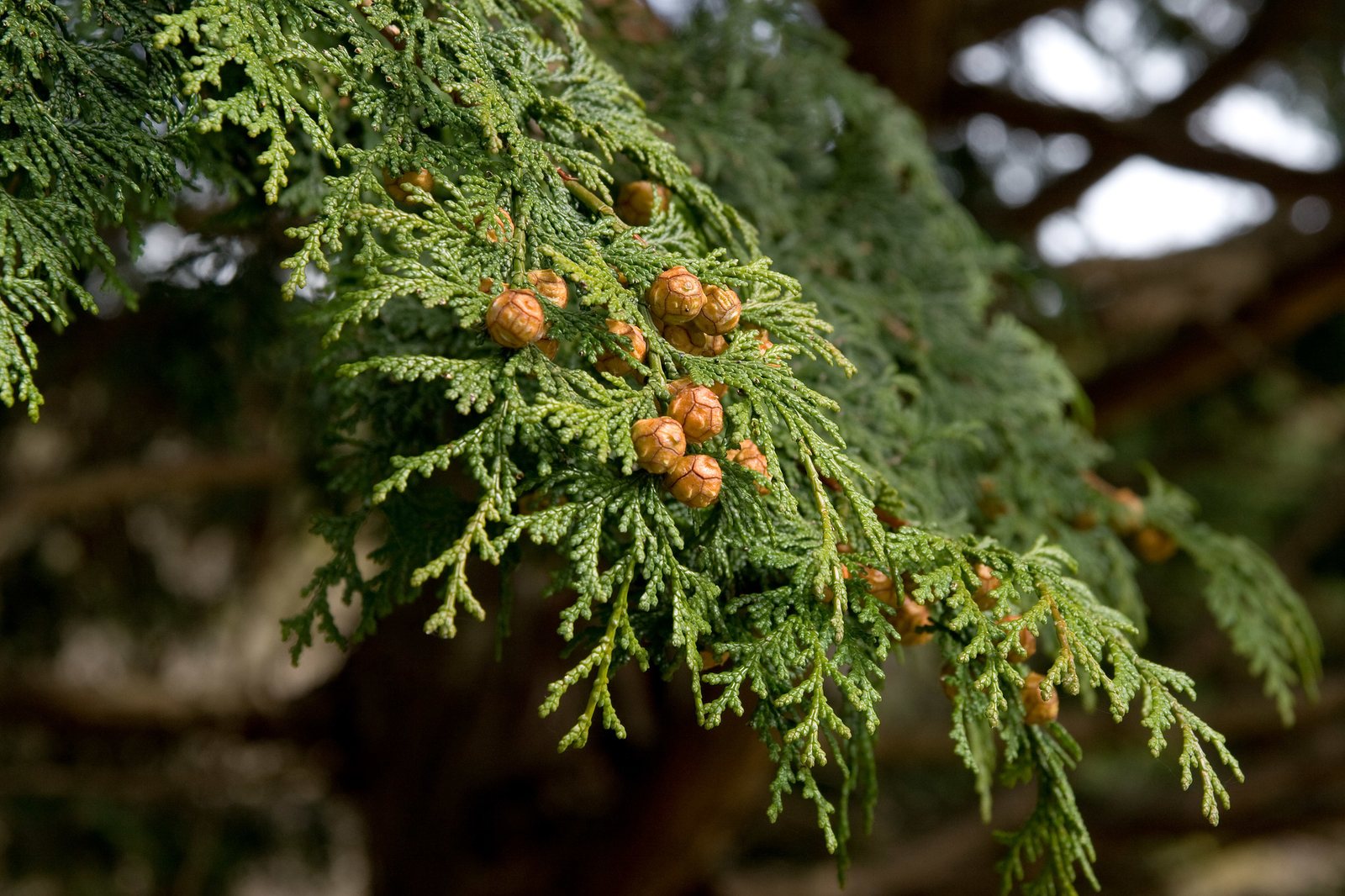
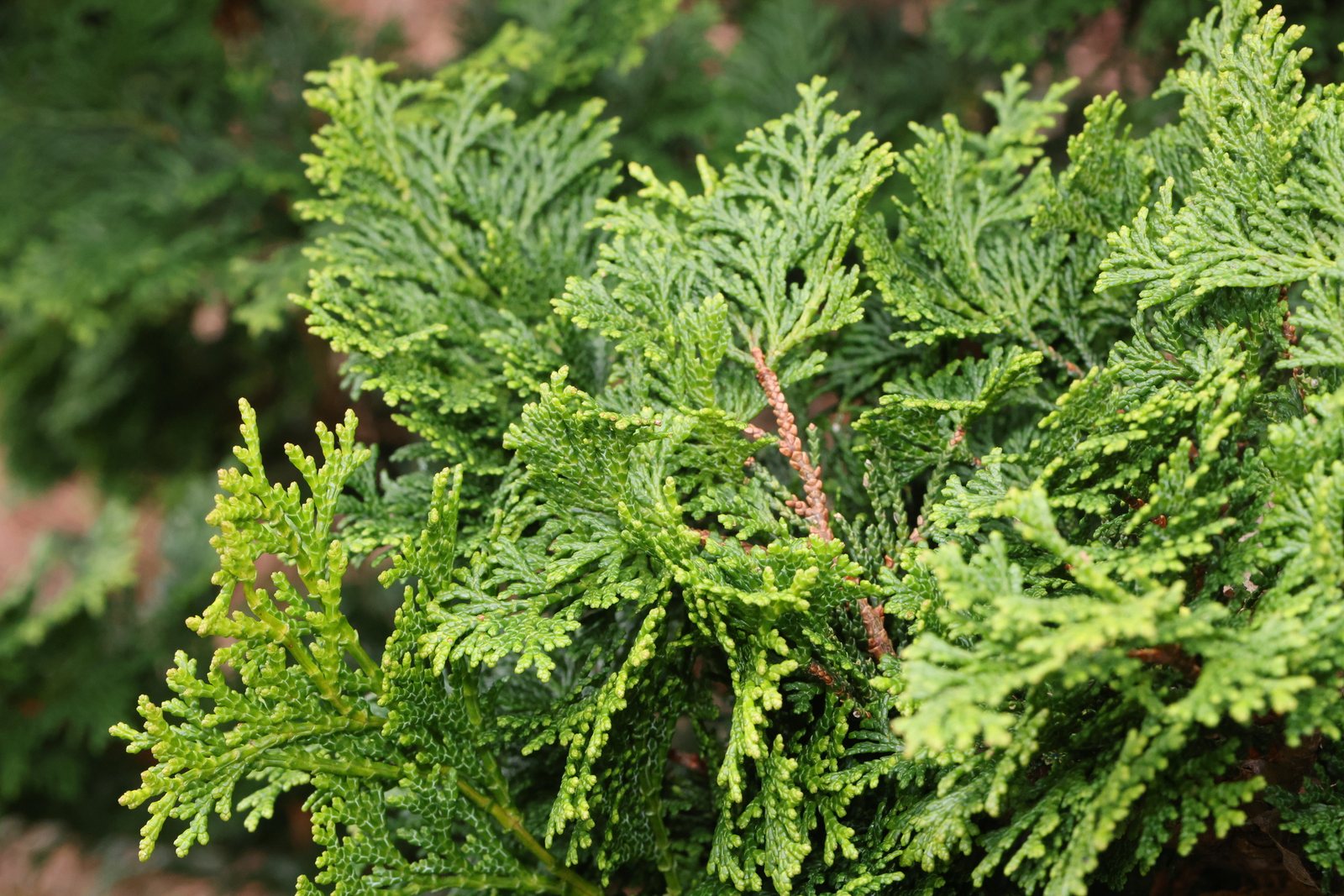
This slow-growing evergreen conifer forms an irregular, broadly upright mound of dark green, cupped foliage sprays. Gardeners grow it for its sculptural shape and year-round structure, especially in small gardens and Japanese-style planting. Although sold as a dwarf, it can become a substantial shrub over several decades.
At a glance
- Sun
- Full sun to partial shade; light afternoon shade helps in hot climates. Protect from drying winds.
- Water
- Keep the root zone evenly moist but not waterlogged. Established plants tolerate brief dry spells, but prolonged drought can scorch the foliage.
- Soil
- Moist, well-drained soil enriched with organic matter; acidic to neutral soil is preferred. Avoid waterlogged ground and very dry, shallow soil.
- Height
- 6-10 ft (1.8-3 m) over several decades; commonly 3-4 ft (0.9-1.2 m) after 10 years
- Spread
- 4-6 ft (1.2-1.8 m) over several decades
- Foliage
- Evergreen. Dense, dark green, scale-like leaves in overlapping, shell-shaped fans, with pale markings beneath. Some bronzing can occur in winter.
- Growth
- Slow, usually about 3-6 in (8-15 cm) a year, depending on conditions
- Care needed
- Low
The year at a glance
- Deer resistant
- Cold hardy
- Wildlife
| J | F | M | A | M | J | J | A | S | O | N | D | |
|---|---|---|---|---|---|---|---|---|---|---|---|---|
| Plant |
Northern hemisphere months. In Australia, shift them by six.
- Difficulty
- Easy
- Toughness
- Fairly tough
Will it suit your garden?
Pick your zone, country, light and whether you have pets.
Full sun is 6 or more hours of direct sun a day, part shade 3 to 6 hours, shade under 3.
How it grows
Planting day
1.6 ft (0.5 m)
After 1 year
2.4 ft (0.74 m)
After 2 years
3 ft (0.98 m)
After 3 years
4 ft (1.2 m)
After 5 years
6 ft (1.7 m)
About 8 years to full size.
From a typical nursery size, at an average rate for this kind of plant. A rule of thumb, not a forecast.
Good to know
- Cats and dogs
- Mildly toxic: may upset a stomach
- Growth rate
- Slow
Care
Jobs through the year
- WaterMar–May, Sep–Nov, every 14 days
- Water established shrubs if upper soil is drying; young plants need more frequent checks.
- WaterJun–Aug, every 7 days
- During dry weather, soak established root zones before they dry out completely.
- WaterJan–Feb, Dec, every 28 days
- Water established shrubs only if soil is dry and unfrozen; check pots more often.
- MulchMar–Apr
- Maintain 5–8 cm of organic mulch without covering the trunk or root flare.
- FeedMar–Apr
- Feed lightly only if soil is poor or growth is weak.
- PruneMay–Jun
- Remove confirmed dead shoots and lightly shorten wayward green tips; avoid bare old wood.
- ProtectJan–Feb, Nov–Dec
- Shelter from drying winds; insulate containers against prolonged root freezing.
- Water deeply during dry weather, especially through the first two growing seasons.
- Apply 2-3 in (5-8 cm) of organic mulch over the root zone, keeping it clear of the trunk.
- Plant with the root flare at soil level; do not bury the trunk or leave roots standing in water.
- Feed lightly in spring only if growth is weak or the soil is poor; avoid heavy nitrogen feeding.
- For container plants, use a pot with drainage holes and check moisture regularly, including in winter.
Pruning. In late spring or early summer, remove dead or damaged shoots and lightly shorten wayward tips if necessary. Keep cuts within green foliage: bare old wood usually does not produce new shoots, and routine shearing spoils the natural form.
Through the year
- Early spring
- Check for winter scorch and broken branches; wait for growth to resume before deciding which browned shoots are dead.
- Spring
- Plant when the soil is workable, water thoroughly and renew mulch without covering the root flare.
- Late spring
- Remove confirmed dead growth and lightly trim any shoots that disrupt the outline.
- Summer
- Check soil moisture during hot spells and water deeply before the root zone dries out.
- Early autumn
- Check sheltered inner foliage for mites and remove loose, naturally shed brown foliage by hand.
- Late autumn
- Water if conditions are dry before the ground freezes; shelter containers from drying winds and prolonged root freezing.
In the garden
- Use as a specimen beside a path or entrance, leaving enough room for its eventual width.
- Pair with Japanese maples, ferns and mossy groundcover for contrasting textures in a sheltered garden.
- Repeat a few plants through a restrained evergreen border to provide year-round structure.
- Grow in a large, well-drained container as a slow-growing courtyard focal point.
Garden styles it suits: Japanese, Zen dry garden, Japandi, Architectural minimal, Woodland and Winter interest.
Plant it with: Japanese maple, Japanese forest grass, Hosta, Japanese painted fern, Pieris and Dwarf rhododendron.
Wildlife: Dense evergreen branches provide shelter for small birds and invertebrates. Wind-pollinated cones offer little value to nectar-feeding insects.
Problems to watch for
- Root rot in waterlogged soil: improve drainage or move the plant to a better-drained position; avoid frequent watering of already wet soil.
- Spider mites in hot, dry conditions: inspect foliage for fine stippling and webbing, rinse with water and use a labelled mite treatment only if needed.
- Drought or winter scorch: maintain soil moisture, mulch the roots and shelter from drying winds; browned foliage may not recover.
- Brown inner foliage: modest autumn shedding is normal; remove loose debris, but investigate watering and drainage if browning reaches the outer tips.
Safety
Not known to be toxic to people, cats, dogs or horses, although specific toxicity information for this cultivar is limited. No part is intended as food; eating foliage or cones may cause digestive upset.
Easily confused with
Dwarf Hinoki cypress 'Nana' (Chamaecyparis obtusa 'Nana')
Usually forms a much lower, more compact mound; 'Nana Gracilis' develops a taller, broadly upright outline. Young plants can be difficult to distinguish without a reliable label.
Dwarf Hinoki cypress 'Gracilis' (Chamaecyparis obtusa 'Gracilis')
Has similar cupped foliage but grows faster and becomes a much larger, more clearly tree-like plant.
Dwarf Sawara cypress 'Boulevard' (Chamaecyparis pisifera 'Boulevard')
Has soft, silvery blue, awl-shaped juvenile foliage rather than the dark green, flattened, shell-like sprays of 'Nana Gracilis'.
The name
Chamaecyparis means 'low cypress', obtusa refers to the blunt leaf tips, and 'Nana Gracilis' means 'dwarf and graceful'.
Propagation. Take semi-ripe cuttings in late summer and root under humid conditions in a free-draining medium; rooting can be slow. Specialist growers also graft it. Seedlings will not reliably retain the cultivar's form.
Checked against open data
- Accepted botanical name
- Chamaecyparis obtusa
- Native range
- Japan and Taiwan.
- Measured
- Average height 1040 cm.
Sources: GBIF (CC BY 4.0) and Trefle (CC BY 4.0). The care and design notes are LandscapeGPT's own.
See it in your own yard.
Upload a photo of your yard and see it redesigned with plants that suit your climate, each checked against your zone.