Dwarf Korean lilac
Syringa meyeri 'Palibin'. Family Oleaceae. Shrub.
Also called Palibin lilac, Meyer lilac.
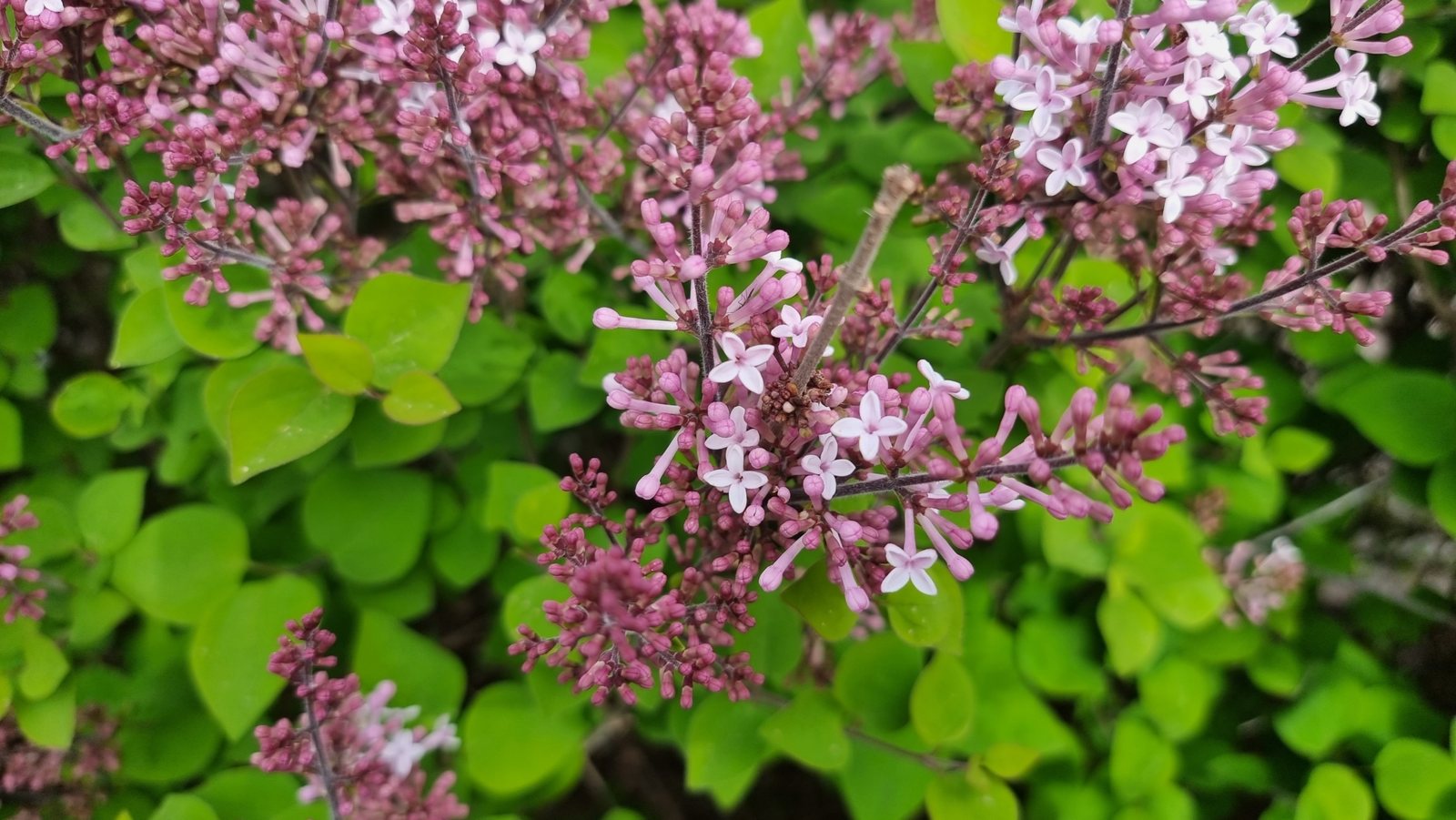
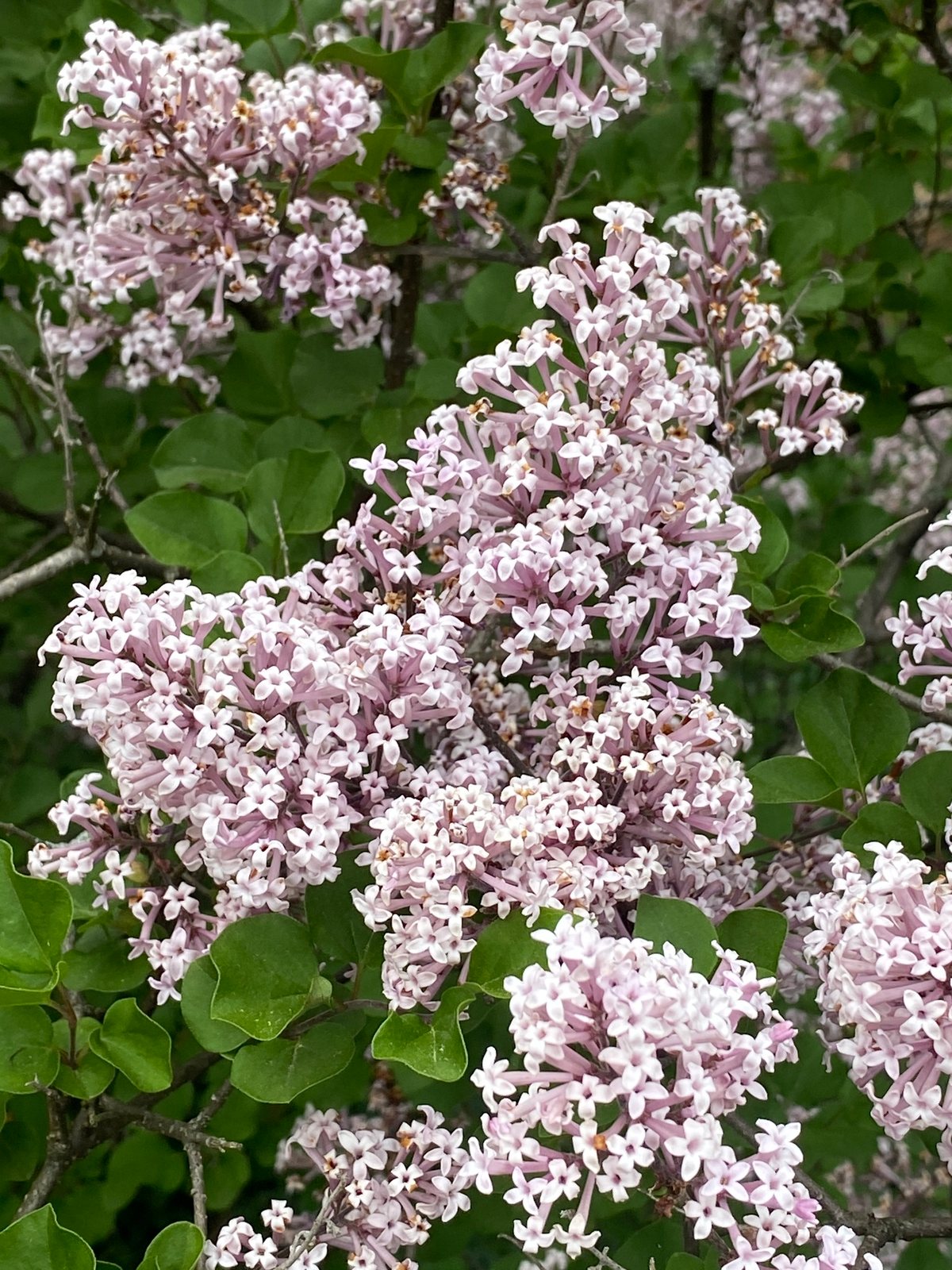
A compact, rounded deciduous lilac grown for its fragrant lavender-pink flowers in late spring. Its small leaves and naturally tidy shape suit smaller gardens, low informal hedges and borders near paths or seating. It flowers best where winters are cold; warm, humid climates and frost-free areas are less suitable.
At a glance
- Sun
- Full sun gives the best flowering; tolerates light partial shade with fewer flowers.
- Water
- Water regularly during establishment. Once established, water during prolonged dry spells rather than keeping the soil constantly wet.
- Soil
- Well-drained, moderately fertile soil, preferably neutral to slightly alkaline. Tolerates clay if drainage is good.
- Height
- 4-5 ft (1.2-1.5 m)
- Spread
- 5-7 ft (1.5-2.1 m)
- Flowers
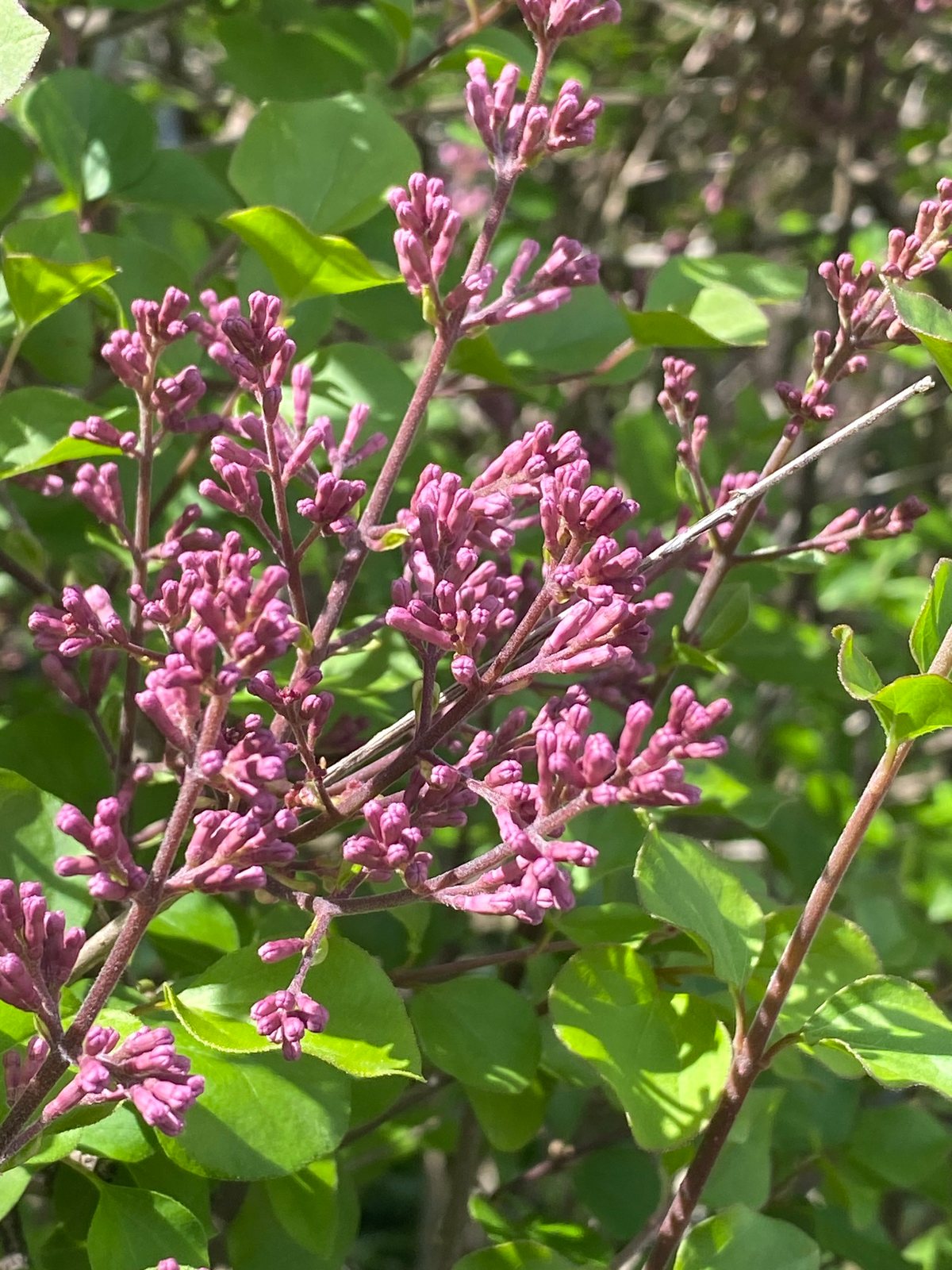
- Late spring to early summer; fragrant lavender-pink flowers in short, dense clusters, opening from darker buds.
- Foliage
- Small, oval, dark green leaves; autumn colour is usually modest, sometimes yellowish.
- Growth
- Slow to moderate.
- Care needed
- Low
The year at a glance
- Pollinators
- Deer resistant
- Cold hardy
- Disease resistant
- Wildlife
- Low allergen
- Fragrant
| J | F | M | A | M | J | J | A | S | O | N | D | |
|---|---|---|---|---|---|---|---|---|---|---|---|---|
| Flowers | ||||||||||||
| Plant |
Northern hemisphere months. In Australia, shift them by six.
- Difficulty
- Easy
- Toughness
- Very tough
Will it suit your garden?
Pick your zone, country, light and whether you have pets.
Full sun is 6 or more hours of direct sun a day, part shade 3 to 6 hours, shade under 3.
How it grows
Planting day
1.6 ft (0.5 m)
After 1 year
2.1 ft (0.63 m)
After 2 years
2.5 ft (0.76 m)
After 3 years
2.9 ft (0.89 m)
After 5 years
4 ft (1.2 m)
About 7 years to full size.
From a typical nursery size, at an average rate for this kind of plant. A rule of thumb, not a forecast.
Good to know
- Cats and dogs
- Safe
- Growth rate
- Slow
Care
Jobs through the year
- WaterApr–May, Sep–Oct, every 14 days
- Water established shrubs only if soil is dry; check young plants more often.
- WaterJun–Aug, every 14 days
- Water established shrubs deeply during prolonged dry spells; water young plants more frequently.
- FeedMar–Apr
- Add a light compost top-dressing; avoid high-nitrogen fertilisers.
- PruneJun
- Immediately after flowering, shorten wayward shoots and remove damaged or occasional old stems.
- DeadheadJun
- Optionally snip off spent flower clusters for tidiness without cutting developing shoots.
- MulchMar–Apr
- Refresh organic mulch to 5–8 cm deep, keeping it away from stem bases.
- Water deeply through the first growing season whenever the root zone starts to dry.
- Apply 2-3 in (5-8 cm) of organic mulch, keeping it clear of the stems.
- Top-dress with compost in spring; avoid heavy feeding or high-nitrogen lawn fertiliser nearby.
- Allow room for its mature spread and keep neighbouring plants from crowding its branches.
- If grown in a container, use a large pot with drainage holes and check moisture regularly.
Pruning. Prune immediately after flowering, removing dead or damaged wood and lightly shortening wayward shoots. Thin an occasional older stem at the base if needed; avoid autumn or winter trimming because it removes the next spring's flower buds.
Through the year
- Early spring
- Refresh mulch and add a light compost top-dressing without burying the stem bases.
- Spring
- Plant container-grown shrubs once the soil is workable, then water thoroughly.
- Late spring
- Enjoy the flowers and check new shoots for aphids.
- Early summer
- Prune lightly as flowering finishes; remove spent flower clusters if you want a tidier appearance.
- Summer
- Water young plants during dry weather and check container-grown plants frequently.
- Autumn
- Plant where soil remains workable and well drained; avoid pruning established shrubs.
In the garden
- Plant beside a path or seating area where you can enjoy the spring fragrance.
- Repeat along a boundary as a low, informal flowering hedge rather than a tightly clipped screen.
- Use in the middle of a small mixed border with hardy geraniums, catmint and spring bulbs.
- Grow in a large container on a sunny terrace, allowing space for the rounded crown.
Garden styles it suits: Cottage garden, English country, Traditional, Sensory garden, Small-space and Pollinator garden.
Plant it with: Catmint, Hardy geranium, Lady's mantle, Peony, Ornamental onion and Daffodil.
Wildlife: Flowers attract bees, butterflies and other nectar-feeding insects. Its dense branches can provide shelter for small birds.
Problems to watch for
- Poor flowering: provide more sun, avoid high-nitrogen fertiliser and prune only just after flowering; insufficient winter cold can also limit bloom.
- Powdery mildew: this cultivar is relatively resistant, but affected plants benefit from better air circulation and less crowding.
- Bacterial blight causing blackened shoots: cut affected growth back into healthy wood during dry weather, disinfect tools between cuts and avoid wetting the foliage.
- Root decline in waterlogged soil: improve drainage or replant in a better-drained position; do not leave container plants standing in water.
Safety
Not known to be toxic to cats, dogs, horses or people. No part is recognised as poisonous, although eating plant material may cause mild digestive upset.
Easily confused with
Miss Kim lilac (Syringa pubescens subsp. patula 'Miss Kim')
Usually grows larger, with more elongated leaves, often paler flowers and more noticeable purple-red autumn colour; 'Palibin' has smaller, rounder leaves and a lower, compact habit.
Common lilac (Syringa vulgaris)
Usually much taller, with larger heart-shaped leaves, larger flower clusters and a stronger tendency to produce suckers.
The name
The genus name Syringa comes from the Greek syrinx, meaning pipe, referring to stems whose pith could be removed to make hollow tubes.
Propagation. Take softwood cuttings in late spring or early summer and root them in a free-draining medium under humid conditions. Seed does not reliably reproduce 'Palibin'; on grafted plants, shoots from below the graft are not the named cultivar.
Checked against open data
- Accepted botanical name
- Syringa pubescens pubescens Syringa meyeri 'Palibin' is an older name for Syringa pubescens pubescens.
Sources: GBIF (CC BY 4.0). The care and design notes are LandscapeGPT's own.
See it in your own yard.
Upload a photo of your yard and see it redesigned with plants that suit your climate, each checked against your zone.