Dymondia
Dymondia margaretae. Family Asteraceae. Groundcover.
Also called Silver carpet, Carpet daisy.
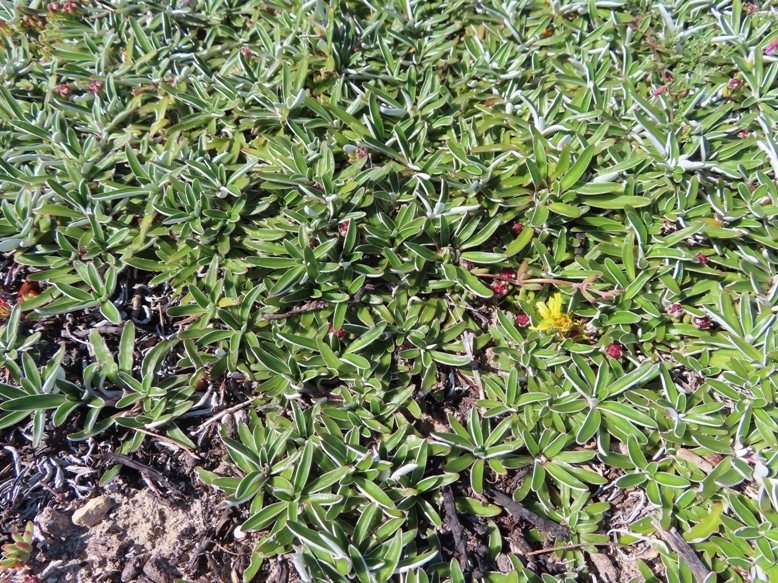
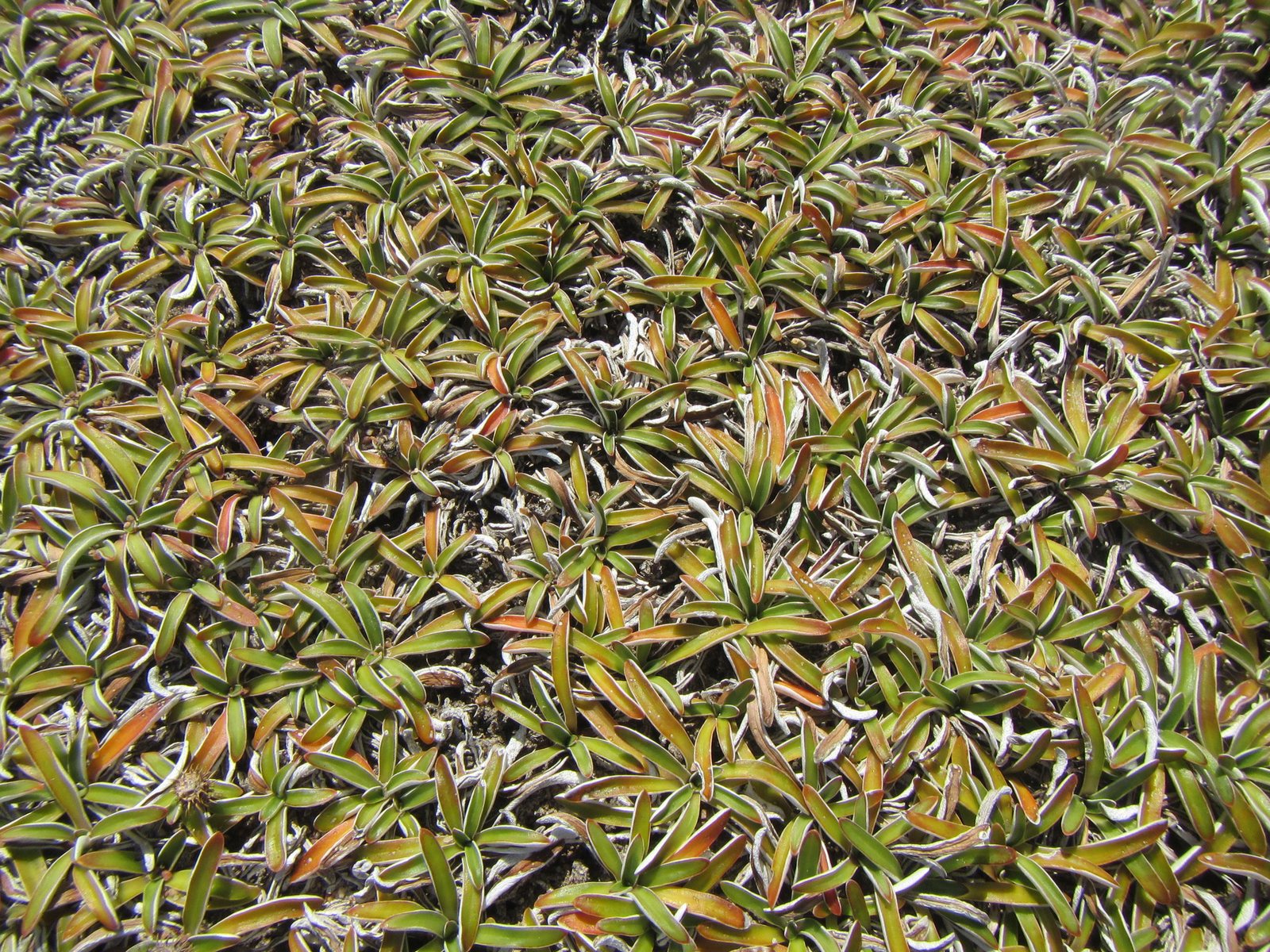
Dymondia is a low, evergreen South African groundcover with narrow leaves that give its dense carpet a silvery-green appearance. Gardeners grow it between paving stones, along sunny borders and as a small lawn alternative where foot traffic is light. It tolerates drought once established but needs excellent drainage and protection from hard freezes.
At a glance
- Sun
- Full sun; tolerates light shade, but growth is less dense.
- Water
- Water regularly while establishing, then deeply but infrequently. Established plants tolerate dry periods, although prolonged drought can cause leaves to curl and growth to stall.
- Soil
- Well-drained sandy or gritty soil; tolerates poorer soils but struggles in waterlogged ground, especially in winter.
- Height
- 0.1-0.25 ft (0.03-0.08 m)
- Spread
- 1-2 ft (0.3-0.6 m), gradually spreading farther where conditions suit it
- Flowers
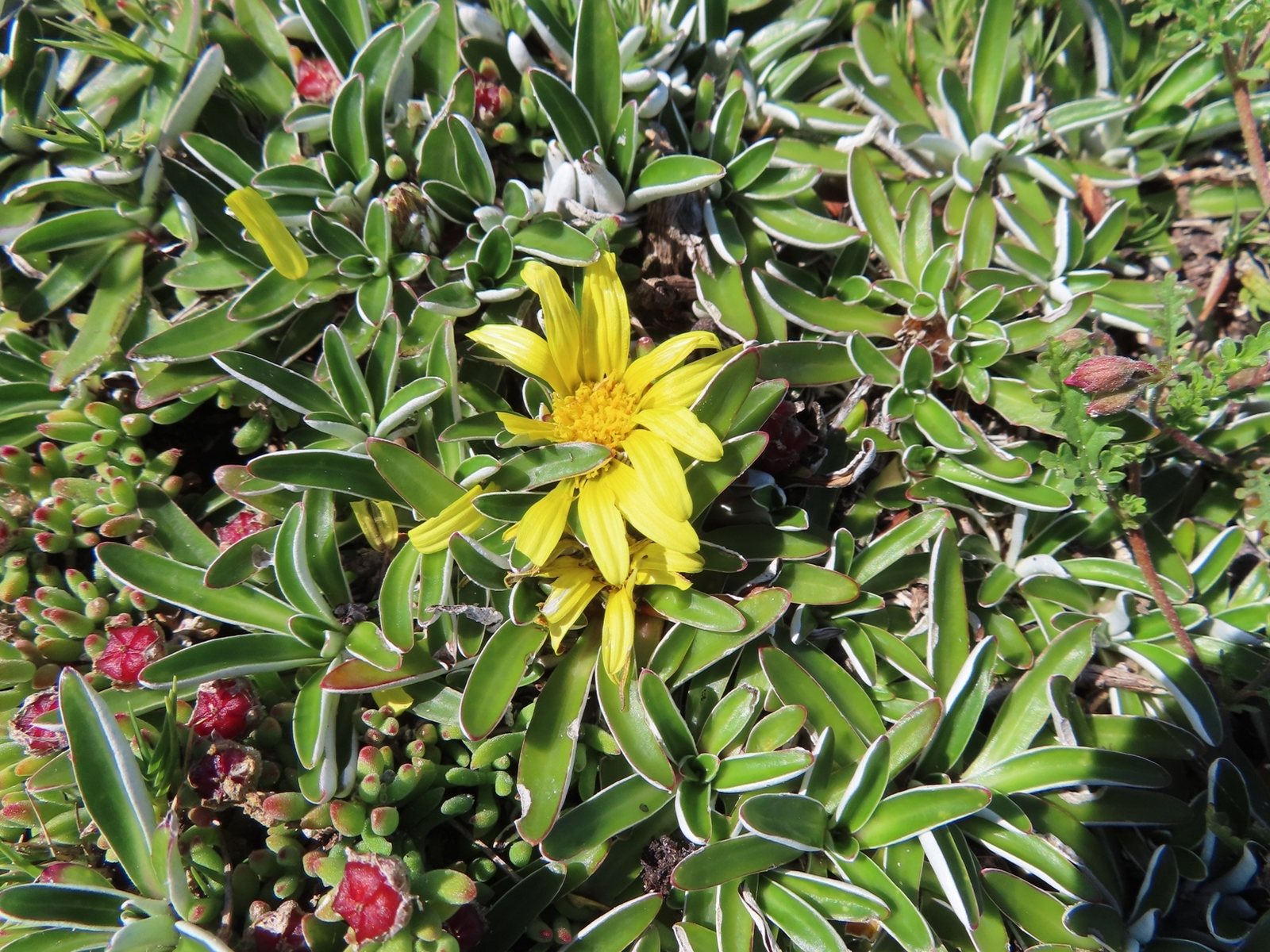
- Small yellow daisy flowers in late spring and summer, sometimes continuing into autumn in mild climates.
- Foliage
- Evergreen. Narrow, slightly curled green leaves with white, felted undersides; the exposed pale edges create a silvery carpet.
- Growth
- Slow to moderate; faster with warmth and adequate establishment watering.
- Care needed
- Low
The year at a glance
- Pollinators
- Deer resistant
- Drought tolerant
- Heat tolerant
- Low allergen
| J | F | M | A | M | J | J | A | S | O | N | D | |
|---|---|---|---|---|---|---|---|---|---|---|---|---|
| Flowers | ||||||||||||
| Plant |
Northern hemisphere months. In Australia, shift them by six.
- Difficulty
- Hard
- Toughness
- Needs looking after
Will it suit your garden?
Pick your zone, country, light and whether you have pets.
Full sun is 6 or more hours of direct sun a day, part shade 3 to 6 hours, shade under 3.
How it grows
Planting day
0 ft (0.01 m)
After 1 year
0.1 ft (0.03 m)
After 2 years
0.2 ft (0.05 m)
After 3 years
0.2 ft (0.06 m)
full size
About 3 years to full size.
From a typical nursery size, at an average rate for this kind of plant. A rule of thumb, not a forecast.
Good to know
- Cats and dogs
- Safe
- Growth rate
- Moderate
Care
Jobs through the year
- WaterMay, Sep, every 14 days
- Water established ground-grown mats only when dry; newly planted plugs need more frequent watering.
- WaterJun–Aug, every 10 days
- Deep-water established mats during prolonged dry weather; avoid frequent shallow sprinkling.
- WaterJan–Apr, Oct–Dec, every 14 days
- Check overwintering containers and water sparingly only when compost is nearly dry.
- PruneApr–May
- Remove dead or frost-damaged patches and trim encroaching edges; do not mow.
- FeedMay
- Give a light feed only if growth is weak; avoid high-nitrogen lawn fertilisers.
- DivideMay–Jun
- Separate rooted sections only to propagate or repair gaps, then water in.
- ProtectJan–Apr, Oct–Dec
- In zone 6–7, overwinter containers in bright frost-free shelter; fleece alone will not protect outdoor carpets.
- Water new plants whenever the root zone starts to dry; reduce watering gradually as they root into the surrounding soil.
- Plant in free-draining ground, using a raised bed where winter drainage is poor.
- Remove weeds before planting and hand-weed gaps until the carpet closes.
- Feed lightly in spring only if growth is weak; avoid heavy lawn fertilisers.
- Keep foot traffic off new plantings and use stepping stones on regularly travelled routes.
Pruning. No routine mowing or pruning is needed. In spring, remove dead or frost-damaged patches and trim spreading edges back from paving as necessary.
Through the year
- Spring
- After frost risk has passed, plant rooted plugs or divisions into prepared, weed-free soil.
- Late spring
- Check gaps for weeds and water new plants thoroughly when the root zone begins to dry.
- Summer
- Give established carpets occasional deep watering during prolonged dry weather; avoid frequent shallow sprinkling.
- Early autumn
- In mild, frost-free areas, plant or divide while the soil is still warm.
- Late autumn
- Clear fallen leaves from the carpet and check that water drains away freely.
- Winter
- Avoid walking on frozen or saturated plants; protect small plantings with horticultural fleece during brief freezes.
In the garden
- Plant between widely spaced paving stones to soften hard surfaces without hiding the paving.
- Use as a small lawn substitute in sunny spaces with only occasional foot traffic.
- Edge gravel paths with a low silver-green carpet beside lavender or other dry-garden plants.
- Mass beneath widely spaced architectural plants, keeping it outside their crowded crowns.
Garden styles it suits: Modern Mediterranean, Contemporary minimal, Dry gravel garden, Desert / xeriscape, Coastal and Low-maintenance.
Plant it with: Lavender, Rosemary, Blue fescue, Society garlic, Rock rose and Agapanthus.
Wildlife: The small yellow flowers provide pollen and nectar for visiting bees and other insects.
Problems to watch for
- Root and crown rot in wet soil: improve drainage, reduce watering and replace badly rotted plants.
- Frost damage: choose a sheltered site, cover during brief freezes and wait until spring to remove dead growth.
- Thin or patchy cover in shade: move plants to a sunnier position rather than increasing fertiliser.
- Bare patches from repeated foot traffic: install stepping stones and replant damaged sections with rooted divisions.
Safety
Not known to be toxic to people, cats, dogs or horses. Species-specific toxicity information is limited, so do not treat any part as edible or encourage pets or livestock to eat it.
Easily confused with
Gazania (Gazania rigens)
Also has leaves with pale undersides, but forms taller clumps or trailing growth and carries much larger, showy daisy flowers.
Silver Falls dichondra (Dichondra argentea)
Has rounded, kidney-shaped silver leaves on trailing stems rather than narrow leaves in a tight carpet.
Woolly thyme (Thymus pseudolanuginosus)
Has much smaller, woolly leaves on wiry stems and pink flowers rather than yellow daisies; crushed foliage is aromatic.
The name
The botanical name commemorates Margaret Dryden-Dymond, who collected the plant in South Africa.
Propagation. Divide established clumps in spring, or in early autumn in frost-free climates. Lift rooted sections with some soil attached, replant promptly and keep evenly moist until established.
Checked against open data
- Accepted botanical name
- Dymondia margaretae
- Native range
- Cape Provinces.
Sources: GBIF (CC BY 4.0) and Trefle (CC BY 4.0). The care and design notes are LandscapeGPT's own.
See it in your own yard.
Upload a photo of your yard and see it redesigned with plants that suit your climate, each checked against your zone.