East Friesland salvia
Salvia nemorosa 'Ostfriesland'. Family Lamiaceae. Perennial.
Also called East Friesland sage, Balkan clary 'Ostfriesland', Salvia × sylvestris 'Ostfriesland'.
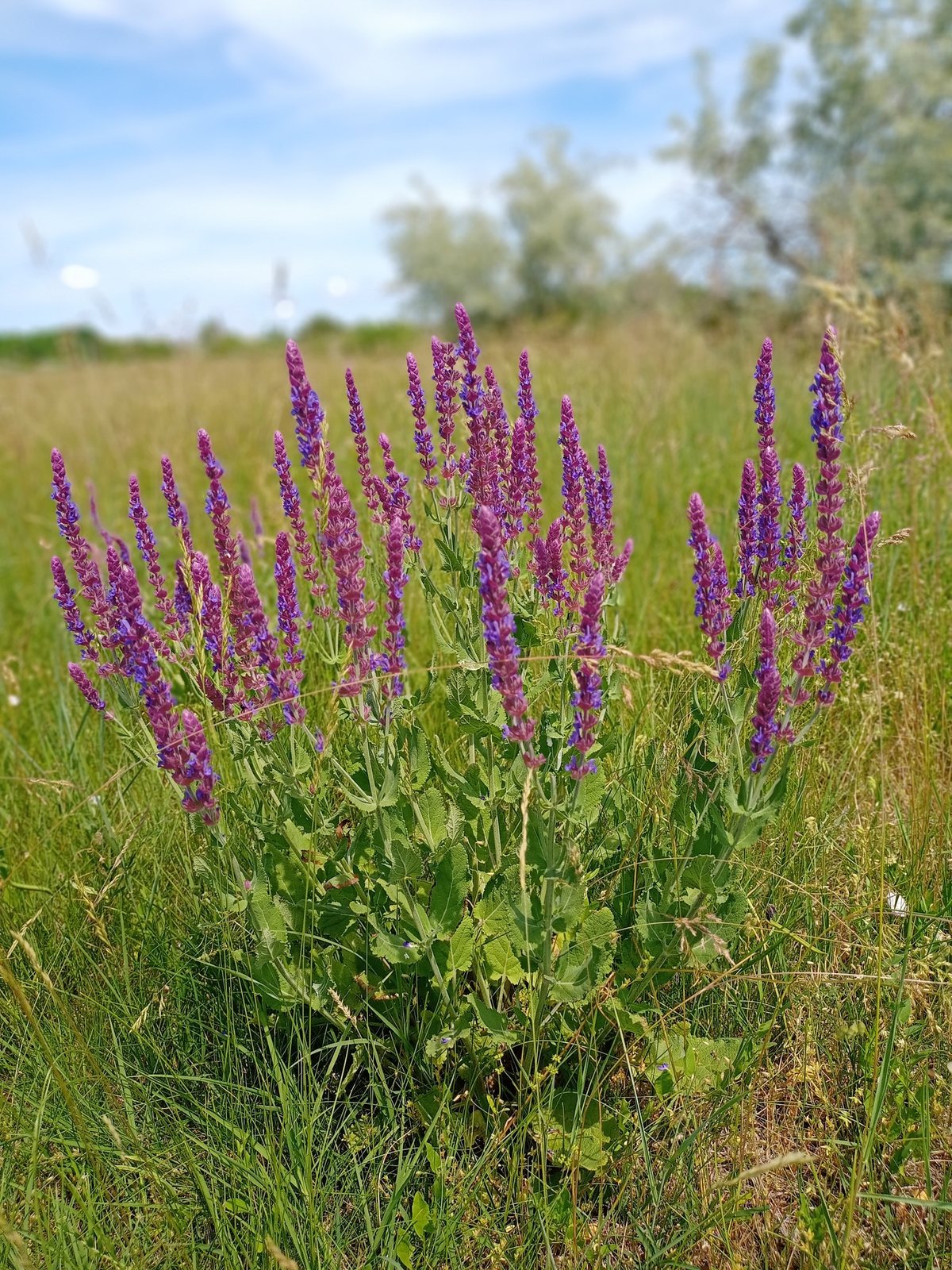
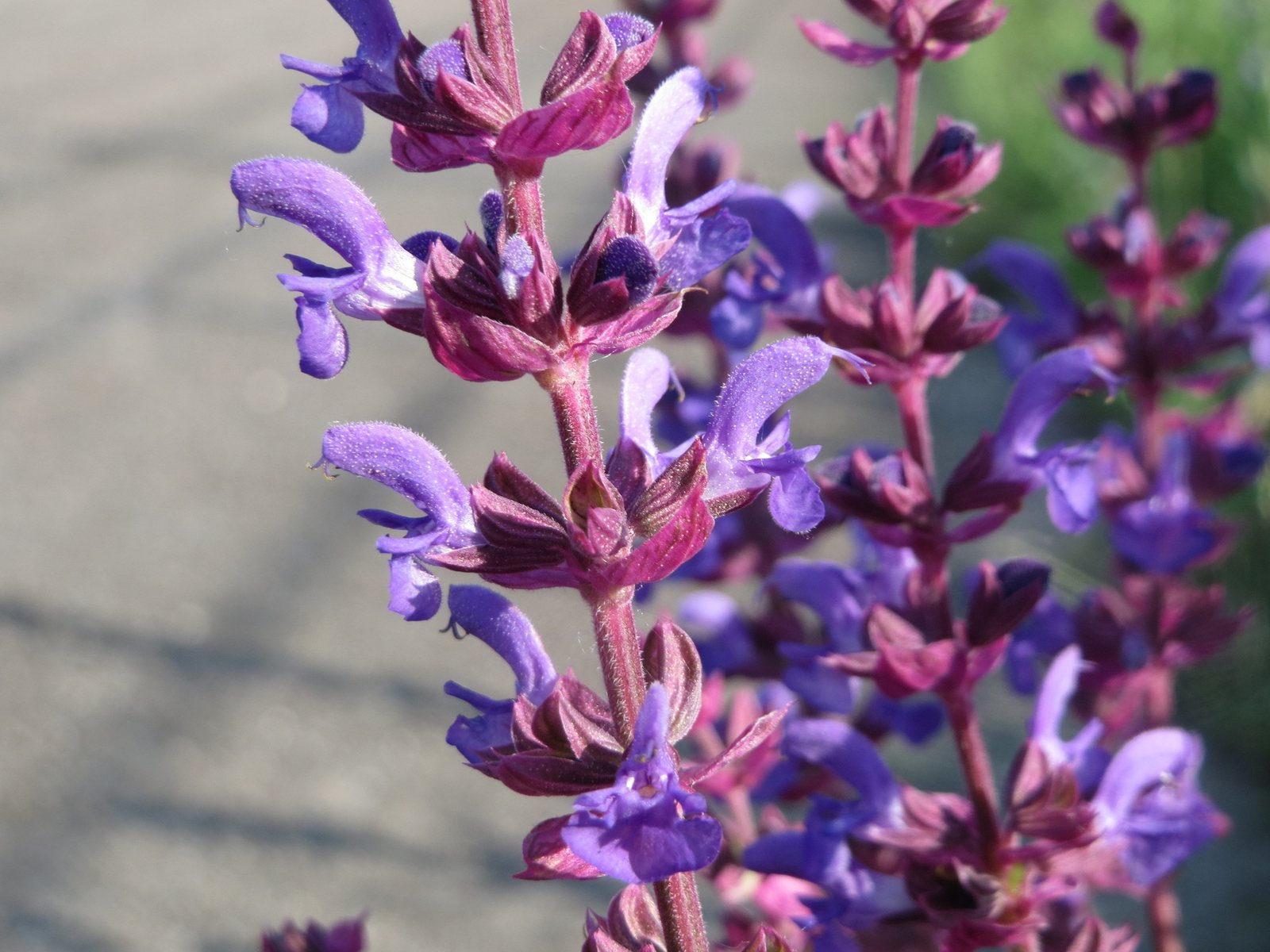
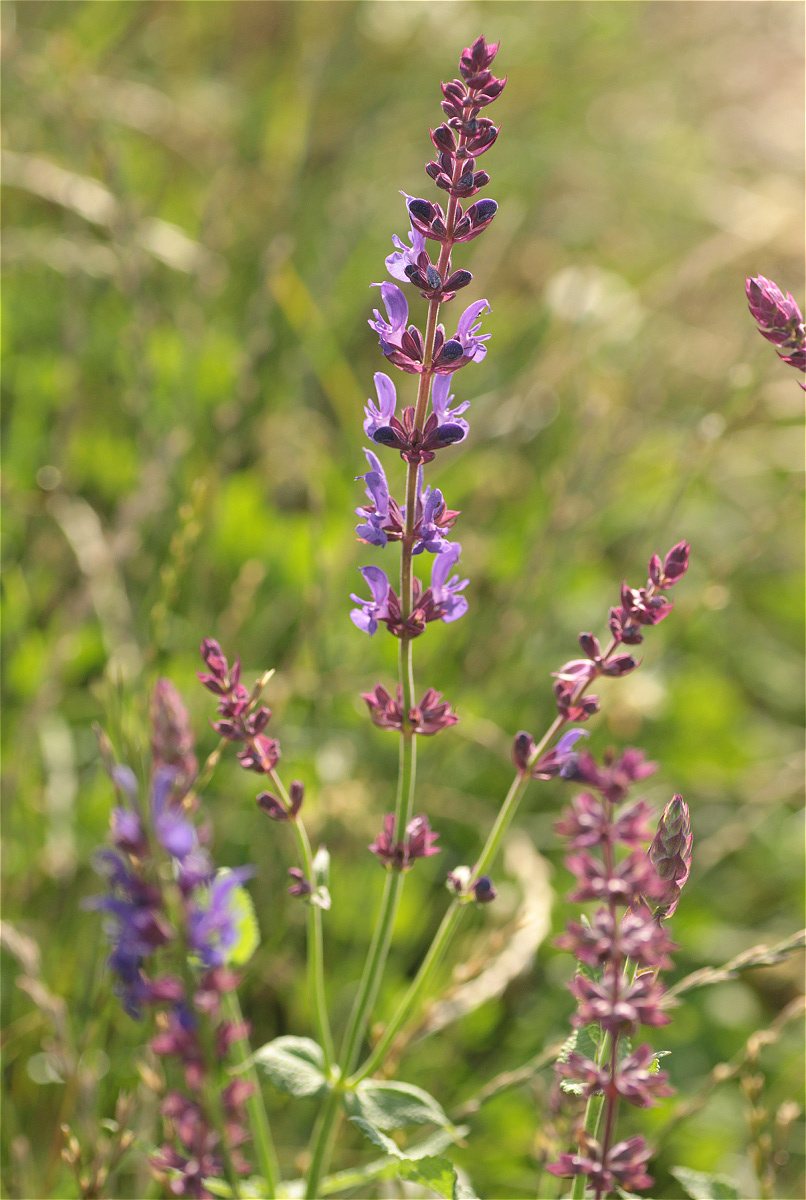
East Friesland salvia is a compact, clump-forming perennial with upright spikes of violet-purple flowers above aromatic, grey-green leaves. Gardeners grow it for its early-summer colour, bee activity and repeat flowering after trimming.
At a glance
- Sun
- Full sun; light shade is tolerated, but flowering is weaker and stems may lean.
- Water
- Water regularly during establishment. Once rooted, water during prolonged dry spells; avoid persistently wet soil, especially in winter.
- Soil
- Well-drained soil of average fertility, from sandy loam to clay improved for drainage; tolerates a broad pH range.
- Height
- 1-2 ft (0.3-0.6 m)
- Spread
- 1-1.5 ft (0.3-0.45 m)
- Flowers
- Violet-purple flower spikes in late spring and early summer, with a smaller repeat display in late summer if cut back after flowering.
- Foliage
- Wrinkled, lance-shaped, grey-green leaves with toothed edges and an aromatic scent when rubbed.
- Growth
- Moderate; usually forms a substantial flowering clump within two growing seasons.
- Care needed
- Low
The year at a glance
- Pollinators
- Deer resistant
- Drought tolerant
- Cold hardy
- Low allergen
- Fragrant
| J | F | M | A | M | J | J | A | S | O | N | D | |
|---|---|---|---|---|---|---|---|---|---|---|---|---|
| Flowers | ||||||||||||
| Plant |
Northern hemisphere months. In Australia, shift them by six.
- Difficulty
- Easy
- Toughness
- Very tough
Will it suit your garden?
Pick your zone, country, light and whether you have pets.
Full sun is 6 or more hours of direct sun a day, part shade 3 to 6 hours, shade under 3.
How it grows
Planting day
1 ft (0.3 m)
After 1 year
1.1 ft (0.35 m)
After 2 years
1.3 ft (0.4 m)
After 3 years
1.5 ft (0.45 m)
full size
About 3 years to full size.
From a typical nursery size, at an average rate for this kind of plant. A rule of thumb, not a forecast.
Good to know
- Cats and dogs
- Safe
- Growth rate
- Moderate
Care
Jobs through the year
- WaterApr–May, Sep, every 21 days
- Water established clumps only during prolonged dry weather; young plants need more frequent watering.
- WaterJun–Aug, every 14 days
- Deep-water during prolonged drought and after cutting back if soil is dry.
- PruneFeb–Mar
- Remove dead stems before new growth, keeping the crown clear of wet debris.
- DeadheadJun–Sep, every 14 days
- Cut faded flowering stems to leafy basal growth to encourage repeat bloom.
- DivideMar–Apr
- Divide congested clumps every three to four years if flowering declines.
- MulchMar–Apr
- On poor soil only, add a thin compost layer without covering the crown.
- ProtectMar–May
- Check emerging shoots for slugs and snails and control them if damage appears.
- Water deeply after planting and during dry weather in the first growing season.
- Keep the crown at soil level and avoid sites that remain waterlogged in winter.
- Apply a thin layer of compost in spring only if soil is poor; heavy feeding encourages floppy growth.
- Keep mulch clear of the crown.
- Divide congested clumps in spring every three to four years if flowering declines.
Pruning. After the first flower spikes fade, cut the flowering stems back to the leafy basal growth, then water if the soil is dry to encourage another flush. Remove dead stems in late winter or early spring before new growth develops.
Through the year
- Early spring
- Remove dead stems and check that the crown has not become buried under mulch or wet debris.
- Spring
- Plant or divide clumps, spacing them about 1-1.5 ft (0.3-0.45 m) apart, and water thoroughly.
- Late spring
- Check young growth for slugs and snails, particularly during damp weather.
- Early summer
- Cut faded flower stems back to the leafy base after the main display.
- Summer
- Water newly planted clumps during dry spells; established plants need water mainly during prolonged drought.
- Autumn
- Leave sound stems for winter structure if desired, but clear fallen material away from the crown.
In the garden
- Repeat small groups along the front of a sunny border for a steady rhythm of purple flower spikes.
- Plant beside roses to contrast their rounded flowers with narrow, upright spikes.
- Combine with yarrow, coneflowers and fine-textured grasses in a sunny perennial planting.
- Use in well-drained gravel beds with lavender and other plants that dislike wet winter soil.
Garden styles it suits: Cottage garden, New perennial (prairie), Pollinator garden, Dry gravel garden, Low-maintenance and Blues and silvers.
Plant it with: Roses, Yarrow, Purple coneflower, Catmint, Lavender and Feather reed grass.
Wildlife: Flowers provide nectar and pollen for bees and attract butterflies. Deer and rabbits often leave the aromatic foliage alone, but browsing is still possible.
Problems to watch for
- Crown or root rot in wet soil: improve drainage or move the plant to a raised position, and keep mulch away from the crown.
- Powdery mildew in crowded or poorly ventilated planting: increase spacing and remove badly affected leaves.
- Slug and snail damage to fresh shoots: inspect during damp evenings, remove pests and use barriers or labelled controls where needed.
- Floppy stems and weak flowering in shade or rich soil: move to full sun and stop high-nitrogen feeding.
Safety
Not known to be toxic to people, cats, dogs or horses; no part is recognised as a significant poisoning hazard. It is an ornamental salvia, not a substitute for culinary sage, and should not be used as a food herb.
Easily confused with
Caradonna salvia (Salvia nemorosa 'Caradonna')
Usually taller and more narrowly upright, with conspicuously dark purple flower stems; 'Ostfriesland' generally forms a shorter, broader clump.
Catmint (Nepeta × faassenii)
Has a softer, spreading habit, smaller rounded grey leaves and looser sprays of usually pale lavender-blue flowers rather than dense upright purple spikes.
The name
Salvia comes from the Latin salvere, meaning to be well, nemorosa means woodland-dwelling, and 'Ostfriesland' is the German name for East Frisia in northwestern Germany.
Propagation. Divide established clumps in spring or take basal cuttings from fresh spring growth. Seedlings may differ from the parent, so use division or cuttings to retain the cultivar's characteristics.
Checked against open data
- Accepted botanical name
- Salvia nemorosa
- In the US and Canada
- Introduced in Canada and the lower 48 states.
- Native range
- Afghanistan, Albania, Austria, Bulgaria, Central European Rus, Czechoslovakia, East European Russia, France, Greece, Hungary, Iran and Italy.
- Measured
- Average height 45 cm.
Sources: GBIF (CC BY 4.0), USDA PLANTS and Trefle (CC BY 4.0). The care and design notes are LandscapeGPT's own.
See it in your own yard.
Upload a photo of your yard and see it redesigned with plants that suit your climate, each checked against your zone.