East Indian holly fern
Arachniodes simplicior. Family Dryopteridaceae. Fern.
Also called Variegated East Indian holly fern, Holly fern.
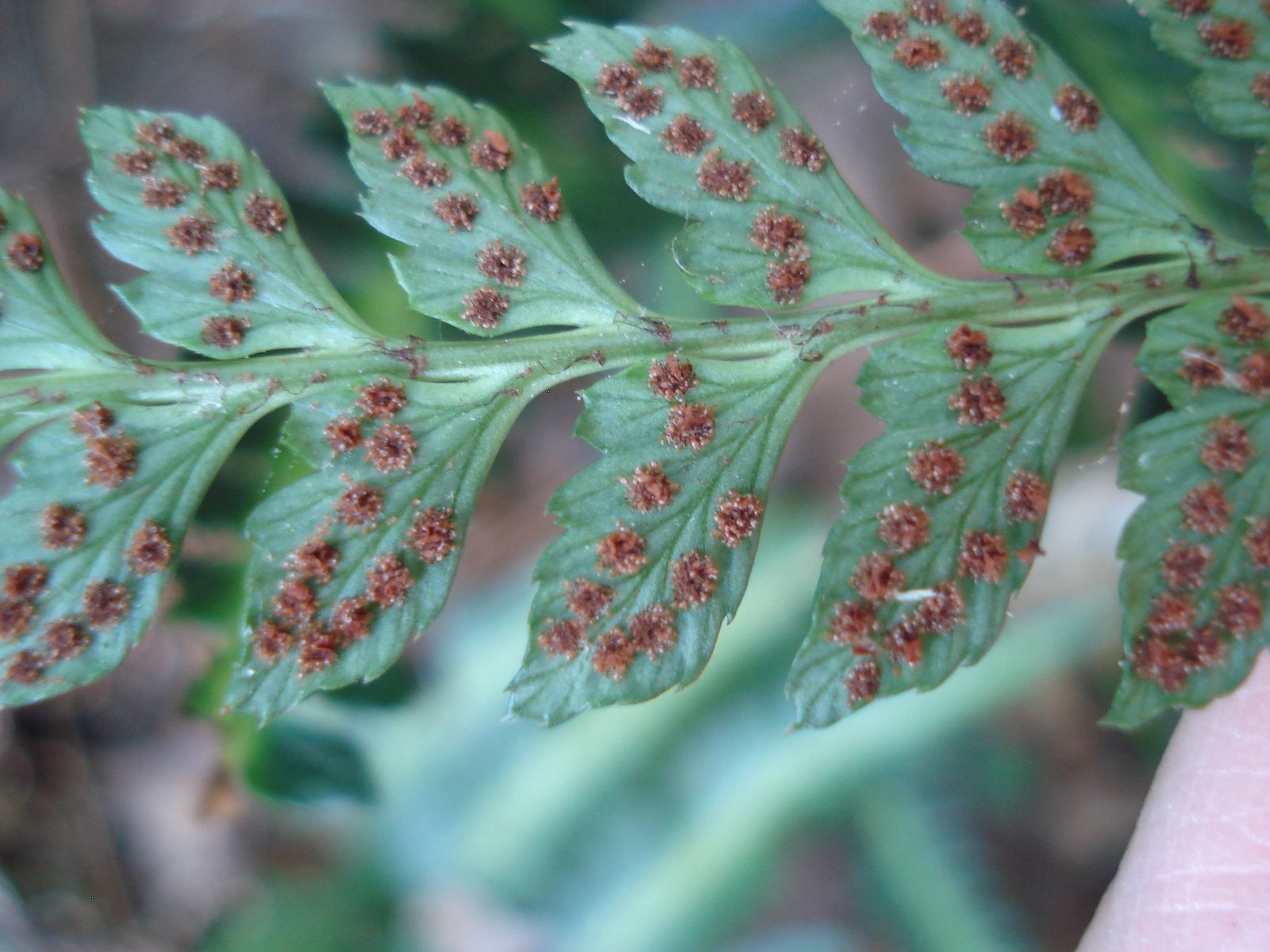
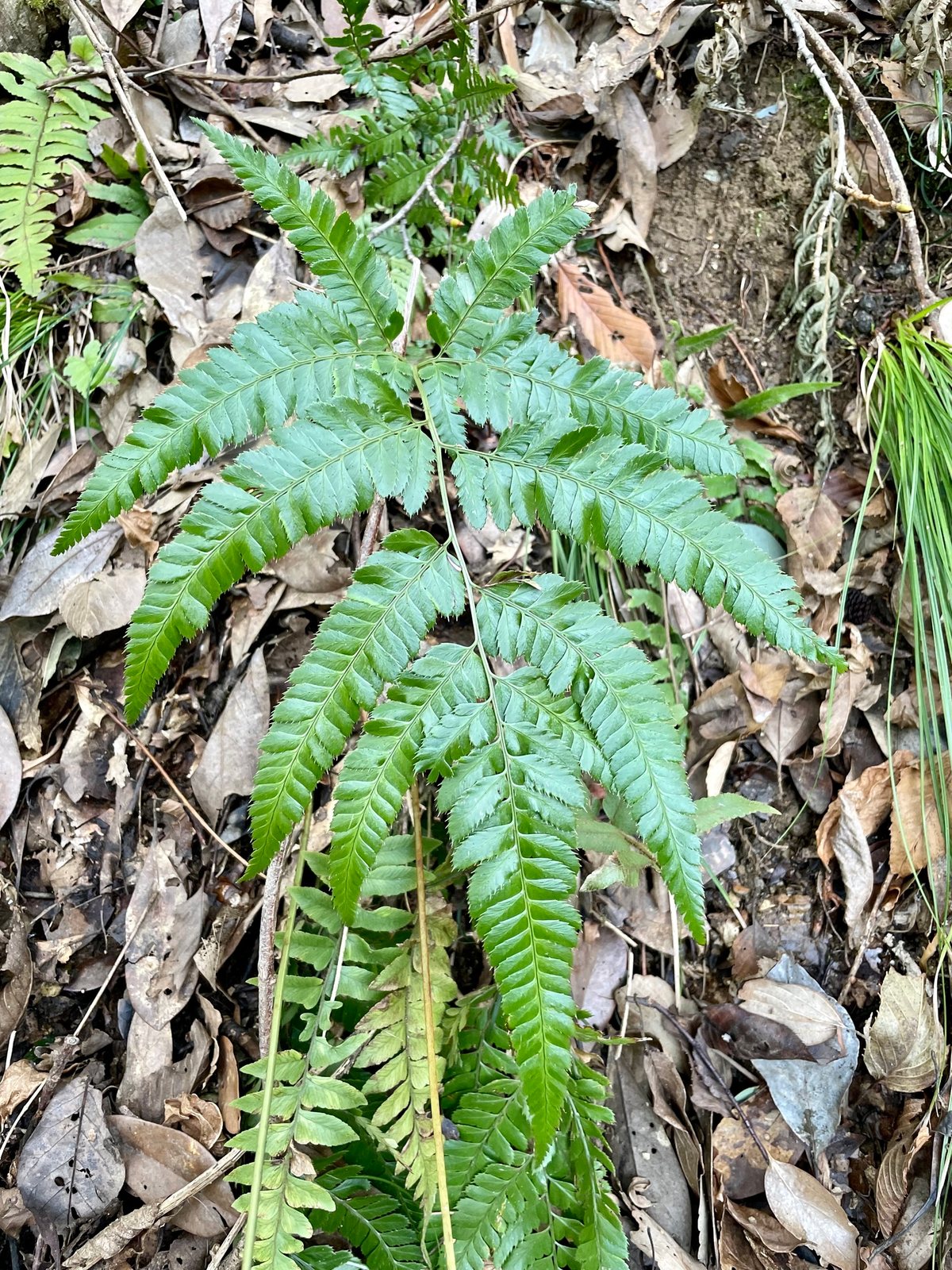
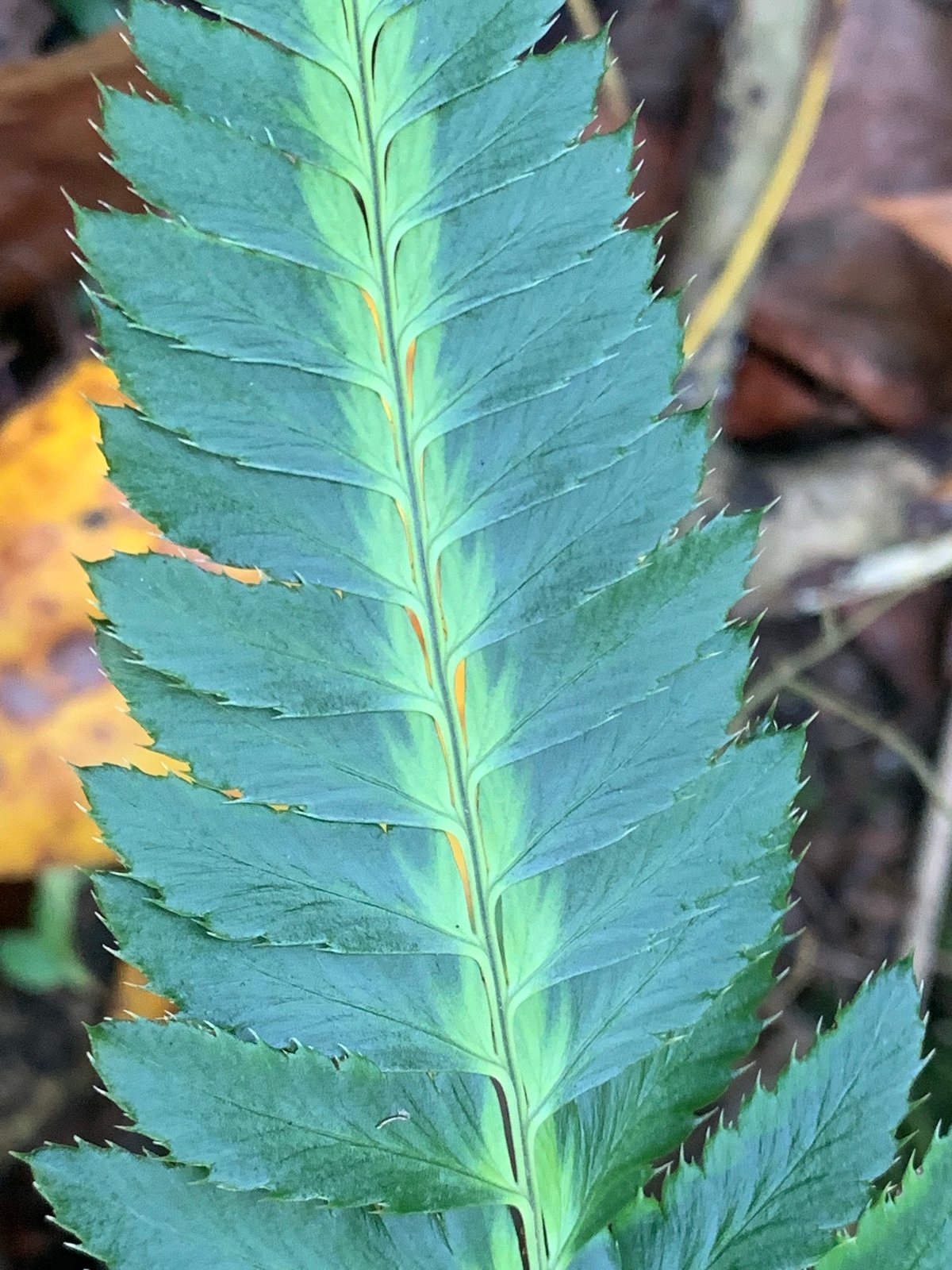
East Indian holly fern is a slow-growing evergreen fern with glossy, leathery fronds, commonly sold in forms with a pale yellow stripe through the leaflets. Grow it for lasting foliage in sheltered shade, where its tidy clumps contrast with softer ferns and broad-leaved perennials. Fronds may suffer winter damage near the colder end of its range.
At a glance
- Sun
- Partial to full shade; protect from hot afternoon sun and drying winds.
- Water
- Keep evenly moist but not waterlogged. Water during dry spells, especially while establishing and when grown in containers.
- Soil
- Humus-rich, well-drained soil, preferably slightly acidic to neutral; avoid sites that remain wet in winter.
- Height
- 1-2 ft (0.3-0.6 m)
- Spread
- 1-2 ft (0.3-0.6 m)
- Foliage
- Evergreen. Glossy, deep green, divided fronds with pointed, leathery leaflets. Commonly cultivated forms have a conspicuous pale yellow band along the centre of the leaflets.
- Growth
- Slow
- Care needed
- Low
The year at a glance
- Deer resistant
- Heat tolerant
- Wildlife
- Low allergen
| J | F | M | A | M | J | J | A | S | O | N | D | |
|---|---|---|---|---|---|---|---|---|---|---|---|---|
| Plant |
Northern hemisphere months. In Australia, shift them by six.
- Difficulty
- Moderate
- Toughness
- Fairly tough
Will it suit your garden?
Pick your zone, country, light and whether you have pets.
Full sun is 6 or more hours of direct sun a day, part shade 3 to 6 hours, shade under 3.
How it grows
Planting day
1 ft (0.3 m)
After 1 year
1.1 ft (0.33 m)
After 2 years
1.2 ft (0.36 m)
After 3 years
1.3 ft (0.39 m)
After 5 years
1.5 ft (0.45 m)
full size
About 5 years to full size.
From a typical nursery size, at an average rate for this kind of plant. A rule of thumb, not a forecast.
Good to know
- Cats and dogs
- Safe
- Growth rate
- Slow
Care
Jobs through the year
- WaterApr–May, Sep–Oct, every 14 days
- Water established plants when soil begins to dry; water young plants more frequently.
- WaterJun–Aug, every 7 days
- Water deeply during dry spells, maintaining even moisture without waterlogging.
- MulchApr–May
- Top-dress with leaf mould or compost, keeping the crown uncovered.
- PruneMar
- Remove dead or badly damaged fronds before new growth; retain healthy foliage.
- DivideApr–May
- Divide established clumps only when propagation is wanted.
- ProtectJan–Mar, Nov–Dec
- Mulch the root zone and shelter from cold winds; in zone 6, overwinter under frost-free cover.
- Plant with the crown at soil level in a sheltered, shaded position.
- Water deeply when the soil begins to dry; do not leave the roots standing in water.
- Apply leaf mould or compost each spring, keeping it clear of the crown.
- Feed container plants lightly in spring; plants in compost-enriched garden soil usually need little extra fertiliser.
- Leave healthy fronds in place over winter and protect the root area with loose mulch in colder gardens.
Pruning. In late winter or early spring, cut dead or badly damaged fronds at their base before new growth unfurls. Retain healthy evergreen fronds and avoid cutting emerging shoots.
Through the year
- Early spring
- Remove winter-damaged fronds before the new croziers open.
- Spring
- Plant or divide established clumps, then water thoroughly.
- Late spring
- Top-dress with compost or leaf mould, leaving the crown uncovered.
- Summer
- Check soil moisture during dry weather and watch young fronds for slug damage.
- Autumn
- Clear heavy accumulations of fallen leaves from the crown and check that drainage remains free.
- Winter
- Shelter containers from severe frost and cold winds; keep the compost slightly moist.
In the garden
- Plant beside shaded paths where the glossy, patterned fronds can be seen closely.
- Combine with hostas and barrenworts for contrasting leaf shapes in woodland borders.
- Use in sheltered courtyard containers with reliable watering and good drainage.
- Repeat small groups beneath deciduous shrubs for evergreen structure without a tall ground layer.
Garden styles it suits: Woodland, Japanese, Modern courtyard, Green on green, Secret garden and Winter interest.
Plant it with: Hostas, Barrenworts, Japanese painted fern, Hellebores, Japanese forest grass and Siberian bugloss.
Wildlife: Provides low shelter for small invertebrates. It produces no flowers or nectar, so it is not a direct food source for pollinating insects.
Problems to watch for
- Slugs and snails can damage emerging fronds; inspect during damp evenings, remove pests and use wildlife-conscious controls if needed.
- Brown, scorched leaflets usually indicate strong sun, dry soil or drying wind; improve shelter and maintain even moisture.
- Crown or root rot can follow waterlogging; improve drainage and keep mulch away from the crown.
- Winter cold can brown otherwise evergreen fronds; retain them until late winter, then remove damaged growth before new shoots emerge.
Safety
Not known to be toxic to people, cats, dogs or horses, but species-specific safety information is limited. No particular part is established as poisonous; it is not an edible fern, so discourage eating the fronds or rhizomes.
Easily confused with
Japanese holly fern (Cyrtomium falcatum)
Has a single row of broad, sickle-shaped leaflets on each side of the frond stalk, rather than the more finely divided fronds of East Indian holly fern.
East Indian shield fern (Arachniodes aristata)
Usually has larger, more finely divided, lacy fronds and lacks the conspicuous pale central bands seen in commonly sold forms of East Indian holly fern.
The name
The botanical epithet simplicior means 'simpler', referring to its relatively less-divided fronds.
Propagation. Divide a mature clump in spring, keeping several growing points and a good root system on each piece. It can also be raised from spores, but this is slow and offspring may not retain the parent's yellow markings.
Checked against open data
- Accepted botanical name
- Arachniodes simplicior
- In the US and Canada
- Introduced in the lower 48 states.
- Native range
- China North-Central, China South-Central, China Southeast, Japan, Korea, Tibet and Vietnam.
Sources: GBIF (CC BY 4.0), USDA PLANTS and Trefle (CC BY 4.0). The care and design notes are LandscapeGPT's own.
See it in your own yard.
Upload a photo of your yard and see it redesigned with plants that suit your climate, each checked against your zone.