Eastern bluestar
Amsonia tabernaemontana. Family Apocynaceae. Perennial.
Also called Blue dogbane, Willow amsonia.
Eastern bluestar (Amsonia tabernaemontana) is a clump-forming perennial native to the central and eastern United States. Gardeners grow it for pale blue spring flowers, a leafy summer mound and yellow autumn foliage. It is long-lived and rarely needs dividing, but takes a few seasons to reach its full size.
At a glance
- Sun
- Full sun to partial shade; the strongest stems and best autumn colour usually develop in full sun.
- Water
- Moderate; keep evenly moist while establishing, then water during prolonged dry spells. Established plants tolerate some drought.
- Soil
- Average, well-drained soil that retains some moisture; tolerates clay if it is not persistently waterlogged.
- Height
- 2-3 ft (0.6-0.9 m)
- Spread
- 2-3 ft (0.6-0.9 m)
- Flowers
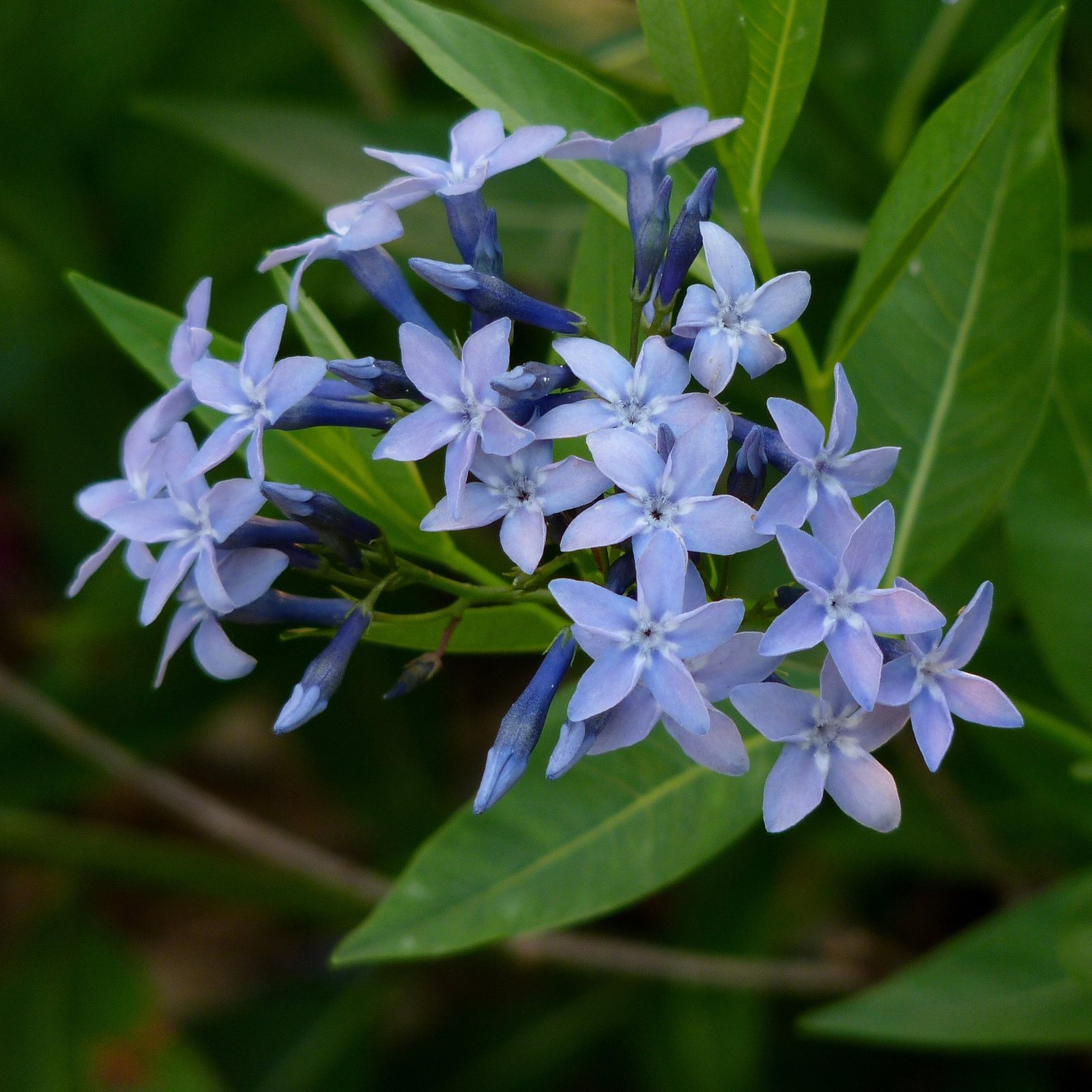
- Late spring to early summer; clusters of pale blue, star-shaped flowers.
- Foliage
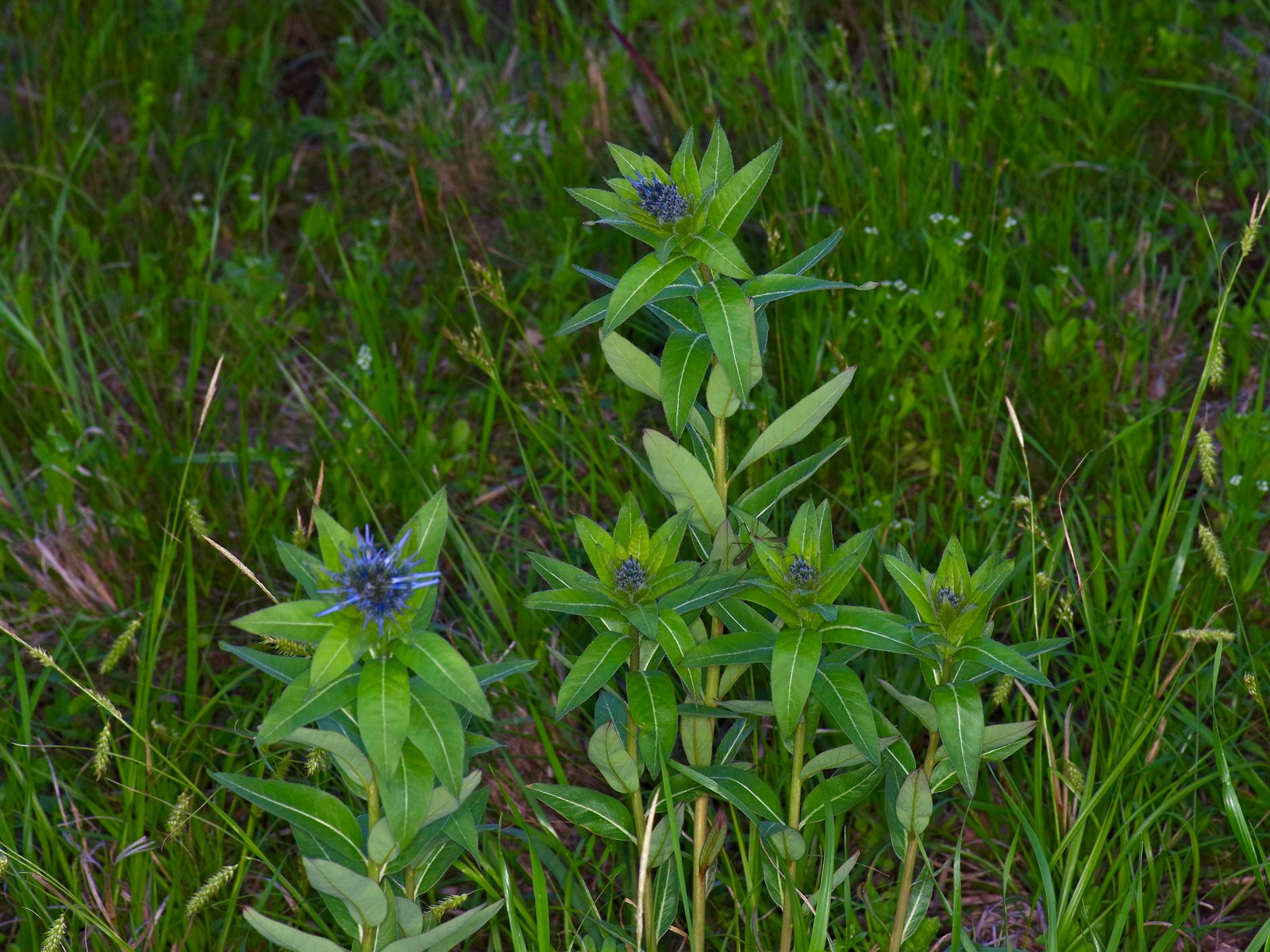
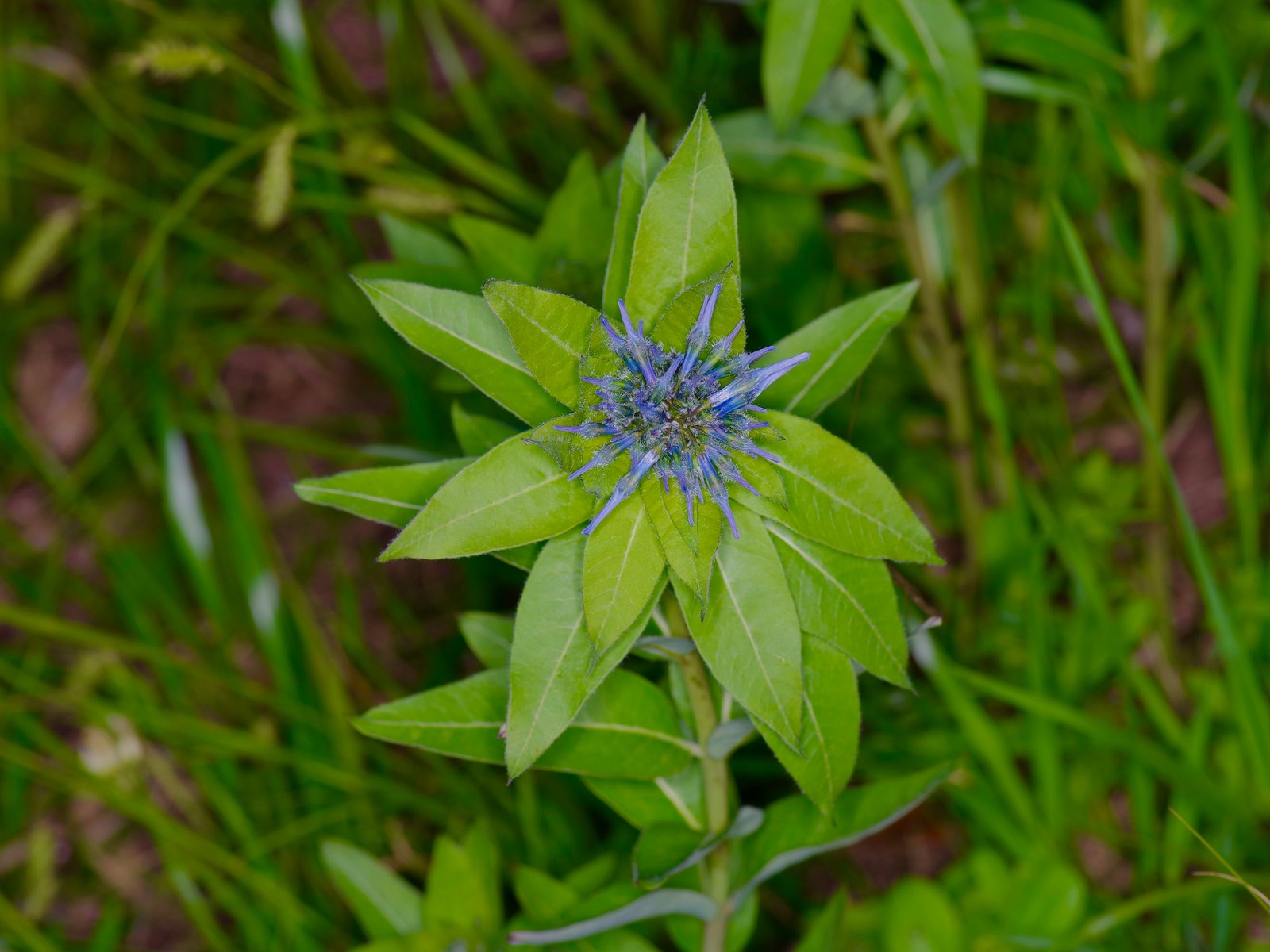
- Narrowly oval to lance-shaped green leaves on upright stems, turning yellow in autumn.
- Growth
- Moderate once established; slow in its first season.
- Care needed
- Low
The year at a glance
- Pollinators
- Deer resistant
- Drought tolerant
- Cold hardy
- Heat tolerant
- Low allergen
| J | F | M | A | M | J | J | A | S | O | N | D | |
|---|---|---|---|---|---|---|---|---|---|---|---|---|
| Flowers | ||||||||||||
| Fruit | ||||||||||||
| Plant |
Northern hemisphere months. In Australia, shift them by six.
- Difficulty
- Easy
- Toughness
- Very tough
Will it suit your garden?
Pick your zone, country, light and whether you have pets.
Full sun is 6 or more hours of direct sun a day, part shade 3 to 6 hours, shade under 3.
How it grows
Planting day
1 ft (0.3 m)
After 1 year
1.4 ft (0.42 m)
After 2 years
1.7 ft (0.53 m)
After 3 years
2.1 ft (0.65 m)
After 5 years
2.5 ft (0.75 m)
full size
About 4 years to full size.
From a typical nursery size, at an average rate for this kind of plant. A rule of thumb, not a forecast.
Good to know
- Cats and dogs
- Mildly toxic: may upset a stomach
- Native to
- the US
- Growth rate
- Slow
Care
Jobs through the year
- WaterApr–May, Sep, every 21 days
- Water established clumps only in prolonged dry spells; keep first-year plants evenly moist.
- WaterJun–Aug, every 14 days
- Water deeply during prolonged drought, particularly if leaves begin to scorch.
- PruneFeb–Mar
- Cut last year's dead stems close to ground level before shoots emerge.
- PruneJun–Jul
- Shorten floppy stems by up to one-third after flowering; leave uncut for seedpods.
- MulchApr
- Apply a thin compost mulch, keeping emerging shoots clear.
- DivideMar–Apr
- Divide only for propagation or relocation; established clumps are best left undisturbed.
- Water deeply during the first growing season whenever the soil begins to dry.
- Apply a thin layer of compost in spring; avoid heavy nitrogen feeding, which encourages floppy growth.
- Mulch around the clump to conserve moisture, keeping mulch away from emerging shoots.
- Use a discreet support before flowering if stems lean in partial shade.
- Leave established clumps undisturbed unless you need to move or propagate them.
Pruning. Cut dead stems to near ground level in late winter or early spring before new shoots grow. If plants flop, shorten stems by up to one-third immediately after flowering to encourage a more compact mound.
Through the year
- Late winter
- Cut down last year's dead stems before new growth emerges.
- Spring
- Plant or divide clumps, water thoroughly and apply a light compost mulch.
- Late spring
- Check for leaning stems and add support where needed.
- Early summer
- After flowering, shorten floppy stems if necessary; leave them uncut if you want seedpods.
- Summer
- Water during prolonged drought, especially in the first year.
- Autumn
- Leave foliage standing while it turns yellow; collect ripe seed if wanted.
In the garden
- Plant in repeated groups through a mixed border for blue spring flowers and rounded summer structure.
- Pair with ornamental grasses and coneflowers in naturalistic planting, where its yellow autumn foliage extends the season.
- Use along a sunny woodland edge with ferns and hardy geraniums, allowing for a looser habit in shade.
- Place behind lower spring-flowering plants so its later foliage fills the border after their flowers fade.
Garden styles it suits: New perennial (prairie), Cottage garden, Woodland, Wildlife garden, Low-maintenance and Autumn colour.
Plant it with: Purple coneflower, Switchgrass, Black-eyed Susan, Hardy geranium, Siberian iris and Lady fern.
Wildlife: Flowers provide nectar for visiting insects, including butterflies and bees. Deer and rabbits usually leave the foliage alone, although no plant is completely browsing-proof.
Problems to watch for
- Floppy stems in shade or rich soil: provide more sun, reduce feeding and shorten stems after flowering.
- Root or crown rot in waterlogged soil: improve drainage or move the plant to a better-drained position.
- Leaf scorch during prolonged drought: water deeply and mulch to reduce drying.
- Occasional rust or leaf spots: remove badly affected foliage, improve airflow and avoid wetting leaves when watering.
Safety
The milky sap can irritate skin, and eating plant material may cause stomach upset. Treat all parts as potentially harmful to people, cats, dogs and horses; species-specific poisoning evidence and the severity of risk are poorly documented. Wear gloves when cutting stems and prevent pets or livestock from eating it.
Easily confused with
Threadleaf bluestar (Amsonia hubrichtii)
Has very fine, threadlike leaves rather than the broader, lance-shaped leaves of Eastern bluestar.
Shining bluestar (Amsonia illustris)
Usually has noticeably glossy, leathery leaves; Eastern bluestar leaves are generally duller and less leathery.
The name
Bluestar refers to the pale blue flowers, whose five pointed lobes form a star.
Propagation. Divide substantial clumps in early spring, using a sharp spade through the tough root crown. Alternatively, sow fresh seed outdoors in autumn so winter cold helps break dormancy; germination can be slow and uneven.
Checked against open data
- Accepted botanical name
- Amsonia tabernaemontana
- In the US and Canada
- Native in the lower 48 states.
- Native range
- Alabama, Arkansas, Delaware, Georgia, Illinois, Indiana, Iowa, Kansas, Kentucky, Louisiana, Missouri and Nevada.
Sources: GBIF (CC BY 4.0), USDA PLANTS and Trefle (CC BY 4.0). The care and design notes are LandscapeGPT's own.
See it in your own yard.
Upload a photo of your yard and see it redesigned with plants that suit your climate, each checked against your zone.