Eastern sowbread
Cyclamen coum. Family Primulaceae. Bulb.
Also called Round-leaved cyclamen, Winter-flowering cyclamen.
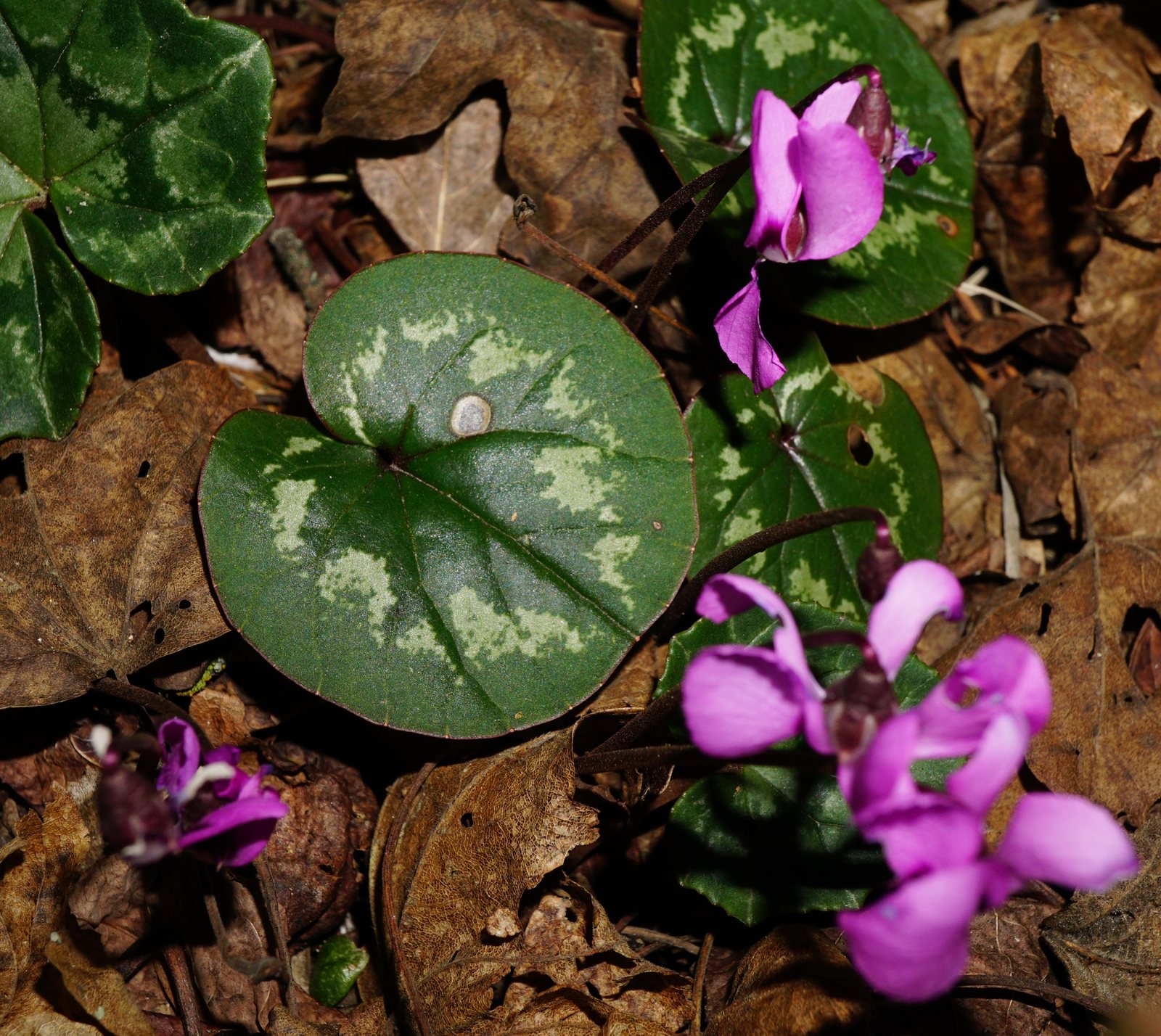
Eastern sowbread is a small, tuberous perennial grown for its winter flowers and rounded, often silver-patterned leaves. It forms slowly spreading colonies beneath deciduous trees and shrubs, flowering when little else is in bloom, then becoming dormant in summer.
At a glance
- Sun
- Partial shade; winter sunshine beneath deciduous trees is ideal. Protect from strong afternoon sun.
- Water
- Keep moderately moist during autumn, winter and spring growth, but never waterlogged. Once dormant in summer, established plants usually need little supplementary water.
- Soil
- Humus-rich, well-drained soil, preferably neutral to alkaline. Good drainage is especially important during summer dormancy.
- Height
- 0.25-0.5 ft (0.08-0.15 m)
- Spread
- 0.5-0.75 ft (0.15-0.23 m) per plant; colonies spread farther through seedlings
- Flowers
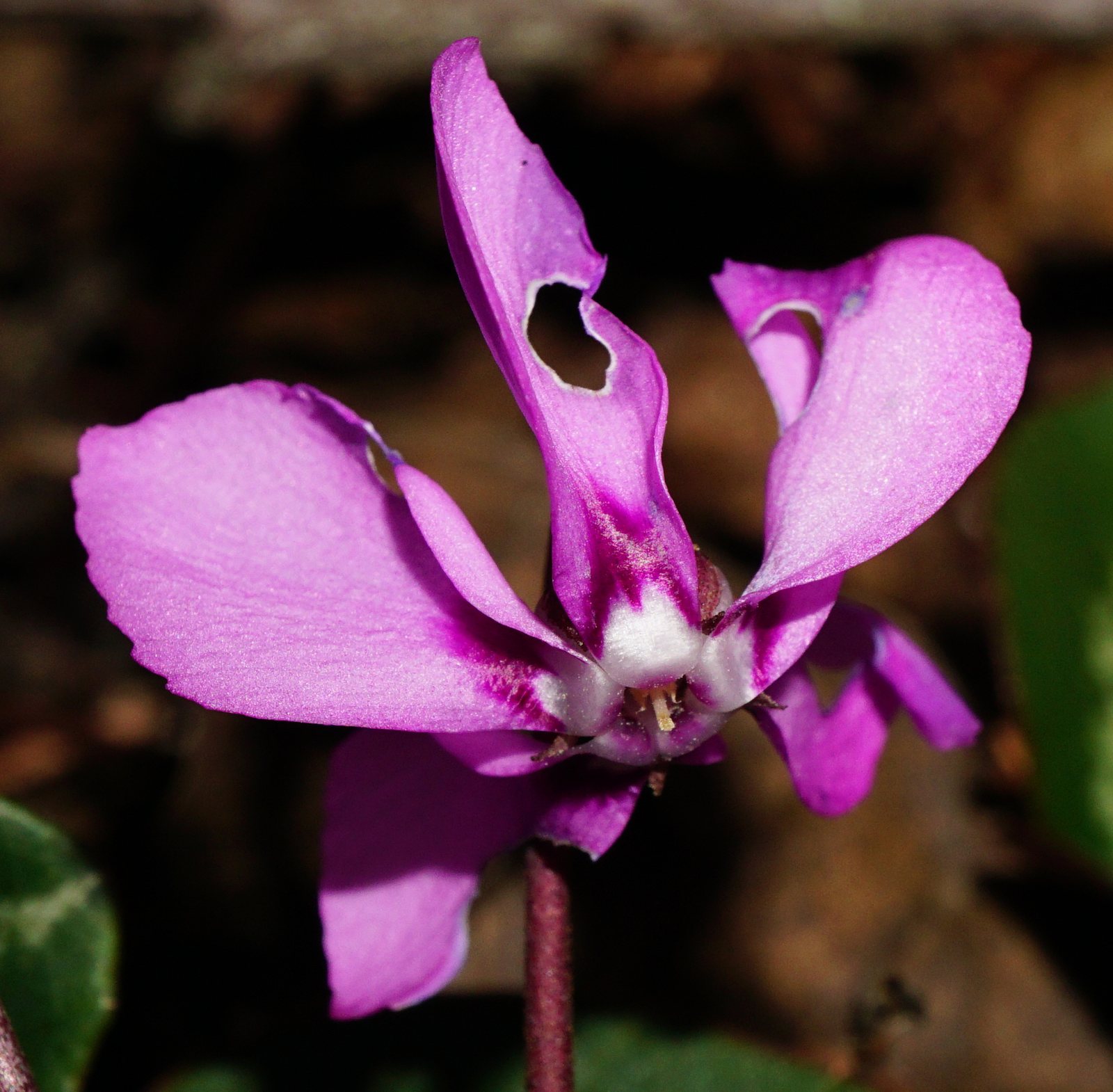
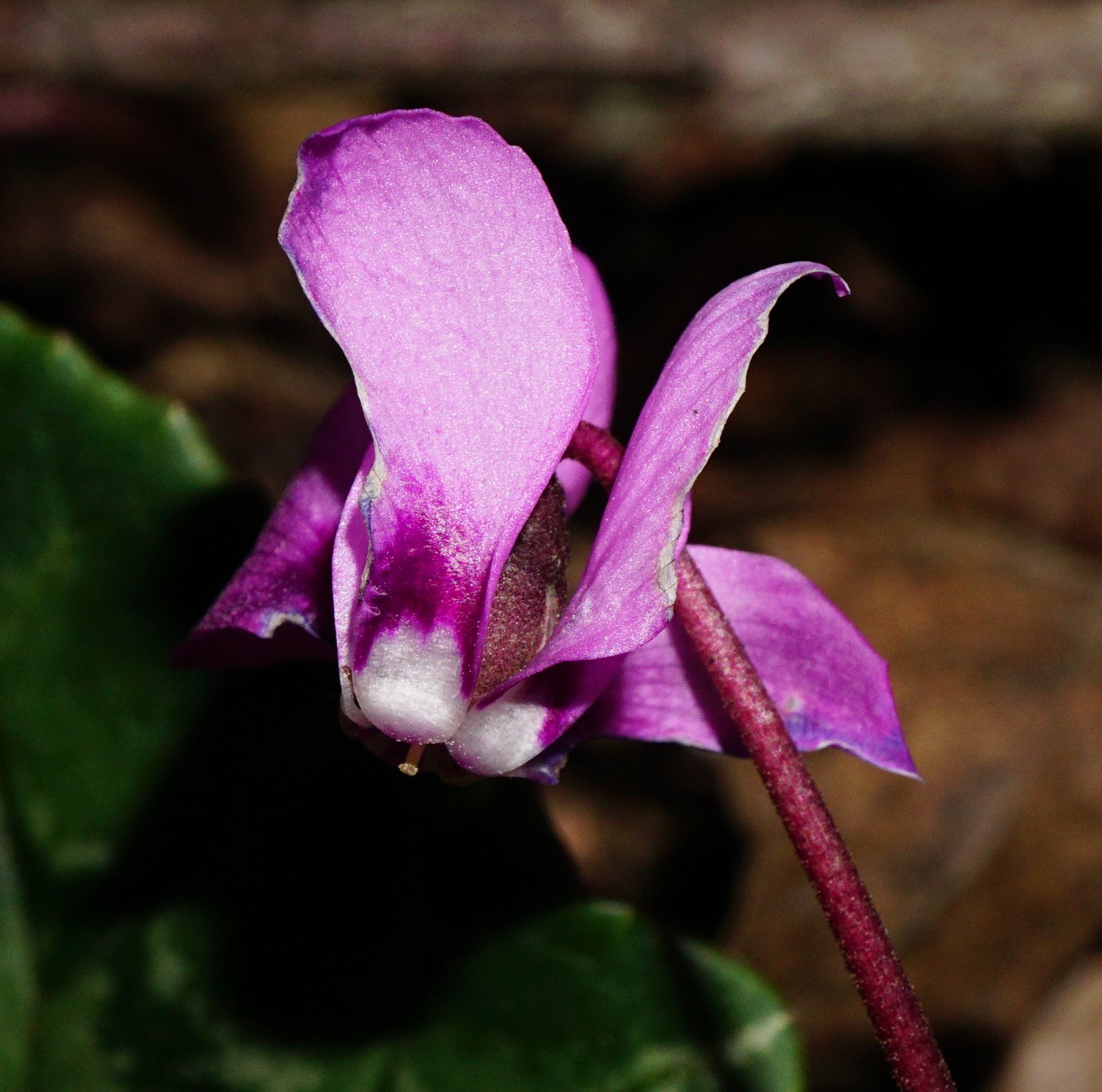
- Winter to early spring, usually January-March in the Northern Hemisphere and June-August in the Southern Hemisphere. Flowers are pink, magenta or white, with swept-back petals and usually a darker mark at the base.
- Foliage
- Rounded to kidney-shaped leaves, plain green or patterned with silver; present from autumn through spring and usually absent in summer.
- Growth
- Slow; seedlings take several years to reach flowering size.
- Care needed
- Low
The year at a glance
- Pollinators
- Deer resistant
- Low allergen
| J | F | M | A | M | J | J | A | S | O | N | D | |
|---|---|---|---|---|---|---|---|---|---|---|---|---|
| Flowers | ||||||||||||
| Fruit | ||||||||||||
| Plant |
Northern hemisphere months. In Australia, shift them by six.
- Difficulty
- Easy
- Toughness
- Fairly tough
Will it suit your garden?
Pick your zone, country, light and whether you have pets.
Full sun is 6 or more hours of direct sun a day, part shade 3 to 6 hours, shade under 3.
How it grows
Planting day
0.4 ft (0.12 m)
full size
About 2 years to full size.
From a typical nursery size, at an average rate for this kind of plant. A rule of thumb, not a forecast.
Good to know
- Cats and dogs
- Toxic
- Growth rate
- Slow
Care
Jobs through the year
- WaterSep–Nov, every 14 days
- Water established plants only if autumn growth is dry; keep new plantings moderately moist.
- WaterJan–Feb, Dec, every 21 days
- Check during prolonged dry, frost-free weather; water only dry soil and avoid waterlogging.
- WaterMar–May, every 14 days
- Water during dry spells while foliage remains green; stop once summer dormancy begins.
- MulchSep–Oct
- Spread a thin layer of leaf mould, keeping growing points uncovered.
- ProtectJan–Feb, Nov–Dec
- Clear smothering fallen leaves and keep drainage outlets open.
- Plant tubers with their tops about 1 in (2.5 cm) below the surface; keep potted plants at their existing depth.
- Water during prolonged dry spells while leaves and flowers are growing, allowing excess water to drain away.
- Avoid regular irrigation over dormant tubers in summer.
- Apply a thin layer of leaf mould in autumn without burying the growing points.
- Leave established clumps undisturbed; raise new plants from seed rather than cutting up tubers.
Pruning. No routine pruning is needed. Let leaves yellow and die naturally in late spring or early summer, then gently remove loose dead foliage.
Through the year
- Early autumn
- Plant potted specimens or firm, healthy tubers in a sheltered, well-drained position.
- Autumn
- Apply a thin leaf-mould mulch and resume watering if conditions are dry as leaves emerge.
- Winter
- Check that fallen leaves are not smothering flowers and that the planting area drains freely.
- Spring
- Keep plants watered during dry spells while their leaves replenish the tubers.
- Late spring
- Leave seed capsules to ripen if you want natural seedlings, and allow foliage to die back.
- Summer
- Reduce watering during dormancy and avoid digging where the hidden tubers lie.
In the garden
- Plant in loose drifts beneath deciduous trees for winter flowers before the canopy closes.
- Edge a shaded path where the small flowers and patterned leaves can be seen close up.
- Combine with snowdrops and hellebores for a low, winter-flowering woodland planting.
- Tuck into a sheltered rock garden or raised bed with shade and sharp drainage.
Garden styles it suits: Woodland, Winter interest, Cottage garden, English country, Low-maintenance and Small-space.
Plant it with: Snowdrops, Hellebores, Winter aconites, Primroses, Epimediums and Deciduous ferns.
Wildlife: Flowers can provide pollen for early-active bees during mild weather. Ants carry the seeds away, helping small colonies establish.
Problems to watch for
- Tuber rot in wet soil: improve drainage, move plants out of waterlogged ground and avoid watering dormant tubers routinely.
- Slugs and snails damaging flowers or leaves: inspect on damp evenings, remove by hand or use an approved iron-phosphate bait as directed.
- Grey mould on crowded, damp growth: remove affected material, clear smothering debris and improve airflow.
- Tubers failing after planting: buy firm tubers or actively growing potted plants; badly dried-out tubers may not recover.
Safety
Toxic to cats, dogs, horses and people if eaten. All parts contain toxic saponins, with the highest concentrations in the tubers; ingestion can cause vomiting, diarrhoea and abdominal pain, while large amounts may cause serious heart or nervous-system effects. Seek medical or veterinary advice promptly after ingestion.
Easily confused with
Ivy-leaved cyclamen (Cyclamen hederifolium)
Usually flowers in late summer or autumn and has angular, ivy-shaped leaves; Eastern sowbread flowers in winter and has much rounder leaves.
Florist's cyclamen (Cyclamen persicum)
Usually has larger flowers with longer petals and larger, pointed, heart-shaped leaves. Common florist cultivars are much less frost-hardy than Eastern sowbread.
The name
Cyclamen comes from the Greek kyklos, meaning circle, referring to the rounded tuber.
Propagation. Sow fresh, ripe seed promptly in a shaded pot of free-draining compost and keep it lightly moist. Germination can be slow and irregular, and seedlings commonly need two to four years to flower. Carefully move self-sown seedlings while young; do not divide or cut the tubers.
Checked against open data
- Accepted botanical name
- Cyclamen coum
- Native range
- Bulgaria, Iran, Krym, Lebanon-Syria, North Caucasus, Palestine, South European Russi, Transcaucasus, Turkey and Turkey-in-Europe.
Sources: GBIF (CC BY 4.0) and Trefle (CC BY 4.0). The care and design notes are LandscapeGPT's own.
See it in your own yard.
Upload a photo of your yard and see it redesigned with plants that suit your climate, each checked against your zone.