Ebbinge's silverberry
Elaeagnus × ebbingei. Family Elaeagnaceae. Shrub.
Also called Ebbing's silverberry, Ebbinge's oleaster, Elaeagnus × submacrophylla.
A vigorous evergreen shrub with leathery green leaves, silvery undersides and small, strongly fragrant autumn flowers. Gardeners grow it for dense screening, clipped hedges and shelter in windy coastal gardens; allow plenty of room if you leave it untrimmed.
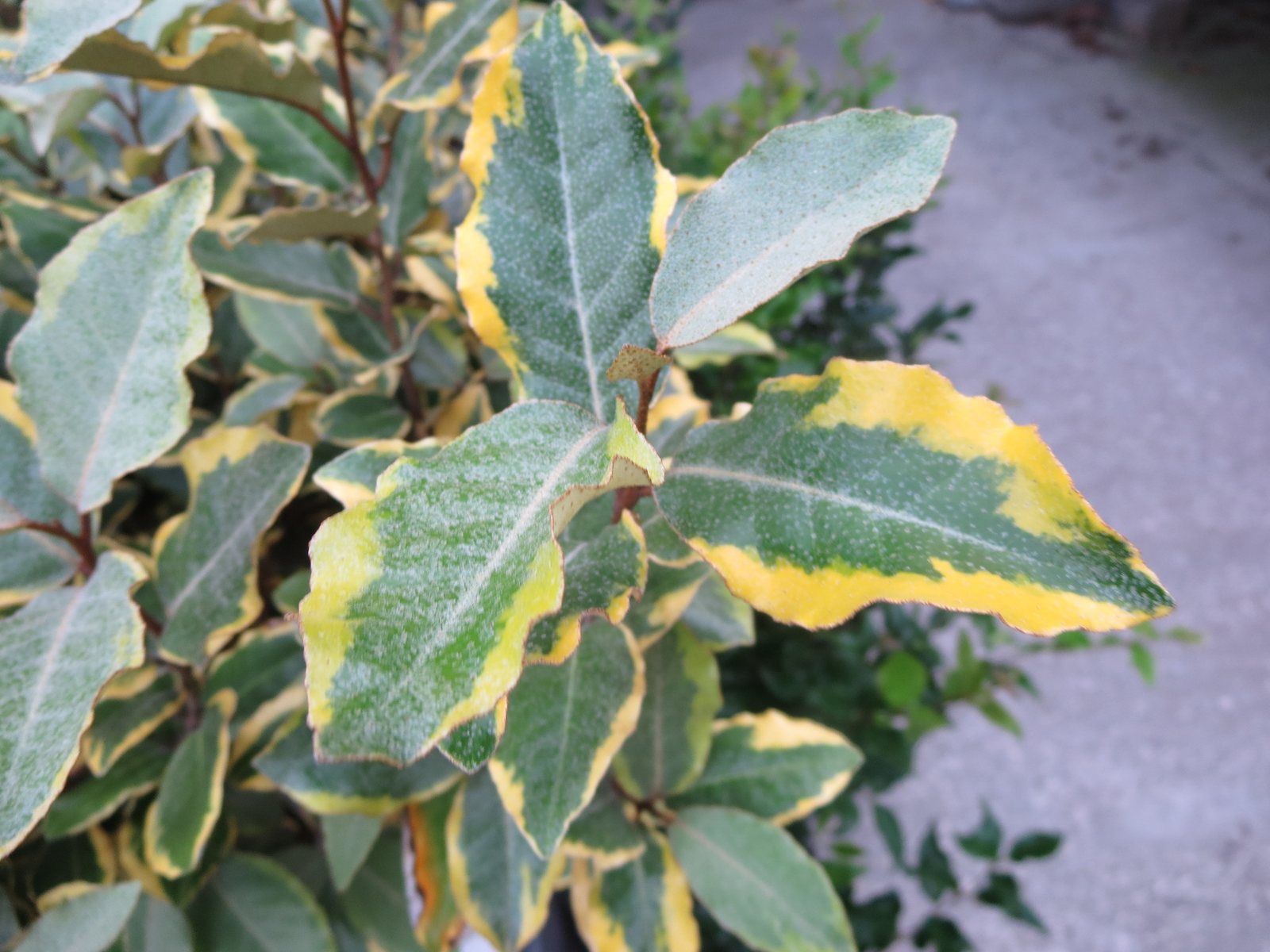
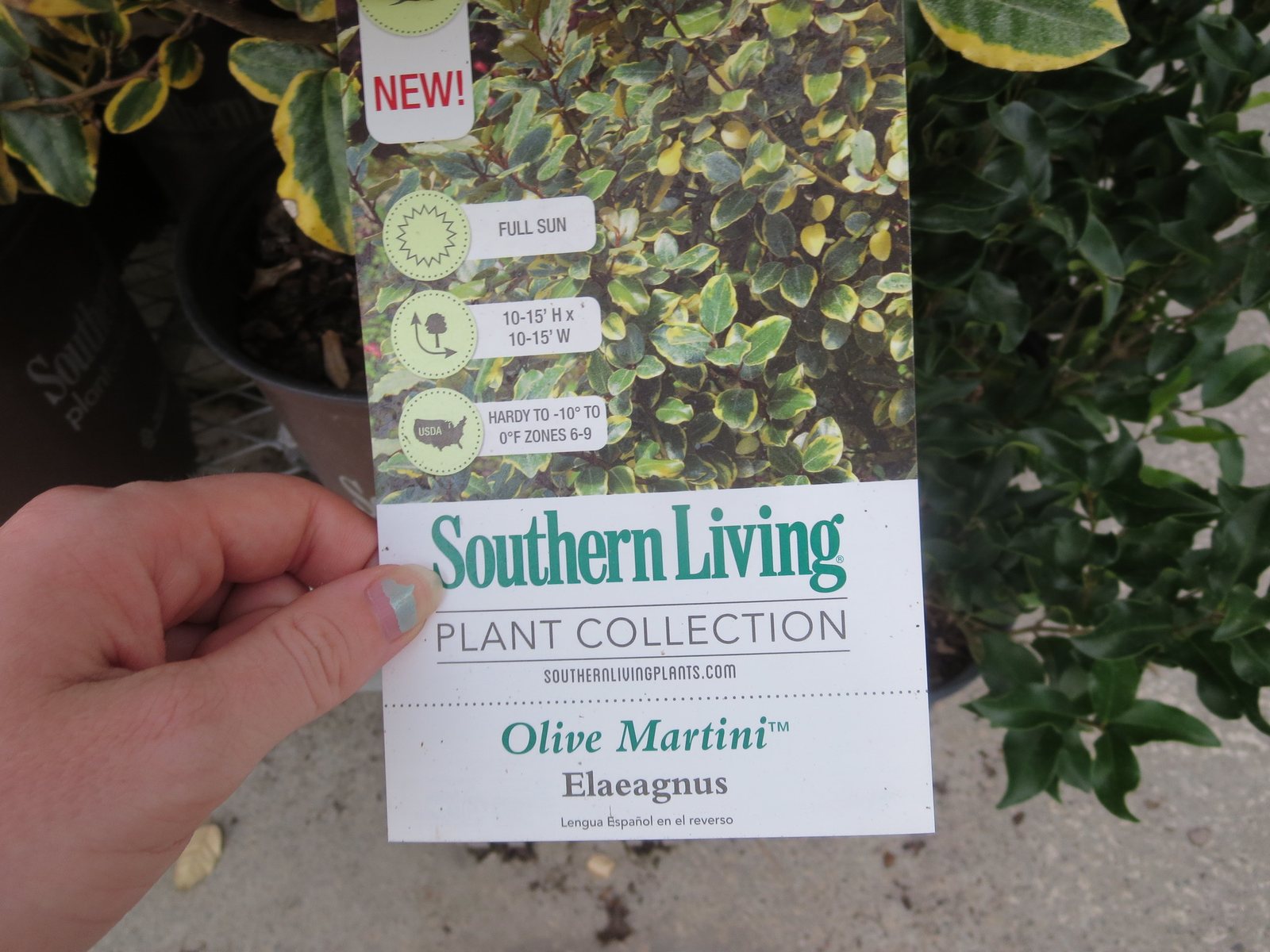
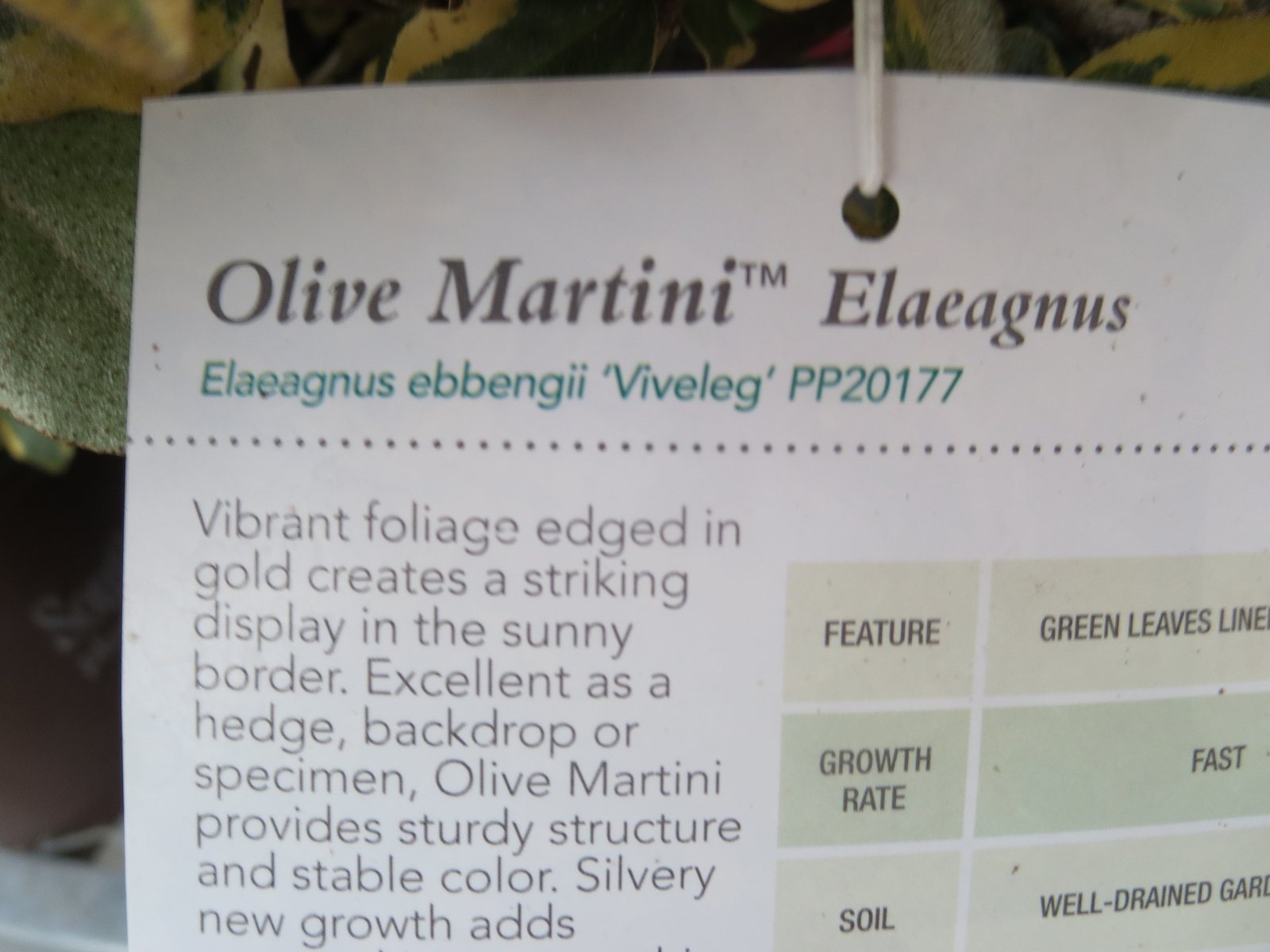
At a glance
- Sun
- Full sun to partial shade; tolerates fairly deep shade but grows less densely.
- Water
- Water regularly while establishing. Once established, it tolerates dry spells, though prolonged drought can cause leaf drop.
- Soil
- Well-drained soil, including sandy, chalky and moderately clayey ground; tolerates poor soil and a wide pH range. Avoid persistently wet sites.
- Height
- 10-13 ft (3-4 m)
- Spread
- 10-13 ft (3-4 m)
- Flowers
- Small, creamy-white, intensely fragrant flowers in autumn, tucked into the leaf axils; sometimes followed by reddish, silver-speckled fruit in spring.
- Foliage
- Evergreen. Oval, leathery, dark green leaves with silver-scaled undersides; young leaves and shoots have a silvery or brownish coating.
- Growth
- Fast, especially in mild climates.
- Care needed
- Low
The year at a glance
- Pollinators
- Deer resistant
- Drought tolerant
- Heat tolerant
- Wildlife
- Low allergen
- Fragrant
| J | F | M | A | M | J | J | A | S | O | N | D | |
|---|---|---|---|---|---|---|---|---|---|---|---|---|
| Flowers | ||||||||||||
| Fruit | ||||||||||||
| Plant |
Northern hemisphere months. In Australia, shift them by six.
- Difficulty
- Easy
- Toughness
- Very tough
Will it suit your garden?
Pick your zone, country, light and whether you have pets.
Full sun is 6 or more hours of direct sun a day, part shade 3 to 6 hours, shade under 3.
How it grows
Planting day
1.6 ft (0.5 m)
After 1 year
5 ft (1.4 m)
After 2 years
8 ft (2.3 m)
After 3 years
11 ft (3.3 m)
After 5 years
11 ft (3.5 m)
full size
About 3 years to full size.
From a typical nursery size, at an average rate for this kind of plant. A rule of thumb, not a forecast.
Good to know
- Cats and dogs
- Safe
- Growth rate
- Fast
Care
Jobs through the year
- WaterApr–May, Sep–Oct, every 21 days
- Water established shrubs only when soil is dry; young plants need more for two seasons.
- WaterJun–Aug, every 14 days
- Soak deeply during prolonged drought; skip watering when rainfall is adequate.
- MulchApr
- Maintain 5–8 cm of organic mulch, keeping stem bases clear.
- PruneApr–May
- After severe frost risk passes, remove damaged wood and shorten long shoots.
- PruneJun–Jul
- Trim hedges only if needed, checking for active bird nests and retaining flowering wood.
- ProtectJan–Mar, Nov–Dec
- Shelter young plants from winter winds; zone 6 is marginal, so use a warmer site or container protection.
- Water deeply during dry weather through the first two growing seasons.
- Apply a 2-3 in (5-8 cm) mulch over the root area, keeping it clear of the stems.
- Avoid routine nitrogen feeding; this shrub fixes nitrogen and usually needs little fertilizer.
- Plant where water drains freely rather than collecting around the roots.
- Give an unclipped plant room to spread, or trim regularly while young to build a dense hedge.
Pruning. Prune in spring after the risk of severe frost, removing damaged wood and shortening long shoots. Trim hedges again in early to midsummer if needed; late-summer clipping removes some of the wood that would carry autumn flowers.
Through the year
- Spring
- Remove frost-damaged shoots once new growth shows which stems are alive.
- Spring
- Plant in colder areas and renew mulch without burying the stem bases.
- Early summer
- Trim hedges and shorten wayward shoots, checking for nesting birds before cutting.
- Summer
- Water young plants deeply during dry spells and inspect stressed foliage for pests.
- Late summer
- Take semi-ripe cuttings from healthy, nonflowering shoots.
- Autumn
- Enjoy the fragrant flowers; plant new shrubs in mild climates while the soil is still warm.
- Winter
- Check newly planted shrubs after strong winds and firm any loosened rootballs.
In the garden
- Plant as a dense evergreen boundary hedge where there is room for its width.
- Use as a coastal windbreak behind more delicate shrubs and perennials.
- Place near a path or seating area so the autumn flower fragrance is noticeable.
- Use its dark foliage as a background for pale flowers, ornamental grasses and silver-leaved plants.
Garden styles it suits: Coastal, Low-maintenance, Mediterranean, Formal, Winter interest and Sensory garden.
Plant it with: Lavender, Rosemary, Rock rose, Santolina, New Zealand flax and Feather reed grass.
Wildlife: Autumn flowers provide nectar for bees and other insects when fewer shrubs are flowering. Dense growth offers shelter and nesting cover, and birds may eat the fruit where it develops.
Problems to watch for
- Root rot in waterlogged soil: improve drainage or move the shrub; do not keep the root zone constantly wet.
- Elaeagnus sucker can cause pale mottling, distorted growth and sticky honeydew: encourage natural predators and, where necessary, use a locally approved insecticidal soap according to its label.
- Scale insects can weaken shoots and leave honeydew: prune heavily infested growth and treat susceptible stages with a locally approved horticultural oil.
- Severe frost or drying winter winds can scorch leaves and kill shoot tips: shelter young plants and wait until spring before cutting back damaged wood.
Safety
Not known to be toxic to people, cats, dogs or horses. No part is generally recognized as poisonous, although animal-specific information is limited; do not use ornamental prunings as livestock feed.
Where it spreads. Reported escaping cultivation in the southeastern United States. Its spread is less widely documented than that of autumn olive or thorny olive; check local invasive-plant guidance before planting near natural areas.
Easily confused with
Thorny olive (Elaeagnus pungens)
Usually has more noticeably wavy leaf margins and thorny, scrambling shoots. Ebbinge's silverberry is generally more upright and less thorny, though the two can be difficult to separate.
Autumn olive (Elaeagnus umbellata)
Deciduous, with generally smaller, thinner leaves; it flowers in spring and bears silver-speckled red fruit in autumn.
Russian olive (Elaeagnus angustifolia)
A deciduous shrub or small tree with much narrower, silvery leaves and yellowish flowers in late spring or early summer.
The name
The hybrid epithet ebbingei commemorates the Dutch horticulturist J. W. E. Ebbinge, while silverberry refers to the silvery scales on the fruit.
Propagation. Take semi-ripe cuttings in late summer and root them in a free-draining medium with protection from drying out. Layering low branches is another option; seed does not reliably reproduce the hybrid or named cultivars.
Checked against open data
- Accepted botanical name
- Elaeagnus ebbingei
Sources: GBIF (CC BY 4.0). The care and design notes are LandscapeGPT's own.
See it in your own yard.
Upload a photo of your yard and see it redesigned with plants that suit your climate, each checked against your zone.