Edamame (soybean)
Glycine max. Family Fabaceae. Annual.
Also called Soybean, Soya bean, Vegetable soybean.
Edamame is soybean grown as an annual for its plump, green, immature seeds, which are cooked and shelled before eating. Its upright, bushy plants suit vegetable beds and large containers, but need a warm growing season; choose an early, locally adapted vegetable soybean variety in cooler regions.
At a glance
- Sun
- Full sun, ideally at least 6-8 hours daily.
- Water
- Keep soil evenly moist, especially during flowering and pod filling; avoid waterlogged soil.
- Soil
- Well-drained, fertile loam with a pH around 6.0-7.0; avoid cold, saturated ground.
- Height
- 1.5-3 ft (0.45-0.9 m)
- Spread
- 1-2 ft (0.3-0.6 m)
- Flowers
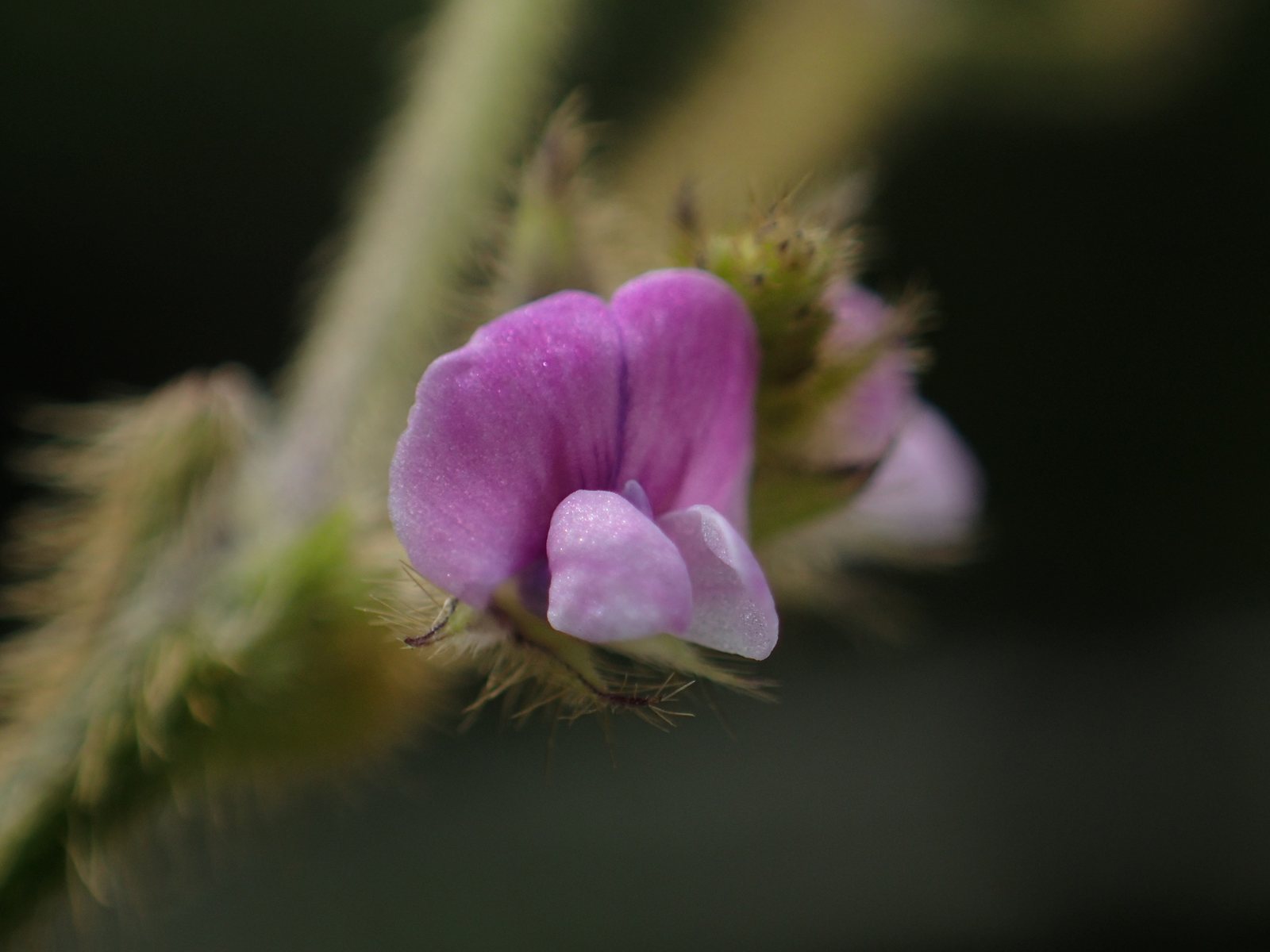
- Small white or pale purple flowers in summer, tucked into the leaf joints.
- Foliage
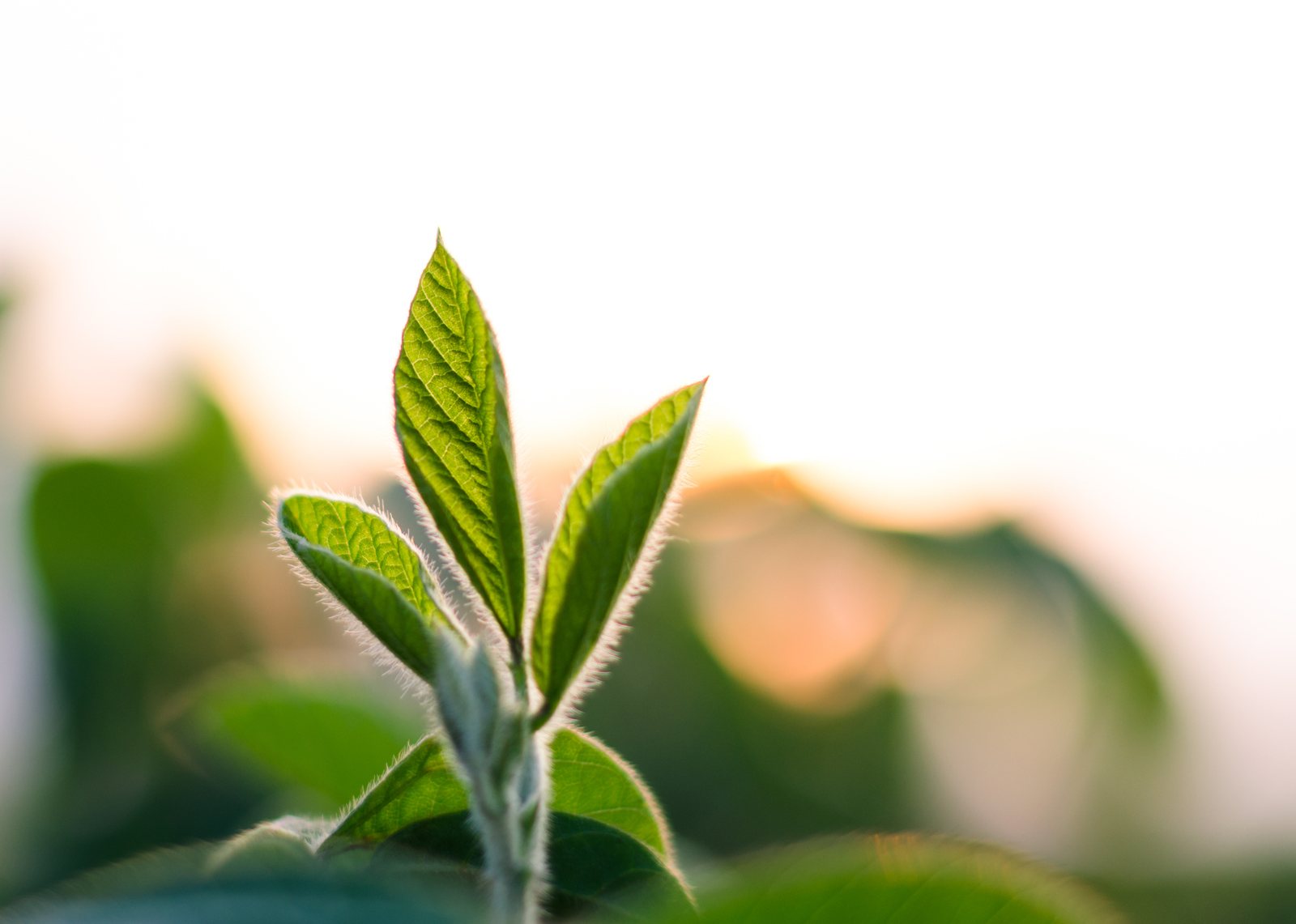
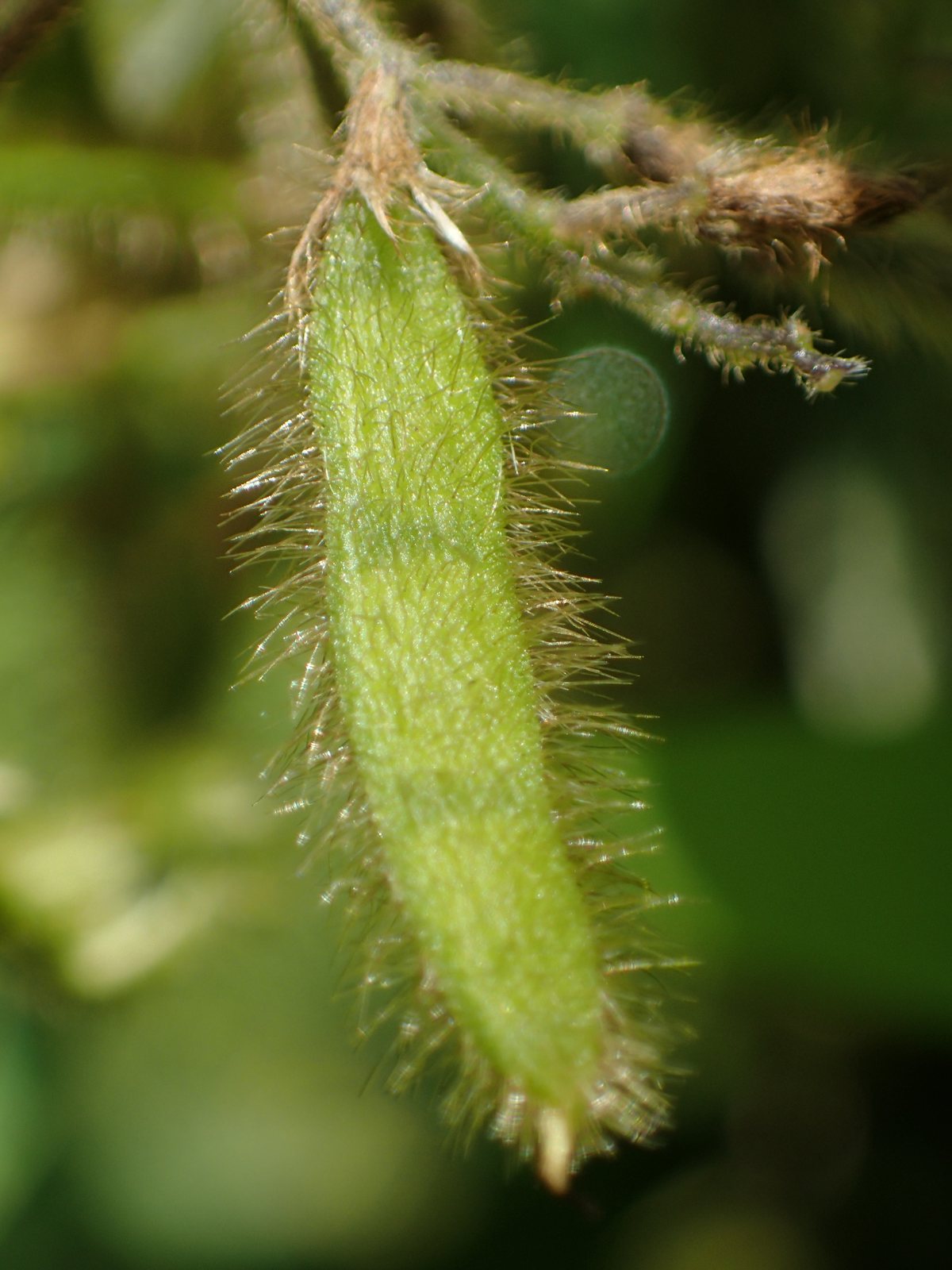
- Green leaves with three broad, softly hairy leaflets; stems and pods are also hairy. Leaves yellow as the seeds mature.
- Growth
- Fast in warm weather; harvest commonly begins about 75-110 days after sowing, depending on variety and conditions.
- Care needed
- Medium
The year at a glance
- Low allergen
- Edible
| J | F | M | A | M | J | J | A | S | O | N | D | |
|---|---|---|---|---|---|---|---|---|---|---|---|---|
| Flowers | ||||||||||||
| Fruit | ||||||||||||
| Plant |
Northern hemisphere months. In Australia, shift them by six.
- Difficulty
- Moderate
- Toughness
- Fairly tough
Will it suit your garden?
Pick your zone, country, light and whether you have pets.
Full sun is 6 or more hours of direct sun a day, part shade 3 to 6 hours, shade under 3.
How it grows
Planting day
0.5 ft (0.15 m)
After 1 year
2.2 ft (0.68 m)
full size
Full size in one season.
From a typical nursery size, at an average rate for this kind of plant. A rule of thumb, not a forecast.
Good to know
- Cats and dogs
- Mildly toxic: may upset a stomach
- Growth rate
- Fast
Care
Jobs through the year
- FeedApr–May
- Incorporate mature compost before sowing; avoid heavy nitrogen feeding.
- ProtectMay–Jun
- Protect newly sown seed and seedlings from birds, rabbits and slugs with suitable barriers.
- WaterMay–Jun, every 7 days
- Water in-ground plants if rain is insufficient; keep seedlings moist without saturating the seedbed.
- WaterJul–Sep, every 3 days
- Check soil moisture and water deeply as needed during flowering and pod filling, allowing for rain.
- MulchJun
- Mulch after the soil warms and seedlings establish, keeping stems clear.
- HarvestAug–Sep
- Pick plump, bright-green pods before yellowing; cook beans thoroughly and discard pods.
- Sow after the last frost when soil has warmed to at least 60°F (16°C), preferably warmer.
- Sow 1-1.5 in (2.5-4 cm) deep and thin to 4-6 in (10-15 cm) apart, with rows 18-30 in (45-75 cm) apart.
- Where soybeans have not grown before, use a soybean-specific rhizobial inoculant according to its label.
- Water deeply during dry spells, particularly while flowers and pods develop.
- Weed gently while plants are young, then mulch once the soil is warm; avoid disturbing shallow roots.
- Add compost before planting, but avoid heavy nitrogen feeding; support unusually tall plants if they lean.
Pruning. No routine pruning or pinching is needed. Remove badly diseased plants rather than trimming them repeatedly.
Harvest
Pick pods when they are bright green and well filled, with rounded seeds visible beneath the pod surface, before pods turn yellow. Check daily as the harvest window is short; pick individual pods or cut the whole plant when most are ready. Cook the beans thoroughly before eating, discard the tough pods, and refrigerate or blanch and freeze promptly.
Through the year
- Late winter
- Order an early, locally adapted edamame variety, especially where summers are short or cool.
- Spring
- Prepare a sunny, well-drained bed with compost and remove perennial weeds.
- Late spring
- Direct-sow after frost danger has passed and the soil is warm.
- Early summer
- Thin seedlings, weed carefully and mulch warmed soil.
- Summer
- Maintain steady moisture during flowering and pod filling; inspect leaves and pods for pests.
- Late summer
- Harvest full green pods before yellowing; early varieties or warm climates may crop sooner.
- Autumn
- Remove finished plants and compost healthy material; keep diseased debris out of home compost.
In the garden
- Plant in short rows or blocks in a kitchen garden for a compact summer crop.
- Use its broad green foliage alongside carrots and other finer-leaved vegetables in a potager.
- Grow several plants in a large container on a sunny patio where watering is easy.
- Follow spring lettuce or radishes with a summer edamame crop once the ground is warm.
Garden styles it suits: Potager (kitchen garden), Edible landscape, Homestead, Farmhouse, Small-space and Family-friendly.
Plant it with: Carrots, Radishes, Lettuce, Beetroot and Sweetcorn.
Wildlife: Flowers are mainly self-pollinating, although bees sometimes visit them. Rabbits and deer may browse the foliage, and birds or rodents may take newly sown seed.
Problems to watch for
- Poor emergence or rotting seed: sow into warm, well-drained soil and avoid overwatering before emergence.
- Slugs, snails and seedling-feeding birds: protect young plants with suitable barriers or securely fitted mesh and remove slugs by hand.
- Leaf-feeding beetles and caterpillars: inspect foliage regularly, hand-pick where practical and identify the pest before treating.
- Few filled pods before cold weather: choose an early variety adapted to your latitude, plant promptly into warm soil and avoid water stress during flowering.
Safety
Soybean foliage and pods are not generally classed as poisonous to cats, dogs, horses or people. Raw or undercooked seeds contain compounds that interfere with digestion and can cause illness if eaten in quantity, so cook edamame thoroughly before eating or offering any to pets. Soy can cause serious allergic reactions in susceptible people; discard the tough pod shells, which are not normally eaten.
Easily confused with
Bush bean (Phaseolus vulgaris)
Both have three-part leaves, but soybean has conspicuously hairy stems and short, fuzzy pods, usually holding two or three rounded seeds; common bean pods are generally longer and less hairy.
Broad bean (Vicia faba)
Broad beans have upright, sturdy stems, leaves with several separate grey-green leaflets rather than three, and much larger flowers, often marked with black.
The name
Edamame is Japanese for 'stem beans', referring to the traditional sale or serving of immature soybean pods still attached to their stems.
Propagation. Grow from seed, preferably by direct sowing because seedlings dislike root disturbance. For seed saving, leave selected healthy pods to turn brown and dry fully on the plant, then shell and store the dried beans somewhere cool and dry.
Checked against open data
- Accepted botanical name
- Glycine max
- In the US and Canada
- Introduced in the lower 48 states and Puerto Rico.
- Native range
- Amur, China North-Central, China South-Central, China Southeast, Hainan, Inner Mongolia, Japan, Khabarovsk, Korea, Manchuria, Nansei-shoto and Primorye.
- Measured
- Soil pH 5.5 to 7.8. Average height 23 cm.
Sources: GBIF (CC BY 4.0), USDA PLANTS and Trefle (CC BY 4.0). The care and design notes are LandscapeGPT's own.
See it in your own yard.
Upload a photo of your yard and see it redesigned with plants that suit your climate, each checked against your zone.