Elberta peach
Prunus persica 'Elberta'. Family Rosaceae. Tree.
Also called Prunus persica 'Elberta'.
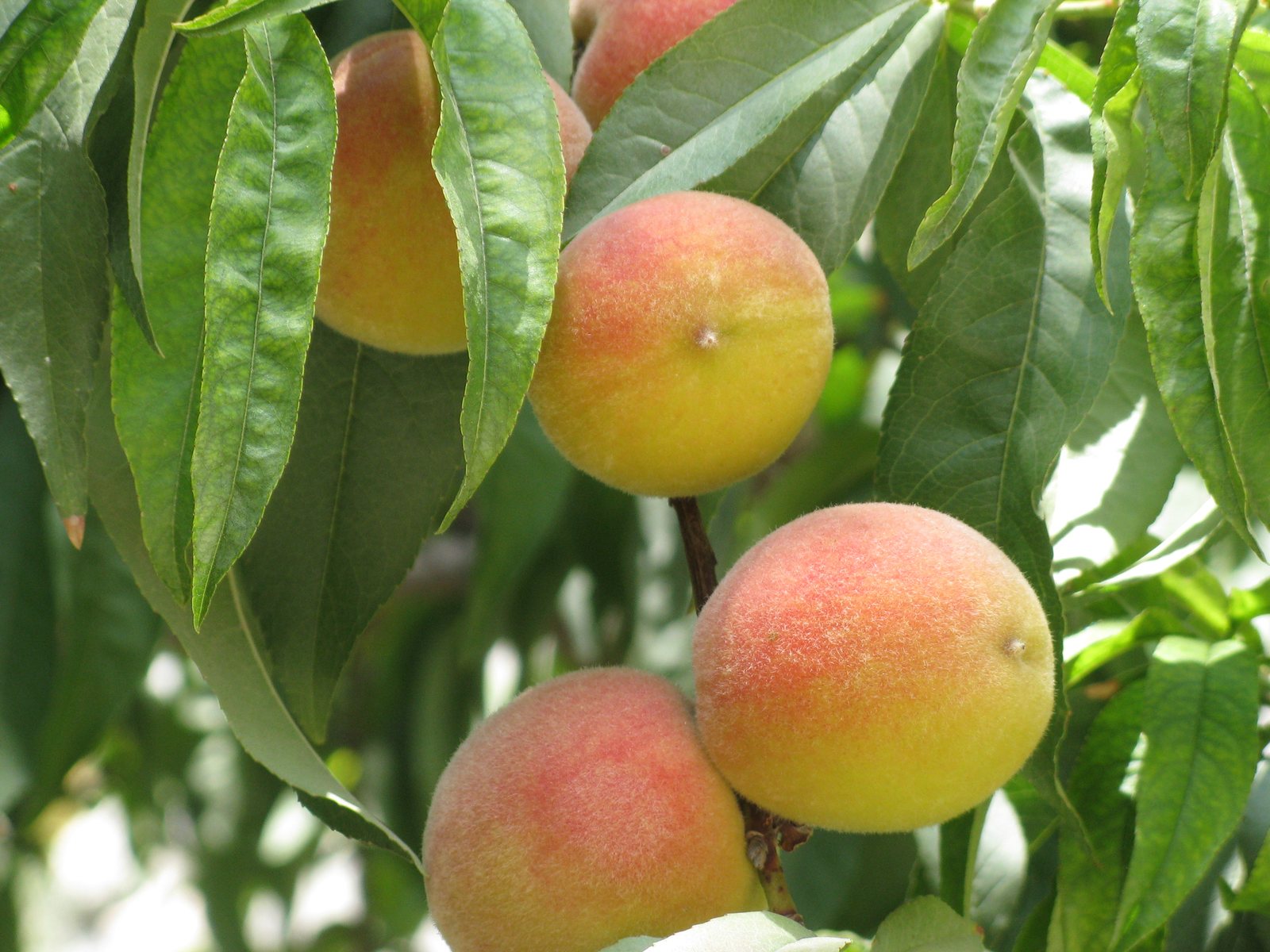
Elberta is a deciduous, self-fertile peach tree grown for large, yellow-fleshed, freestone fruit suitable for eating fresh, preserving and baking. It needs a sunny position, regular pruning and enough winter chill to crop reliably; early blossom is vulnerable to frost.
At a glance
- Sun
- Full sun, ideally at least 8 hours daily; choose a sheltered site away from frost pockets.
- Water
- Water deeply during dry spells, especially while establishing and while fruit is swelling. Keep the root zone evenly moist but never waterlogged.
- Soil
- Deep, fertile, well-drained loam, preferably slightly acidic to neutral, around pH 6.0-7.0. Avoid poorly drained clay.
- Height
- 15-25 ft (4.6-7.6 m) on vigorous rootstock; smaller on dwarfing rootstock or with regular pruning.
- Spread
- 15-20 ft (4.6-6.1 m) on vigorous rootstock; rootstock and training affect final width.
- Flowers
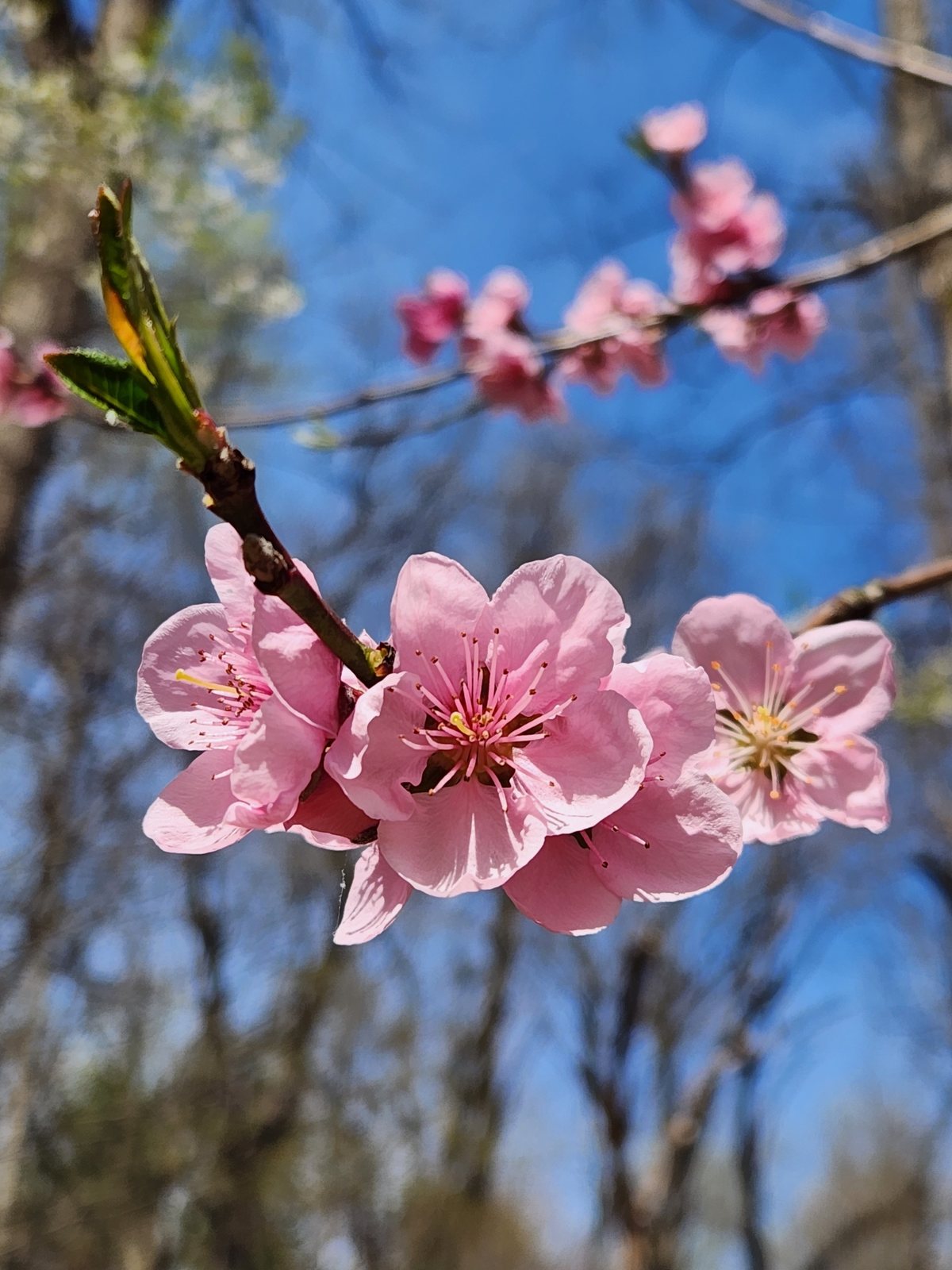
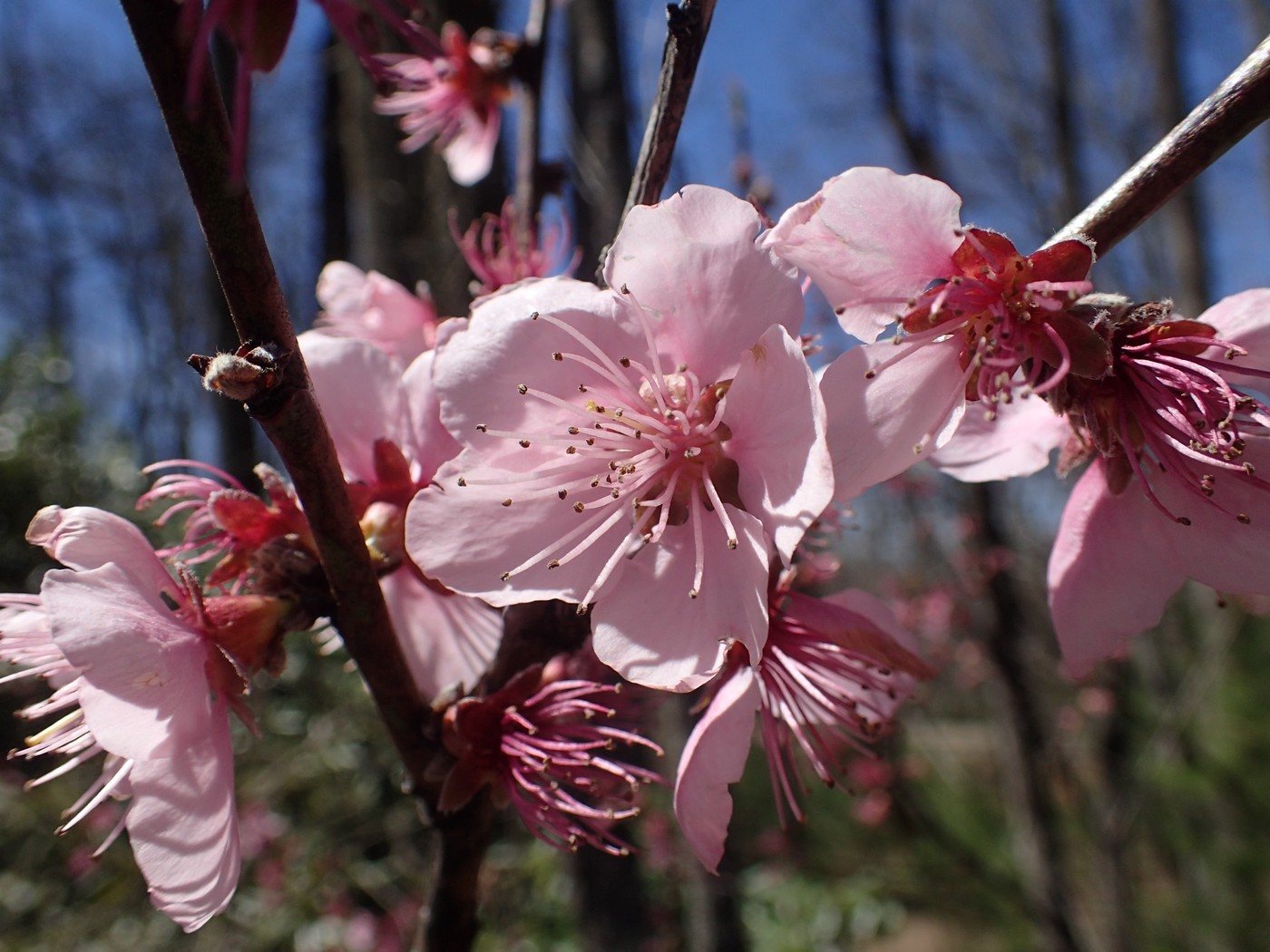
- Pink flowers in early to mid-spring, before or as the leaves emerge.
- Foliage
- Long, narrow, pointed green leaves with finely toothed edges; usually yellow in autumn.
- Growth
- Fast when young, slowing as cropping increases.
- Care needed
- High
The year at a glance
- Pollinators
- Heat tolerant
- Wildlife
- Low allergen
- Edible
| J | F | M | A | M | J | J | A | S | O | N | D | |
|---|---|---|---|---|---|---|---|---|---|---|---|---|
| Flowers | ||||||||||||
| Fruit | ||||||||||||
| Plant |
Northern hemisphere months. In Australia, shift them by six.
- Difficulty
- Hard
- Toughness
- Needs looking after
Will it suit your garden?
Pick your zone, country, light and whether you have pets.
Full sun is 6 or more hours of direct sun a day, part shade 3 to 6 hours, shade under 3.
How it grows
Planting day
7 ft (2 m)
After 1 year
7 ft (2.2 m)
After 2 years
8 ft (2.4 m)
After 3 years
9 ft (2.6 m)
After 5 years
10 ft (3 m)
About 20 years to full size.
From a typical nursery size, at an average rate for this kind of plant. A rule of thumb, not a forecast.
Good to know
- Cats and dogs
- Toxic
- Growth rate
- Moderate
Care
Jobs through the year
- WaterApr–May, Sep–Oct, every 14 days
- Water established trees deeply if soil is drying; newly planted trees need more frequent checks.
- WaterJun–Aug, every 7 days
- Water deeply in dry weather, keeping soil evenly moist while fruit swells.
- FeedMar
- Apply compost; add balanced fruit-tree feed only if growth is weak.
- MulchMar–Apr
- Spread 5–8 cm of organic mulch over the root zone, clear of the trunk.
- PruneMar–Apr
- Prune in dry weather around flowering; retain healthy one-year-old fruiting shoots.
- PruneJun
- Thin fruit after the natural drop to leave peaches 15–20 cm apart.
- ProtectJan–Mar
- Where leaf curl recurs, use rain shelter or a locally approved treatment before buds open.
- ProtectMar–Apr
- Cover blossom during forecast frost; remove fleece by day for pollination.
- ProtectJul–Sep
- Remove rotting fruit promptly and use taut wildlife-safe netting if needed.
- HarvestAug–Sep
- Pick fragrant peaches that yield slightly and release with a gentle lift and twist.
- ProtectOct–Nov
- Clear fallen leaves, rotten fruit and dried fruit remaining on branches.
- Water newly planted trees deeply whenever the root zone begins to dry; continue watering established trees during prolonged drought.
- Apply compost and, if growth is weak, a balanced fruit-tree fertiliser in early spring; avoid heavy nitrogen feeding.
- Spread 2-3 in (5-8 cm) of organic mulch over the root zone, keeping it clear of the trunk.
- Thin young peaches to roughly 6-8 in (15-20 cm) apart after the main natural fruit drop.
- Protect blossom on small trees with horticultural fleece during frost, removing it during the day for pollination.
- Allow for roughly 800-850 winter chill hours; mild-winter districts may not provide enough chill for reliable cropping.
Pruning. Prune in dry weather in early to mid-spring, around flowering, rather than during wet winter conditions. Train an open-centred crown, remove dead and crossing growth, and renew older fruiting branches while retaining healthy one-year-old shoots, which bear the crop.
Harvest
Pick peaches in late summer, with timing varying by climate, when the green background colour turns yellow, the fruit smells fragrant and it yields slightly to gentle pressure. Lift and twist gently; ripe fruit should release readily, and red skin alone does not indicate ripeness. A grafted tree usually gives its first worthwhile crop about 2-4 years after planting.
Through the year
- Late autumn
- Remove fallen leaves, rotten fruit and dried fruit remaining on the tree; check that drainage is adequate.
- Winter
- Plant bare-root trees while dormant, provided the ground is neither frozen nor waterlogged.
- Late winter
- Where peach leaf curl is a recurring problem, use a locally approved preventative treatment before buds open, following its label.
- Early spring
- Feed if needed, renew mulch and protect opening blossom during forecast frosts.
- Spring
- Prune in dry weather around flowering, keeping the crown open and retaining young fruiting wood.
- Late spring
- Thin developing fruit after the main natural drop to reduce branch strain and improve fruit size.
- Summer
- Water during dry spells, inspect fruit for rot and use wildlife-safe netting where necessary.
- Late summer
- Harvest in several passes as individual peaches ripen.
In the garden
- Plant in a sunny home orchard with enough space for pruning, picking and airflow.
- Train as a fan against a sunny, sheltered wall where summers are cool; use a south-facing wall in the Northern Hemisphere or a north-facing wall in Australia.
- Use as a spring-flowering focal tree in an edible garden, keeping the ground beneath it mulched.
- Place near a kitchen garden with low flowering herbs beyond the mulched root zone.
Garden styles it suits: Backyard orchard, Edible landscape, Homestead, Potager (kitchen garden), Cottage garden and Food forest.
Plant it with: Chives, Thyme, Yarrow and Nasturtiums.
Wildlife: Flowers provide pollen and nectar for bees. Ripe fruit attracts birds, mammals and wasps; harvest promptly and use taut, wildlife-safe netting rather than loose mesh.
Problems to watch for
- Peach leaf curl causes thickened, puckered, reddish leaves: protect fan-trained trees from winter and early-spring rain where practical, and use a locally approved preventative treatment before bud opening if available.
- Brown rot spoils ripening fruit and leaves dried fruit on branches: remove affected fruit promptly, clear old fruit from the tree and ground, thin the crop and prune for airflow.
- Peach tree borers can cause gum and frass around the lower trunk: protect bark from injury, inspect the trunk regularly and seek locally appropriate control because the pest species and treatments differ by region.
- Spring frost or insufficient winter chill can prevent cropping: avoid frost pockets, protect blossom where practical and choose a lower-chill cultivar instead if local winters are too mild for Elberta.
Safety
Leaves, stems and the seed inside the stone contain cyanogenic compounds and can seriously poison people, cats, dogs and horses if eaten; wilted leaves are a particular livestock hazard. The ripe flesh is edible, but do not eat the kernels or allow animals to chew stones, which also pose choking and obstruction risks.
Easily confused with
Nectarine (Prunus persica, nectarine forms)
The tree and flowers are very similar, but nectarines have smooth skin while Elberta peaches have fuzzy skin.
Apricot (Prunus armeniaca)
Apricots have broader, more rounded leaves and usually smaller orange fruit; Elberta has long, narrow leaves and larger yellow fruit with a red blush.
Other peach cultivars (Prunus persica)
Many cultivars closely resemble Elberta. Its large, yellow-fleshed freestone fruit and late-season ripening are useful clues, but reliable identification normally requires a nursery label or planting record.
The name
The cultivar was named for the wife of its breeder, Samuel H. Rumph, while persica refers to Persia, through which peaches reached Europe despite originating in China.
Propagation. Propagate by budding or grafting onto a suitable peach-compatible rootstock. Seedlings will not reliably retain Elberta's fruit characteristics; buy a named grafted tree for predictable fruit and size.
Checked against open data
- Accepted botanical name
- Prunus persica
- In the US and Canada
- Introduced in Canada, the lower 48 states and US Virgin Islands.
- Native range
- China North-Central.
- Measured
- Average height 640 cm.
Sources: GBIF (CC BY 4.0), USDA PLANTS and Trefle (CC BY 4.0). The care and design notes are LandscapeGPT's own.
See it in your own yard.
Upload a photo of your yard and see it redesigned with plants that suit your climate, each checked against your zone.