Elephant bush
Portulacaria afra. Family Didiereaceae. Succulent.
Also called Dwarf jade plant, Spekboom, Porkbush.
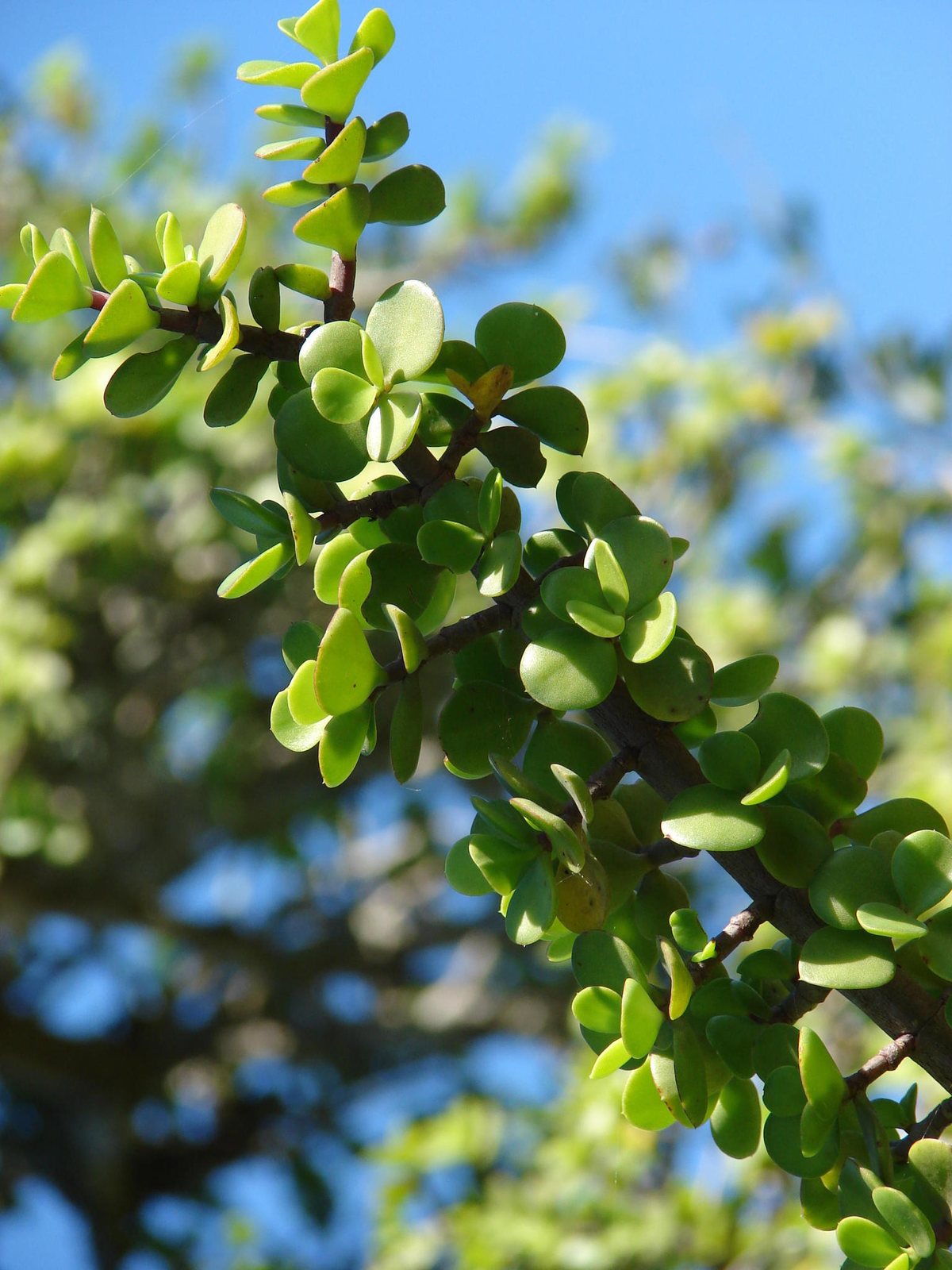
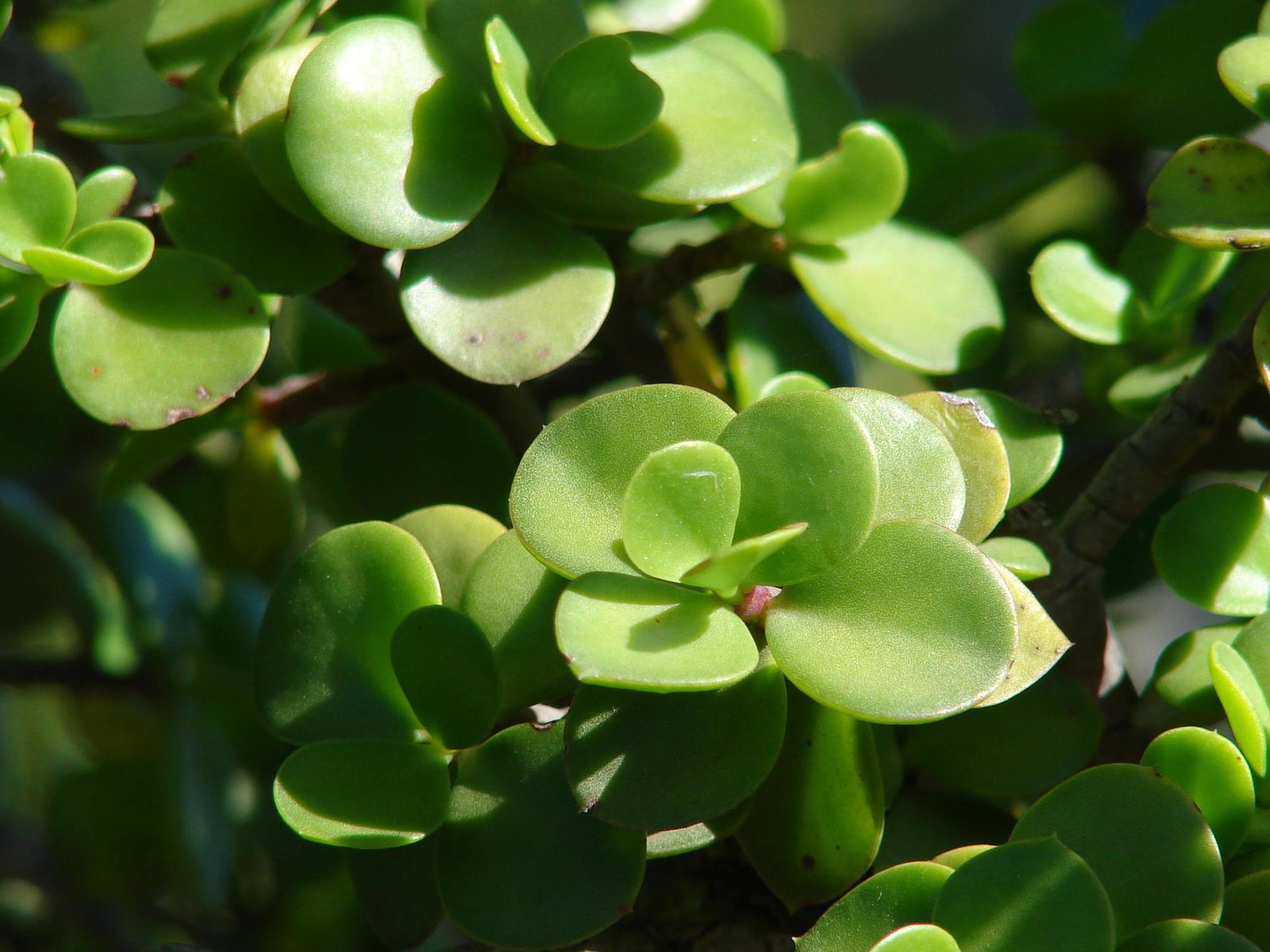
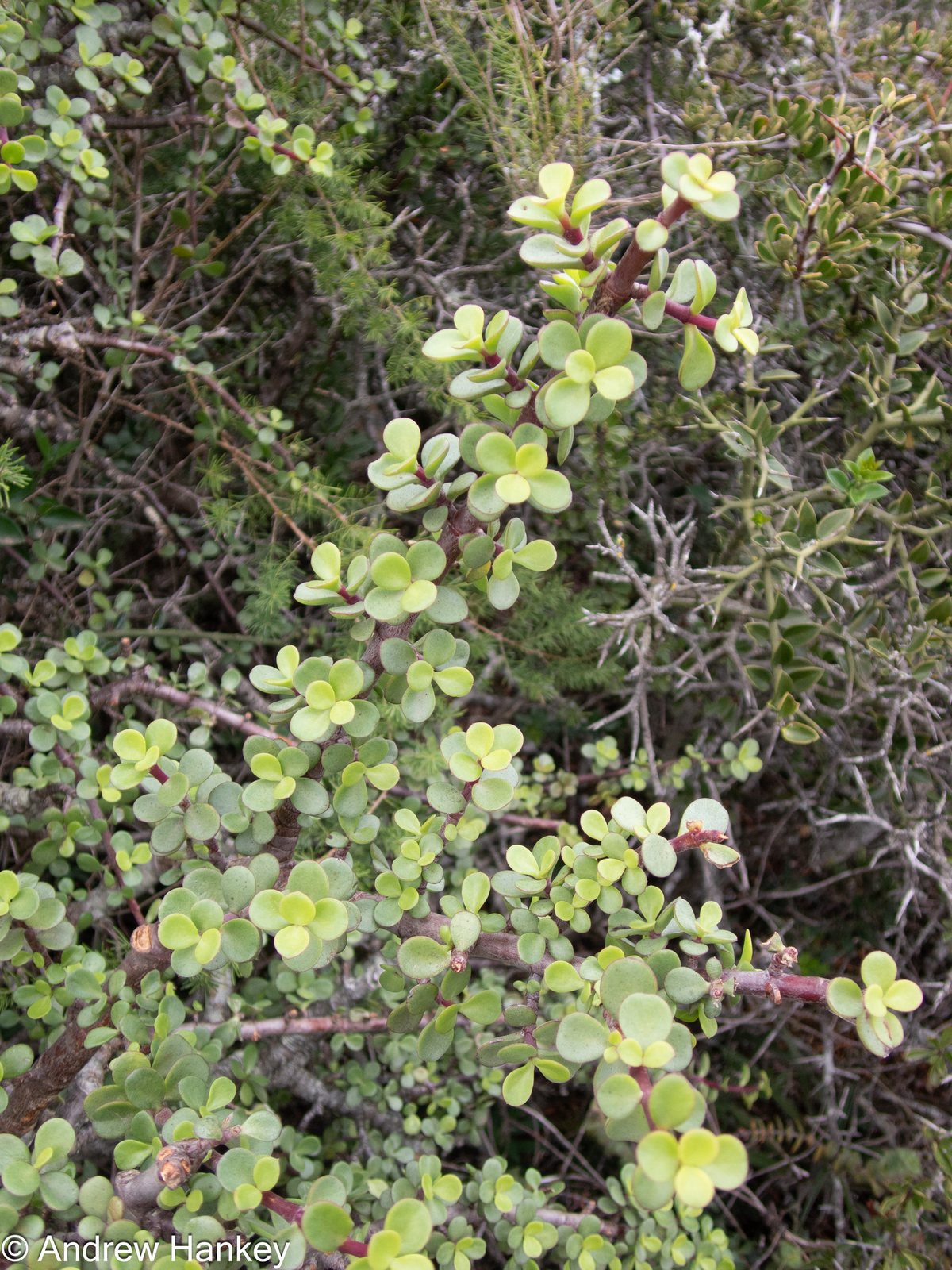
Elephant bush (Portulacaria afra) is an evergreen succulent shrub from southern Africa, with small, rounded leaves and reddish young stems. Gardeners grow it for its branching shape, drought tolerance and suitability for containers or bonsai. Outside frost-free climates, keep it in a pot and bring it into bright, frost-free shelter for winter.
At a glance
- Sun
- Full sun to light shade outdoors; a very bright position indoors. Introduce plants gradually to strong outdoor sun to prevent scorching.
- Water
- Let the potting mix dry between thorough waterings. Water very sparingly in cool weather; established plants in the ground need little supplementary water.
- Soil
- Sharply drained sandy or gravelly soil. In containers, use cactus potting mix with added pumice, grit or perlite, and a pot with drainage holes.
- Height
- 8-15 ft (2.4-4.6 m) in frost-free ground; commonly maintained at 2-4 ft (0.6-1.2 m) in containers
- Spread
- 4-8 ft (1.2-2.4 m) in the ground; readily kept narrower by pruning
- Flowers
- Small clusters of pale pink flowers in summer, mainly on mature outdoor plants; flowering is uncommon indoors.
- Foliage
- Evergreen. Small, rounded to oval, fleshy green leaves in opposite pairs; young stems are reddish and older branches become woody.
- Growth
- Moderate in warm, bright conditions; slow in cool weather or indoors.
- Care needed
- Low
The year at a glance
- Drought tolerant
- Heat tolerant
- Low allergen
| J | F | M | A | M | J | J | A | S | O | N | D | |
|---|---|---|---|---|---|---|---|---|---|---|---|---|
| Flowers | ||||||||||||
| Plant |
Northern hemisphere months. In Australia, shift them by six.
- Difficulty
- Easy
- Toughness
- Fairly tough
Will it suit your garden?
Pick your zone, country, light and whether you have pets.
Full sun is 6 or more hours of direct sun a day, part shade 3 to 6 hours, shade under 3.
How it grows
Planting day
1.4 ft (0.42 m)
After 1 year
2.7 ft (0.81 m)
After 2 years
4 ft (1.2 m)
After 3 years
5 ft (1.6 m)
After 5 years
8 ft (2.4 m)
About 8 years to full size.
From a typical nursery size, at an average rate for this kind of plant. A rule of thumb, not a forecast.
Good to know
- Cats and dogs
- Safe
- Growth rate
- Slow
Care
Jobs through the year
- WaterApr–May, Sep–Oct, every 21 days
- Established ground plants need water only if dry; locally grown pots need checks for fully dried compost.
- WaterJun–Aug, every 14 days
- Water only after soil dries; established ground plants need little extra water, while pots may dry faster.
- WaterJan–Mar, Nov–Dec, every 35 days
- Check sheltered pots and water very sparingly only when thoroughly dry.
- FeedMay–Aug, every 35 days
- Feed container plants at half strength during active growth only.
- PruneApr–Jun
- Shorten leggy stems just above paired leaves and remove dead or damaged growth.
- ProtectMay–Jun
- Use containers locally; gradually acclimatise plants to outdoor sun after frost risk passes.
- ProtectSep–Oct
- Bring pots into bright, frost-free shelter before cold nights and protect from winter rain.
- Water deeply, then let the mix dry; empty saucers so roots never stand in water.
- Feed container plants lightly with a balanced fertiliser at half strength every 4-6 weeks during active growth.
- Move sheltered plants outdoors gradually after frost risk has passed, starting in light shade.
- Bring pots under bright, frost-free cover before cold nights; protect them from prolonged winter rain.
- Repot in spring only when roots fill the pot, using a container just one size larger.
Pruning. Prune in spring or early summer, cutting just above a pair of leaves to encourage branching. Remove dead or damaged stems and shorten long shoots as needed; avoid heavy pruning during cool, inactive periods.
Through the year
- Spring
- Check roots and repot crowded container plants into fresh, sharply drained mix.
- Late spring
- After frost risk has passed, gradually acclimatise indoor plants to outdoor light.
- Early summer
- Prune for shape and use healthy stem pieces for cuttings.
- Summer
- Water when the mix has dried and feed container plants lightly during active growth.
- Autumn
- Stop feeding as growth slows and move pots into frost-free shelter before cold nights.
- Winter
- Keep plants in the brightest available position and water sparingly, especially in cool rooms.
In the garden
- Grow in a simple terracotta or stone-coloured pot as a branching focal point on a sunny patio.
- Combine with aloes and echeverias in a raised, sharply drained succulent bed.
- Use as a clipped informal hedge or screen in frost-free, dry gardens.
- Train as bonsai or a small container tree where its woody trunk and fine branching can be seen closely.
Garden styles it suits: Desert modern, Modern Mediterranean, Desert / xeriscape, Dry gravel garden, Modern courtyard and Small-space.
Plant it with: Aloe vera, Echeveria, Haworthia, Blue chalk sticks and Golden barrel cactus.
Wildlife: Flowers can attract bees and other small pollinating insects where plants bloom outdoors. In its native range, the foliage is browsed by elephants and other herbivores.
Problems to watch for
- Root rot: soft stems, yellowing leaves and persistently wet mix indicate trouble. Remove rotten roots, repot into dry, free-draining mix and reduce watering.
- Mealybugs: inspect leaf joints and stems for white cottony clusters. Isolate affected pots, remove visible pests and use an insecticidal soap labelled for succulents, testing a small area first.
- Leaf drop: sudden changes in light, cold, drought or overwatering can cause shedding. Check soil moisture and temperature before changing the watering routine.
- Frost injury: leaves and stems become translucent, soft or blackened. Move the plant under cover and remove dead tissue once damage is clear and conditions are warm.
Safety
Not known to be toxic to cats, dogs, horses or people. The leaves are traditionally eaten by people in southern Africa, but eating large amounts of plant material may still upset a pet's stomach. Do not confuse it with jade plant (Crassula ovata), which is toxic to cats and dogs.
Easily confused with
Jade plant (Crassula ovata)
Jade plant has much larger, thicker leaves and heavier branches. Elephant bush has smaller leaves, finer branching and typically redder young stems.
Chinese money plant (Pilea peperomioides)
Chinese money plant has thin, coin-shaped leaves on long stalks attached near the centre of each leaf. Elephant bush has fleshy leaves on very short stalks, arranged in opposite pairs along branching stems.
The name
The common name refers to elephants browsing the plant in southern Africa, while the botanical epithet afra means African.
Propagation. Take stem cuttings in spring or summer. Let the cut ends dry and seal for several days, then insert into a sharply drained propagation mix. Keep warm in bright, indirect light and water sparingly while roots develop.
Checked against open data
- Accepted botanical name
- Portulacaria afra
- Native range
- Cape Provinces, Kenya, KwaZulu-Natal, Mozambique, Northern Provinces and Swaziland.
Sources: GBIF (CC BY 4.0) and Trefle (CC BY 4.0). The care and design notes are LandscapeGPT's own.
See it in your own yard.
Upload a photo of your yard and see it redesigned with plants that suit your climate, each checked against your zone.