Emerald Blue creeping phlox
Phlox subulata 'Emerald Blue'. Family Polemoniaceae. Groundcover.
Also called Emerald Blue moss phlox, Emerald Blue moss pink, Phlox subulata 'Emerald Blue'.
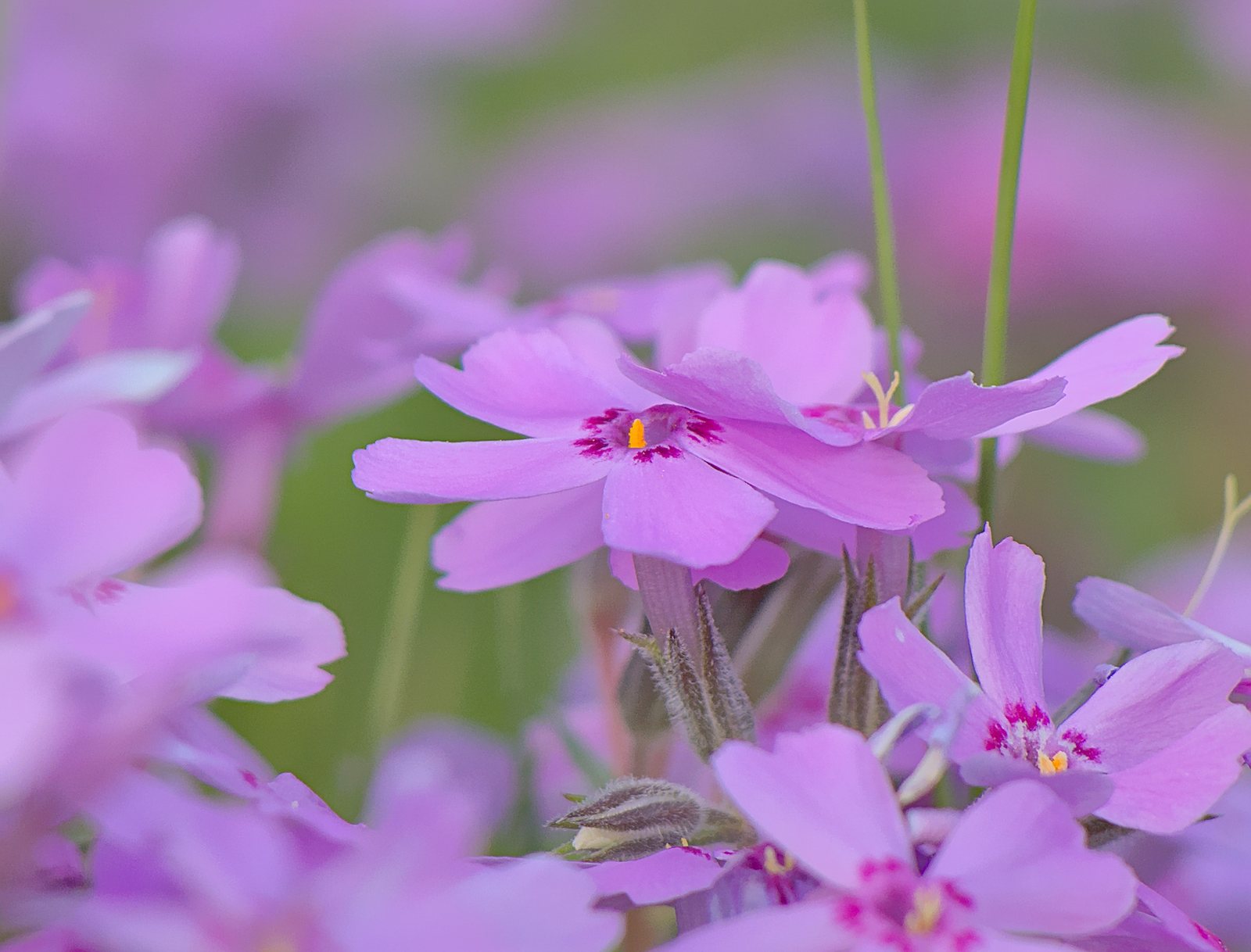
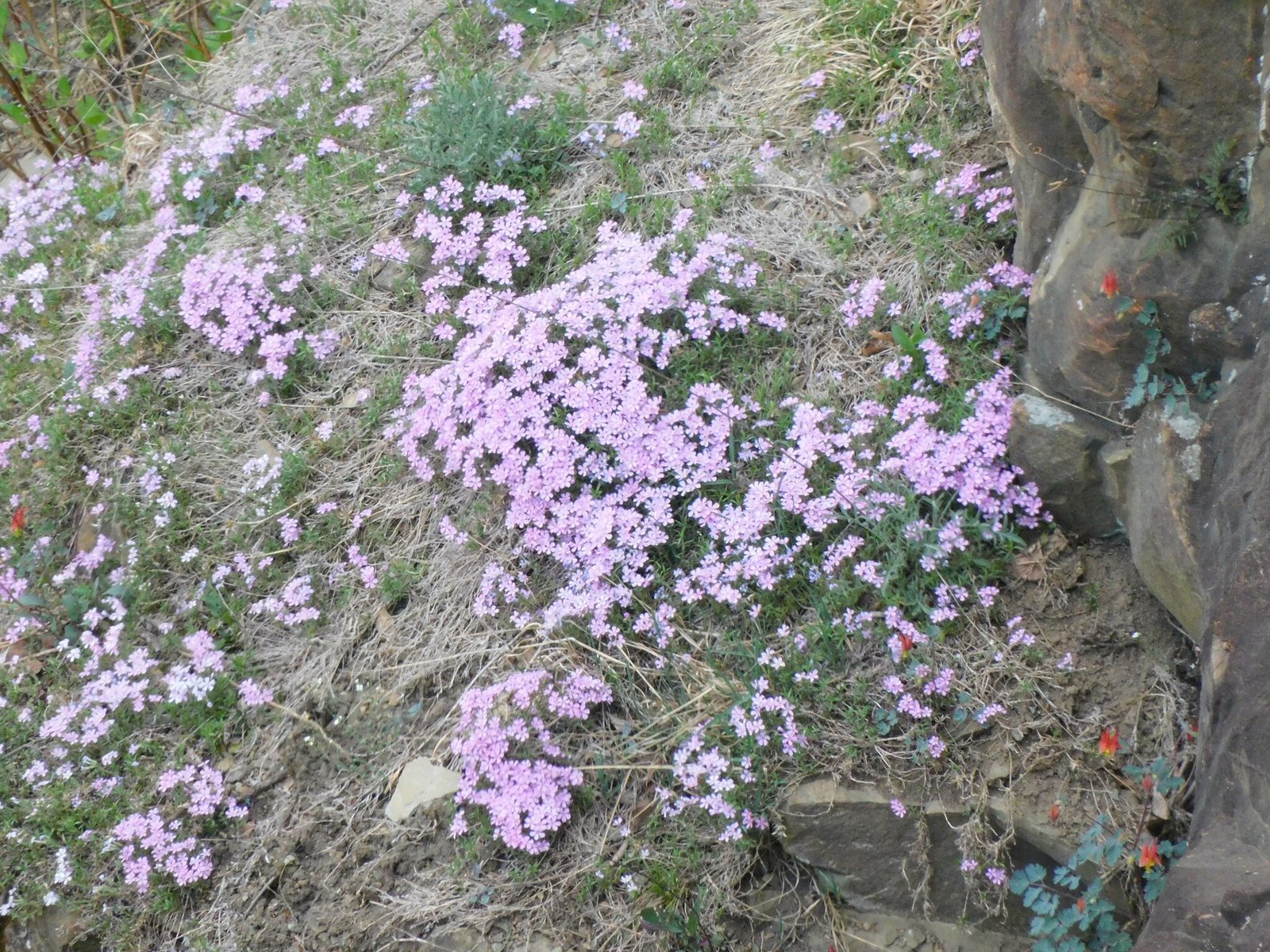
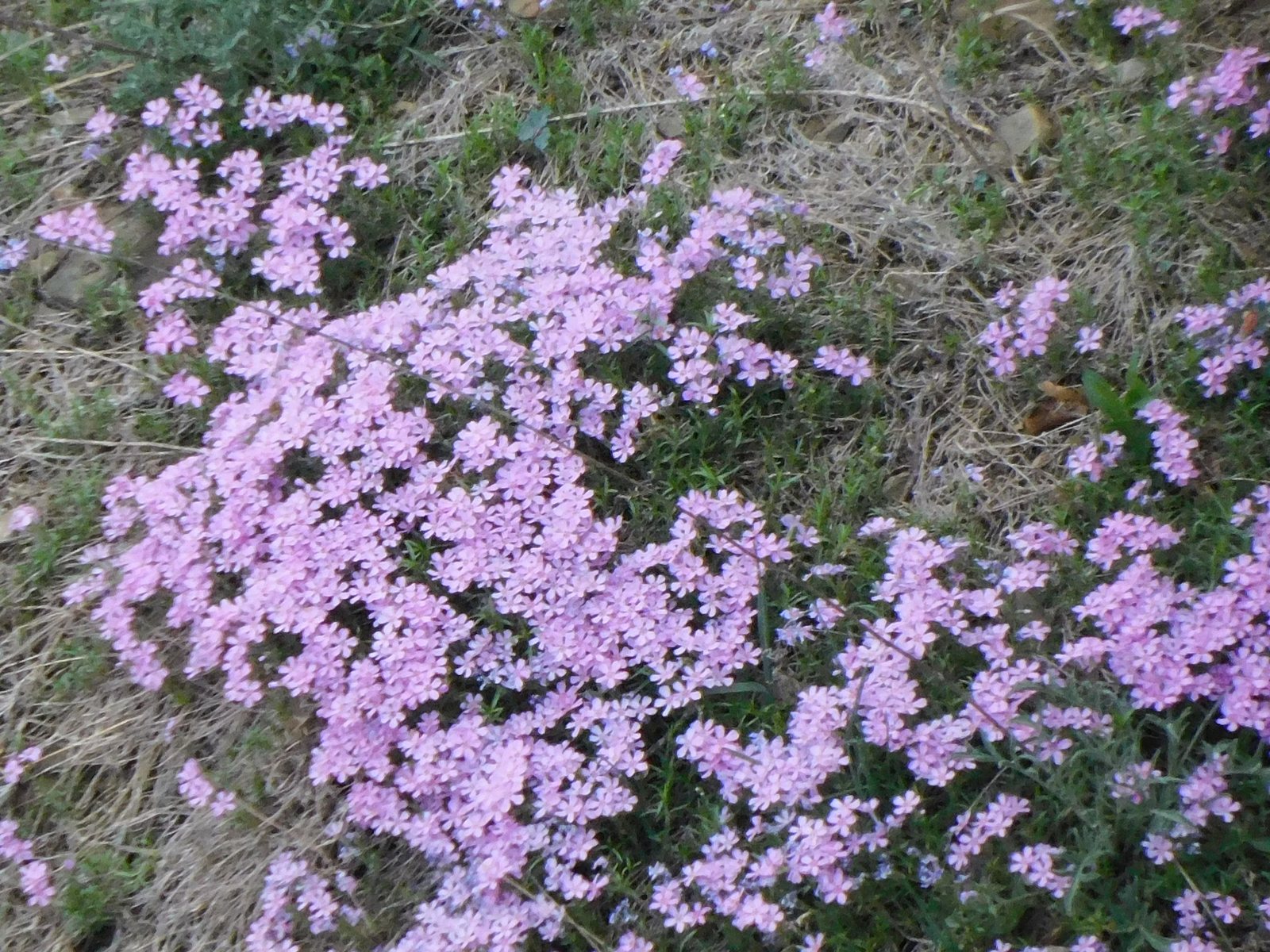
Emerald Blue creeping phlox is a low, spreading perennial that covers its needle-like foliage with lavender-blue flowers in spring. Grow it along sunny border edges, over low walls or among rocks where the soil drains freely; it tolerates some drought once established but dislikes wet winter soil.
At a glance
- Sun
- Full sun gives the best flowering. Light afternoon shade can help in hot climates, but too much shade produces thin growth and fewer flowers.
- Water
- Water regularly during establishment, allowing the soil surface to dry between waterings. Established plants need occasional deep watering during prolonged dry spells rather than frequent sprinkling.
- Soil
- Well-drained sandy, gritty or loamy soil, preferably moderately fertile. Tolerates mildly acidic to alkaline conditions; avoid waterlogged clay unless drainage is improved.
- Height
- 0.3-0.5 ft (0.1-0.15 m)
- Spread
- 1-2 ft (0.3-0.6 m)
- Flowers
- Mid- to late spring; masses of lavender-blue, five-petalled flowers, sometimes continuing into early summer in cool climates.
- Foliage
- Small, narrow, pointed green leaves form a dense mat. Usually evergreen, though foliage may bronze or partly die back in severe winters.
- Growth
- Moderate; spreading stems gradually form a broad, low mat.
- Care needed
- Low
The year at a glance
- Pollinators
- Drought tolerant
- Cold hardy
- Heat tolerant
- Low allergen
| J | F | M | A | M | J | J | A | S | O | N | D | |
|---|---|---|---|---|---|---|---|---|---|---|---|---|
| Flowers | ||||||||||||
| Plant |
Northern hemisphere months. In Australia, shift them by six.
- Difficulty
- Easy
- Toughness
- Very tough
Will it suit your garden?
Pick your zone, country, light and whether you have pets.
Full sun is 6 or more hours of direct sun a day, part shade 3 to 6 hours, shade under 3.
How it grows
Planting day
0.1 ft (0.03 m)
After 1 year
0.2 ft (0.07 m)
After 2 years
0.3 ft (0.11 m)
After 3 years
0.4 ft (0.13 m)
full size
About 3 years to full size.
From a typical nursery size, at an average rate for this kind of plant. A rule of thumb, not a forecast.
Good to know
- Cats and dogs
- Safe
- Native to
- the US and Canada
- Growth rate
- Moderate
Care
Jobs through the year
- WaterApr–May, Sep–Oct, every 21 days
- Water established mats only during dry spells; water new plants regularly without keeping them damp.
- WaterJun–Aug, every 14 days
- Water deeply at the base during prolonged drought, allowing soil to dry between waterings.
- FeedMar–Apr
- Feed lightly only if growth is weak; avoid rich feeding.
- PruneMay–Jun
- Immediately after flowering, shear spent blooms and up to one-third of leafy growth; avoid bare wood.
- DivideSep
- Renew woody or bare-centred mats using rooted outer sections, allowing time to establish before frost.
- ProtectJan–Feb, Nov–Dec
- Keep fallen leaves and thick mulch off the mat and ensure the crown drains freely.
- Plant with the crown at soil level in a sunny, freely drained position.
- Water at the base during establishment and prolonged drought; avoid keeping the mat constantly damp.
- Feed lightly in spring only if growth is weak; rich soil and heavy feeding encourage foliage at the expense of flowers.
- Keep fallen leaves and thick organic mulch off the mat, especially in winter.
- Remove weeds by hand before they become rooted among the spreading stems.
- Divide or replace sections when the centre becomes bare and woody.
Pruning. Immediately after flowering, lightly shear off spent flowers and up to one-third of the leafy growth to keep the mat compact. Avoid cutting deeply into bare, woody stems, which may not regrow well.
Through the year
- Early spring
- Remove winter debris and trim dead shoots once healthy new growth is visible.
- Spring
- Plant in well-drained soil and water new plants thoroughly.
- Late spring
- After flowering, lightly shear the mat to remove spent blooms and encourage branching.
- Summer
- Water during prolonged drought and check dry, stressed foliage for spider mites.
- Early autumn
- Divide rooted outer sections if needed, allowing time for establishment before frost.
- Winter
- Keep fallen leaves off the foliage and check that water drains away from the crown.
In the garden
- Let it trail over a low retaining wall for a sheet of spring colour.
- Plant between rocks on a sunny slope, leaving room for the mat to spread without covering smaller alpine plants.
- Edge a sunny path or border with low cushions; keep it outside regular foot traffic.
- Combine with spring bulbs so the flowers rise through or behind the evergreen mats.
- Use beside white candytuft and yellow basket-of-gold for contrasting spring flowers.
Garden styles it suits: Cottage garden, Alpine rock garden, Dry gravel garden, Low-maintenance, Blues and silvers and Pollinator garden.
Plant it with: Candytuft, Basket-of-gold, Rock cress, Dwarf bearded iris, Species tulips and Creeping thyme.
Wildlife: Flowers provide nectar for butterflies and other pollinating insects. The low mat offers some shelter for small invertebrates.
Problems to watch for
- Root or crown rot in wet soil: improve drainage, keep the crown clear and replace badly rotted plants in a drier position.
- Spider mites during hot, dry weather: look for fine webbing and stippled leaves; rinse foliage in the morning and use insecticidal soap labelled for mites if needed.
- Powdery mildew: improve airflow, avoid crowding and remove badly affected shoots; water the soil rather than repeatedly wetting foliage.
- Bare, woody centres: lightly trim after flowering and renew the planting with rooted outer pieces rather than cutting hard into old wood.
Safety
Not known to be toxic to people, cats, dogs or horses; no plant parts are recognized as poisonous. It is an ornamental rather than a food plant, and eating it may still cause mild stomach upset.
Easily confused with
Woodland phlox (Phlox divaricata)
Has taller, upright flowering stems and broader leaves, and prefers partial shade rather than forming a tight, needle-leaved mat in full sun.
Creeping woodland phlox (Phlox stolonifera)
Forms spreading patches with rounded to oval leaves and flowers held on upright stems above the foliage; it prefers more shade and moisture.
Dalmatian bellflower (Campanula portenschlagiana)
Has rounded, toothed leaves and violet-blue bell-shaped flowers, rather than needle-like leaves and flat, five-petalled phlox flowers.
The name
Phlox comes from the Greek word for flame, while subulata means awl-shaped, referring to the narrow, pointed leaves.
Propagation. Divide rooted sections in spring or early autumn, or take non-flowering softwood cuttings in late spring or early summer. Use vegetative propagation to preserve 'Emerald Blue'; seedlings may differ from the parent.
Checked against open data
- Accepted botanical name
- Phlox subulata
- In the US and Canada
- Native in Canada and the lower 48 states. Introduced in Canada.
- Native range
- Arkansas, Connecticut, Delaware, Georgia, Indiana, Iowa, Kentucky, Louisiana, Maine, Manitoba, Maryland and Masachusettes.
- Measured
- Soil pH 5.7 to 7.5.
Sources: GBIF (CC BY 4.0), USDA PLANTS and Trefle (CC BY 4.0). The care and design notes are LandscapeGPT's own.
See it in your own yard.
Upload a photo of your yard and see it redesigned with plants that suit your climate, each checked against your zone.