Encore Autumn Royalty azalea
Rhododendron 'Conlec'. Family Ericaceae. Shrub.
Also called Autumn Royalty reblooming azalea, Rhododendron 'Conlec'.
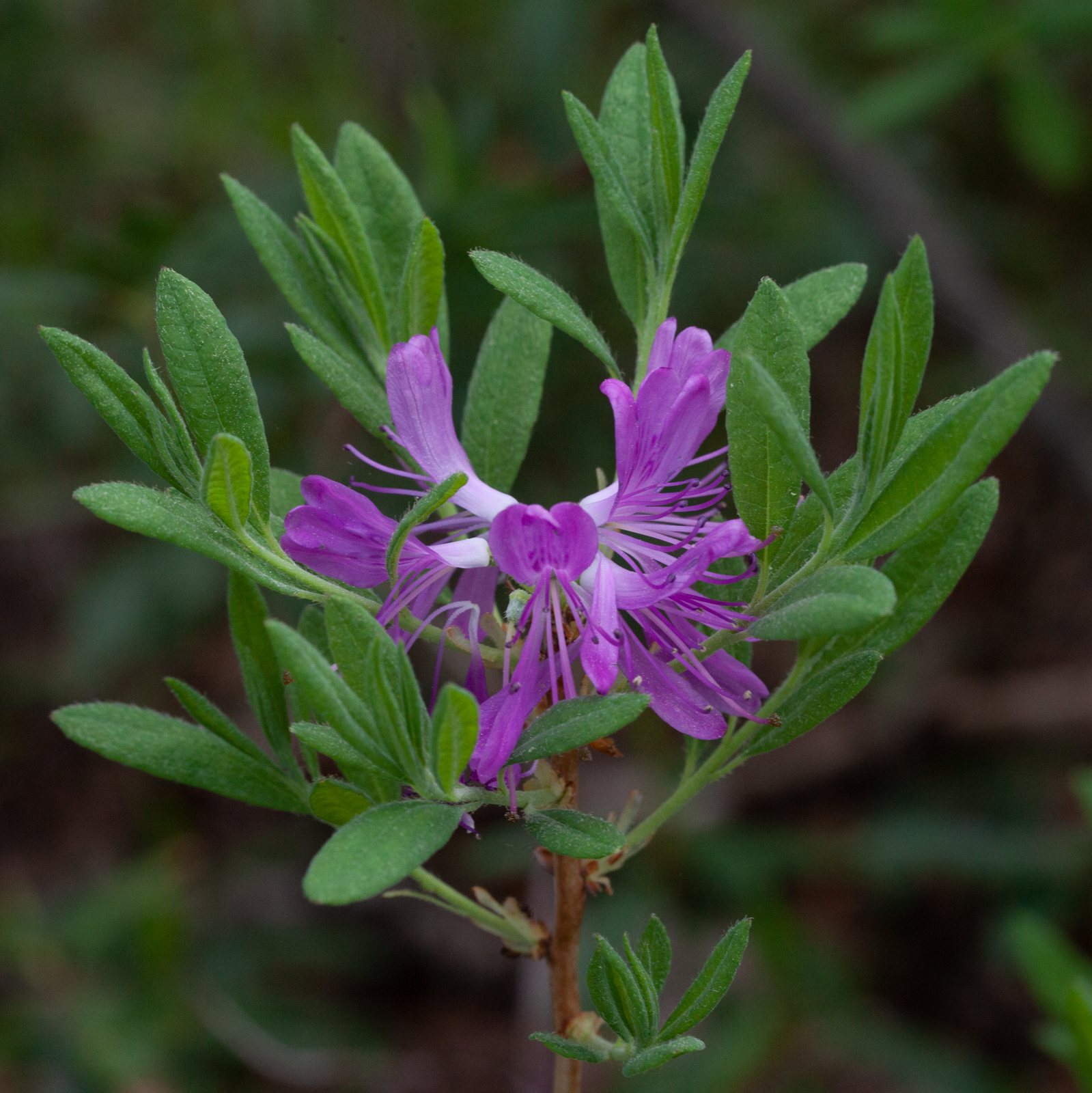
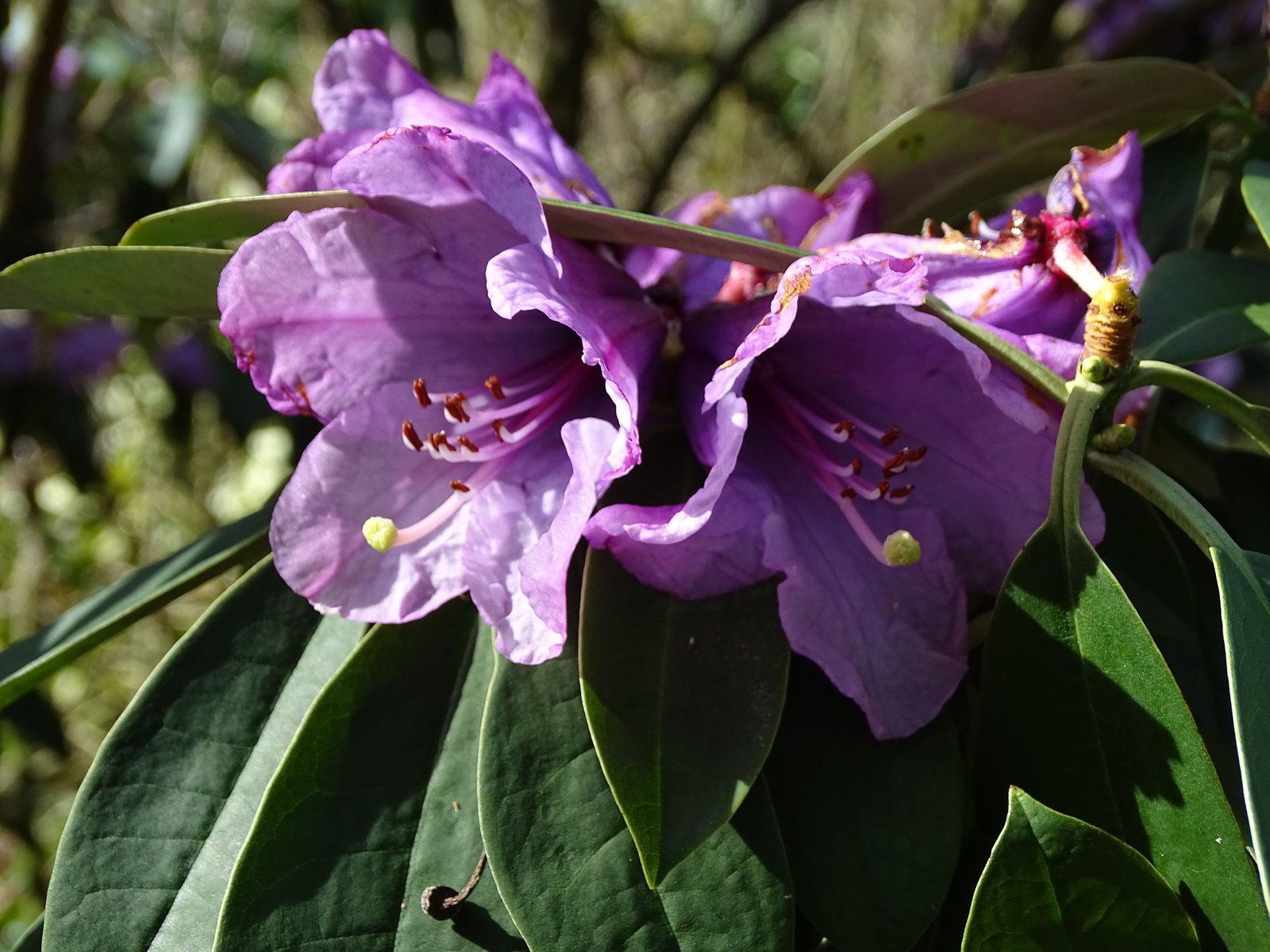
An evergreen azalea with large, single purple flowers in spring and repeat flowering in summer and autumn. It forms a rounded shrub for borders, informal hedges and foundation planting; repeat flowering is strongest with adequate light, moisture and a long growing season.
At a glance
- Sun
- Full sun to partial shade; aim for 4-6 hours of direct light, preferably morning sun with afternoon shade in hot climates.
- Water
- Keep the shallow root zone evenly moist but not saturated. Water deeply during dry spells, especially during establishment and in containers.
- Soil
- Acidic, humus-rich, well-drained soil, ideally pH 4.5-6.0. Avoid chalky soil and sites that remain waterlogged.
- Height
- 4-5 ft (1.2-1.5 m)
- Spread
- 4-5 ft (1.2-1.5 m)
- Flowers
- Large, single, rich purple flowers in spring, with further flushes in summer and autumn; repeat flowering varies with climate and growing conditions.
- Foliage
- Evergreen. Small, leathery, dark green leaves retained through winter; some older leaves may shed or bronze in cold weather.
- Growth
- Moderate
- Care needed
- Medium
The year at a glance
- Pollinators
- Heat tolerant
- Wildlife
- Low allergen
| J | F | M | A | M | J | J | A | S | O | N | D | |
|---|---|---|---|---|---|---|---|---|---|---|---|---|
| Flowers | ||||||||||||
| Plant |
Northern hemisphere months. In Australia, shift them by six.
- Difficulty
- Moderate
- Toughness
- Fairly tough
Will it suit your garden?
Pick your zone, country, light and whether you have pets.
Full sun is 6 or more hours of direct sun a day, part shade 3 to 6 hours, shade under 3.
How it grows
Planting day
1.6 ft (0.5 m)
After 1 year
2.2 ft (0.67 m)
After 2 years
2.8 ft (0.84 m)
After 3 years
3 ft (1 m)
After 5 years
4 ft (1.4 m)
full size
About 5 years to full size.
From a typical nursery size, at an average rate for this kind of plant. A rule of thumb, not a forecast.
Good to know
- Cats and dogs
- Toxic
- Growth rate
- Moderate
Care
Jobs through the year
- WaterMar–May, Sep–Oct, every 7 days
- Water established shrubs if the shallow root zone starts drying; new plants need closer checks.
- WaterJun–Aug, every 7 days
- Water deeply during dry weather; check more often in heat and use rainwater if tap water is alkaline.
- FeedMay–Jun
- Feed lightly once after the main spring bloom with azalea fertiliser.
- PruneMay–Jun
- Shorten stray shoots only if needed immediately after spring flowering; avoid later routine pruning.
- MulchApr, Oct
- Maintain 5–8 cm of pine bark or leaf mould, keeping mulch clear of stems.
- ProtectJun–Sep, every 14 days
- Inspect leaf undersides for lace bugs if leaves become pale or stippled.
- ProtectJan–Feb, Nov–Dec
- Shelter from drying winds and protect container roots; zone 6 gardens need protected container culture.
- Plant with the top of the root ball level with, or slightly above, the surrounding soil.
- Water at soil level when the surface begins to dry; do not let newly planted roots dry out.
- Apply 2-3 in (5-8 cm) of pine bark or leaf-mould mulch, keeping it clear of the stems.
- Feed lightly with an azalea fertiliser after the main spring flowering; avoid late-season nitrogen.
- In alkaline gardens, grow it in a container of ericaceous compost and use rainwater where practical.
Pruning. Prune lightly just after the main spring flowering, shortening stray shoots rather than shearing the whole shrub. Avoid routine late-summer or autumn pruning, which removes developing flower buds; remove dead wood whenever noticed.
Through the year
- Early spring
- Check soil moisture and winter damage; remove dead branches once damaged growth is clear.
- Spring
- Plant in prepared acidic soil, water thoroughly and mulch the root zone.
- Late spring
- After the main flowering, feed lightly and prune only if shaping is needed.
- Summer
- Water during dry spells and inspect leaf undersides if foliage becomes pale or stippled.
- Autumn
- Maintain moisture during repeat flowering and replenish mulch without burying the stems.
- Winter
- Shelter container plants from drying winds and protect their roots from prolonged freezing.
In the garden
- Plant in groups beneath high-canopied trees for purple flowers above a leafy woodland understory.
- Use as an informal flowering hedge along a path, allowing room for its natural rounded shape.
- Combine with ferns and hostas in an acidic, partly shaded border for contrasting leaf textures.
- Grow in a large container of ericaceous compost beside a patio where garden soil is alkaline.
Garden styles it suits: Woodland, Traditional, Southern, Cottage garden, Japanese and Romantic rose garden.
Plant it with: Japanese pieris, Camellias, Japanese maples, Hostas, Christmas fern and Japanese forest grass.
Wildlife: Flowers provide nectar and pollen for visiting insects, including bees. Dense evergreen growth offers small birds shelter, but deer may browse the foliage and buds.
Problems to watch for
- Azalea lace bugs cause pale stippling, especially in hot, exposed sites. Check leaf undersides and treat infested surfaces with an insecticidal soap labelled for azaleas, following local directions.
- Phytophthora root rot causes wilting and root decay in wet ground. Improve drainage before planting and remove badly affected plants; extra watering makes the problem worse.
- Yellow leaves with green veins often indicate iron deficiency in alkaline soil. Check soil pH and move to suitable acidic soil or ericaceous compost; chelated iron may provide temporary relief.
- Weak repeat flowering can result from deep shade, drought or late pruning. Provide more morning sun, maintain steady moisture and prune only after the main spring flush.
Safety
All parts are toxic to people, cats, dogs and horses if eaten, including leaves, flowers and nectar. Grayanotoxins can cause vomiting, weakness, abnormal heart rhythms and potentially life-threatening poisoning; seek urgent medical or veterinary advice after ingestion.
Easily confused with
Formosa azalea (Rhododendron 'Formosa')
Also has large purple flowers, but generally becomes a much larger shrub and flowers mainly in spring rather than producing dependable repeat flushes.
Encore Autumn Twist azalea (Rhododendron 'Conlep')
Usually bears pale flowers striped or splashed with purple, sometimes alongside solid purple flowers; Autumn Royalty normally has uniformly purple flowers.
The name
Rhododendron comes from the Greek words for 'rose' and 'tree'; Autumn Royalty is the selling name for the cultivar 'Conlec'.
Propagation. Root semi-ripe cuttings in summer in a moist, free-draining acidic medium with high humidity. Seedlings will not reliably retain the cultivar's characteristics; check any local plant-propagation rights before multiplying it.
Checked against open data
- Accepted botanical name
- Rhododendron
Sources: GBIF (CC BY 4.0). The care and design notes are LandscapeGPT's own.
See it in your own yard.
Upload a photo of your yard and see it redesigned with plants that suit your climate, each checked against your zone.