English edging boxwood
Buxus sempervirens 'Suffruticosa'. Family Buxaceae. Shrub.
Also called Dwarf English boxwood, Dwarf common box, Edging box.
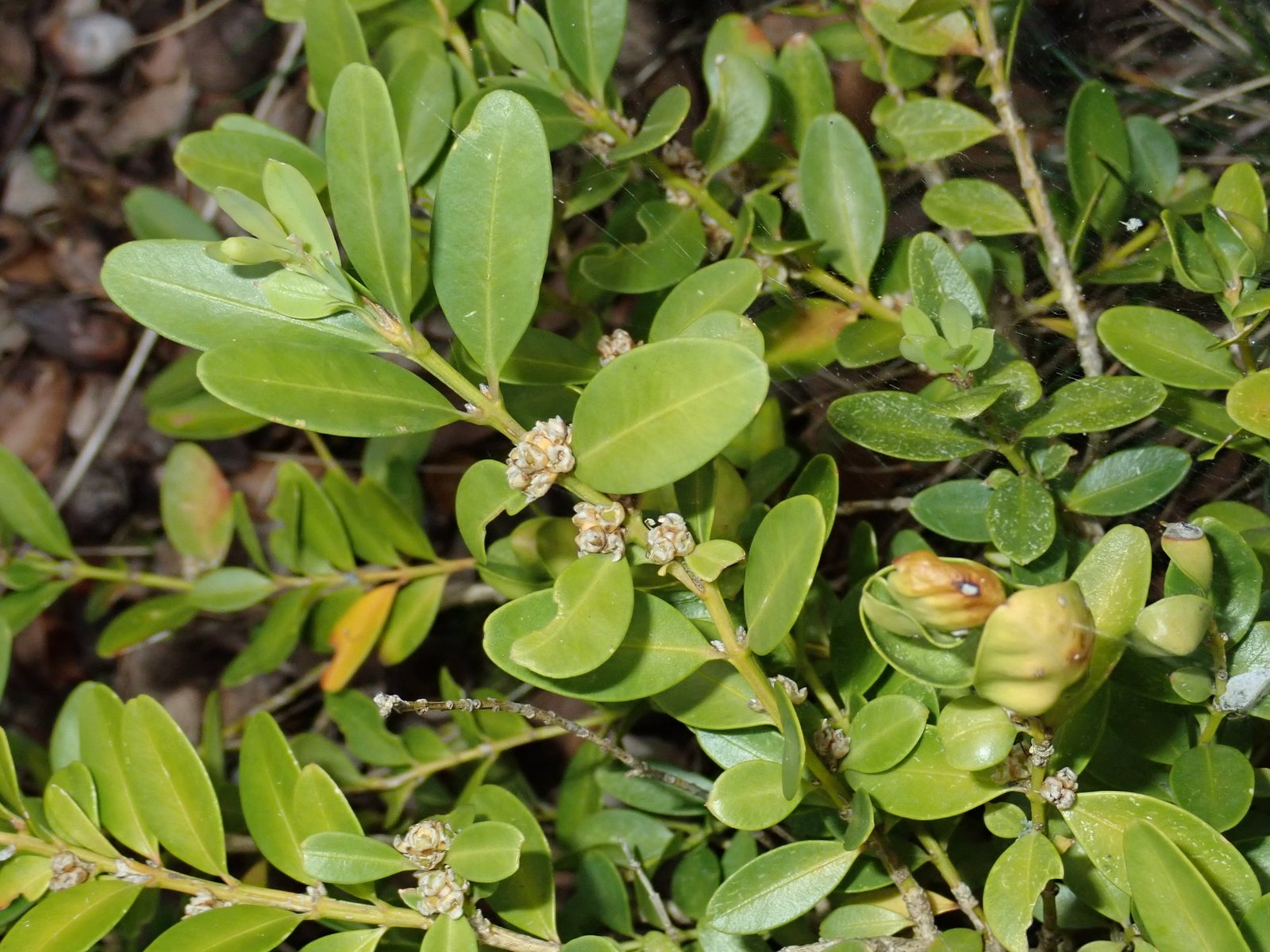
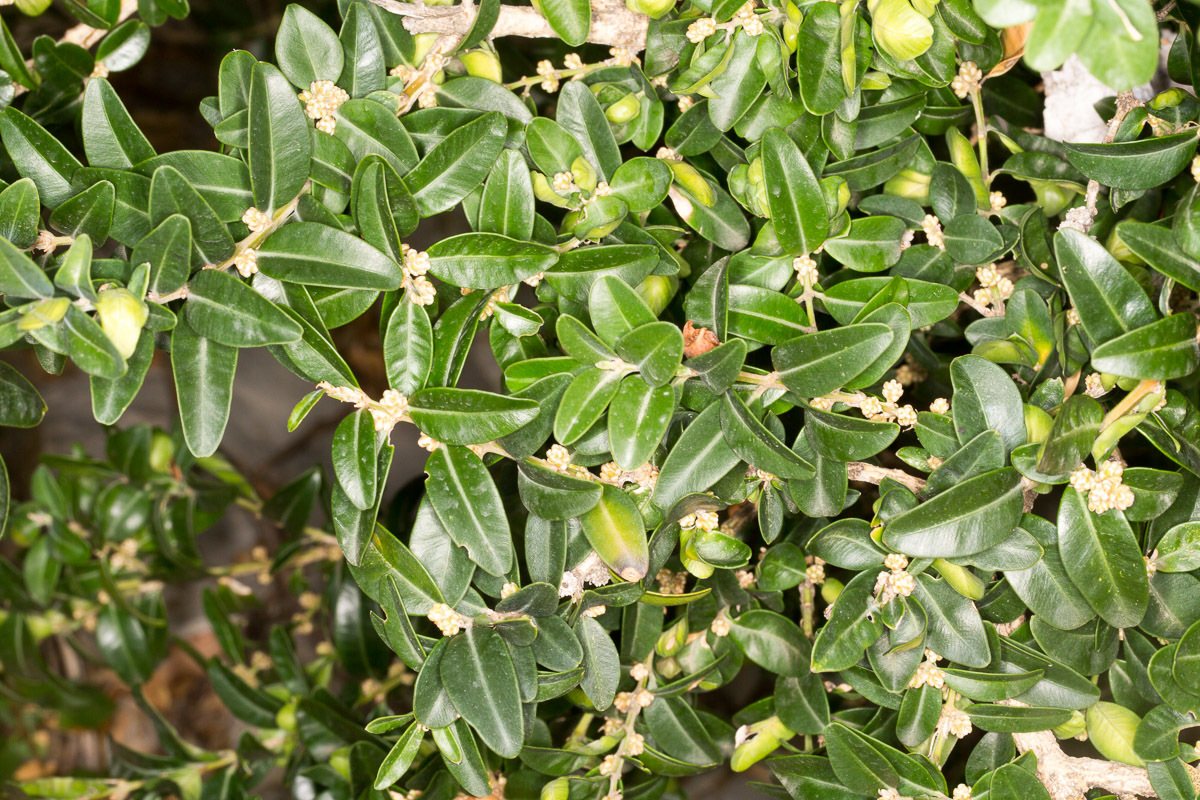
This slow-growing evergreen boxwood forms a dense, rounded shrub with small leaves, making it useful for low hedges, knot gardens and clipped borders. It keeps its structure through winter, but is highly susceptible to box blight and needs regular inspection rather than being a trouble-free edging plant.
At a glance
- Sun
- Full sun to partial shade; afternoon shade is helpful in hot climates. Shelter from drying winter winds and strong winter sun in cold regions.
- Water
- Keep evenly moist but never waterlogged while establishing. Established plants tolerate short dry spells, but need deep watering during prolonged drought; containers need more frequent checks.
- Soil
- Well-drained loam, clay or sandy soil with organic matter; neutral to alkaline soil is ideal, though mildly acidic soil is tolerated. Avoid wet ground and planting too deeply.
- Height
- 2-3 ft (0.6-0.9 m), eventually taller if left unclipped for many years
- Spread
- 2-4 ft (0.6-1.2 m)
- Foliage
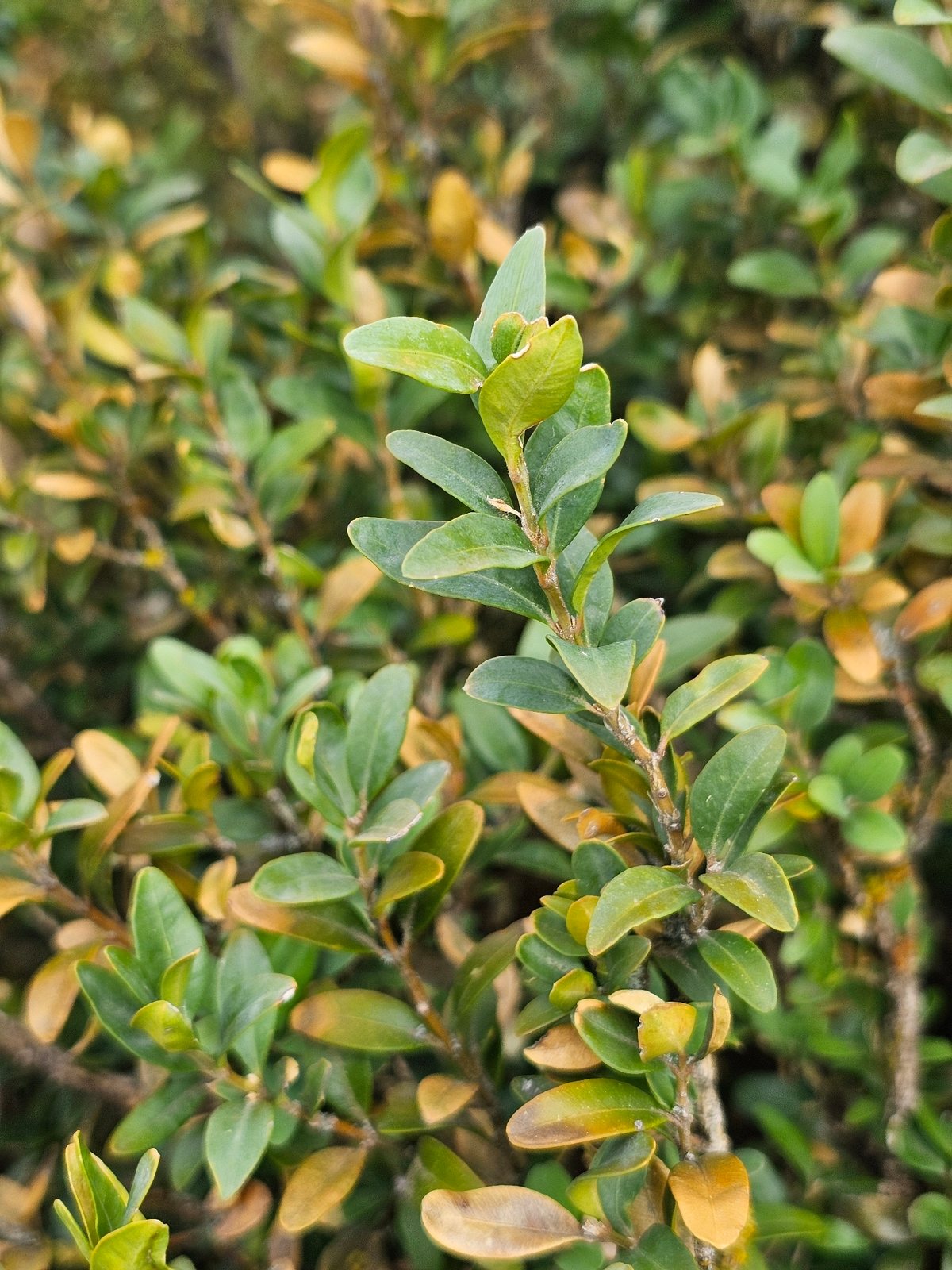
- Evergreen. Small, opposite, rounded to oval leaves, usually glossy dark green. Foliage may bronze in winter, particularly in exposed positions.
- Growth
- Very slow
- Care needed
- High
The year at a glance
- Pollinators
- Deer resistant
- Wildlife
- Low allergen
| J | F | M | A | M | J | J | A | S | O | N | D | |
|---|---|---|---|---|---|---|---|---|---|---|---|---|
| Plant |
Northern hemisphere months. In Australia, shift them by six.
- Difficulty
- Hard
- Toughness
- Needs looking after
Will it suit your garden?
Pick your zone, country, light and whether you have pets.
Full sun is 6 or more hours of direct sun a day, part shade 3 to 6 hours, shade under 3.
How it grows
Planting day
1.6 ft (0.5 m)
After 1 year
1.7 ft (0.53 m)
After 2 years
1.8 ft (0.56 m)
After 3 years
1.9 ft (0.59 m)
After 5 years
2.2 ft (0.66 m)
About 8 years to full size.
From a typical nursery size, at an average rate for this kind of plant. A rule of thumb, not a forecast.
Good to know
- Cats and dogs
- Toxic
- Native to
- the UK
- Growth rate
- Slow
Care
Jobs through the year
- WaterApr–May, Sep–Oct, every 14 days
- Deep-water established plants in dry weather; water young plants more often, keeping foliage dry.
- WaterJun–Aug, every 7 days
- Water deeply at soil level during dry spells; skip when rainfall keeps soil moist.
- WaterNov
- Water before the ground freezes if autumn has been dry.
- MulchMar–Apr
- Maintain 5 cm of organic mulch, keeping it clear of stems.
- FeedApr
- Feed lightly only if growth is weak or a soil test shows deficiency.
- PruneApr
- Remove confirmed dead or broken growth once spring recovery is visible.
- PruneMay–Jun
- Clip after spring growth firms in dry weather; thin congestion and disinfect tools between plants.
- ProtectApr–Sep, every 7 days
- Inspect inside shrubs for caterpillars and blight; remove infected debris promptly.
- ProtectJan–Feb, Nov–Dec
- Shelter exposed plants from drying winter winds and strong winter sun.
- Plant with the root flare at soil level and leave enough room for air to move between plants.
- Water at soil level during dry weather; avoid routinely wetting the foliage.
- Apply 2 in (5 cm) of organic mulch over the root zone, keeping it clear of the stems.
- Feed lightly in spring only if growth is weak or a soil test indicates a deficiency; avoid heavy nitrogen feeding.
- Check regularly for leaf spotting, bare patches and caterpillars, and remove fallen infected leaves promptly.
Pruning. Clip lightly after the main spring flush has firmed, usually in late spring or early summer, choosing dry, mild weather. Keep hedge bases slightly wider than their tops, thin congested growth selectively, and clean tools between plants; avoid late-season clipping that encourages frost-sensitive shoots.
Through the year
- Late winter
- Check for wind scorch, frost damage and broken branches; wait until growth resumes before deciding how much browned growth is dead.
- Spring
- Refresh mulch and feed lightly if needed, keeping mulch away from the stems.
- Spring
- Inspect new growth for box tree moth caterpillars where this pest occurs.
- Late spring
- Clip once the new flush has firmed, working in dry weather and collecting the clippings.
- Summer
- Water deeply during dry spells and inspect for blight, mites and further caterpillar activity.
- Early autumn
- Take semi-ripe cuttings from healthy plants and clear fallen leaves from beneath hedges.
- Late autumn
- Water before the ground freezes if conditions are dry, and shelter exposed container plants from winter wind.
In the garden
- Clip into low edging around formal beds to give planting a clear, year-round outline.
- Use in knot gardens and parterres, where its small leaves suit intricate patterns.
- Plant as a restrained evergreen border around roses or herbaceous flowers, allowing space for airflow.
- Grow as small clipped balls in well-drained containers beside entrances or along terraces.
Garden styles it suits: Formal, English country, French parterre, Tudor knot garden, Topiary garden and Herb parterre.
Plant it with: Roses, Peonies, Hardy geraniums, Catmint, Tulips and Snowdrops.
Wildlife: Small spring flowers provide pollen and nectar for visiting insects, although flowering is reduced by frequent clipping. Dense foliage offers shelter for small birds and invertebrates; this is not a native habitat plant in most regions where it is grown.
Problems to watch for
- Box blight: brown leaf spots, black stem streaks and rapid leaf loss are warning signs. Remove affected material and fallen leaves, disinfect tools, improve airflow and avoid overhead watering; replace repeatedly affected plants with a non-box alternative.
- Box tree moth: caterpillars strip leaves and leave webbing. Inspect inside shrubs, hand-pick small infestations, or use a locally approved caterpillar treatment while larvae are young.
- Boxwood leafminer: blistered leaves may contain larvae, especially in North America. Remove affected shoots before adults emerge and seek local guidance if damage is extensive.
- Root rot and winter injury: wet soil can cause root decline, while frozen roots and drying winds cause bronzing or scorch. Improve drainage, avoid deep planting and shelter exposed plants; prune dead growth after spring recovery becomes clear.
Safety
All parts are toxic if eaten by people, cats, dogs and horses. Ingestion can cause vomiting, diarrhoea and abdominal pain; large amounts can cause serious poisoning, and horses are particularly at risk. Sap may irritate sensitive skin.
Easily confused with
Common box (Buxus sempervirens)
The typical species grows faster and becomes a much larger shrub or small tree, usually with larger leaves and longer shoots. 'Suffruticosa' has notably short growth and a dense, dwarf habit.
Japanese boxwood (Buxus microphylla var. japonica)
Usually faster-growing, with somewhat broader, often lighter green leaves. Cultivars overlap in appearance, so a reliable label is more useful than leaf colour alone.
Japanese holly (Ilex crenata)
Its leaves alternate along the stems rather than growing in opposite pairs, and their edges have fine rounded teeth. Female plants can carry black berries.
The name
Buxus is the Latin name for box, sempervirens means evergreen, and 'Suffruticosa' means somewhat shrubby, referring to its low-growing habit.
Propagation. Take semi-ripe cuttings from healthy, disease-free shoots in late summer or early autumn and root them in a free-draining medium. Cuttings preserve the cultivar; seed does not reliably produce the same plant.
Checked against open data
- Accepted botanical name
- Buxus sempervirens
- In the US and Canada
- Introduced in the lower 48 states.
- Native range
- Albania, Algeria, Austria, Belgium, Corse, France, Germany, Great Britain, Greece, Iran, Italy and Libya.
- Measured
- Soil pH 7.5 to 8. Average height 338 cm.
Sources: GBIF (CC BY 4.0), USDA PLANTS and Trefle (CC BY 4.0). The care and design notes are LandscapeGPT's own.
See it in your own yard.
Upload a photo of your yard and see it redesigned with plants that suit your climate, each checked against your zone.