English walnut
Juglans regia. Family Juglandaceae. Tree.
Also called Persian walnut, Common walnut.
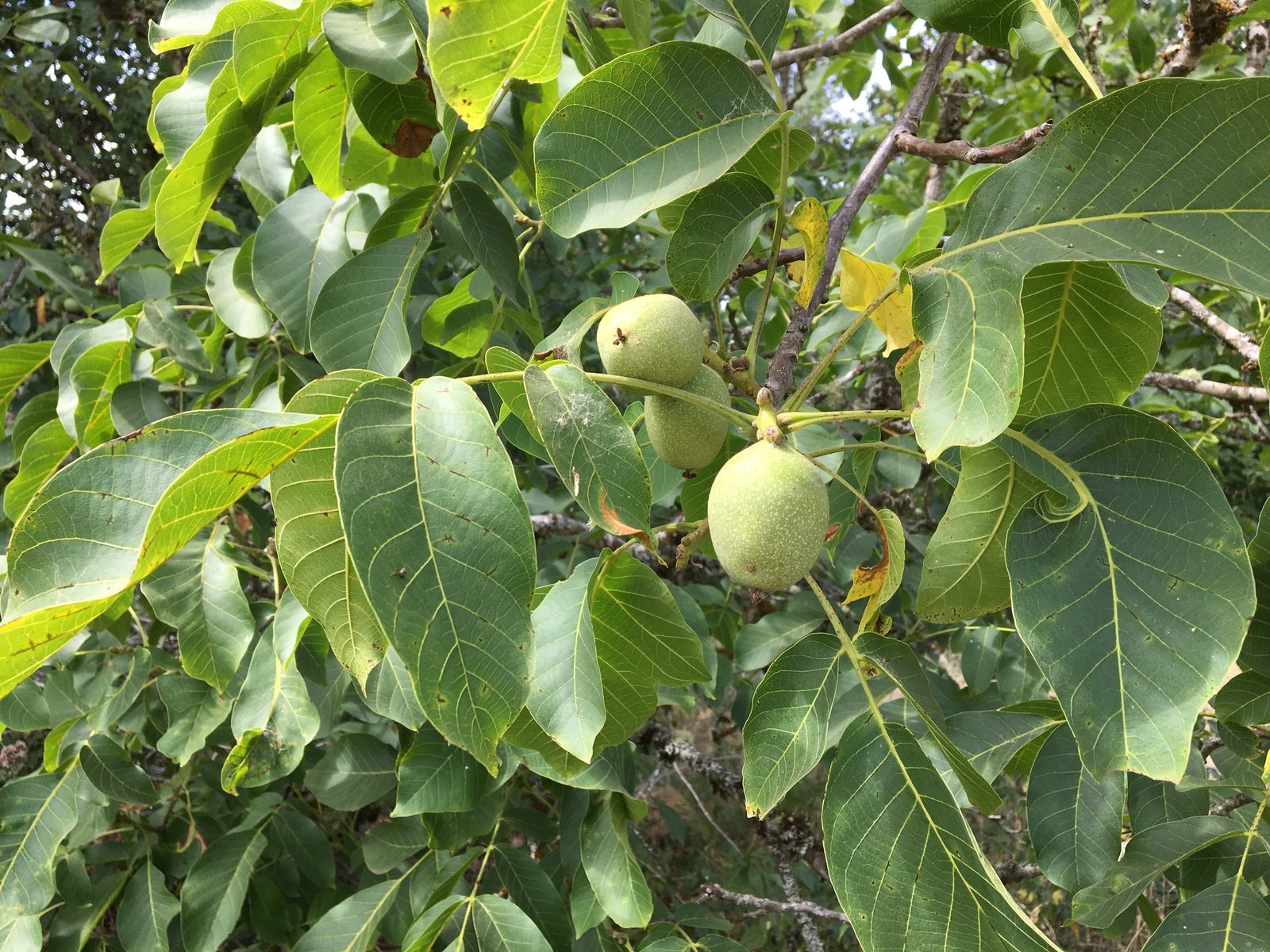
English walnut is a large deciduous tree grown for its edible nuts, broad summer shade and handsome spreading crown. It needs a spacious site, deep soil and enough summer warmth to ripen a crop; late spring frosts can damage its young shoots and flowers.
At a glance
- Sun
- Full sun; choose a sheltered position away from frost pockets.
- Water
- Water young trees deeply during dry spells. Established trees tolerate some drought, but prolonged dryness reduces nut size and cropping.
- Soil
- Deep, fertile, well-drained loam, preferably neutral to slightly alkaline. Avoid shallow soil, compacted ground and sites that remain waterlogged.
- Height
- 40-80 ft (12-24 m)
- Spread
- 40-70 ft (12-21 m)
- Flowers
- Spring: hanging yellow-green male catkins and small green female flowers appear as the leaves unfold.
- Foliage
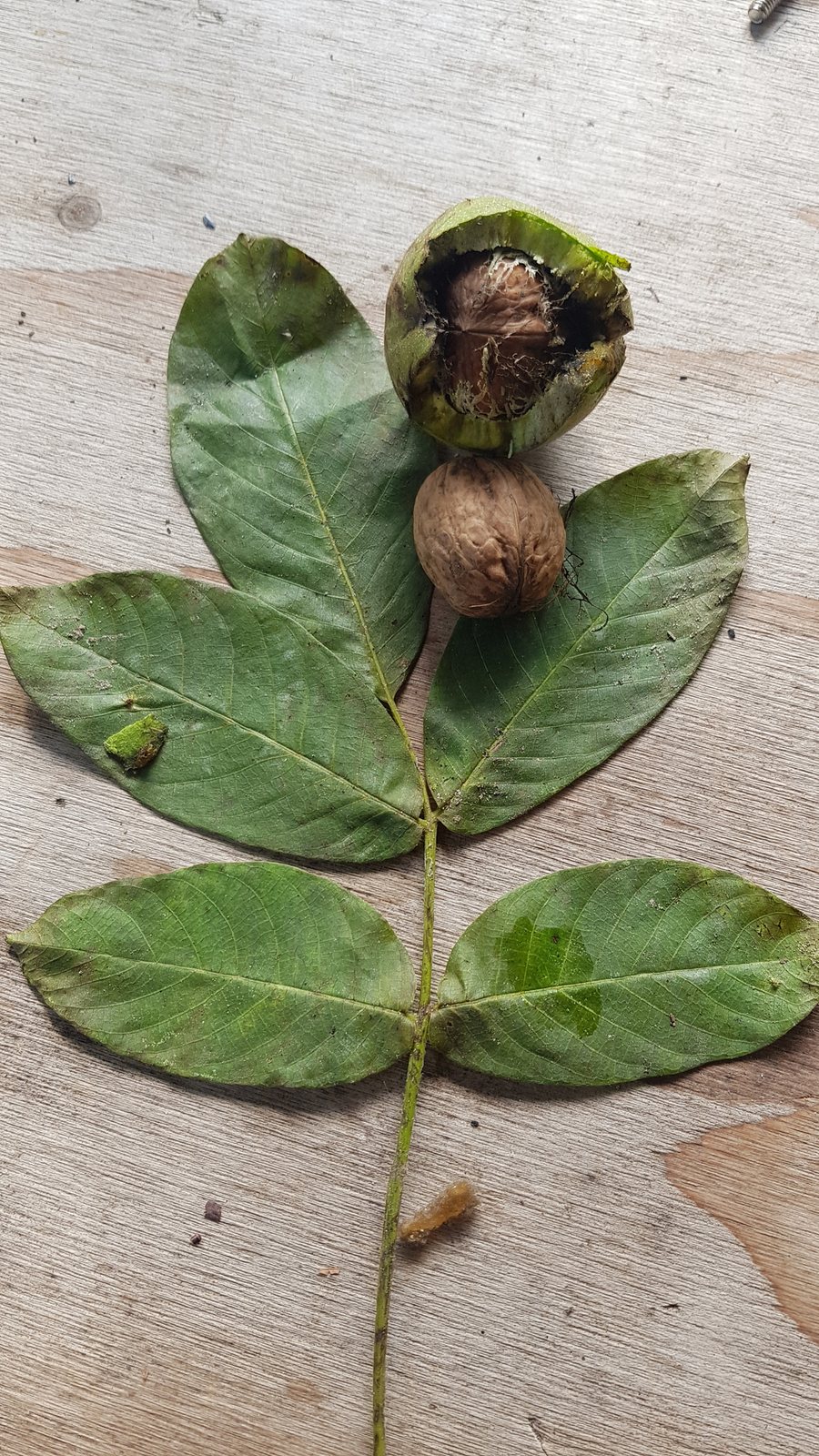
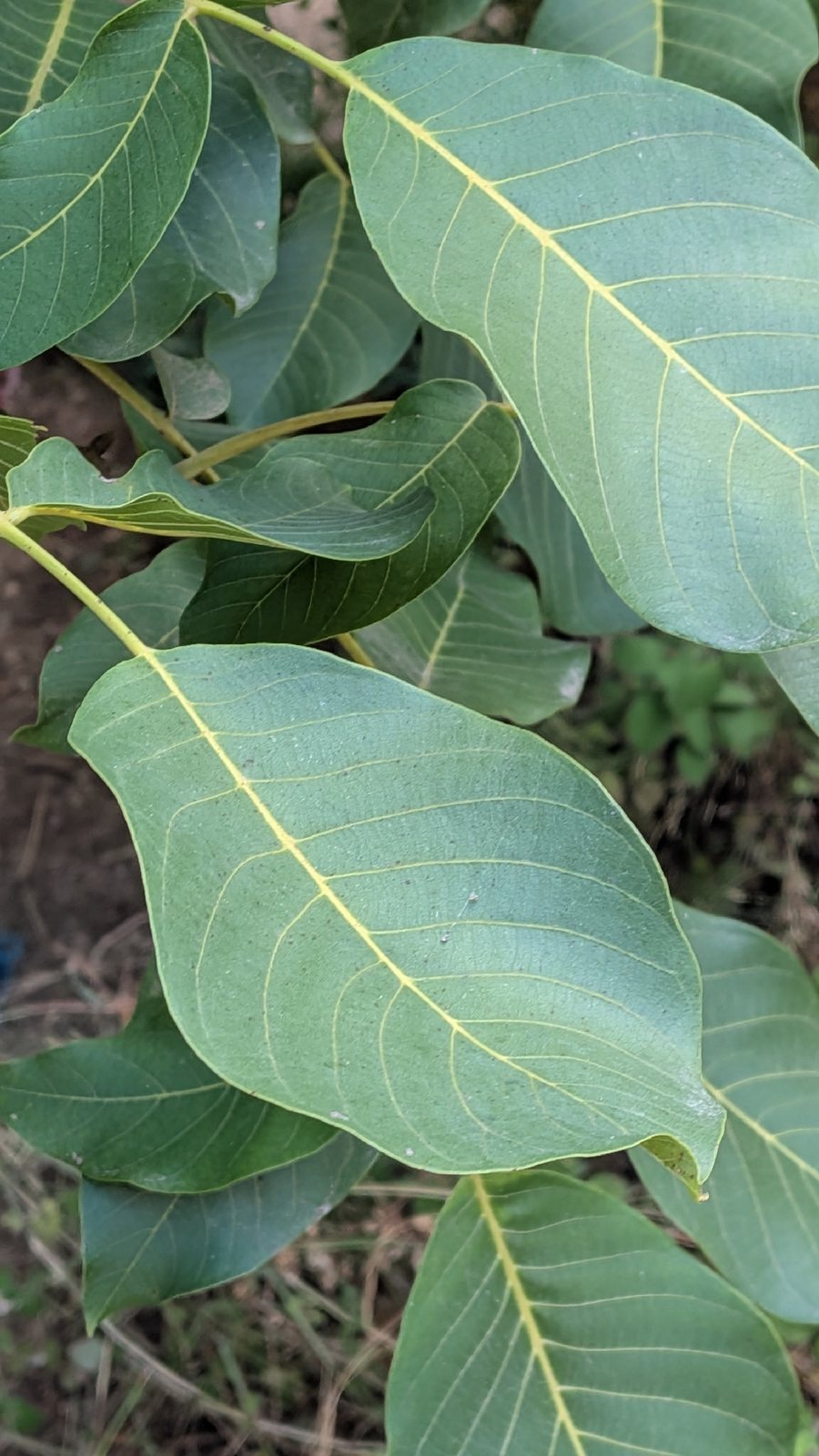
- Large, aromatic leaves divided into usually 5-9 broad leaflets; green in summer, turning yellow or brown before falling.
- Growth
- Moderate; faster on deep soil with adequate moisture.
- Care needed
- Medium
The year at a glance
- Drought tolerant
- Heat tolerant
- Wildlife
- Edible
| J | F | M | A | M | J | J | A | S | O | N | D | |
|---|---|---|---|---|---|---|---|---|---|---|---|---|
| Flowers | ||||||||||||
| Fruit | ||||||||||||
| Plant |
Northern hemisphere months. In Australia, shift them by six.
- Difficulty
- Moderate
- Toughness
- Fairly tough
Will it suit your garden?
Pick your zone, country, light and whether you have pets.
Full sun is 6 or more hours of direct sun a day, part shade 3 to 6 hours, shade under 3.
How it grows
Planting day
7 ft (2.2 m)
After 1 year
10 ft (3.2 m)
After 2 years
14 ft (4.1 m)
After 3 years
17 ft (5.1 m)
After 5 years
23 ft (7.1 m)
About 16 years to full size.
From a typical nursery size, at an average rate for this kind of plant. A rule of thumb, not a forecast.
Good to know
- Cats and dogs
- Toxic
- Growth rate
- Fast
Care
Jobs through the year
- WaterApr–May, Sep–Oct, every 14 days
- Water established trees deeply during prolonged dry spells; young trees need more frequent watering.
- WaterJun–Aug, every 7 days
- Water deeply when rainfall is scarce, especially on bearing trees; prioritize young trees.
- MulchMar–Apr
- Maintain a grass-free ring with 5–8 cm of organic mulch, keeping bark clear.
- FeedMar–Apr
- Feed only if weak growth or soil testing indicates a shortage.
- PruneAug
- Train young trees with small cuts in dry weather; avoid topping and large cuts.
- HarvestSep–Oct
- Gather fallen nuts promptly, remove split husks with gloves and dry in an airy, squirrel-proof place.
- ProtectOct–Nov
- Remove diseased fallen leaves, husks and leftover nuts.
- Plant while dormant, keeping the root flare at soil level and any graft union above the soil.
- Water deeply through the first two growing seasons whenever the root zone begins to dry.
- Keep grass away from the trunk and apply 2-3 in (5-8 cm) of organic mulch, leaving the bark clear.
- Stake only if needed on an exposed site, and remove the support once the tree is firmly rooted.
- Feed in spring only where growth or a soil test indicates a shortage; avoid heavy nitrogen feeding.
- For more reliable crops, choose locally suitable grafted trees with overlapping pollen-shedding and female flowering periods.
Pruning. Train young trees to a strong central leader with well-spaced branches, making small cuts in late summer when sap bleeding is less likely. Mature trees need little pruning; avoid topping or removing large limbs, and use a qualified arborist for substantial work.
Harvest
Gather nuts in autumn when their green husks split and the nuts fall freely; collect promptly, remove the husks with gloves and dry the shells in a well-ventilated, squirrel-proof place. Grafted trees commonly produce a worthwhile crop about 4-7 years after planting, while seedlings often take 10-15 years or longer.
Through the year
- Late autumn
- Plant dormant trees where soil remains workable and well drained; in very cold regions, wait until spring.
- Early spring
- Check ties, renew mulch and feed only if needed.
- Spring
- Watch for frost damage to new growth and flowers; record flowering times when planning a pollination partner.
- Summer
- Water young trees and bearing trees during prolonged dry weather.
- Late summer
- Carry out light formative pruning in dry weather.
- Autumn
- Collect fallen nuts frequently, remove husks and dry thoroughly before storage.
- Late autumn
- Remove diseased fallen leaves, husks and leftover nuts to reduce carry-over of pests and disease.
In the garden
- Use as a specimen shade tree in a large lawn, well away from buildings and paved seating areas.
- Plant in a spacious nut orchard with compatible flowering partners and room for harvesting.
- Place at the edge of a productive garden, keeping sun-loving vegetables beyond its eventual canopy.
- Use its broad crown as a long-term landscape feature in a country or estate garden.
Garden styles it suits: Backyard orchard, Edible landscape, Homestead, Grand estate, English country and Food forest.
Plant it with: Daffodils, Hostas, Daylilies and Elderberry.
Wildlife: Nuts feed squirrels, rodents and some birds, while mature trees provide nesting sites and shelter. Flowers are wind-pollinated rather than a significant nectar source for bees.
Problems to watch for
- Walnut blight: blackened young nuts, shoots and leaves are worse in wet springs. Choose locally resistant cultivars, avoid overhead watering and remove infected debris; seek local advice before using any registered treatment.
- Walnut leaf blotch or anthracnose: brown leaf spots and early leaf fall can weaken trees. Collect affected fallen leaves and maintain an open crown through light pruning.
- Codling moth: larvae can enter developing nuts in affected regions. Remove damaged nuts promptly and use locally recommended monitoring and control timed to moth activity.
- Poor cropping: late frost, insufficient summer warmth or poor overlap between male and female flowering can limit yields. Choose locally proven, late-leafing cultivars and a suitable pollination partner.
Safety
Ripe, sound kernels are edible to people, but walnut allergy can be severe. Green husks and sap can stain and irritate skin. Mouldy nuts and husks can cause serious poisoning, including tremors and seizures, in dogs and potentially other pets; keep cats and dogs away from fallen, decaying nuts. English walnut is not established as causing the same horse-bedding toxicity as black walnut, but keep horses away from walnut wood shavings and mouldy nuts.
Easily confused with
Black walnut (Juglans nigra)
Usually has 15-23 narrower, toothed leaflets, often with a small or missing terminal leaflet; its nuts have very thick, deeply ridged shells.
Butternut (Juglans cinerea)
Has more numerous, toothed leaflets and sticky, hairy, elongated fruits rather than the English walnut's rounded fruits.
Japanese walnut (Juglans ailantifolia)
Has much larger leaves with numerous toothed, hairy leaflets and fruits commonly borne in conspicuous clusters.
The name
Juglans comes from Latin words meaning 'Jupiter's nut', and regia means 'royal'; the name English walnut reflects its historical trade through England rather than its native origin.
Propagation. Named nut cultivars are propagated by grafting or budding onto suitable walnut rootstocks. Fresh seed can be cold-stratified and sown, but seedlings vary in nut quality, grow large and take much longer to crop.
Checked against open data
- Accepted botanical name
- Juglans regia
- In the US and Canada
- Introduced in Canada and the lower 48 states.
- Native range
- Afghanistan, Iran, Iraq, Lebanon-Syria, North Caucasus, Pakistan, Transcaucasus, Turkey and West Himalaya.
- Measured
- Soil pH 6 to 7.5. Average height 1400 cm.
Sources: GBIF (CC BY 4.0), USDA PLANTS and Trefle (CC BY 4.0). The care and design notes are LandscapeGPT's own.
See it in your own yard.
Upload a photo of your yard and see it redesigned with plants that suit your climate, each checked against your zone.