European wild ginger
Asarum europaeum. Family Aristolochiaceae. Groundcover.
Also called European ginger, Asarabacca.
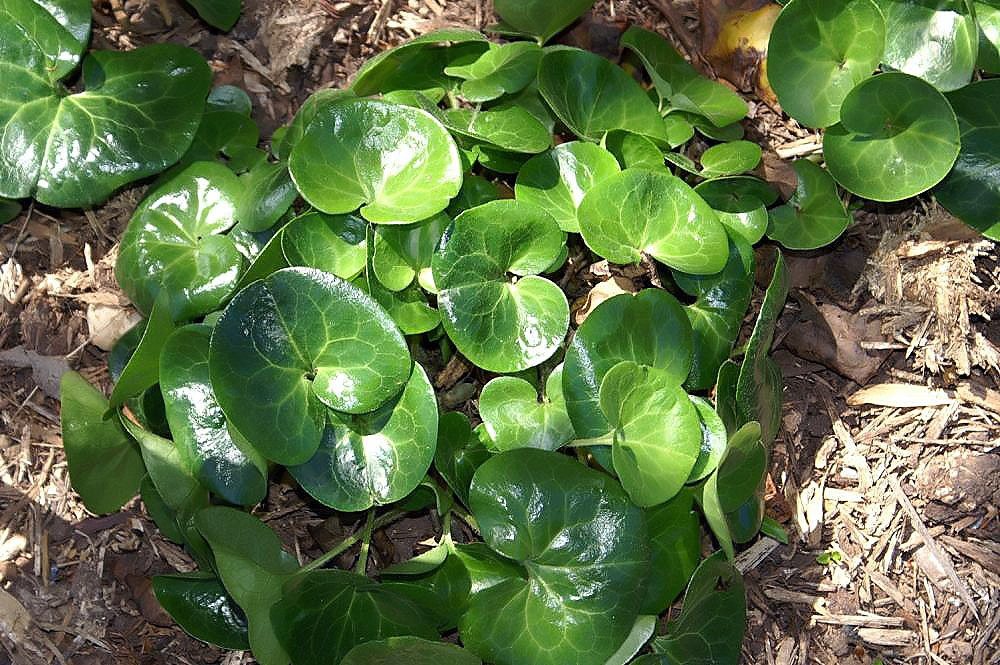
European wild ginger is a slow-spreading woodland perennial grown for its glossy, rounded leaves and low, dense cover in shade. It is usually evergreen, although severe winters can damage or remove the foliage. Despite its name, it is poisonous and must not be used as culinary ginger.
At a glance
- Sun
- Partial to full shade; avoid hot afternoon sun.
- Water
- Keep evenly moist but not waterlogged. Water during dry spells, especially beneath trees and while plants are establishing.
- Soil
- Humus-rich, well-drained soil; tolerates acidic, neutral and alkaline conditions.
- Height
- 0.3-0.5 ft (0.1-0.15 m)
- Spread
- 1-1.5 ft (0.3-0.45 m), gradually spreading farther through rhizomes
- Flowers
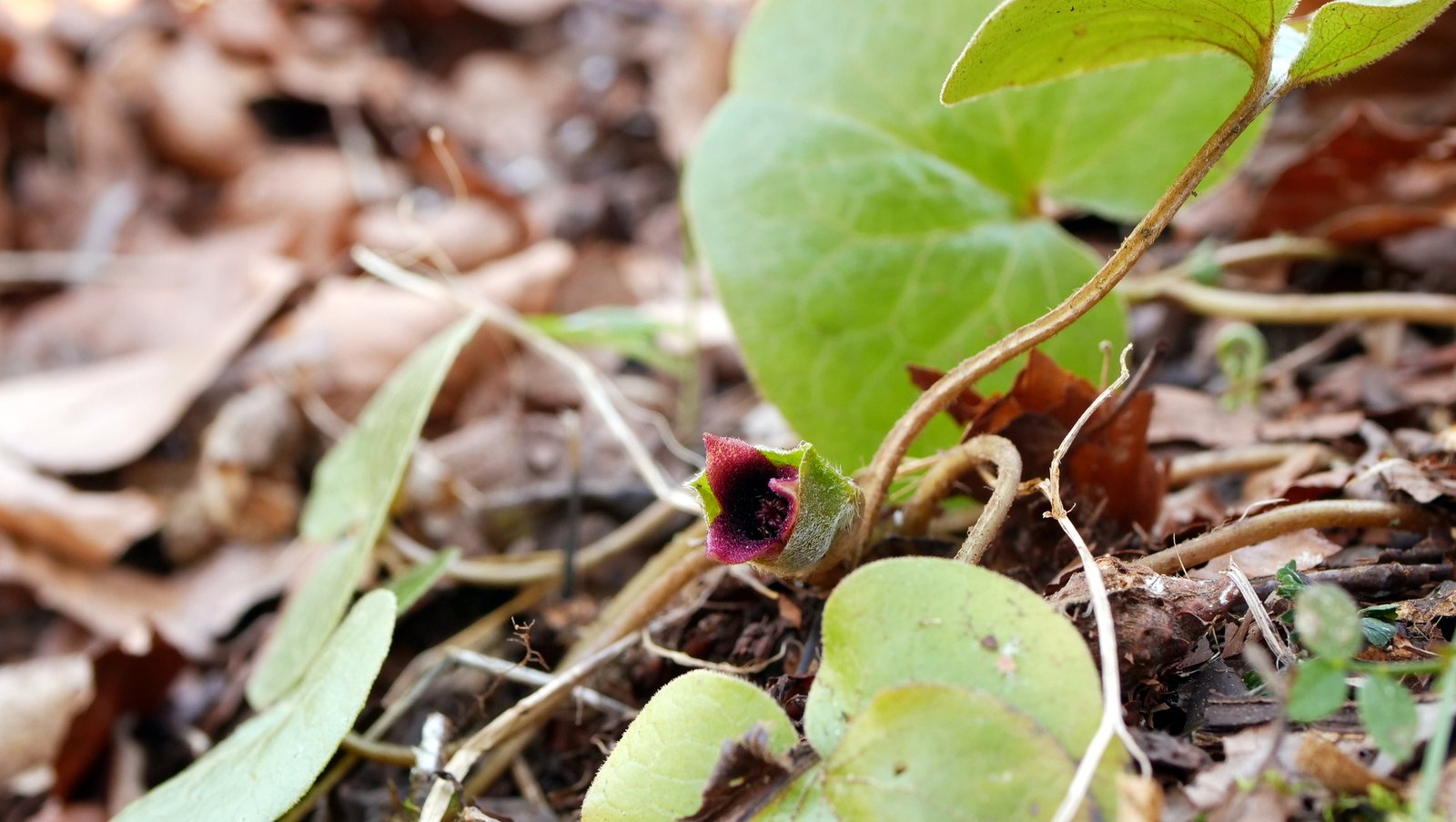
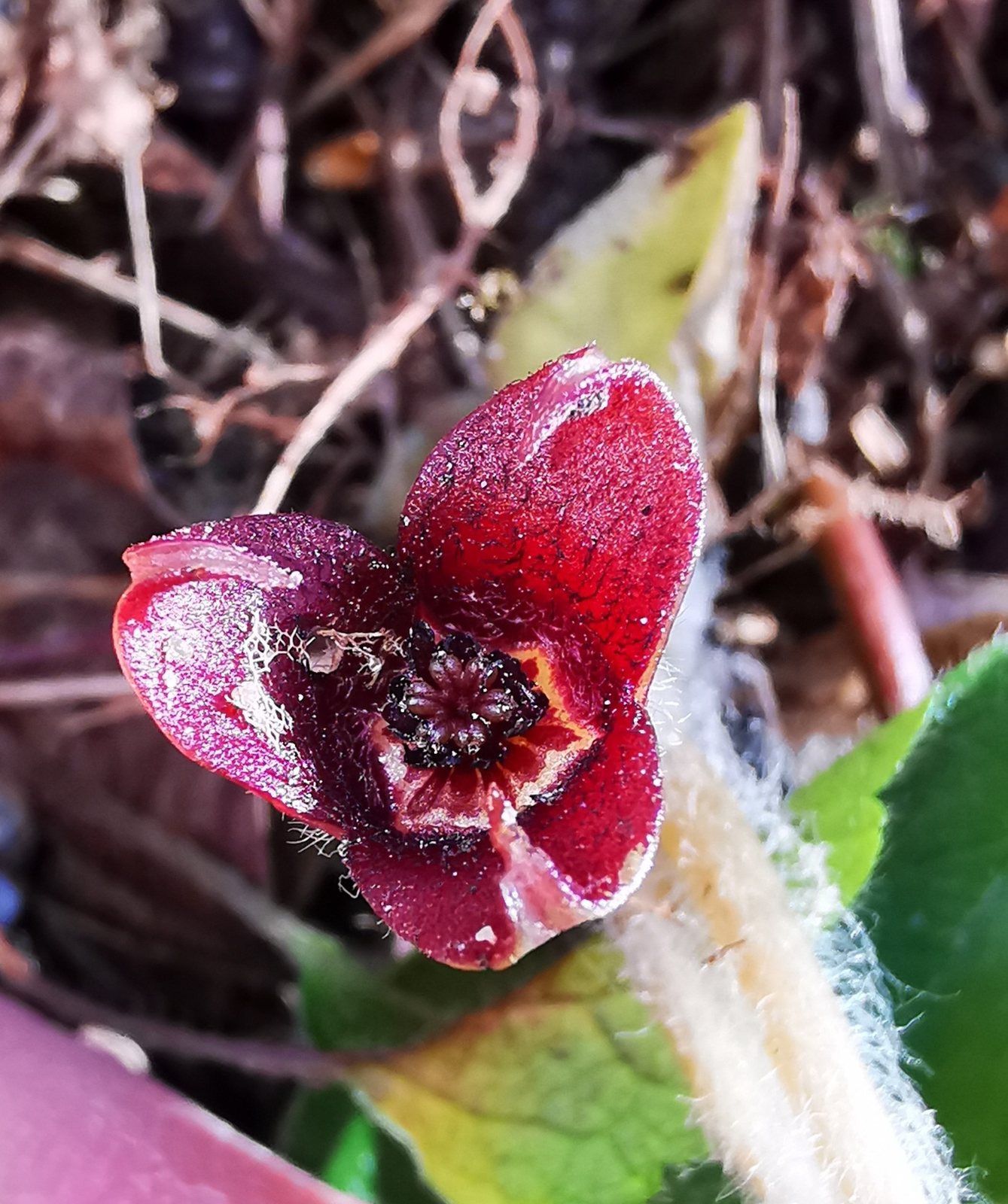
- Small, brownish-purple, bell-shaped flowers in spring, usually hidden beneath the leaves.
- Foliage
- Glossy, dark green, kidney-shaped to rounded leaves with leathery surfaces; usually evergreen but may die back in severe cold.
- Growth
- Slow
- Care needed
- Low
The year at a glance
- Deer resistant
- Cold hardy
- Wildlife
- Low allergen
| J | F | M | A | M | J | J | A | S | O | N | D | |
|---|---|---|---|---|---|---|---|---|---|---|---|---|
| Flowers | ||||||||||||
| Plant |
Northern hemisphere months. In Australia, shift them by six.
- Difficulty
- Easy
- Toughness
- Fairly tough
Will it suit your garden?
Pick your zone, country, light and whether you have pets.
Full sun is 6 or more hours of direct sun a day, part shade 3 to 6 hours, shade under 3.
How it grows
Planting day
0.1 ft (0.03 m)
After 1 year
0.2 ft (0.05 m)
After 2 years
0.3 ft (0.08 m)
After 3 years
0.3 ft (0.1 m)
After 5 years
0.4 ft (0.13 m)
full size
About 4 years to full size.
From a typical nursery size, at an average rate for this kind of plant. A rule of thumb, not a forecast.
Good to know
- Cats and dogs
- Toxic
- Growth rate
- Slow
Care
Jobs through the year
- WaterApr–May, Sep–Oct, every 14 days
- Water established patches if soil begins to dry; newly planted clumps need more frequent watering.
- WaterJun–Aug, every 7 days
- Water during dry spells, especially where tree roots compete for moisture.
- MulchApr–May
- Apply a thin layer of leaf mould or compost, keeping crowns clear.
- PruneFeb–Mar
- Snip off damaged leaves at their bases while retaining healthy foliage.
- DivideMar–Apr
- Divide established clumps to propagate or limit spread.
- Plant in cool shade, spacing plants about 1 ft (0.3 m) apart for eventual groundcover.
- Water when the soil begins to dry; do not let newly planted clumps dry out.
- Apply a thin layer of leaf mould or well-rotted compost in spring, keeping it off the crowns.
- Avoid routine high-nitrogen feeding; an annual organic mulch is usually enough.
- Divide established clumps in spring if you want more plants or need to limit their spread.
Pruning. In late winter or early spring, snip off dead, frost-damaged or badly marked leaves at their bases. Leave healthy foliage in place rather than cutting the whole patch down.
Through the year
- Late winter
- Remove damaged foliage before fresh leaves expand.
- Spring
- Plant or divide clumps, then water thoroughly.
- Late spring
- Add a thin mulch of leaf mould or compost and check young growth for slug damage.
- Summer
- Water during dry spells, checking especially carefully beneath trees and near walls.
- Autumn
- Remove thick mats of fallen leaves that smother the foliage; leave a light scattering between plants.
- Winter
- Check that water is draining away and avoid walking over frozen or saturated patches.
In the garden
- Use as a low carpet beneath deciduous shrubs where the soil stays moist.
- Edge shaded paths with its rounded, glossy leaves, keeping it away from regular foot traffic.
- Plant beside ferns and hostas for contrasting leaf shapes and textures.
- Fill small shaded courtyard beds where restrained growth is more useful than rapid coverage.
Garden styles it suits: Woodland, Green on green, Japanese, Secret garden, Traditional and Small-space.
Plant it with: Hostas, Hellebores, Epimediums, Solomon's seal, Snowdrops and Hardy ferns.
Wildlife: The inconspicuous flowers attract small ground-level insects, and ants can disperse the seeds. Its flowers offer little value to bees compared with more accessible woodland blooms.
Problems to watch for
- Slugs and snails can chew leaves, especially new growth; hand-pick them and use an approved iron-phosphate bait if necessary.
- Dry soil and hot sun cause scorched leaves and poor establishment; provide shade, mulch and water during drought.
- Waterlogged soil can cause crown or rhizome rot; improve drainage or move plants to a better-drained site.
- Severe frost can blacken foliage; leave the crowns undisturbed and remove damaged leaves when spring growth begins.
Safety
All parts should be treated as poisonous to people, cats, dogs and horses if eaten. The plant contains aristolochic acids, associated with serious kidney damage and cancer risk; repeated ingestion is especially dangerous. Do not use the leaves or rhizomes as food, tea or medicine, and seek medical or veterinary advice after ingestion.
Easily confused with
Canadian wild ginger (Asarum canadense)
Its leaves are larger, softly hairy and less glossy, and they die back in winter rather than normally remaining evergreen.
Ivy-leaved cyclamen (Cyclamen hederifolium)
Its leaves are often angular and silver-patterned, and it produces conspicuous pink or white flowers with swept-back petals in late summer and autumn.
The name
The name europaeum means European, while wild ginger refers to the ginger-like smell of the rhizomes, not a relationship to edible ginger.
Propagation. Divide rooted sections of established clumps in spring and replant promptly. Fresh seed can be sown outdoors in a sheltered, shaded spot, but germination may be slow and irregular.
Checked against open data
- Accepted botanical name
- Asarum europaeum
- Native range
- Albania, Altay, Austria, Baltic States, Belarus, Belgium, Bulgaria, Central European Rus, Czechoslovakia, East European Russia, Finland and France.
- Measured
- Soil pH 7 to 7.5. Average height 8 cm.
Sources: GBIF (CC BY 4.0) and Trefle (CC BY 4.0). The care and design notes are LandscapeGPT's own.
See it in your own yard.
Upload a photo of your yard and see it redesigned with plants that suit your climate, each checked against your zone.