Evereste crab apple
Malus 'Evereste'. Family Rosaceae. Tree.
Also called Evereste flowering crabapple.
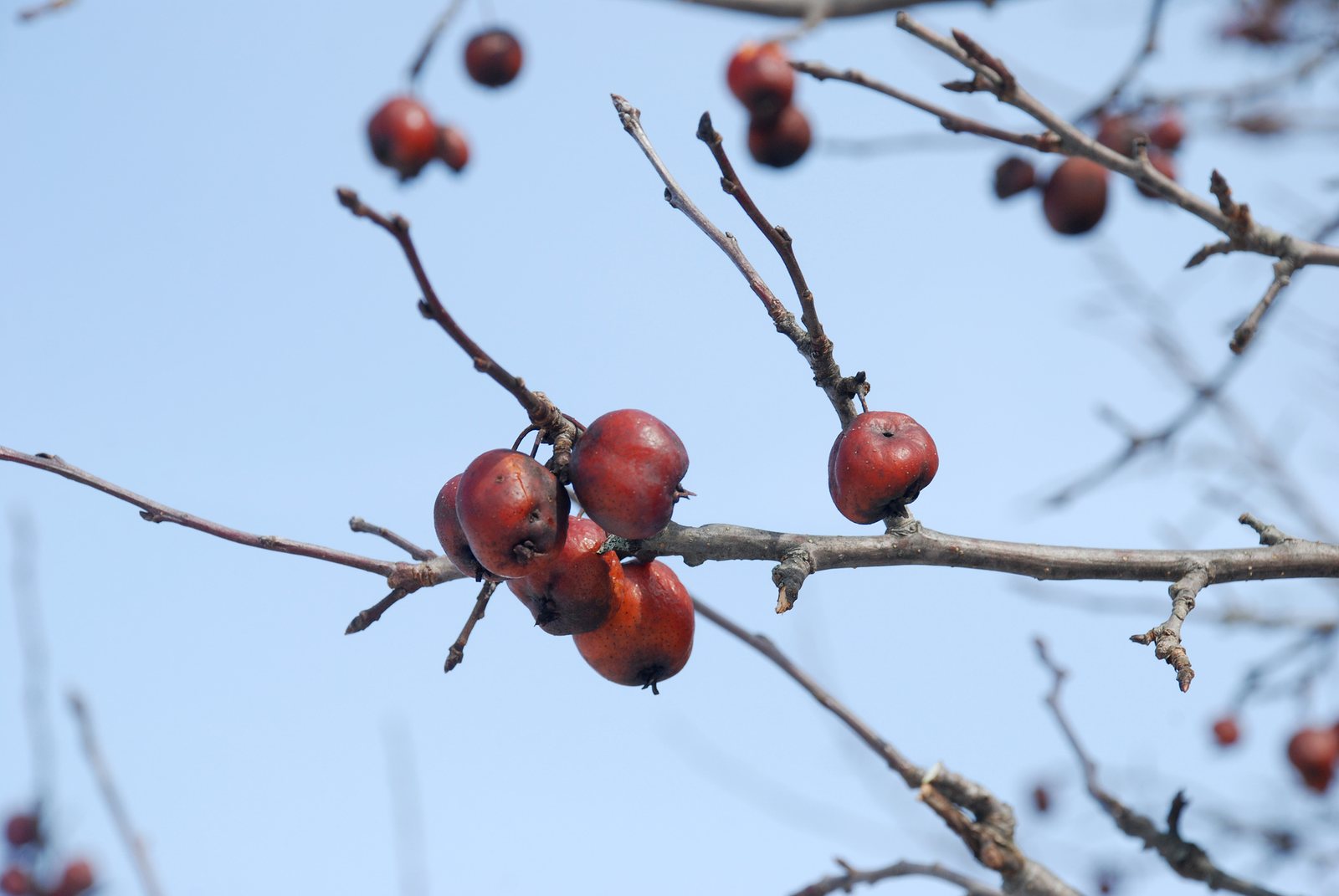
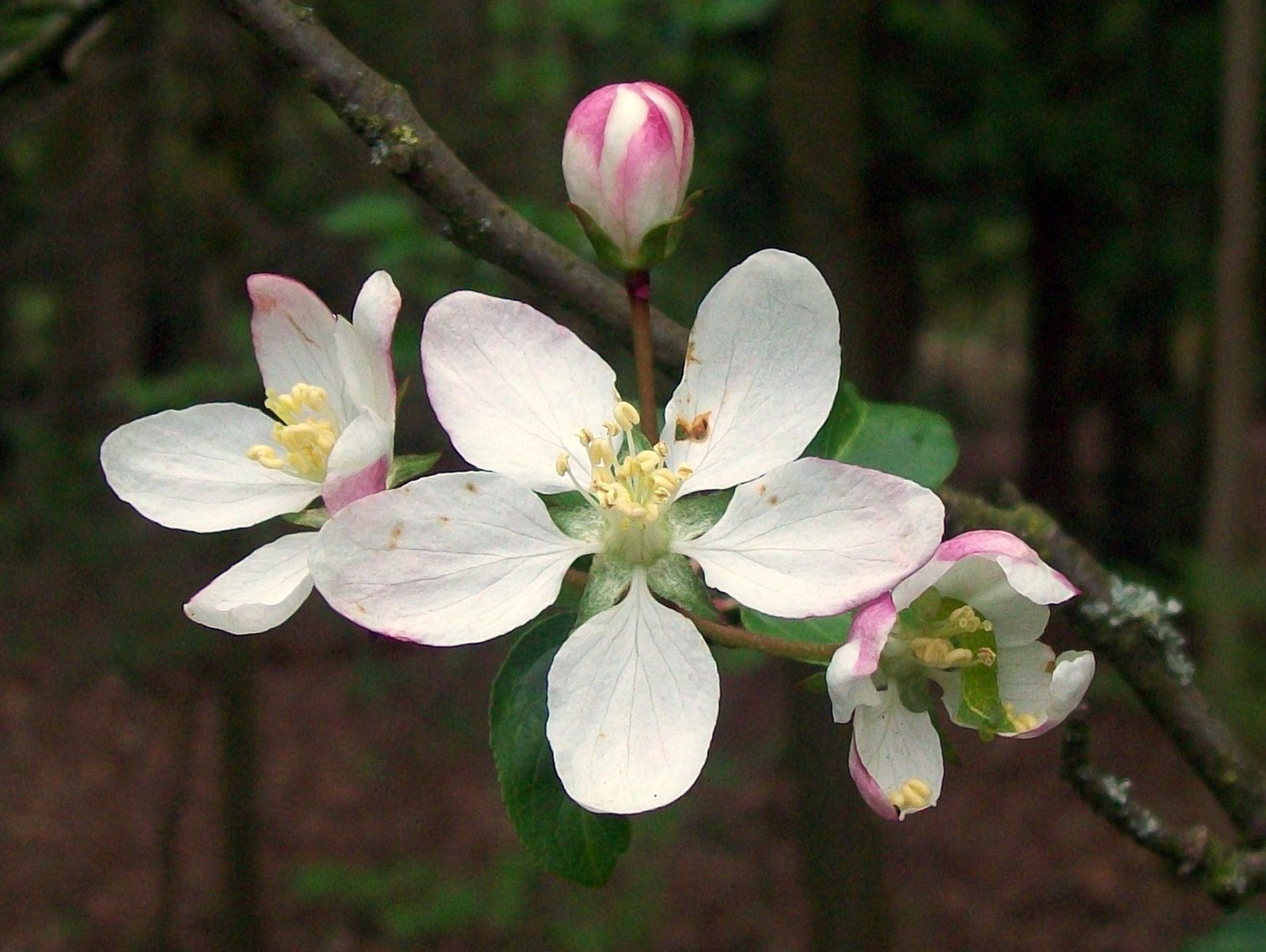
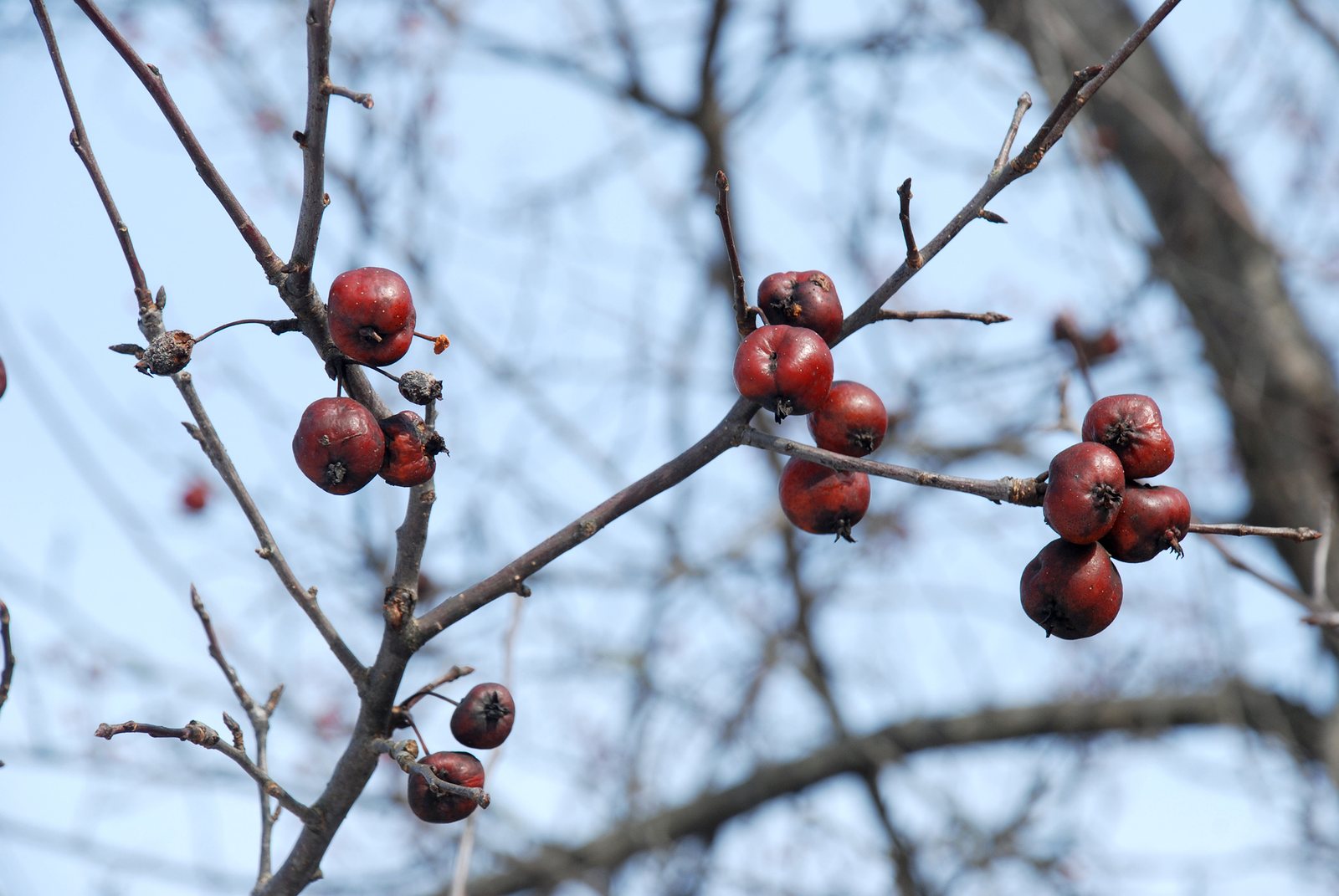
Malus 'Evereste' is a small deciduous tree grown for pink buds opening to white blossom, followed by orange-red crab apples that often remain into winter. Its rounded crown, autumn leaf colour and useful resistance to several apple diseases make it a good garden specimen and pollination partner for compatible apple trees.
At a glance
- Sun
- Full sun gives the best blossom and fruit; tolerates light partial shade.
- Water
- Water regularly while establishing. Once rooted, water deeply during prolonged dry spells, especially on sandy soil.
- Soil
- Moderately fertile, well-drained soil that retains some moisture; tolerates clay if it does not remain waterlogged, and acid to moderately alkaline conditions.
- Height
- 15-25 ft (4.5-7.5 m), depending on rootstock and conditions
- Spread
- 15-25 ft (4.5-7.5 m)
- Flowers
- Mid- to late spring; pink buds open to white flowers.
- Foliage
- Green, oval leaves turn yellow to orange in autumn before falling.
- Growth
- Moderate
- Care needed
- Low
The year at a glance
- Pollinators
- Cold hardy
- Disease resistant
- Wildlife
- Low allergen
| J | F | M | A | M | J | J | A | S | O | N | D | |
|---|---|---|---|---|---|---|---|---|---|---|---|---|
| Flowers | ||||||||||||
| Fruit | ||||||||||||
| Plant |
Northern hemisphere months. In Australia, shift them by six.
- Difficulty
- Easy
- Toughness
- Very tough
Will it suit your garden?
Pick your zone, country, light and whether you have pets.
Full sun is 6 or more hours of direct sun a day, part shade 3 to 6 hours, shade under 3.
How it grows
Planting day
7 ft (2 m)
After 1 year
7 ft (2.2 m)
After 2 years
8 ft (2.4 m)
After 3 years
9 ft (2.6 m)
After 5 years
10 ft (3 m)
About 20 years to full size.
From a typical nursery size, at an average rate for this kind of plant. A rule of thumb, not a forecast.
Good to know
- Cats and dogs
- Toxic
- Growth rate
- Moderate
Care
Jobs through the year
- WaterApr–May, Sep–Oct, every 14 days
- Water established trees deeply only when soil is dry; young trees need more frequent watering for two years.
- WaterJun–Aug, every 7 days
- Water deeply during prolonged dry spells, especially on sandy soil; skip after sufficient rain.
- MulchMar–Apr
- Maintain 5–8 cm of organic mulch, leaving the trunk and graft clear.
- FeedMar–Apr
- Feed only if growth is weak or soil is poor; avoid high-nitrogen feeding.
- PruneFeb–Mar
- Lightly remove dead, damaged and crossing branches while retaining the natural crown.
- PruneApr–Sep
- Remove rootstock suckers promptly; follow local guidance for suspected fire blight.
- ProtectMar–Apr
- Check ties and bark guards; keep lawn equipment away from the trunk.
- ProtectOct–Nov
- Clear diseased leaves and shrivelled fruit; leave healthy fruit for birds where safe.
- Plant with the root flare at soil level and any graft union above the soil.
- Water deeply during dry weather for the first two growing seasons; check moisture beneath the surface before watering.
- Apply a 2-3 in (5-8 cm) mulch over the root area, keeping it clear of the trunk.
- Feed in spring only if growth is weak or the soil is poor; avoid heavy nitrogen feeding.
- Stake only if the root ball moves in the wind, use a flexible tie, and remove the support once roots hold the tree securely.
- Keep lawn grass away from the trunk and protect the bark from mowers and string trimmers.
Pruning. Prune lightly in late winter while dormant, removing dead, damaged and crossing branches without spoiling the natural crown. Remove rootstock suckers promptly; where fire blight is present, follow local guidance on pruning timing and tool hygiene.
Through the year
- Autumn
- Plant while the soil is workable and moist; in very cold regions, spring planting is often safer.
- Late winter
- Inspect the crown and make any necessary light structural cuts.
- Early spring
- Refresh mulch, check staking ties and feed only if needed.
- Spring
- Enjoy the blossom and avoid insecticide sprays while bees are visiting.
- Summer
- Water young trees during dry spells and check shoots for aphids or sudden dieback.
- Late autumn
- Clear diseased fallen leaves and remove shrivelled fruit; leave healthy fruit for birds if it is not causing a slip hazard.
In the garden
- Use as a lawn specimen where its rounded crown and seasonal changes can be seen from the house.
- Underplant with snowdrops, daffodils and hardy geraniums for successive flowers beneath the canopy.
- Place near a patio or garden entrance, allowing room for the mature crown and some fallen fruit.
- Include in a mixed orchard as an ornamental tree and a pollen source for apples with overlapping flowering times.
Garden styles it suits: English country, Cottage garden, Wildlife garden, Backyard orchard, Autumn colour and Winter interest.
Plant it with: Snowdrops, Daffodils, Hardy geraniums, Lady's mantle, Hellebores and Catmint.
Wildlife: Flowers provide pollen and nectar for bees and other insects. Birds eat the small fruits, often later in autumn or winter, and the branches provide shelter.
Problems to watch for
- Apple scab: resistance is good but not absolute; collect infected leaves and maintain an open, well-spaced crown.
- Fire blight: blackened shoots may look scorched; seek local advice and remove affected wood in suitable dry weather, disinfecting tools between cuts.
- Aphids: colonies can curl young leaves; encourage predators and wash small colonies off accessible shoots with water.
- Poor establishment or root decline: waterlogging, deep planting and drought are common causes; check drainage, expose a buried root flare and adjust watering.
Safety
The fruit flesh is edible to people and can be cooked into jelly, though it is tart. Seeds, leaves and stems contain cyanogenic compounds and can poison cats, dogs, horses and people if enough is chewed and swallowed; wilted leaves are a particular concern around livestock. Serious poisoning is possible, so do not allow pets or horses to browse the tree or eat fallen fruit in quantity.
Easily confused with
Golden Hornet crab apple (Malus 'Golden Hornet')
Also has white spring blossom, but its mature fruits are distinctly yellow rather than orange-red.
Red Sentinel crab apple (Malus 'Red Sentinel')
Its mature fruits are glossy cherry-red, rather than the orange-red fruits, often with a yellow background, of 'Evereste'.
The name
Malus is the Latin name for the apple tree.
Propagation. Usually propagated by budding or grafting onto an apple rootstock. Seedlings do not reliably retain the characteristics of 'Evereste'; rootstock also influences mature size.
Checked against open data
- Accepted botanical name
- Malus
Sources: GBIF (CC BY 4.0). The care and design notes are LandscapeGPT's own.
See it in your own yard.
Upload a photo of your yard and see it redesigned with plants that suit your climate, each checked against your zone.