Evergold sedge
Carex oshimensis 'Evergold'. Family Cyperaceae. Ornamental grass.
Also called Evergold Japanese sedge, Variegated Japanese sedge.
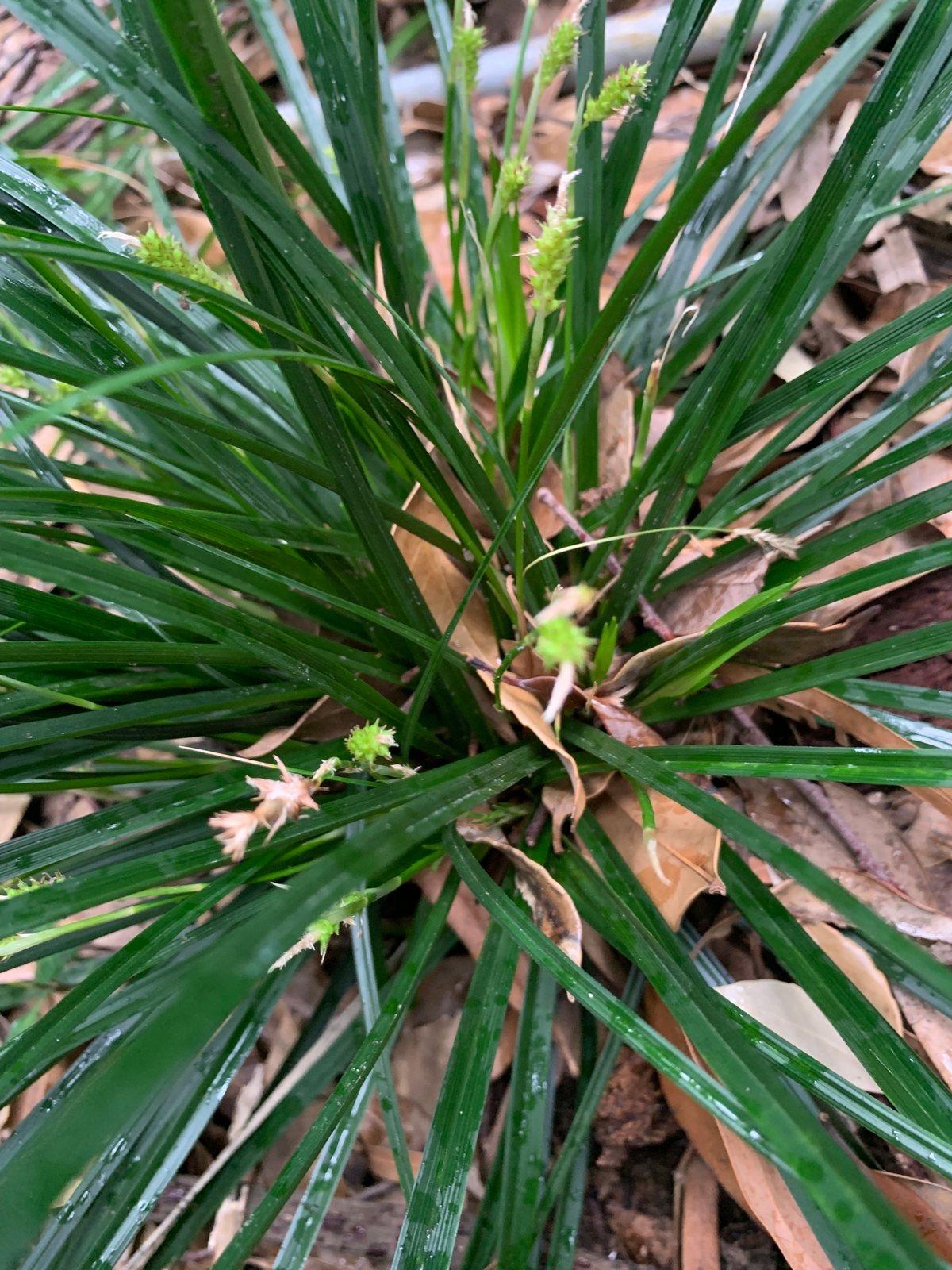
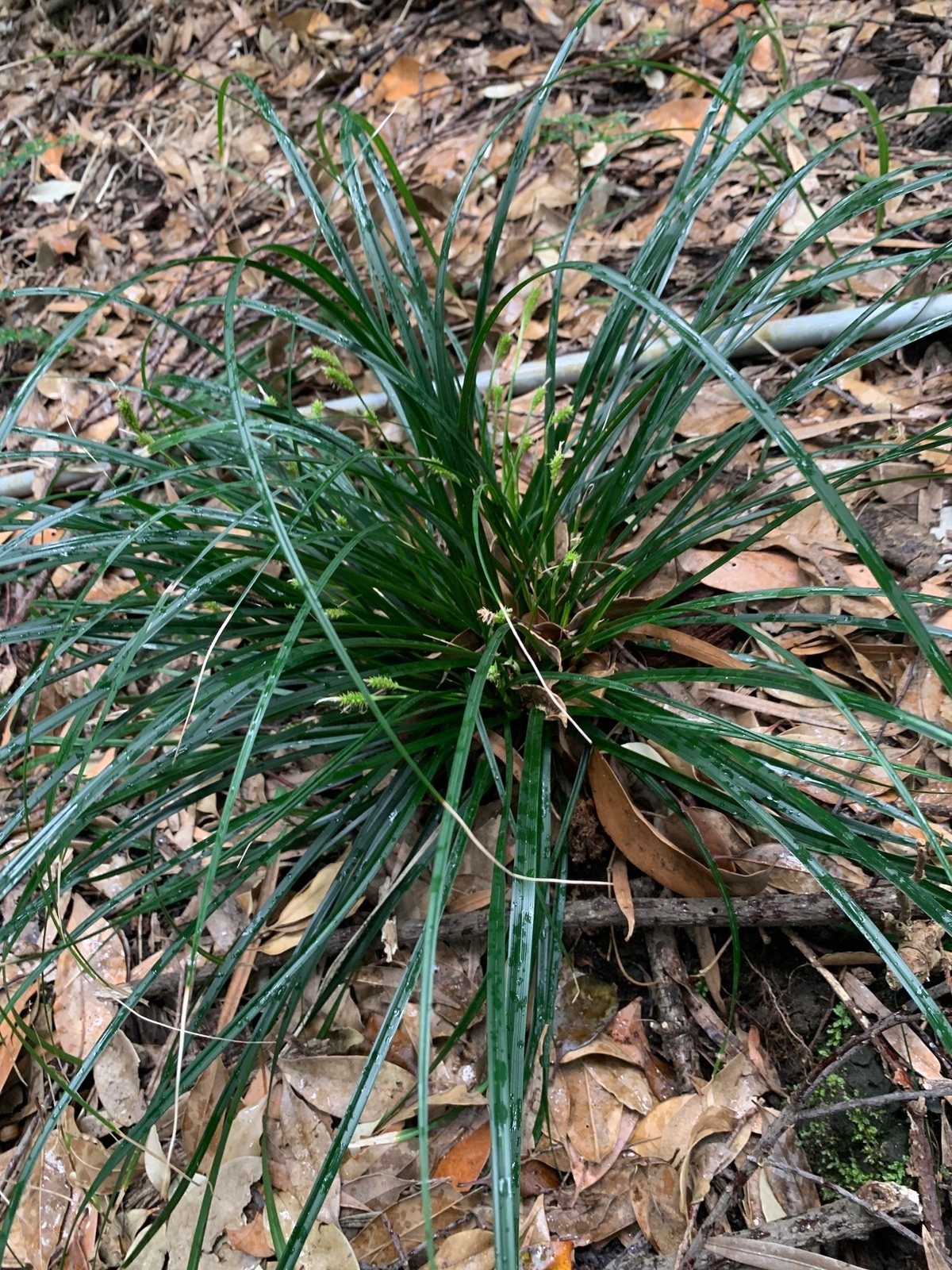
Carex oshimensis 'Evergold' is a compact, clump-forming sedge with arching leaves striped creamy yellow down the centre and dark green along the edges. Gardeners grow it for year-round foliage, especially to brighten lightly shaded borders, path edges and containers. It is usually evergreen, but leaves may suffer winter damage in colder areas.
At a glance
- Sun
- Partial shade is ideal. Tolerates full sun in cool climates if the soil stays moist; give it afternoon shade in hot areas.
- Water
- Keep the soil evenly moist while establishing. Once established, water during dry spells; avoid both prolonged drought and waterlogged soil.
- Soil
- Moist but well-drained soil enriched with organic matter; tolerates clay, loam and sandy soil if drainage and moisture are suitable.
- Height
- 1-1.5 ft (0.3-0.45 m)
- Spread
- 1-1.5 ft (0.3-0.45 m)
- Flowers
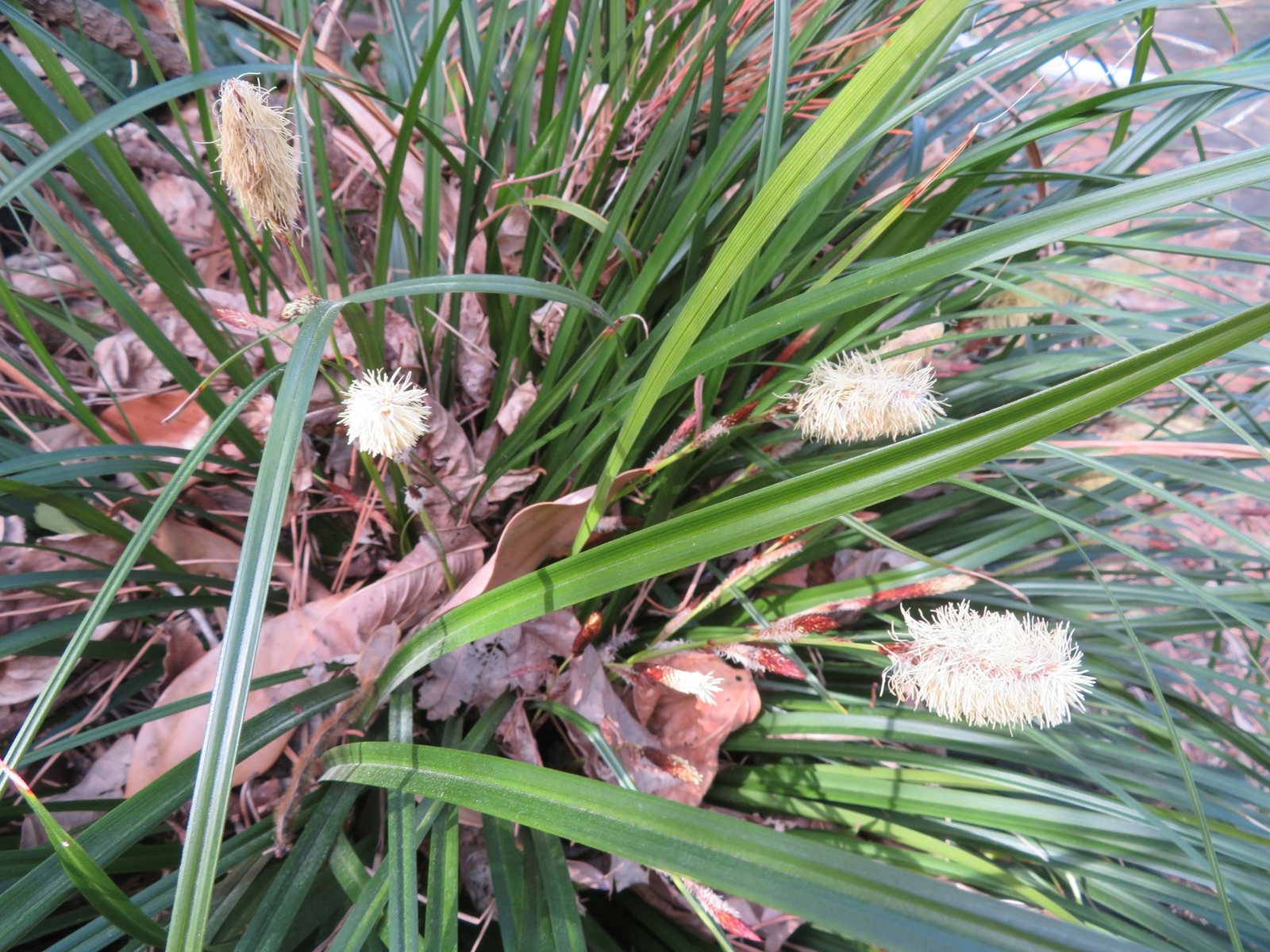
- Small, inconspicuous brown flower spikes in spring; grown mainly for foliage.
- Foliage
- Narrow, arching leaves with broad creamy-yellow centres and dark green margins; evergreen in milder climates.
- Growth
- Moderate; gradually forms a wider, dense clump.
- Care needed
- Low
The year at a glance
- Deer resistant
- Heat tolerant
- Wildlife
| J | F | M | A | M | J | J | A | S | O | N | D | |
|---|---|---|---|---|---|---|---|---|---|---|---|---|
| Plant |
Northern hemisphere months. In Australia, shift them by six.
- Difficulty
- Easy
- Toughness
- Fairly tough
Will it suit your garden?
Pick your zone, country, light and whether you have pets.
Full sun is 6 or more hours of direct sun a day, part shade 3 to 6 hours, shade under 3.
How it grows
Planting day
1.1 ft (0.35 m)
After 1 year
1.2 ft (0.36 m)
After 2 years
1.2 ft (0.37 m)
After 3 years
1.2 ft (0.38 m)
full size
About 3 years to full size.
From a typical nursery size, at an average rate for this kind of plant. A rule of thumb, not a forecast.
Good to know
- Cats and dogs
- Mildly toxic: may upset a stomach
- Growth rate
- Moderate
Care
Jobs through the year
- WaterApr–May, Sep–Oct, every 14 days
- Water established clumps during dry spells; water first-year plants more often to keep soil evenly moist.
- WaterJun–Aug, every 7 days
- Water deeply if soil is drying, especially beneath trees; avoid saturated soil.
- PruneFeb–Mar
- Comb out dead leaves and snip damaged blades at the base; retain healthy evergreen foliage.
- PruneApr–Sep, every 30 days
- Check for plain-green shoots and remove them at their point of origin.
- MulchMar–Apr
- Apply a thin compost mulch around the clump, leaving its crown uncovered.
- DivideMar–May
- Divide congested or thinning clumps every three to five years.
- ProtectOct–Nov
- Clear fallen leaves from the crown and maintain free winter drainage.
- Water regularly through the first growing season, allowing excess water to drain away.
- Apply a thin layer of compost around the clump in spring; keep it away from the crown.
- Mulch lightly to conserve moisture without burying the base of the leaves.
- Water containers when the surface of the compost begins to dry, and keep drainage holes clear.
- Divide congested or thinning clumps in spring, usually every three to five years.
Pruning. In late winter or early spring, comb out dead leaves and snip damaged blades at the base before fresh growth starts. Avoid routine hard cutting of healthy evergreen foliage; if winter damage is extensive, trim the damaged leaves back without cutting into the crown.
Through the year
- Late winter
- Check for winter damage and remove dead or badly browned leaves.
- Spring
- Plant new clumps or divide established ones as growth resumes.
- Spring
- Top-dress with compost and renew a light mulch, leaving the crown exposed.
- Summer
- Water during dry spells, especially in containers and beneath trees.
- Autumn
- Remove fallen leaves that collect over the crown and check that the soil drains freely.
- Winter
- Leave healthy foliage in place; shelter pots from severe freezes and persistent winter wet.
In the garden
- Edge a shaded path with repeated clumps for a soft, bright boundary.
- Plant beneath deciduous shrubs with ferns and hellebores to provide foliage through winter.
- Use in containers with dark-leaved heucheras, letting the arching leaves soften the rim.
- Repeat among broad-leaved hostas to contrast fine and bold foliage textures.
- Plant in small groups beside rocks or stepping stones in Japanese-inspired gardens.
Garden styles it suits: Woodland, Japanese, Modern courtyard, Small-space, Winter interest and Low-maintenance.
Plant it with: Hostas, Hellebores, Japanese painted ferns, Heucheras, Siberian bugloss and Japanese forest grass.
Wildlife: Dense clumps provide small-scale shelter for insects and other invertebrates. The wind-pollinated flowers offer little nectar value for bees or butterflies.
Problems to watch for
- Brown tips or scorched leaves: check for dry soil, hot afternoon sun or drying winds; water deeply and provide more shelter or shade.
- Crown or root rot in waterlogged soil: improve drainage, reduce watering and replace badly rotted plants.
- Aphids on young growth: wash off small colonies with water; use insecticidal soap if an infestation persists.
- Plain green shoots: remove them at their point of origin so they do not overtake the variegated growth.
Safety
Not known to be toxic to cats, dogs, horses or people; no poisonous parts are recognised. It is not an edible plant, and chewing the fibrous leaves may cause irritation or stomach upset.
Easily confused with
Ice Dance sedge (Carex morrowii 'Ice Dance')
Its leaves have green centres and creamy-white margins, the reverse of Evergold's pattern; it also spreads more readily into patches.
Everillo sedge (Carex oshimensis 'Everillo')
Its foliage is golden yellow to lime green rather than striped with dark green margins.
Aureola Japanese forest grass (Hakonechloa macra 'Aureola')
It has broader, softer leaves carried on jointed stems and dies back in winter, unlike the usually evergreen, basal leaves of Evergold.
The name
The species name oshimensis refers to Oshima in Japan, while 'Evergold' describes the persistent golden colouring of its leaves.
Propagation. Divide healthy clumps in spring, keeping roots and several growing shoots on each division. Replant promptly and water well. Seed does not reliably reproduce the 'Evergold' leaf pattern.
Checked against open data
- Accepted botanical name
- Carex oshimensis
- Native range
- Japan.
Sources: GBIF (CC BY 4.0) and Trefle (CC BY 4.0). The care and design notes are LandscapeGPT's own.
See it in your own yard.
Upload a photo of your yard and see it redesigned with plants that suit your climate, each checked against your zone.