Evergreen clematis
Clematis armandii. Family Ranunculaceae. Climber.
Also called Armand clematis.
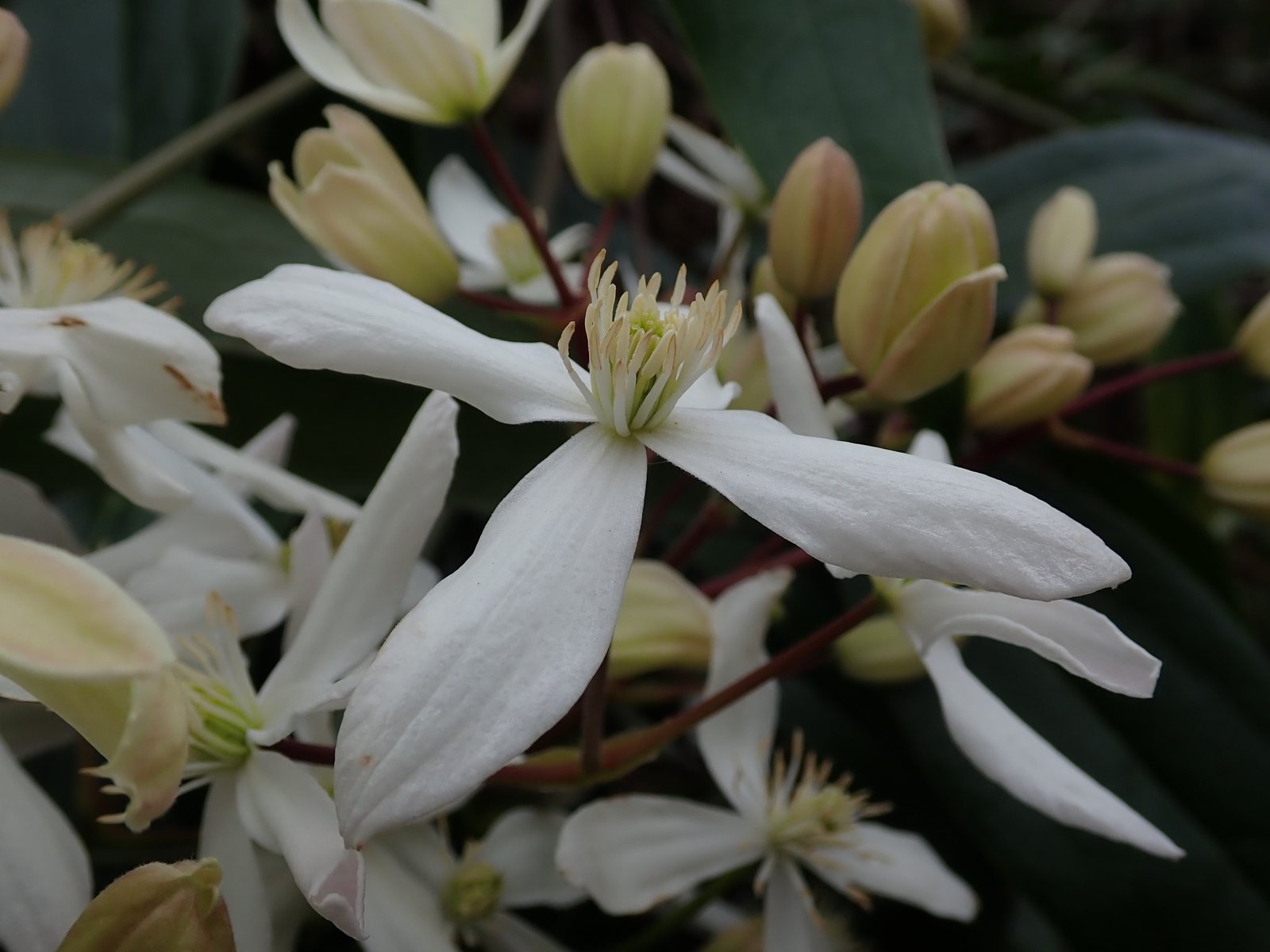
Evergreen clematis is a vigorous, woody climber grown for its glossy leaves and fragrant white flowers in early spring. It needs a substantial support and a sheltered position; cold winds and severe frost can damage its foliage and flower buds.
At a glance
- Sun
- Full sun to partial shade; flowers best with good light. Shelter from cold, drying winds and intense afternoon sun in hot climates.
- Water
- Water regularly during establishment and deeply during prolonged dry spells. Keep the root zone moist but never waterlogged.
- Soil
- Fertile, humus-rich, well-drained soil; tolerates slightly acidic to alkaline conditions.
- Height
- 15-25 ft (4.5-7.5 m)
- Spread
- 10-15 ft (3-4.5 m)
- Flowers
- Late winter to mid-spring, depending on climate; clusters of fragrant, creamy-white flowers.
- Foliage
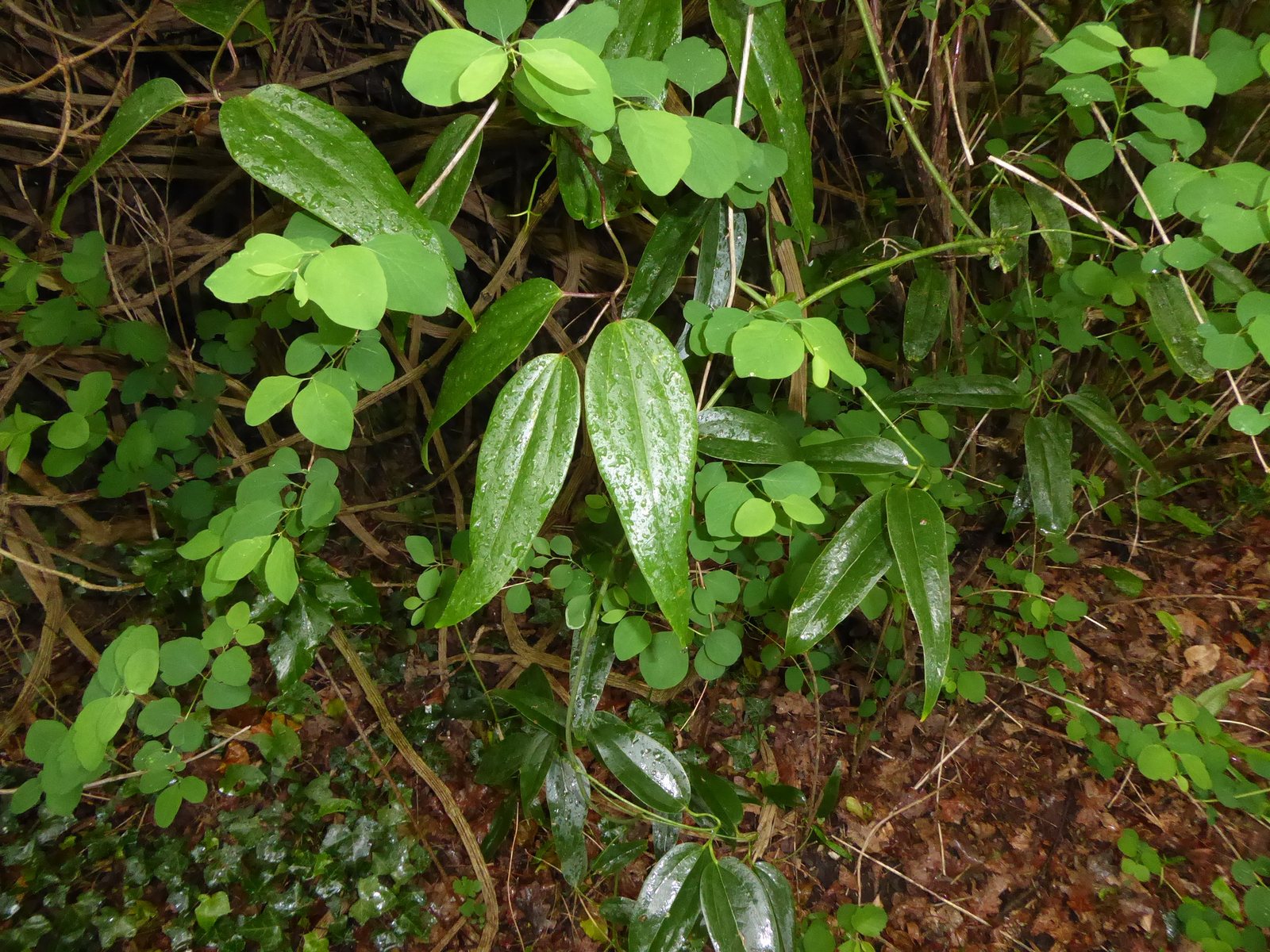
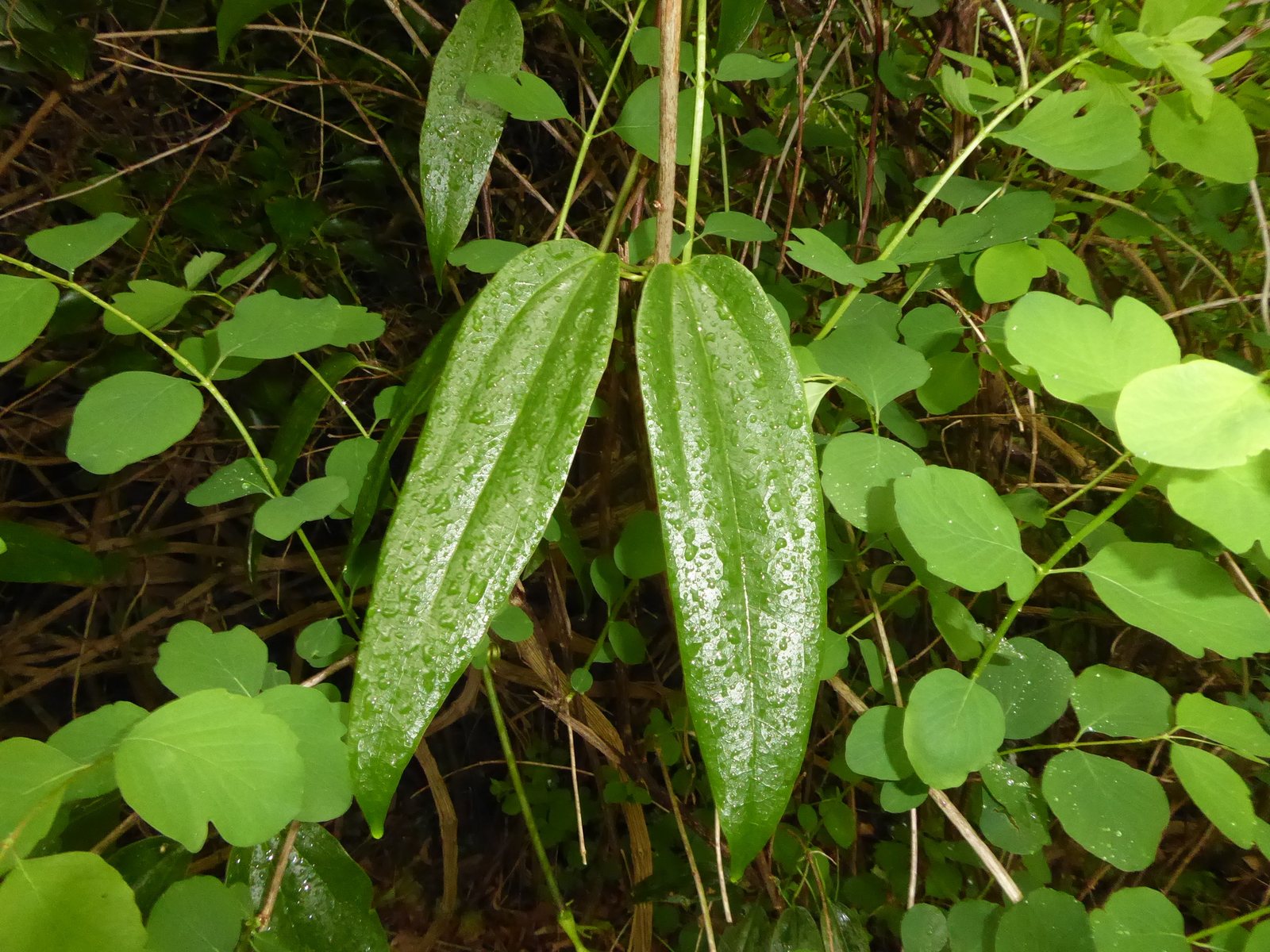
- Evergreen. Leathery, glossy, dark green leaves divided into three long, pointed leaflets; young growth is often bronze.
- Growth
- Fast once established.
- Care needed
- Medium
The year at a glance
- Pollinators
- Wildlife
- Low allergen
- Fragrant
| J | F | M | A | M | J | J | A | S | O | N | D | |
|---|---|---|---|---|---|---|---|---|---|---|---|---|
| Flowers | ||||||||||||
| Fruit | ||||||||||||
| Plant |
Northern hemisphere months. In Australia, shift them by six.
- Difficulty
- Moderate
- Toughness
- Fairly tough
Will it suit your garden?
Pick your zone, country, light and whether you have pets.
Full sun is 6 or more hours of direct sun a day, part shade 3 to 6 hours, shade under 3.
How it grows
Planting day
2 ft (0.6 m)
After 1 year
3 ft (1.1 m)
After 2 years
5 ft (1.5 m)
After 3 years
6 ft (1.8 m)
full size
About 3 years to full size.
From a typical nursery size, at an average rate for this kind of plant. A rule of thumb, not a forecast.
Good to know
- Cats and dogs
- Toxic
- Growth rate
- Fast
Care
Jobs through the year
- WaterApr–May, Sep–Oct, every 14 days
- Water established ground plants deeply in dry weather; water regularly through the first two growing seasons.
- WaterJun–Aug, every 7 days
- During dry spells, soak the root zone without waterlogging it.
- FeedMar–Apr
- Apply a balanced fertiliser as growth starts, following the label rate.
- MulchMar–Apr
- Mulch with compost to conserve root moisture, keeping stems clear.
- PruneApr–May
- Prune only after flowering, removing damaged stems and shortening overlong shoots.
- ProtectJan–Feb, Nov–Dec
- Shelter from drying winds and severe frost; zone 6 generally requires protected cultivation.
- ProtectMay–Aug, every 21 days
- Guide and loosely tie young shoots across a strong support with slender gripping sections.
- Provide a strong pergola, trellis or wires with slender sections that the leaf stalks can grip.
- Tie young shoots loosely to spread growth across the support before they become tangled.
- Water deeply through the first two growing seasons and during extended drought.
- Apply compost and a balanced fertiliser in spring, following the product's application rate.
- Mulch the root area annually, keeping mulch away from the stems; shelter the foliage from winter winds.
Pruning. Pruning group 1: prune immediately after flowering, removing dead or damaged stems and shortening shoots that have outgrown their space. Avoid routine hard pruning or winter trimming, which removes the wood carrying the next flowers.
Through the year
- Late winter
- Check ties and supports; protect young plants from severe frost and drying winds.
- Spring
- Apply compost, mulch and a balanced fertiliser as growth begins.
- Late spring
- After flowering, remove damaged growth and shorten overlong shoots if needed.
- Summer
- Water during dry spells and guide new shoots across their support.
- Autumn
- Plant in mild regions while the soil is warm; in colder regions, wait until spring.
- Early winter
- Check drainage and secure loose stems before winter storms.
In the garden
- Cover a substantial pergola near a seating area where the spring fragrance can be enjoyed.
- Train along wires on a sheltered wall for evergreen cover and early flowers.
- Screen a sturdy fence, allowing enough space for its vigorous growth.
- Use above spring bulbs and shade-tolerant perennials, keeping its root area cool and planted.
Garden styles it suits: English country, Cottage garden, Romantic rose garden, Modern courtyard, Sensory garden and White garden.
Plant it with: Hellebores, Snowdrops, Daffodils, Epimediums, Japanese anemones and Hardy geraniums.
Wildlife: Flowers provide an early-season pollen source for bees and other visiting insects. Dense mature growth can offer shelter for small birds.
Problems to watch for
- Brown or scorched leaves after winter: shelter from cold winds, maintain soil moisture and remove dead growth once frost risk has passed.
- Poor flowering: provide more light and avoid pruning in autumn or winter, when flower buds are already present.
- Aphids on soft shoots: wash off small colonies with water and encourage natural predators.
- Yellowing and decline in wet soil: improve drainage and reduce watering; persistently waterlogged roots may rot.
Safety
Toxic to cats, dogs, horses and people if eaten. All parts contain irritant compounds, especially in fresh leaves and stems; ingestion can cause mouth irritation, drooling, vomiting or diarrhoea. Serious poisoning is uncommon, but seek medical or veterinary advice after ingestion. Sap can also irritate skin, so wear gloves when pruning.
Easily confused with
Sweet autumn clematis (Clematis terniflora)
Flowers in late summer or autumn rather than early spring and usually loses its leaves in winter; its leaflets are broader and less leathery.
Winter-flowering clematis (Clematis cirrhosa)
Has nodding, bell-shaped flowers, often spotted inside, and smaller, frequently lobed leaves rather than long, leathery leaflets.
The name
Clematis comes from a Greek word for a climbing plant, and armandii honours the French missionary and plant collector Armand David.
Propagation. Layer a low-growing shoot in spring, or take semi-ripe cuttings in summer. Seed-grown plants are variable, and named cultivars should be propagated vegetatively.
Checked against open data
- Accepted botanical name
- Clematis armandii
Sources: GBIF (CC BY 4.0) and Trefle (CC BY 4.0). The care and design notes are LandscapeGPT's own.
See it in your own yard.
Upload a photo of your yard and see it redesigned with plants that suit your climate, each checked against your zone.