False rosemary
Conradina canescens. Family Lamiaceae. Shrub.
Also called Beach rosemary.
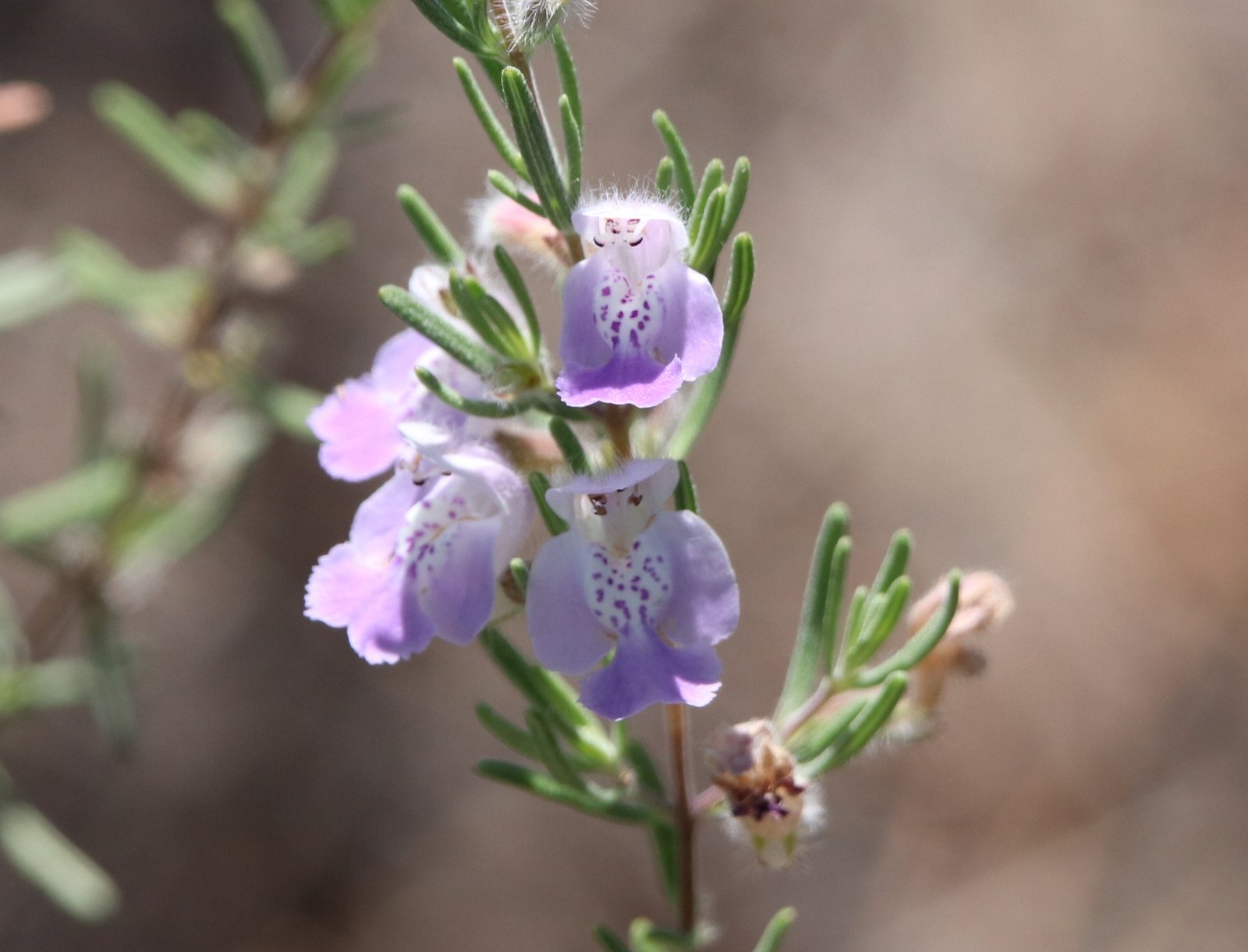
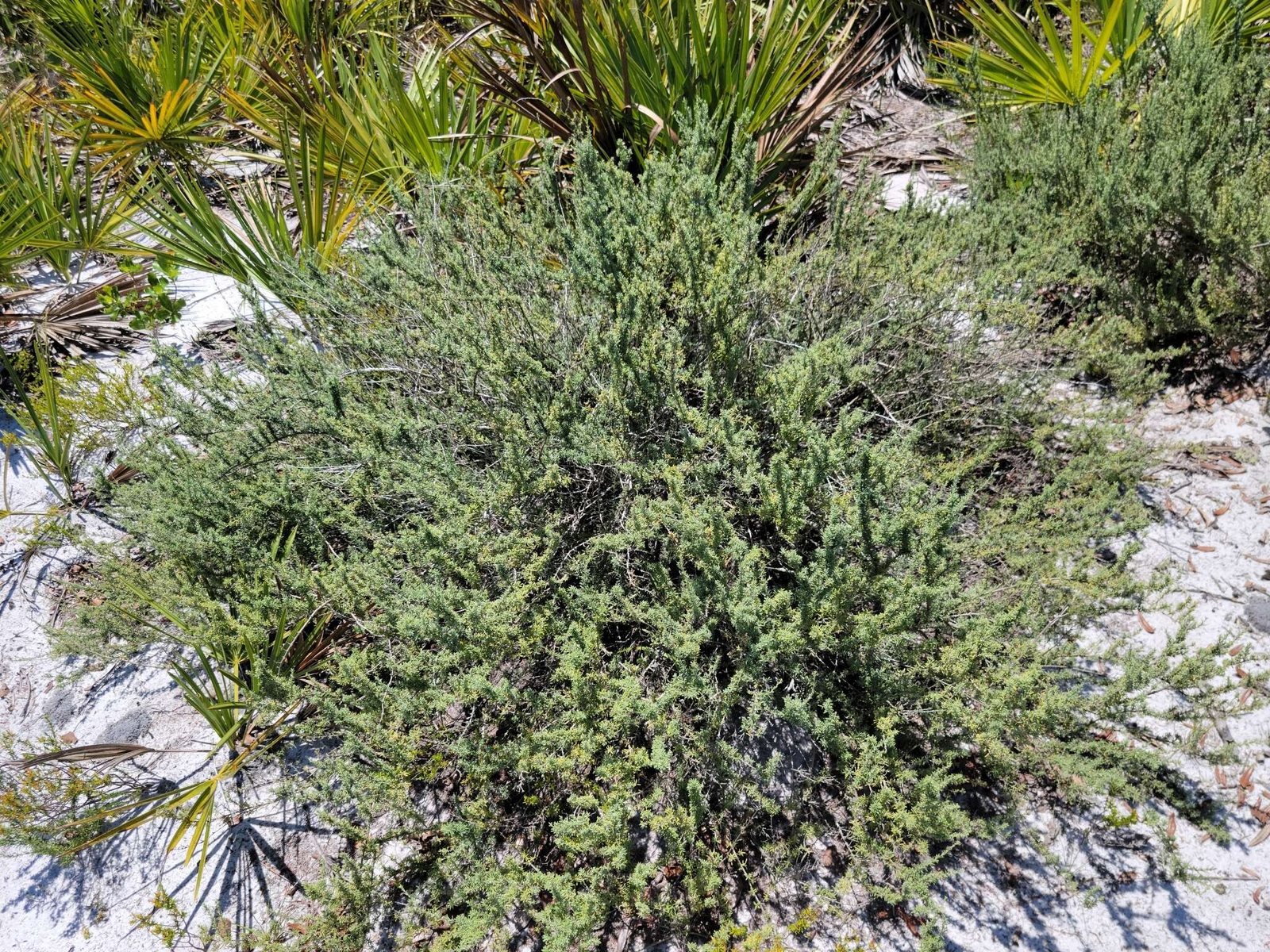
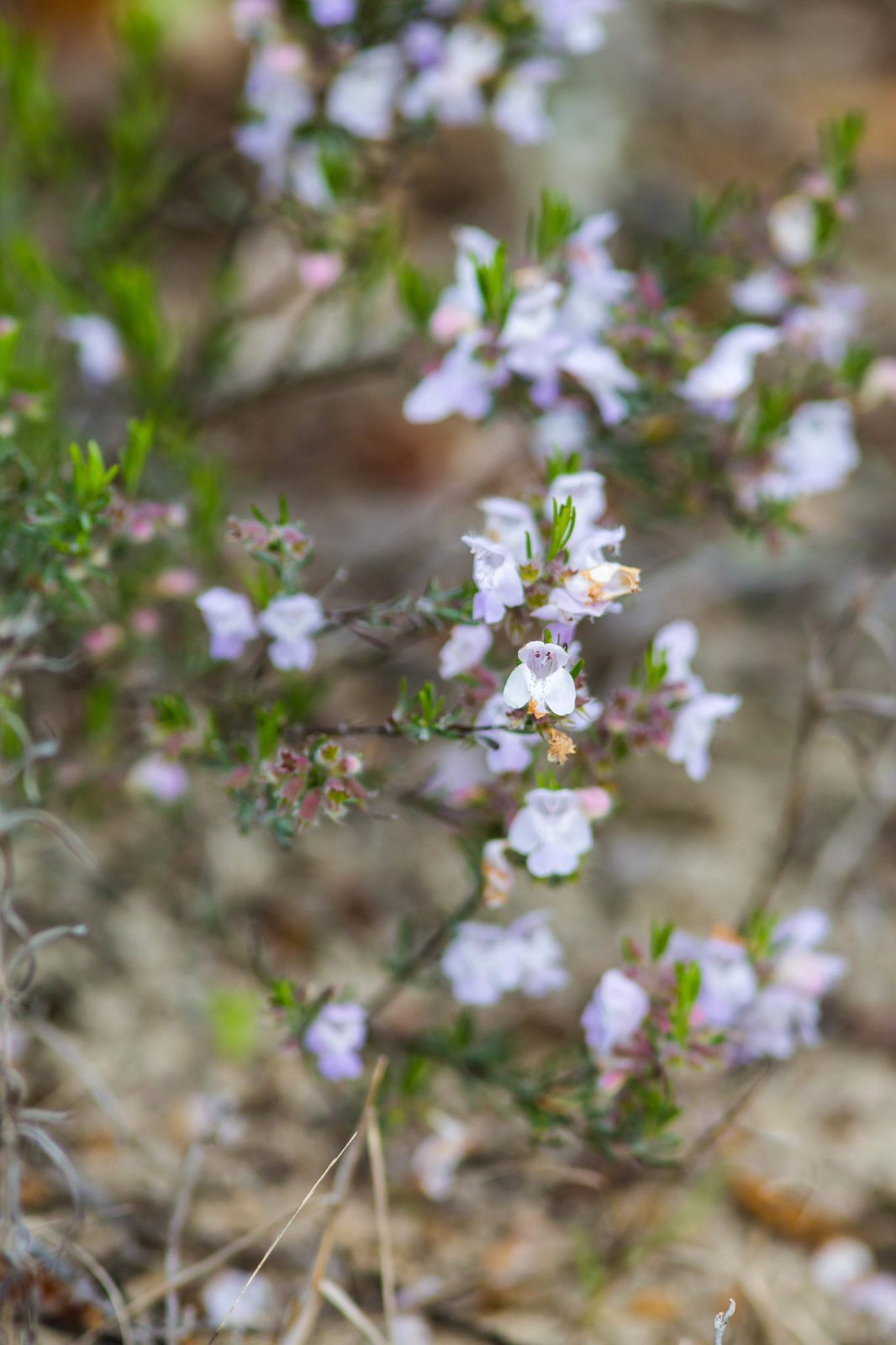
False rosemary is a small evergreen shrub native to the southeastern United States' Gulf Coast, with aromatic, grey-green leaves and pale lavender flowers. Grow it for its soft texture, bee-friendly blooms and tolerance of dry, sandy ground; it is not a substitute for culinary rosemary.
At a glance
- Sun
- Full sun; tolerates light shade but flowers best in an open, sunny position.
- Water
- Water regularly while establishing, allowing the soil to dry between waterings. Established plants usually need water only during prolonged drought.
- Soil
- Very well-drained, sandy, preferably acidic soil with low fertility. Avoid heavy clay, persistently damp ground and rich planting mixes.
- Height
- 2-3 ft (0.6-0.9 m)
- Spread
- 2-3 ft (0.6-0.9 m)
- Flowers
- Pale lavender to nearly white, two-lipped flowers with purple markings, mainly in spring; scattered flowers may appear at other times in warm climates.
- Foliage
- Evergreen. Small, narrow, aromatic grey-green leaves with rolled edges and fine hairs, especially beneath.
- Growth
- Moderate
- Care needed
- Low
The year at a glance
- Pollinators
- Deer resistant
- Drought tolerant
- Heat tolerant
- Low allergen
- Fragrant
| J | F | M | A | M | J | J | A | S | O | N | D | |
|---|---|---|---|---|---|---|---|---|---|---|---|---|
| Flowers | ||||||||||||
| Plant |
Northern hemisphere months. In Australia, shift them by six.
- Difficulty
- Moderate
- Toughness
- Fairly tough
Will it suit your garden?
Pick your zone, country, light and whether you have pets.
Full sun is 6 or more hours of direct sun a day, part shade 3 to 6 hours, shade under 3.
How it grows
Planting day
1.6 ft (0.5 m)
After 1 year
1.8 ft (0.55 m)
After 2 years
2 ft (0.6 m)
After 3 years
2.1 ft (0.65 m)
After 5 years
2.5 ft (0.75 m)
full size
About 5 years to full size.
From a typical nursery size, at an average rate for this kind of plant. A rule of thumb, not a forecast.
Good to know
- Cats and dogs
- Safe
- Growth rate
- Moderate
Care
Jobs through the year
- WaterApr–May, Sep–Oct, every 21 days
- For established outdoor plants, water only during drought after soil dries; new plants need closer checks.
- WaterJun–Aug, every 14 days
- Water established plants only in prolonged drought; containers need more frequent checks.
- PruneMay–Jun
- Lightly trim tips after flowering; remove dead stems without cutting into leafless old wood.
- ProtectJan–Apr, Oct–Dec
- Not reliably hardy in zones 6–7; overwinter containers in bright, cool, frost-free shelter.
- WaterJan–Mar, Nov–Dec, every 21 days
- Check sheltered containers and water sparingly only when the growing mix has dried.
- ProtectSep–Oct
- Clear fallen leaves from the crown and keep drainage holes and surface drainage open.
- Plant in a sunny position with sharp drainage; use a raised bed or container if your ground stays wet.
- Water the root area during establishment, then reduce watering as the plant settles in.
- Avoid routine feeding and rich compost; excessive fertility encourages loose growth.
- Keep mulch clear of the stems and crown; a thin gravel mulch suits dry planting schemes.
- In containers, use a gritty growing mix and keep drainage holes clear.
Pruning. Lightly trim shoot tips after the main spring flowering to keep the plant compact. Remove dead stems, but avoid cutting hard into old, leafless wood.
Through the year
- Spring
- Plant after severe frost has passed, choosing sandy ground or a sharply drained raised bed.
- Late spring
- Lightly trim after the main flower flush if the shrub needs shaping.
- Summer
- Check newly planted shrubs during dry spells and water deeply when the root zone has dried.
- Summer
- Take semi-ripe cuttings from healthy, non-flowering shoots.
- Autumn
- Clear fallen leaves from around the crown and check that drainage remains open.
- Winter
- Keep container plants out of standing water and shelter them from prolonged cold, wet conditions.
In the garden
- Use as a low edging beside sunny paths where its aromatic foliage can be appreciated.
- Plant in small groups in sandy coastal gardens for evergreen structure and soft lavender flowers.
- Combine with grasses and drought-tolerant perennials in a gravel garden.
- Grow in a well-drained container on a sunny terrace where garden soil is too heavy.
Garden styles it suits: Coastal, Florida subtropical, Dry gravel garden, Desert / xeriscape, Pollinator garden and Sensory garden.
Plant it with: Pink muhly grass, Little bluestem, Blanket flower, Butterfly weed and Prickly pear.
Wildlife: Flowers provide nectar and pollen for bees and attract other flower-visiting insects, including butterflies.
Problems to watch for
- Root rot in wet soil: improve drainage or move the plant to a raised bed; do not keep the root zone constantly moist.
- Sparse growth and few flowers in shade: move to a sunnier position.
- Loose, floppy growth after heavy feeding: stop fertilizing and lightly trim after flowering.
- Winter damage in cold, wet sites: provide a sheltered, freely drained position and protect container roots during hard freezes.
Safety
Not known to be toxic to people, cats, dogs or horses, but species-specific safety information is limited. No particular toxic part is established; do not treat the aromatic leaves as an edible herb.
Easily confused with
Rosemary (Salvia rosmarinus)
Culinary rosemary usually has longer, darker, leathery leaves with a strong familiar rosemary scent. False rosemary has softer, greyer foliage and pale flowers with conspicuous purple markings.
Florida rosemary (Ceratiola ericoides)
Florida rosemary has densely crowded, needle-like leaves and tiny, inconspicuous flowers, rather than false rosemary's showy, two-lipped lavender flowers.
The name
The common name refers to its resemblance to culinary rosemary, while canescens means becoming grey or hoary, referring to its fine-haired foliage.
Propagation. Take semi-ripe cuttings in summer and root them in a sharply drained medium with gentle humidity. Seed is another option, but availability and germination can be variable.
Checked against open data
- Accepted botanical name
- Conradina canescens
- Native range
- Alabama, Florida and Mississippi.
Sources: GBIF (CC BY 4.0) and Trefle (CC BY 4.0). The care and design notes are LandscapeGPT's own.
See it in your own yard.
Upload a photo of your yard and see it redesigned with plants that suit your climate, each checked against your zone.