Fan flower
Scaevola aemula. Family Goodeniaceae. Perennial.
Also called Fairy fan flower, Common fan-flower.
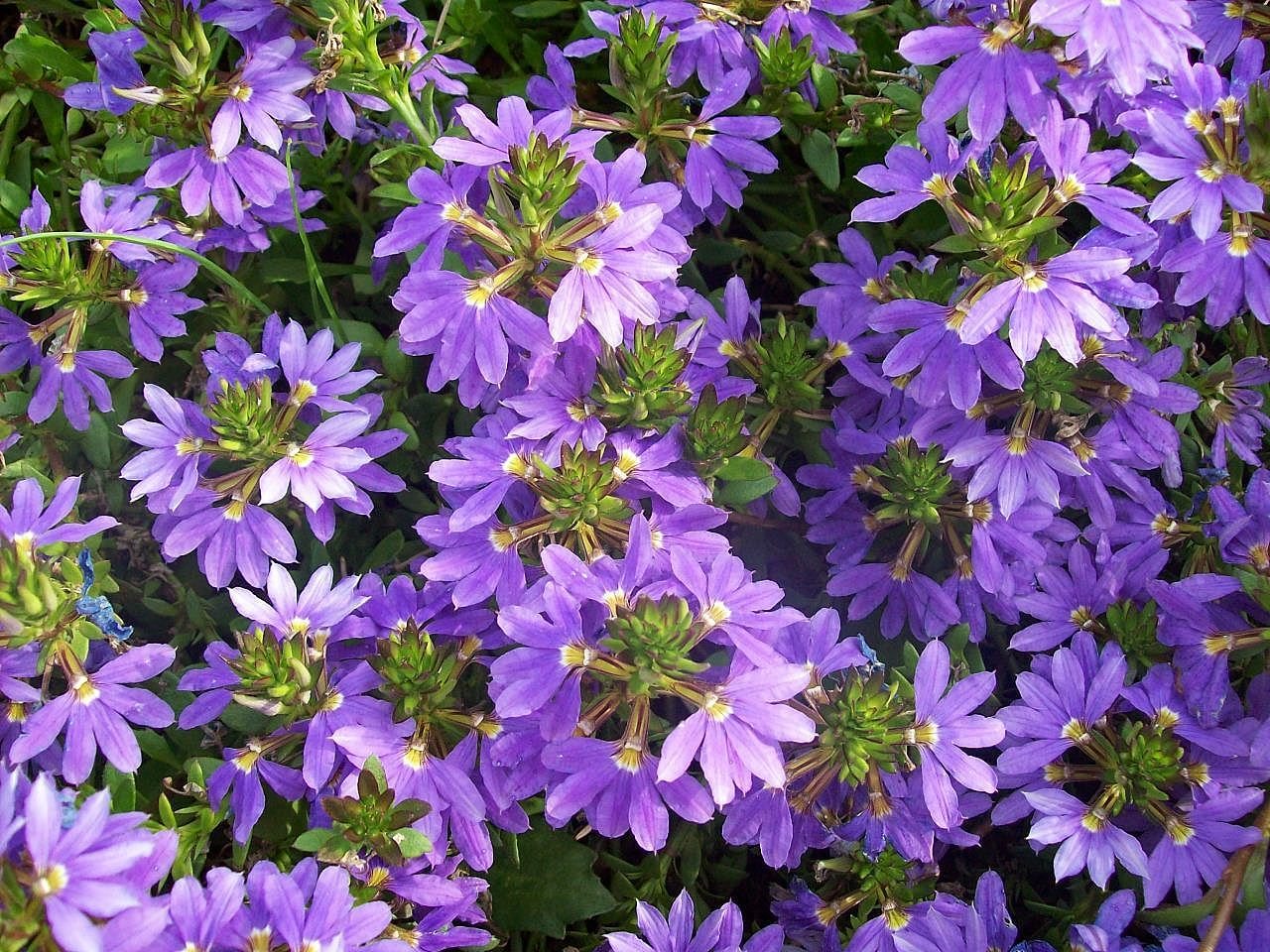
Fan flower is a frost-tender Australian perennial with spreading stems and flowers shaped like little open fans. It is grown as an annual in colder climates, providing long-lasting colour in hanging baskets, containers and sunny border edges.
At a glance
- Sun
- Full sun to partial shade; flowers best with at least 6 hours of sun. Light afternoon shade helps in very hot inland gardens.
- Water
- Water regularly while establishing. Once established, allow the soil surface to dry slightly between waterings; containers need more frequent checks than plants in the ground.
- Soil
- Well-drained sandy or loamy soil, or a free-draining container compost. Avoid heavy, persistently wet soil.
- Height
- 0.5-1 ft (0.15-0.3 m)
- Spread
- 1-2 ft (0.3-0.6 m)
- Flowers
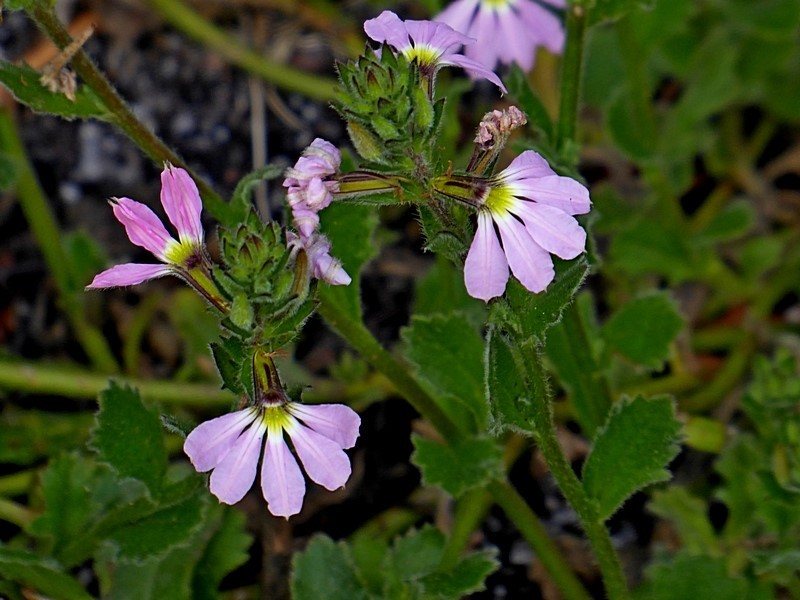
- Late spring to autumn, often until frost; usually blue-purple, with pink and white selections also available. Flowering may continue longer in frost-free climates.
- Foliage
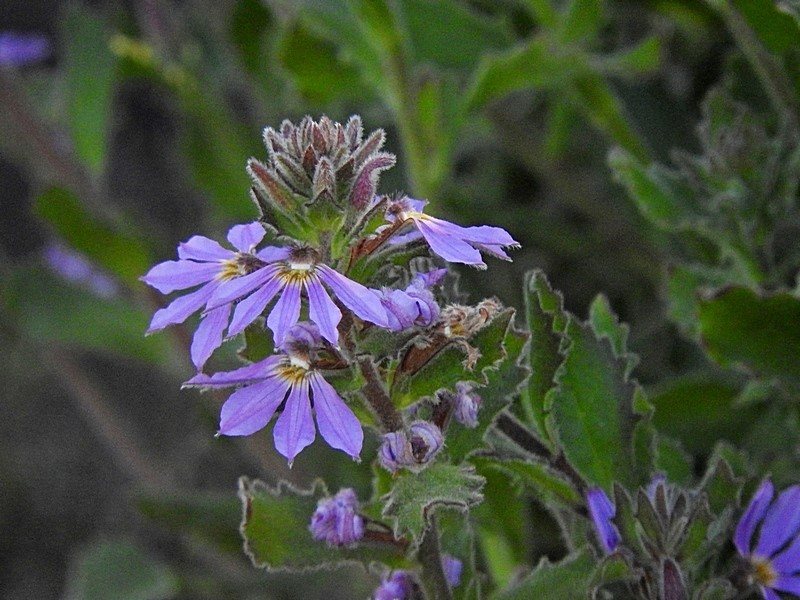
- Evergreen. Green, slightly fleshy, spoon-shaped to lance-shaped leaves, often with toothed edges, on spreading or trailing stems.
- Growth
- Fast during warm weather.
- Care needed
- Low
The year at a glance
- Pollinators
- Drought tolerant
- Heat tolerant
- Low allergen
| J | F | M | A | M | J | J | A | S | O | N | D | |
|---|---|---|---|---|---|---|---|---|---|---|---|---|
| Flowers | ||||||||||||
| Plant |
Northern hemisphere months. In Australia, shift them by six.
- Difficulty
- Easy
- Toughness
- Fairly tough
Will it suit your garden?
Pick your zone, country, light and whether you have pets.
Full sun is 6 or more hours of direct sun a day, part shade 3 to 6 hours, shade under 3.
How it grows
Planting day
0.7 ft (0.22 m)
full size
About 2 years to full size.
From a typical nursery size, at an average rate for this kind of plant. A rule of thumb, not a forecast.
Good to know
- Cats and dogs
- Safe
- Native to
- Australia
- Growth rate
- Fast
Care
Jobs through the year
- WaterMay, Sep–Oct, every 10 days
- For established bedding plants, water if the surface has dried; young plants and pots need more frequent checks.
- WaterJun–Aug, every 7 days
- Water established plants when the surface dries, adjusting for rain; avoid severe wilting.
- FeedJun–Sep, every 28 days
- Feed containers with dilute flowering-plant fertilizer; bedding in fertile soil rarely needs extra feed.
- PruneMay, Jul–Aug
- Pinch young tips or lightly trim straggly stems; routine deadheading is unnecessary.
- ProtectSep–Oct
- Treat as an annual, or move plants into bright, frost-free shelter before frost.
- Plant outside after frost danger has passed and the soil has warmed.
- Use containers with drainage holes and do not leave them standing in water.
- Water at soil level when the surface begins to dry; avoid repeated severe wilting.
- Feed container plants every 2-4 weeks during active growth with a dilute flowering-plant fertiliser, following the label.
- If keeping plants through winter, move them into a bright, frost-free place and water sparingly.
Pruning. Pinch young shoots to encourage branching, and lightly trim straggly stems during summer to keep plants compact. Deadheading is usually unnecessary.
Through the year
- Spring
- Pot up young plants and gradually acclimatise indoor-grown plants to outdoor conditions.
- Late spring
- Plant out after the last frost, leaving room for stems to spread.
- Summer
- Check baskets and pots frequently for water and feed regularly while plants are growing.
- Midsummer
- Lightly trim long, sparse stems to encourage fresh branching.
- Late summer
- Take softwood cuttings if you want young plants to overwinter under cover.
- Autumn
- Before frost, bring plants you want to keep into bright, frost-free shelter, or remove them when their annual display ends.
- Winter
- Keep sheltered plants barely moist and check for aphids and whiteflies.
In the garden
- Trail it over hanging baskets and window boxes for a long season of flower.
- Use it around upright container plants such as pelargoniums or ornamental grasses to soften the pot edge.
- Plant along sunny paths or raised-bed edges where its spreading stems can spill over.
- Combine blue-purple selections with white alyssum or yellow flowering annuals for clear colour contrast.
Garden styles it suits: Australian native, Coastal, Modern courtyard, Cottage garden, Small-space and Low-maintenance.
Plant it with: Pelargoniums, Calibrachoa, Sweet alyssum, Verbena and Dwarf fountain grass.
Wildlife: Flowers provide nectar for bees and other visiting insects.
Problems to watch for
- Root rot in waterlogged soil: improve drainage, empty saucers and let the soil surface dry slightly before watering again.
- Aphids on young shoots: rinse them off with water or use insecticidal soap labelled for the plant.
- Whiteflies, especially under cover: inspect leaf undersides and treat with insecticidal soap if needed, following the label.
- Sparse flowering or stretched growth in shade: move containers to a sunnier position and lightly trim weak stems.
Safety
Not known to be toxic to cats, dogs, horses or people. Specific safety data are limited, especially for horses; no poisonous part is established, but it is not an edible plant.
Easily confused with
White fan-flower (Scaevola albida)
Usually has smaller leaves and smaller white to pale mauve fan-shaped flowers; fan flower generally has larger leaves and showier blooms.
Trailing lobelia (Lobelia erinus)
Has finer foliage and flowers with two small upper lobes and three larger lower lobes, rather than five lobes arranged together as a one-sided fan.
The name
Scaevola comes from Latin meaning 'left-handed', referring to the one-sided flowers, which also give the plant its common name.
Propagation. Take softwood cuttings in spring or summer and root them in a moist, free-draining propagation mix. Seed is another option for the species, but named selections may not come true; check restrictions before propagating protected cultivars.
Checked against open data
- Accepted botanical name
- Scaevola aemula
- Native range
- New South Wales, Northern Territory, Queensland, South Australia, Tasmania, Victoria and Western Australia.
Sources: GBIF (CC BY 4.0) and Trefle (CC BY 4.0). The care and design notes are LandscapeGPT's own.
See it in your own yard.
Upload a photo of your yard and see it redesigned with plants that suit your climate, each checked against your zone.