Fernleaf yarrow
Achillea filipendulina. Family Asteraceae. Perennial.
Also called Fern-leaved yarrow.
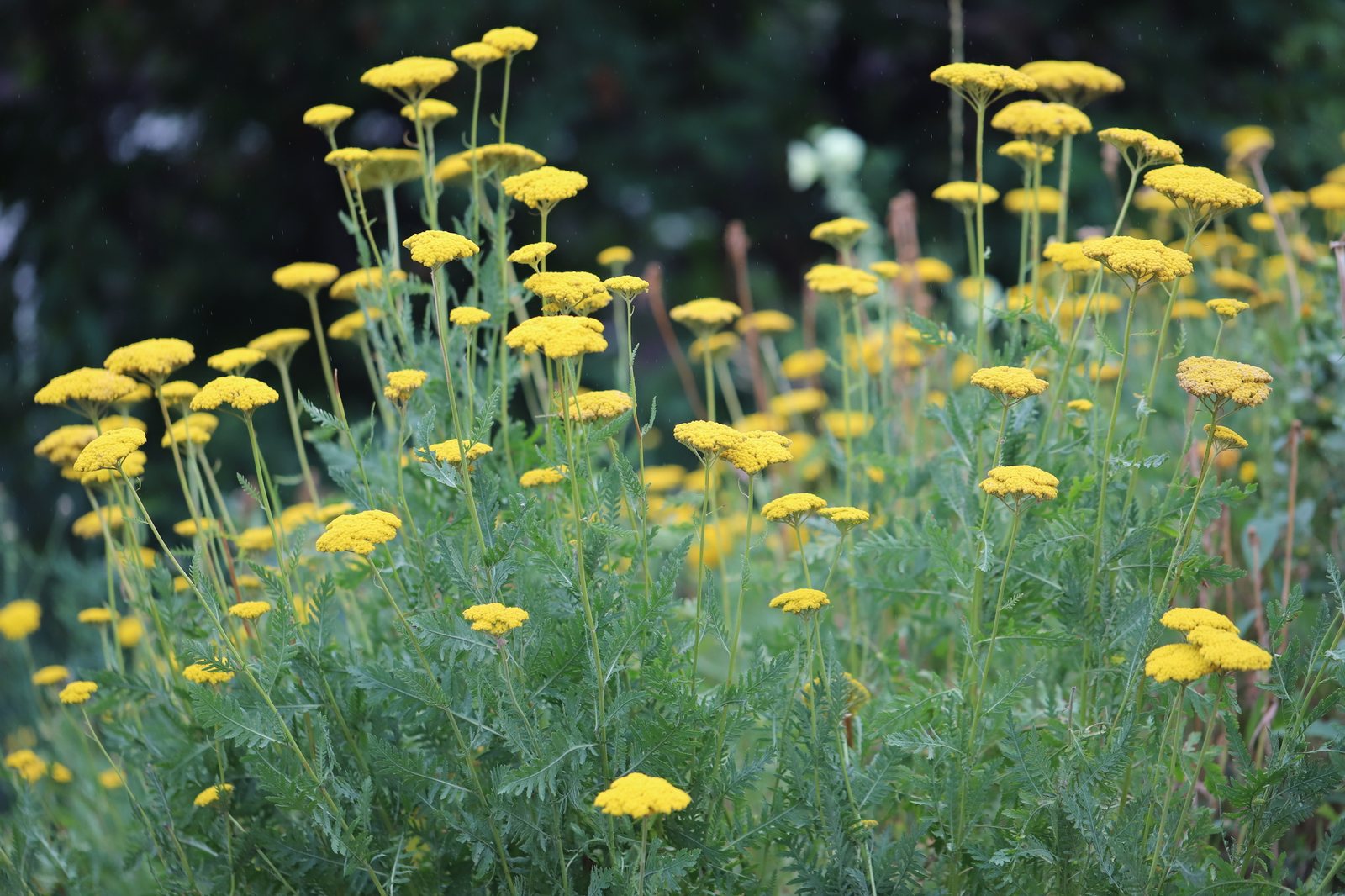
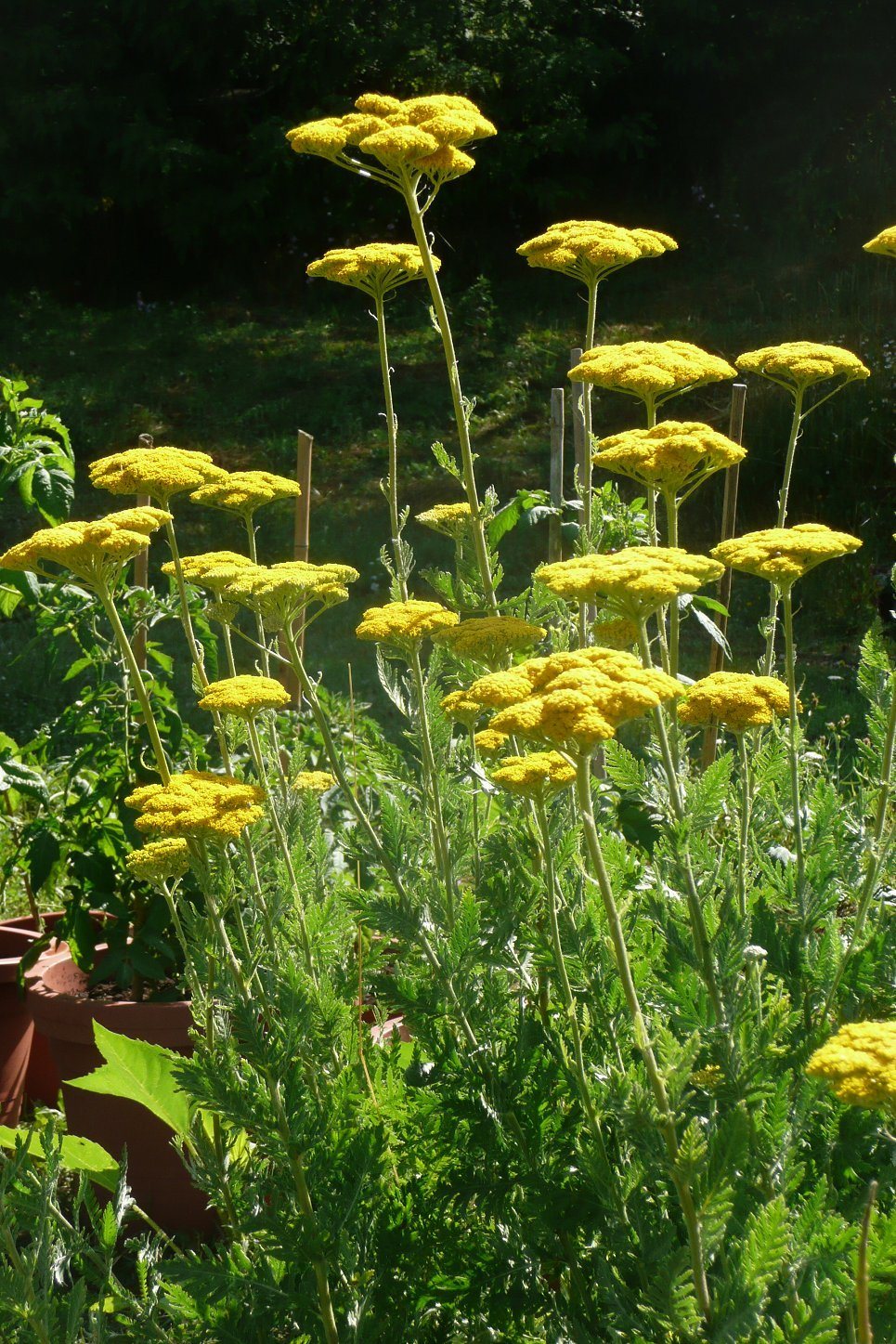
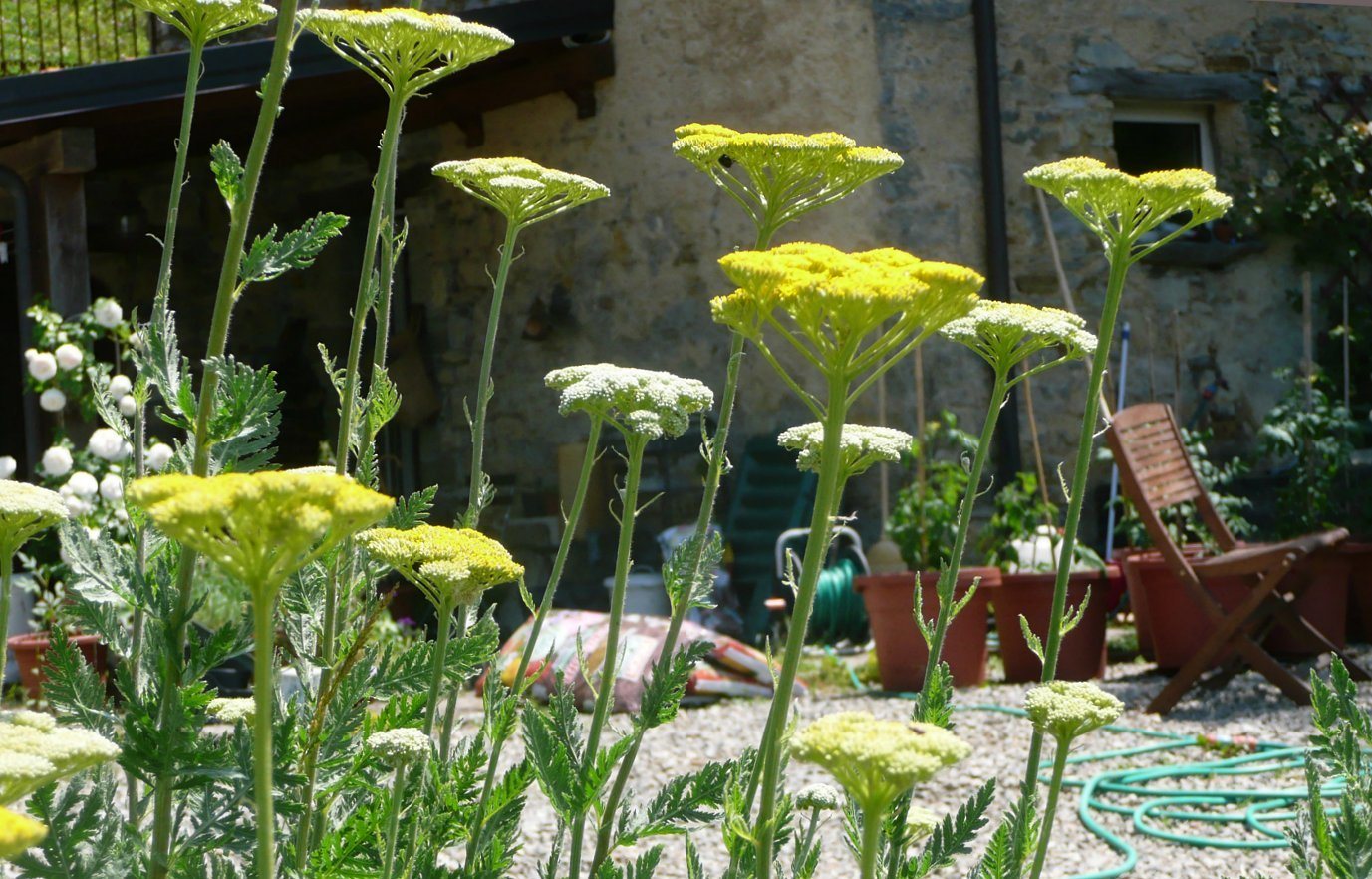
Fernleaf yarrow is an upright, clump-forming perennial with finely divided foliage and broad, flat clusters of golden-yellow flowers. Gardeners grow it for its long summer display, drought tolerance once established, and useful fresh or dried flower stems.
At a glance
- Sun
- Full sun; shade encourages weak stems and fewer flowers.
- Water
- Water regularly during establishment, then only during prolonged dry spells. Avoid persistently wet soil, especially in winter.
- Soil
- Well-drained sandy, gravelly or loamy soil; tolerates poor soil and a broad pH range. Heavy clay needs improved drainage.
- Height
- 3-5 ft (0.9-1.5 m)
- Spread
- 2-3 ft (0.6-0.9 m)
- Flowers
- Early to late summer; dense, flat-topped clusters of golden-yellow flowers.
- Foliage
- Aromatic, deeply divided, fernlike leaves, green to grey-green; usually dies back in winter.
- Growth
- Moderate
- Care needed
- Low
The year at a glance
- Pollinators
- Deer resistant
- Drought tolerant
- Cold hardy
| J | F | M | A | M | J | J | A | S | O | N | D | |
|---|---|---|---|---|---|---|---|---|---|---|---|---|
| Flowers | ||||||||||||
| Fruit | ||||||||||||
| Plant |
Northern hemisphere months. In Australia, shift them by six.
- Difficulty
- Easy
- Toughness
- Very tough
Will it suit your garden?
Pick your zone, country, light and whether you have pets.
Full sun is 6 or more hours of direct sun a day, part shade 3 to 6 hours, shade under 3.
How it grows
Planting day
1 ft (0.3 m)
After 1 year
2 ft (0.6 m)
After 2 years
3 ft (0.9 m)
After 3 years
4 ft (1.2 m)
full size
About 3 years to full size.
From a typical nursery size, at an average rate for this kind of plant. A rule of thumb, not a forecast.
Good to know
- Cats and dogs
- Toxic
- Growth rate
- Moderate
Care
Jobs through the year
- WaterApr–May, Sep, every 21 days
- Water established plants only during prolonged drought; water new plants more often until rooted.
- WaterJun–Aug, every 14 days
- Deep-water only during prolonged dry spells; avoid keeping the crown wet.
- PruneFeb–Mar
- Cut old stems to ground level before new spring growth develops.
- DivideMar–Apr
- Every 3-4 years, divide congested clumps and replant vigorous outer sections.
- ProtectMay
- Support tall stems early on windy sites or where fertile soil encourages flopping.
- DeadheadJun–Aug, every 14 days
- Cut faded stems back to leafy growth; leave selected heads for winter structure if desired.
- ProtectOct–Nov
- Clear crown debris and ensure free drainage; avoid thick organic mulch over the crown.
- Water new plants deeply when the root zone starts to dry; reduce watering once established.
- Avoid routine feeding and rich manure, which encourage floppy growth.
- Keep mulch clear of the crown; use gravel rather than a thick organic mulch on damp sites.
- Support tall stems early if the site is windy or the soil is fertile.
- Divide congested clumps every 3-4 years, replanting vigorous outer sections.
Pruning. Remove faded flower stems down to leafy growth to tidy the plant and sometimes encourage a smaller repeat display. Leave some dry stems for winter structure if wanted, then cut them to the ground before new spring growth develops.
Through the year
- Early spring
- Cut down old stems before new growth lengthens.
- Spring
- Plant or divide clumps in well-drained soil and water them in thoroughly.
- Late spring
- Install discreet supports around tall plants before the flower stems reach full height.
- Summer
- Cut flowers for arrangements and remove spent heads if you want a tidier display.
- Late summer
- Remove unwanted seedheads before seeds ripen; retain a few if you want dried winter structure.
- Autumn
- Clear fallen debris from the crown and check that water drains freely around it.
In the garden
- Plant in repeated groups through a sunny perennial border for a strong band of yellow.
- Pair with ornamental grasses so its flat flowerheads contrast with fine leaves and airy seedheads.
- Combine with blue or violet salvias and catmint for a clear warm-and-cool colour contrast.
- Use in gravel gardens and dry, sunny planting schemes where drainage is reliable.
- Grow in a cutting border for long-stemmed fresh flowers and dried arrangements.
Garden styles it suits: New perennial (prairie), Cottage garden, Dry gravel garden, Pollinator garden, Low-maintenance and Hot border.
Plant it with: Russian sage, Catmint, Meadow sage, Feather reed grass, Purple coneflower and Globe thistle.
Wildlife: Flowers attract bees, hoverflies, butterflies and other insects. The open flower clusters also provide feeding sites for small beneficial insects.
Problems to watch for
- Flopping stems: provide full sun, avoid rich feeding and excessive watering, and support tall clumps early.
- Crown or root rot: improve drainage, keep mulch away from the crown and avoid winter waterlogging.
- Powdery mildew: allow more space for airflow and avoid letting plants become severely drought-stressed.
- Aphids: rinse colonies from young shoots with water and encourage ladybirds and other natural predators.
Safety
Treat all parts as potentially toxic to cats, dogs and horses if eaten; yarrow ingestion can cause digestive upset and drooling. Species-specific toxicity information is limited. In people, the sap and foliage can cause contact dermatitis, particularly in those sensitive to the daisy family; do not use it as an edible garden plant.
Easily confused with
Common yarrow (Achillea millefolium)
Usually shorter, with finer foliage and a more spreading, rhizomatous habit; wild forms normally have white or pale pink flowers rather than the large golden-yellow heads of fernleaf yarrow.
Woolly yarrow (Achillea tomentosa)
Also has yellow flowers, but forms low mats with noticeably woolly grey leaves and much shorter flowering stems.
The name
Achillea refers to the Greek hero Achilles, traditionally associated with yarrow, while filipendulina means resembling Filipendula, or dropwort.
Propagation. Divide established clumps in spring. Sow seed in spring, pressing it onto the surface of moist seed compost without burying it deeply; seedlings from named cultivars may not resemble the parent.
Checked against open data
- Accepted botanical name
- Achillea filipendulina
- In the US and Canada
- Introduced in Canada and the lower 48 states.
- Native range
- Afghanistan, Iran, Iraq, Kazakhstan, Kirgizstan, Lebanon-Syria, North Caucasus, Pakistan, Tadzhikistan, Transcaucasus, Turkey and Turkmenistan.
- Measured
- Soil pH 7.5 to 8. Average height 19 cm.
Sources: GBIF (CC BY 4.0), USDA PLANTS and Trefle (CC BY 4.0). The care and design notes are LandscapeGPT's own.
See it in your own yard.
Upload a photo of your yard and see it redesigned with plants that suit your climate, each checked against your zone.