Fiber optic grass
Isolepis cernua. Family Cyperaceae. Ornamental grass.
Also called Fibre optic grass, Slender club-rush, Low bulrush.
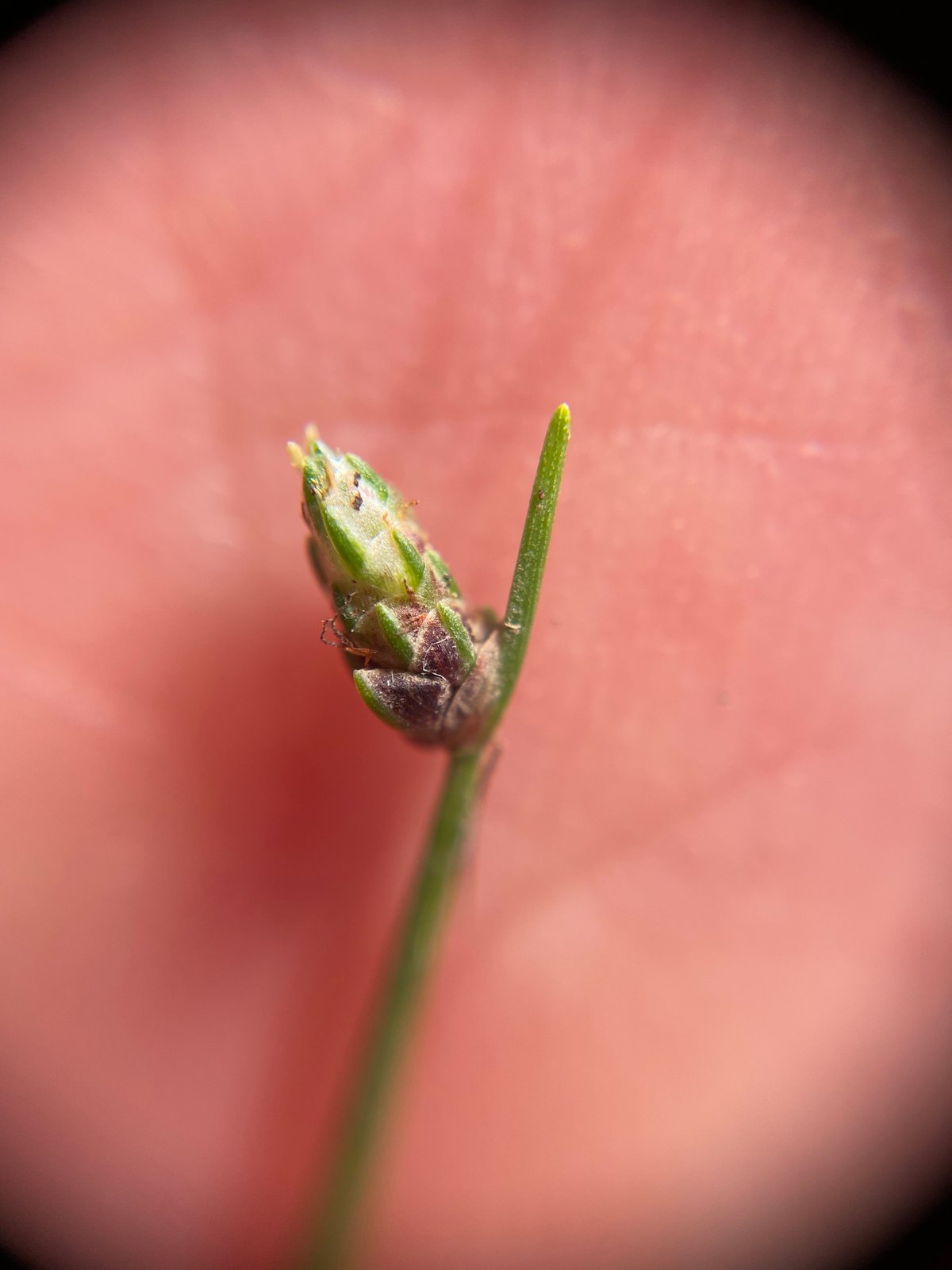
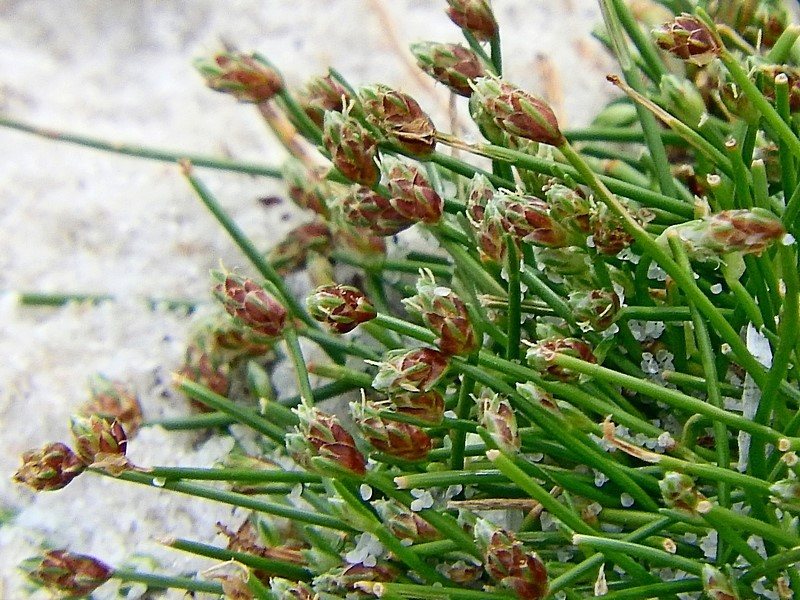
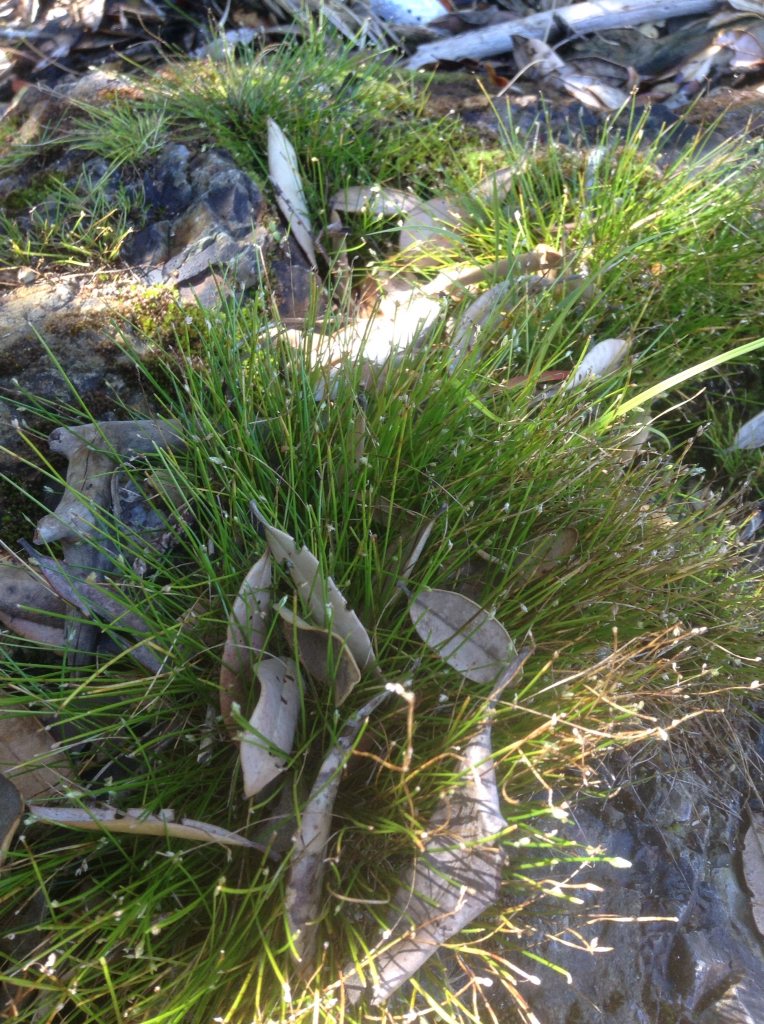
Fiber optic grass is a small, tufted sedge, not a true grass, with fine green stems tipped by tiny pale flower heads that resemble points of light. Gardeners grow it beside water and in moist containers for its soft, arching shape. It is a tender perennial, often grown as an annual or overwintered indoors in cold climates.
At a glance
- Sun
- Full sun to partial shade; provide afternoon shade in hot, dry climates.
- Water
- Keep consistently moist to wet; do not let the root ball dry out.
- Soil
- Moisture-retentive loam or aquatic planting compost; tolerates boggy ground and shallow water around its roots.
- Height
- 0.5-1 ft (0.15-0.3 m)
- Spread
- 0.5-1 ft (0.15-0.3 m)
- Flowers
- Tiny cream to silvery-white flower heads at the stem tips, ageing brown; mainly spring through autumn, sometimes longer in mild climates.
- Foliage
- Evergreen. Very fine, bright green, threadlike stems form a tuft that arches outward as it grows.
- Growth
- Moderate
- Care needed
- Medium
The year at a glance
- Heat tolerant
- Wildlife
| J | F | M | A | M | J | J | A | S | O | N | D | |
|---|---|---|---|---|---|---|---|---|---|---|---|---|
| Flowers | ||||||||||||
| Plant |
Northern hemisphere months. In Australia, shift them by six.
- Difficulty
- Moderate
- Toughness
- Needs looking after
Will it suit your garden?
Pick your zone, country, light and whether you have pets.
Full sun is 6 or more hours of direct sun a day, part shade 3 to 6 hours, shade under 3.
How it grows
Planting day
0.7 ft (0.22 m)
full size
About 3 years to full size.
From a typical nursery size, at an average rate for this kind of plant. A rule of thumb, not a forecast.
Good to know
- Cats and dogs
- Safe
- Native to
- the US, Canada, the UK and Australia
- Growth rate
- Moderate
Care
Jobs through the year
- WaterMay, Sep, every 3 days
- Keep outdoor roots consistently moist to wet; check new plants and containers more often.
- WaterJun–Aug
- Check moisture and replenish shallow saucers or pond margins before roots dry out.
- WaterJan–Apr, Oct–Dec, every 3 days
- Check plants overwintering under cover and water as needed to keep compost moist.
- FeedMay–Aug, every 28 days
- Give container plants a light balanced liquid feed; do not feed plants directly in ponds.
- PruneMar–Apr
- Remove dead stems and lightly trim tired clumps without cutting into the crown.
- DivideMar–Apr
- Divide crowded clumps under cover and replant immediately before roots dry.
- ProtectMay–Jun
- Move plants outside after frost risk passes and gradually introduce stronger light.
- ProtectSep–Oct
- Bring pots into bright frost-free shelter before the first frost.
- Keep the compost wet; stand container plants in a shallow saucer of water during active growth.
- At pond edges, keep the crown at or just above water level rather than deeply submerged.
- Feed container plants lightly with a balanced liquid fertiliser during spring and summer; avoid feeding plants directly in ponds.
- Divide crowded clumps in spring and replant immediately before their roots dry out.
- Before frost, move pots to a bright, frost-free place and keep the compost moist through winter.
Pruning. Remove brown stems at their base as needed. In spring, lightly trim a tired clump before new growth develops, avoiding a hard cut into the crown.
Through the year
- Spring
- Divide crowded clumps, repot if necessary and remove dead stems.
- Late spring
- Move overwintered plants outdoors after frost risk has passed, gradually introducing them to stronger light.
- Summer
- Check container moisture daily in hot weather and replenish water before the root ball dries.
- Summer
- Feed container plants lightly while they are actively growing.
- Autumn
- Bring pots under cover before frost where winters are cold.
- Winter
- Keep sheltered plants in bright light with moist compost; do not feed unless they are actively growing.
In the garden
- Edge a small pond or bog garden with low tufts that soften the boundary between water and paving.
- Plant in a watertight patio container where the fine stems can arch over the rim.
- Repeat small clumps beside broad-leaved moisture lovers to create a clear contrast in texture.
- Use as a low foreground plant in a moist courtyard planter, keeping it clear of taller plants that could shade it heavily.
Garden styles it suits: Bog garden, Contemporary minimal, Modern courtyard, Coastal, Small-space and Sensory garden.
Plant it with: Japanese sweet flag, Marsh marigold, Water forget-me-not, Japanese iris and Hosta.
Wildlife: Provides small-scale shelter for invertebrates at pond margins. Its inconspicuous, wind-pollinated flowers are not a significant nectar source for bees or butterflies.
Problems to watch for
- Brown tips or a collapsing tuft usually follow drying out: thoroughly rewet the root ball and maintain a steady water supply.
- Frost can brown or kill the clump: move containers under cover before freezing weather and remove dead growth in spring.
- Spider mites can affect plants overwintered in warm, dry rooms: rinse the stems regularly and use insecticidal soap labelled for mites if needed.
- Aphids may gather on soft growth: wash them off with water and repeat as necessary.
Safety
Not known to be toxic to people, cats, dogs or horses, and no particular part is recognised as poisonous. Species-specific safety information is limited, especially for horses; it is an ornamental plant, not a food or forage plant.
Easily confused with
Needle spikerush (Eleocharis acicularis)
Usually forms a creeping carpet of short, upright stems with narrow brown terminal spikelets, rather than an arching tuft with conspicuous pale tips.
Soft rush (Juncus effusus)
Has much taller, thicker upright stems and brown flower clusters that appear to emerge from the sides of the stems rather than their tips.
The name
The common name refers to the pale flower heads resembling illuminated fibre-optic tips, while the species name cernua means nodding.
Propagation. Divide established clumps in spring, keeping roots moist throughout. It can also be raised from seed sown on the surface of moist compost in a bright, frost-free place.
Checked against open data
- Accepted botanical name
- Isolepis cernua
- In the US and Canada
- Native in Alaska, Canada and the lower 48 states.
- Native range
- Albania, Algeria, Antipodean Is., Argentina Northeast, Argentina Northwest, Argentina South, Azores, Baleares, Bolivia, Brazil South, British Columbia and California.
- Measured
- Soil pH 5 to 5.5. Average height 7 cm.
Sources: GBIF (CC BY 4.0), USDA PLANTS and Trefle (CC BY 4.0). The care and design notes are LandscapeGPT's own.
See it in your own yard.
Upload a photo of your yard and see it redesigned with plants that suit your climate, each checked against your zone.