Filbert
Corylus maxima. Family Betulaceae. Shrub.
Also called Large filbert, Giant filbert, Lombardy hazel.
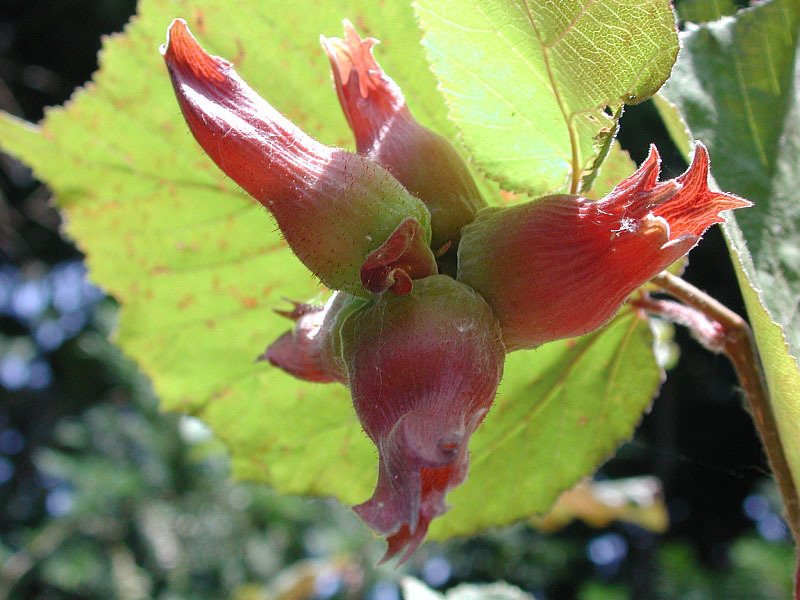
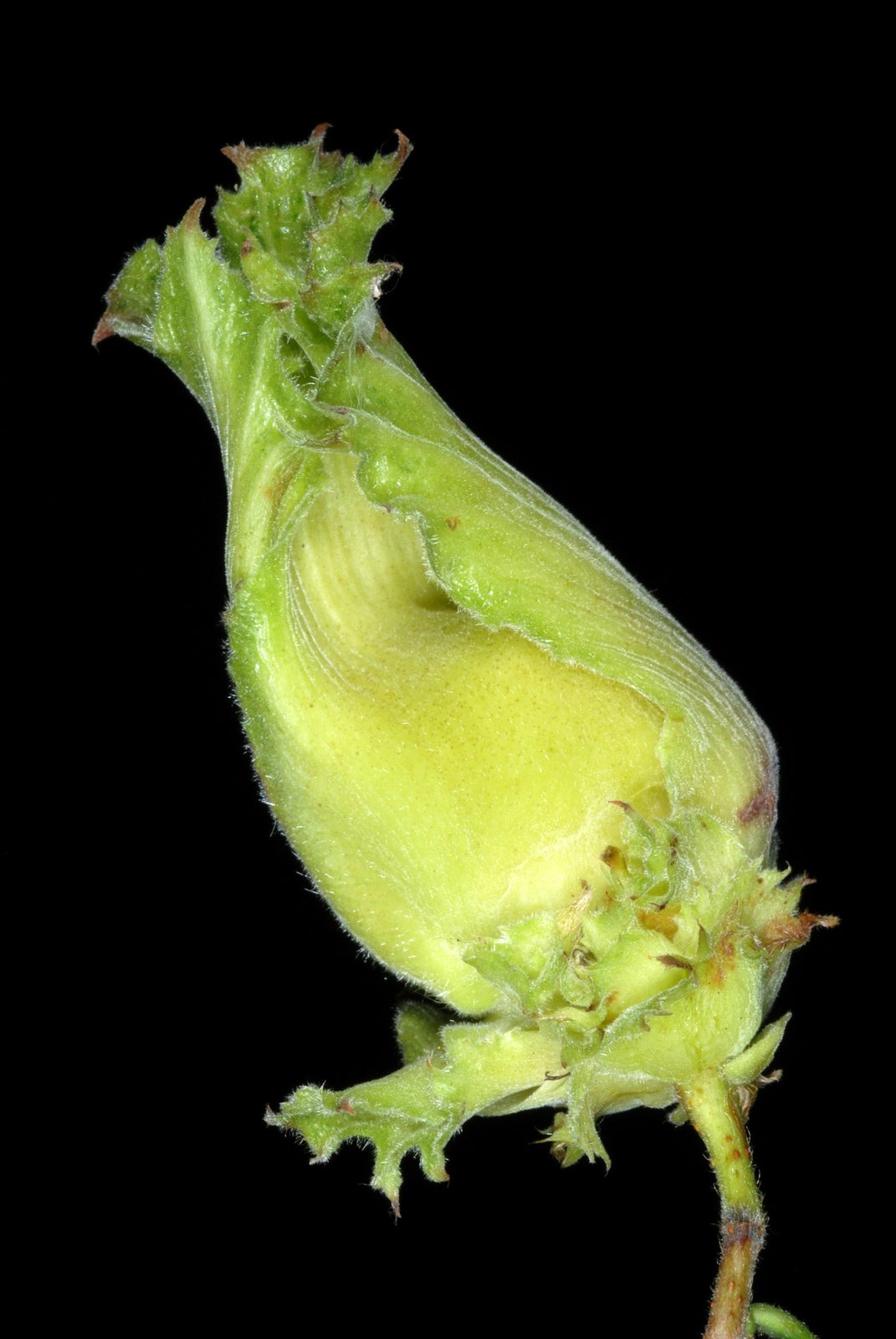
Filbert is a large, deciduous, usually multi-stemmed shrub grown for edible hazelnuts, winter catkins and a leafy garden screen. Its nuts sit inside long, tubular husks that extend beyond the shell. For reliable crops, plant another compatible hazel nearby that sheds pollen while its female flowers are receptive.
At a glance
- Sun
- Full sun to partial shade; full sun gives the best nut crops.
- Water
- Moderate; keep the root zone evenly moist while establishing and during nut development, without waterlogging.
- Soil
- Fertile, moisture-retentive but well-drained soil; tolerates clay and chalk if drainage is adequate.
- Height
- 12-20 ft (3.7-6 m)
- Spread
- 12-20 ft (3.7-6 m)
- Flowers
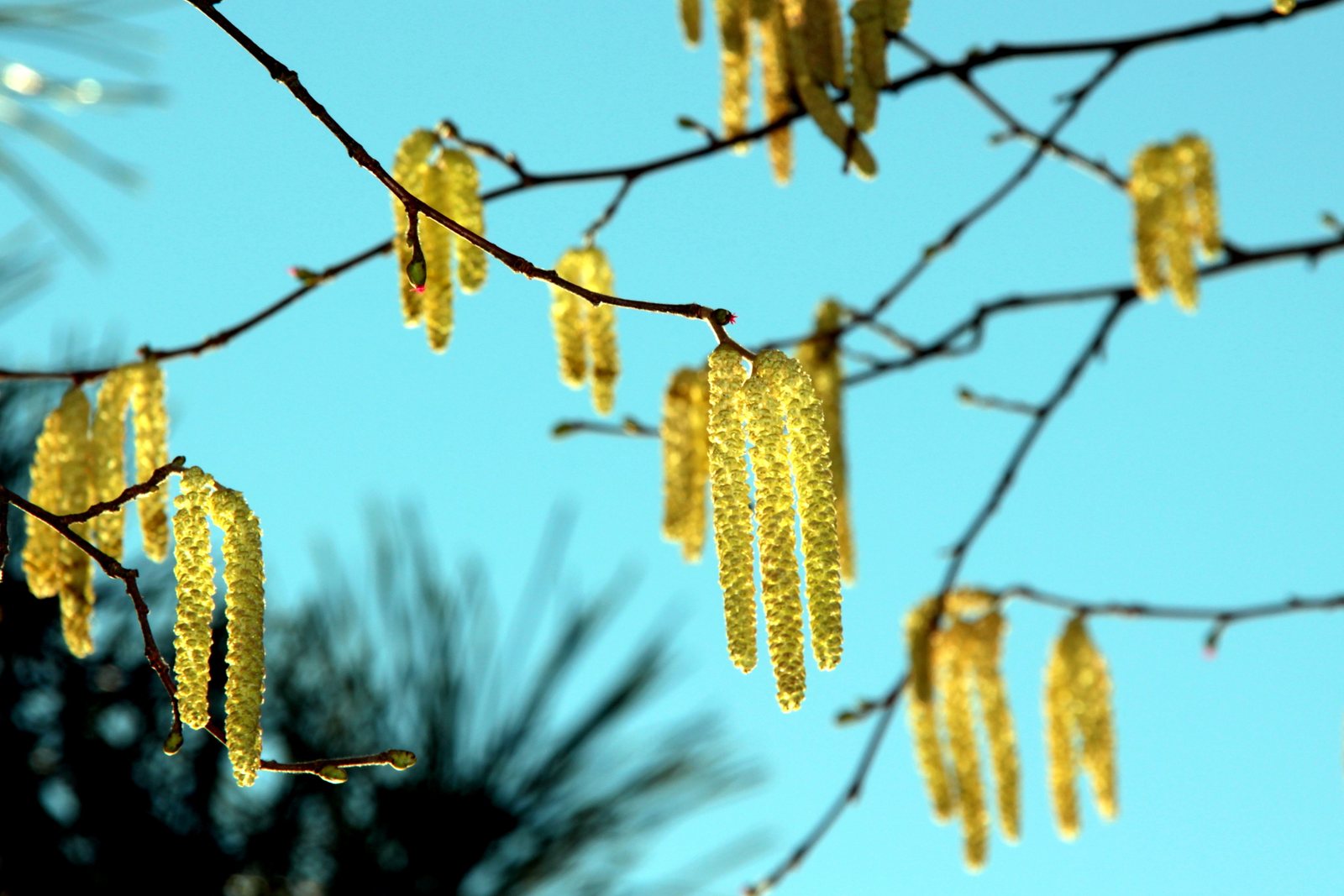
- Late winter to early spring: dangling pale-yellow male catkins and tiny red female flowers, before the leaves open.
- Foliage
- Broad, rounded to heart-shaped green leaves with toothed edges; usually yellow in autumn. Purple-leaved selections are also grown.
- Growth
- Moderate to fast once established.
- Care needed
- Medium
The year at a glance
- Pollinators
- Cold hardy
- Wildlife
- Edible
| J | F | M | A | M | J | J | A | S | O | N | D | |
|---|---|---|---|---|---|---|---|---|---|---|---|---|
| Flowers | ||||||||||||
| Fruit | ||||||||||||
| Plant |
Northern hemisphere months. In Australia, shift them by six.
- Difficulty
- Moderate
- Toughness
- Fairly tough
Will it suit your garden?
Pick your zone, country, light and whether you have pets.
Full sun is 6 or more hours of direct sun a day, part shade 3 to 6 hours, shade under 3.
How it grows
Planting day
1.9 ft (0.58 m)
After 1 year
5 ft (1.6 m)
After 2 years
9 ft (2.7 m)
After 3 years
12 ft (3.8 m)
After 5 years
16 ft (4.9 m)
full size
About 4 years to full size.
From a typical nursery size, at an average rate for this kind of plant. A rule of thumb, not a forecast.
Good to know
- Cats and dogs
- Safe
- Growth rate
- Fast
Care
Jobs through the year
- WaterApr–May, Oct, every 14 days
- Water established shrubs when the root zone dries; check more often during the first two years.
- WaterJun–Sep, every 7 days
- Water deeply during dry weather while nuts fill, allowing excess water to drain.
- PruneFeb
- Thin crowded stems, remove suckers and cut a few oldest stems to ground level.
- MulchMar–Apr
- Apply 5–8 cm of organic mulch, keeping it away from stems.
- FeedApr
- Feed modestly only for weak growth or a soil-test deficiency; avoid excess nitrogen.
- ProtectAug–Oct
- Use secure wildlife-safe exclusion mesh if squirrels threaten the crop.
- HarvestAug–Oct
- Gather nuts as husks brown and nuts loosen; husk and dry promptly, removing damaged nuts.
- Plant two genetically different, compatible hazels with overlapping flowering times if you want nuts; two plants of the same cultivar are not enough.
- Water deeply during dry spells for the first two growing seasons and while nuts are filling.
- Apply a 2-3 in (5-8 cm) organic mulch, keeping it away from the stems.
- Feed in spring only if growth is weak or a soil test shows a deficiency; excess nitrogen encourages leaves rather than nuts.
- Remove unwanted basal suckers annually unless you want a broad thicket.
Pruning. In late winter, thin crowded stems and remove dead or crossing growth, retaining an open framework of younger, productive wood. Once established, remove a few of the oldest stems at ground level each year rather than shearing the whole shrub.
Harvest
Pick nuts in late summer or autumn when the husks turn yellow-brown and the nuts loosen readily; collect fallen nuts promptly before squirrels take them. Remove the husks and dry the nuts in a sheltered, airy place before storage. Nursery-grown plants commonly give a first worthwhile crop about 3-5 years after planting, but seedlings and poorly pollinated plants can take longer.
Through the year
- Autumn
- Plant while the soil is workable, allowing room for the mature spread and a compatible pollination partner.
- Late winter
- Thin crowded stems, remove unwanted suckers and check for cankers or dead branches.
- Early spring
- Refresh mulch and water new plants if rainfall is low.
- Summer
- Water during prolonged dry weather, especially while nuts are developing.
- Late summer to autumn
- Check ripening nuts frequently, harvest promptly and dry them before storage.
- Late autumn
- Clear leftover nuts and diseased debris from beneath the shrub.
In the garden
- Use as a loose boundary screen where its broad, suckering habit has room to develop.
- Include in an edible hedge with compatible hazels, keeping access open for harvesting.
- Place at a woodland edge with spring bulbs beneath the canopy for flowers before leaf-out.
- Grow as a multi-stemmed specimen in a large lawn or informal border, where winter catkins are visible.
Garden styles it suits: Woodland, Native hedgerow, Food forest, Edible landscape, Homestead and Winter interest.
Plant it with: Snowdrops, Daffodils, Primroses and Woodland strawberries.
Wildlife: Wind-pollinated, but bees may collect pollen from the catkins. Nuts feed squirrels, mice and some birds, while dense stems provide shelter and nesting cover.
Problems to watch for
- Poor nut set: provide a genetically different, compatible hazel with overlapping pollen shed; cold or wet flowering weather can still reduce the crop.
- Eastern filbert blight, especially in North America: look for elongated stem cankers and rows of dark bumps; prune infected wood well below visible symptoms in dry weather and seek local advice. In affected areas, a locally recommended resistant hazel may be a better choice.
- Nut weevils: larvae leave empty or damaged nuts; collect and destroy infested and prematurely fallen nuts promptly.
- Squirrels and other rodents: harvest as soon as nuts ripen; secure, wildlife-safe mesh protection may help on small plants.
Safety
Not known to be toxic to cats, dogs, horses or people. The kernels are edible, but hazelnuts can cause severe allergic reactions in susceptible people; whole nuts and shells can cause choking or intestinal blockage in pets, and mouldy nuts should never be fed to animals.
Easily confused with
Common hazel (Corylus avellana)
Its nut husks are usually open and leafy, exposing much of the nut; filbert has a long, tubular husk extending beyond the nut. Cultivated hybrids can blur this distinction.
Turkish hazel (Corylus colurna)
Usually forms a single-trunked tree with corky bark and nuts surrounded by deeply divided, bristly husks, rather than a suckering shrub with tubular husks.
Beaked hazel (Corylus cornuta)
Its husk narrows into a conspicuous slender beak and is covered in stiff hairs; filbert husks are broader and less bristly.
The name
Corylus is the classical Latin name for hazel, and maxima means 'largest', referring to the plant's comparatively large fruits.
Propagation. Layer flexible young stems or lift well-rooted suckers during dormancy. Sow fresh nuts outdoors with protection from rodents; seedlings vary and do not reliably preserve cultivar traits. Named fruiting selections are commonly propagated by layering or grafting.
Checked against open data
- Accepted botanical name
- Corylus maxima
- Native range
- Yugoslavia.
- Measured
- Average height 500 cm.
Sources: GBIF (CC BY 4.0) and Trefle (CC BY 4.0). The care and design notes are LandscapeGPT's own.
See it in your own yard.
Upload a photo of your yard and see it redesigned with plants that suit your climate, each checked against your zone.