Firepower nandina
Nandina domestica 'Firepower'. Family Berberidaceae. Shrub.
Also called Firepower heavenly bamboo, Firepower sacred bamboo.
Firepower nandina is a compact, rounded shrub grown for its yellow-green summer foliage and bright red autumn and winter colour. It normally produces neither flowers nor berries, unlike ordinary heavenly bamboo, and suits small borders and containers. It is evergreen in mild climates but may lose leaves or suffer stem damage near the cold end of its range.
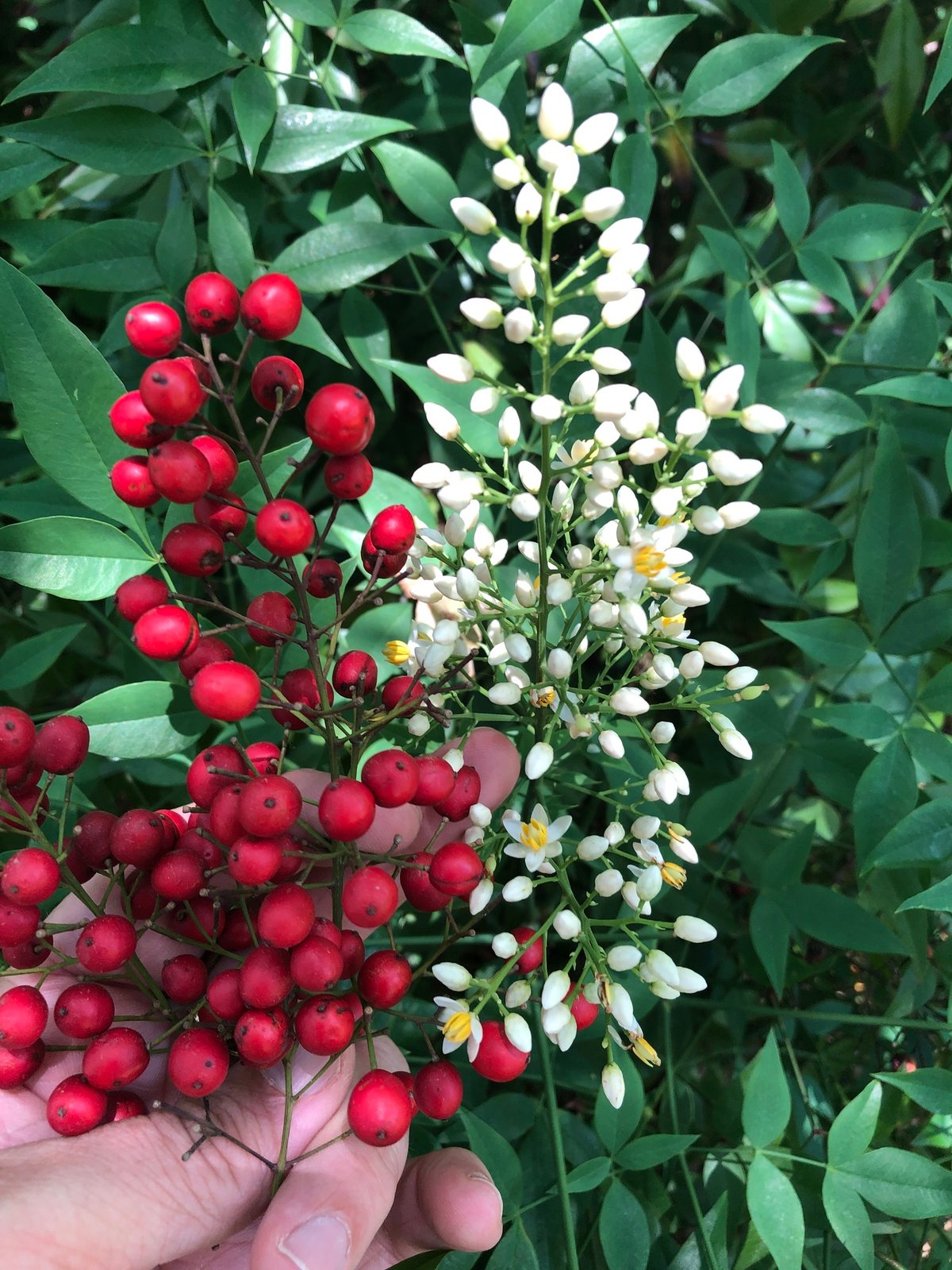
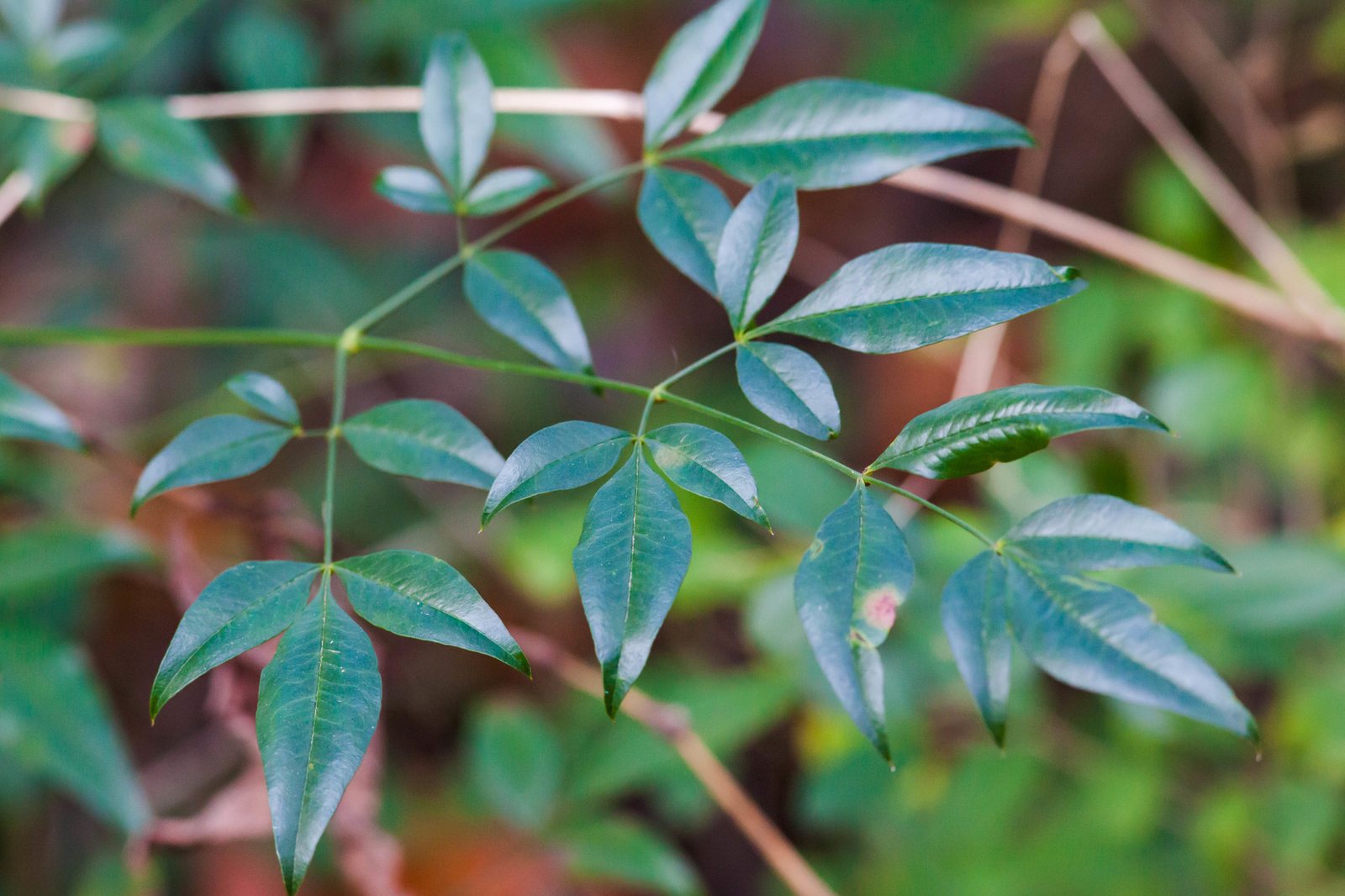
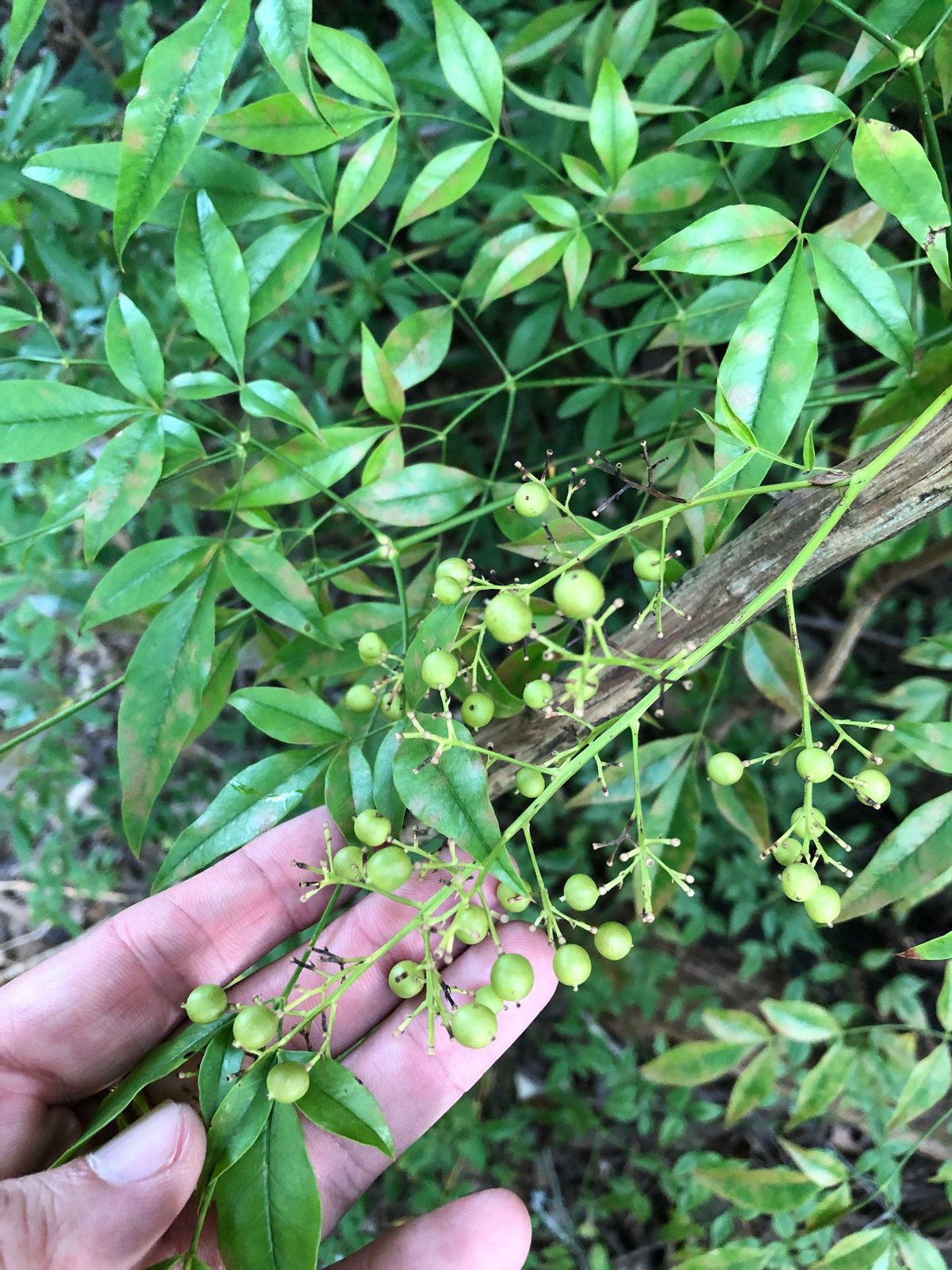
At a glance
- Sun
- Full sun to partial shade; good light gives the strongest winter colour. Provide afternoon shade in hot, dry climates.
- Water
- Water regularly during the first growing season. Once established, water during prolonged dry spells; container plants need more frequent watering.
- Soil
- Well-drained soil with moderate fertility, preferably slightly acidic to neutral. Avoid waterlogged ground and very alkaline soil.
- Height
- 1-2 ft (0.3-0.6 m)
- Spread
- 1.5-2 ft (0.45-0.6 m)
- Foliage
- Evergreen. Compound leaves with broad, pointed leaflets; fresh growth is often lime-green or yellow-green, becoming green in summer and red with cool weather. Winter colour is weaker in deep shade or very mild winters.
- Growth
- Slow to moderate
- Care needed
- Low
The year at a glance
- Deer resistant
- Drought tolerant
- Heat tolerant
- Low allergen
| J | F | M | A | M | J | J | A | S | O | N | D | |
|---|---|---|---|---|---|---|---|---|---|---|---|---|
| Plant |
Northern hemisphere months. In Australia, shift them by six.
- Difficulty
- Easy
- Toughness
- Very tough
Will it suit your garden?
Pick your zone, country, light and whether you have pets.
Full sun is 6 or more hours of direct sun a day, part shade 3 to 6 hours, shade under 3.
How it grows
Planting day
1.5 ft (0.45 m)
full size
About 7 years to full size.
From a typical nursery size, at an average rate for this kind of plant. A rule of thumb, not a forecast.
Good to know
- Cats and dogs
- Toxic
- Invasive in
- the US and Australia
- Growth rate
- Slow
Care
Jobs through the year
- WaterApr–May, Sep–Oct, every 14 days
- Water established shrubs when soil is dry; water new shrubs more often through their first season.
- WaterJun–Aug, every 10 days
- Deep-water established shrubs during prolonged dry spells, skipping watering when soil remains moist.
- PruneMar–Apr
- Remove frost-damaged or dead stems once healthy growth is visible; avoid routine shearing.
- MulchApr
- Maintain 5–8 cm of organic mulch over the roots, keeping it away from stems.
- FeedApr
- Apply a light balanced slow-release feed only on poor soil or where growth is weak.
- ProtectJan–Feb, Nov–Dec
- Shelter from drying winter winds; insulate exposed containers against prolonged freezing.
- Water deeply when the root zone begins to dry during the first growing season.
- Spread 2-3 in (5-8 cm) of organic mulch over the roots, keeping it clear of the stems.
- Apply a light dressing of balanced slow-release fertiliser in spring only if growth is weak or the soil is poor.
- Use a pot with drainage holes and a free-draining container mix; do not leave it standing in water.
- Shelter plants from drying winter winds in colder areas.
Pruning. In early spring, remove dead or frost-damaged stems back to healthy growth or ground level. Little shaping is needed; avoid routine shearing, which spoils the natural leafy mound.
Through the year
- Spring
- Plant when the soil is workable and severe frost has passed; water thoroughly.
- Early spring
- Remove winter-damaged stems once healthy buds or new shoots are visible.
- Mid-spring
- Refresh mulch and feed lightly if needed.
- Summer
- Check newly planted shrubs and containers regularly for dry soil; water deeply rather than little and often.
- Autumn
- Plant in mild climates while the soil is warm, allowing time for roots to establish before winter.
- Winter
- Protect exposed containers from prolonged freezing and check that their drainage holes remain clear.
In the garden
- Repeat small groups along a path or at the front of a shrub border for a low, rounded rhythm.
- Use in courtyard containers where the winter-red foliage can be seen from indoors.
- Pair with dark-green evergreen shrubs to make the seasonal leaf colour stand out.
- Combine with sedges and low grasses for contrasting leaf shapes in a lightly shaded border.
Garden styles it suits: Japanese, Modern courtyard, Modern, Small-space, Winter interest and Low-maintenance.
Plant it with: Japanese forest grass, Lilyturf, Coral bells, Japanese sedge, Camellias and Hellebores.
Wildlife: Offers some low cover, but little nectar or fruit because this cultivar normally does not flower or berry. If berries do appear, do not encourage birds to eat them: nandina berries contain cyanogenic compounds and have caused bird deaths.
Problems to watch for
- Root rot in wet soil: improve drainage or move the plant to a raised bed; let container compost drain freely.
- Yellow leaves with green veins on alkaline soil: check soil pH and use a suitable chelated iron treatment if iron deficiency is confirmed.
- Leaf scorch or winter burn: water during dry spells and provide afternoon shade or shelter from cold, drying winds.
- Weak winter colour: provide more light where practical; warm winters can also limit redness and cannot be corrected by feeding.
Safety
Toxic to cats, dogs, horses and people if eaten. Leaves, stems and especially berries contain cyanogenic compounds; substantial ingestion can cause serious, potentially fatal poisoning. Firepower normally has no berries, but its foliage is not safe to eat. Seek veterinary or poison-control advice promptly after suspected ingestion.
Where it spreads. Nandina domestica is invasive in parts of the southeastern United States, including Florida, Georgia and Alabama, and parts of eastern Texas. It has also escaped cultivation in parts of eastern Australia, including New South Wales and Queensland. Firepower normally does not flower or fruit, so its seed-spread risk is much lower than that of the species;
Easily confused with
Heavenly bamboo (Nandina domestica)
The ordinary species grows much taller, with upright cane-like stems, finer-looking foliage, white flower clusters and red berries; Firepower stays low and rounded and normally has neither flowers nor berries.
Gulf Stream nandina (Nandina domestica 'Gulf Stream')
Usually grows taller and more upright, with narrower leaflets and bronze-orange new growth; Firepower forms a smaller mound with broader leaflets.
True bamboo (Bambusoideae)
True bamboos are grasses with jointed canes and simple leaves; nandina is a woody shrub with branching, compound leaves.
The name
Nandina comes from the Japanese name nanten, while 'Firepower' refers to this cultivar's fiery red seasonal foliage.
Propagation. Take semi-ripe cuttings in summer, or divide established clumps with rooted shoots in spring. Use vegetative propagation to retain the cultivar's compact habit and foliage colour.
Checked against open data
- Accepted botanical name
- Nandina domestica
- In the US and Canada
- Introduced in the lower 48 states and Pacific Basin.
- Native range
- China North-Central, China South-Central and China Southeast.
- Measured
- Soil pH 4.5 to 6. Average height 244 cm.
Sources: GBIF (CC BY 4.0), USDA PLANTS and Trefle (CC BY 4.0). The care and design notes are LandscapeGPT's own.
See it in your own yard.
Upload a photo of your yard and see it redesigned with plants that suit your climate, each checked against your zone.