Firewitch dianthus
Dianthus gratianopolitanus 'Feuerhexe'. Family Caryophyllaceae. Perennial.
Also called Dianthus gratianopolitanus 'Feuerhexe', Firewitch cheddar pink, Feuerhexe pink.
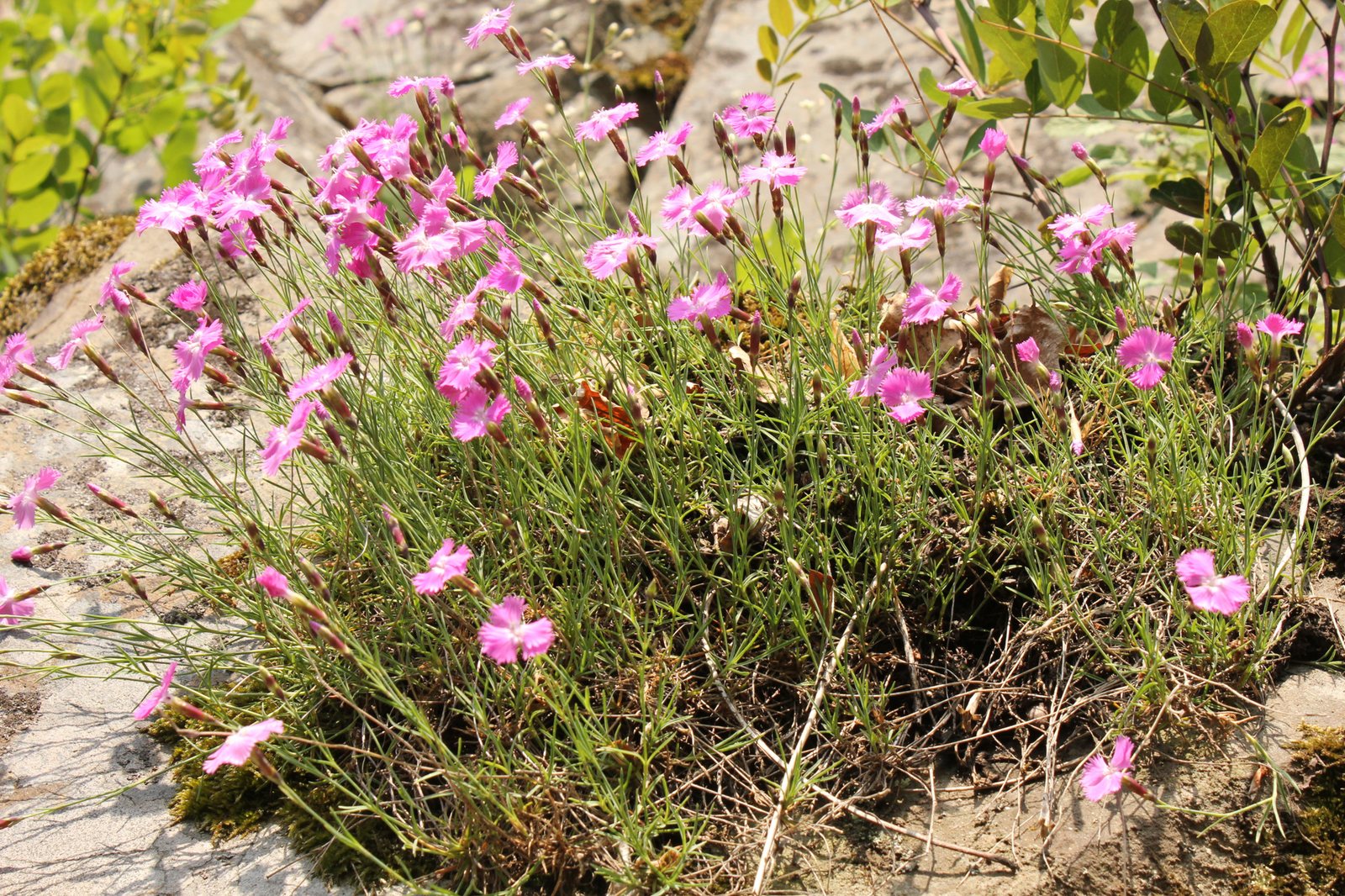
Firewitch dianthus forms a low cushion of blue-grey leaves topped with fragrant, vivid magenta-pink flowers in late spring. Grow it along sunny paths, in rock gardens or at the front of borders where the soil drains freely; wet winters and humid summers can shorten its life.
At a glance
- Sun
- Full sun, ideally at least 6 hours daily. Light afternoon shade can help in hot climates, but too much shade reduces flowering.
- Water
- Water regularly while establishing, then during prolonged dry spells. Let the surface soil dry between waterings; established plants tolerate some drought.
- Soil
- Well-drained sandy, gravelly or loamy soil, preferably neutral to alkaline. Avoid heavy, waterlogged soil and rich, moisture-retentive compost around the crown.
- Height
- 0.5-0.75 ft (0.15-0.23 m), including flowers
- Spread
- 1-1.5 ft (0.3-0.45 m)
- Flowers
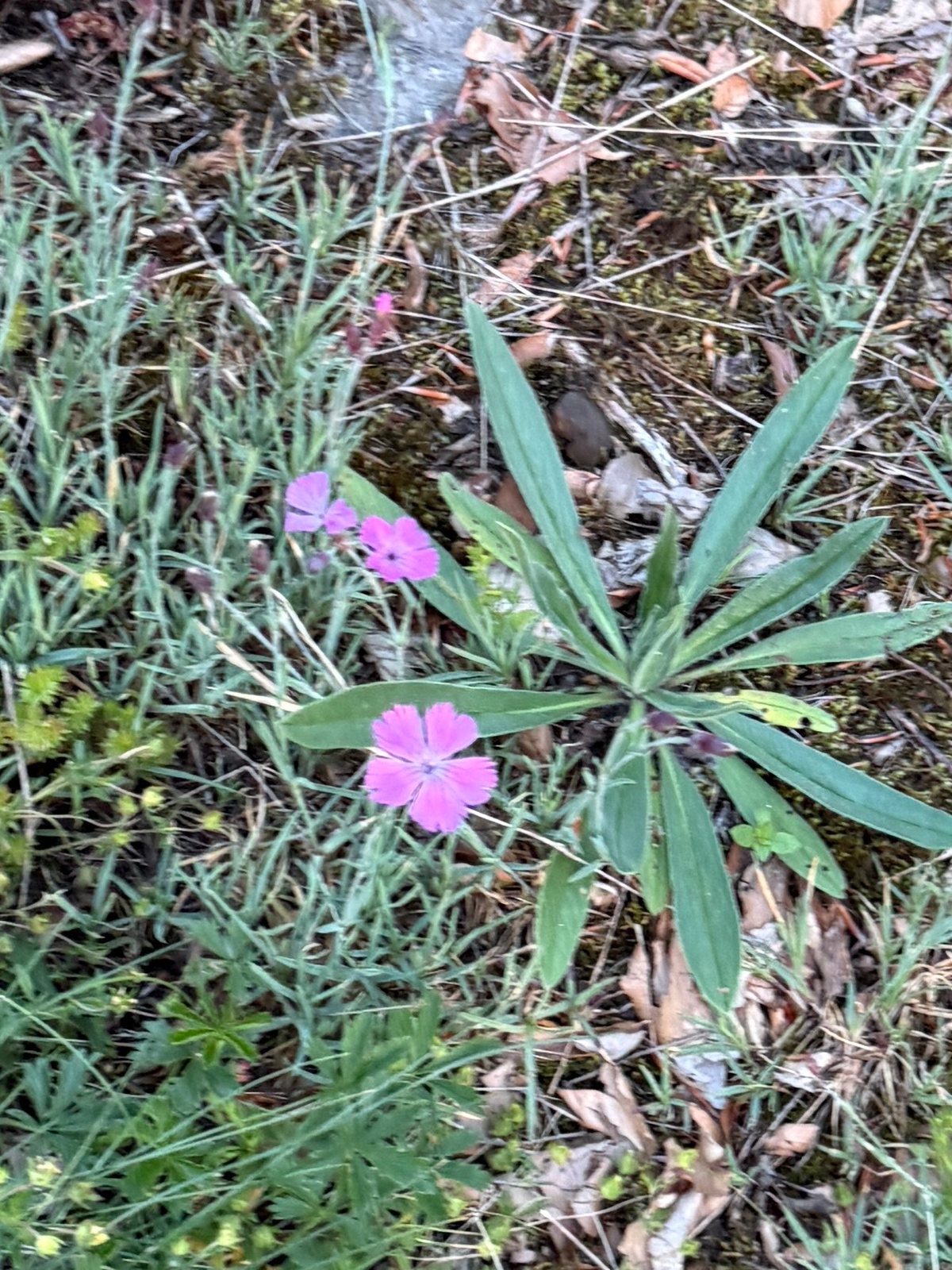
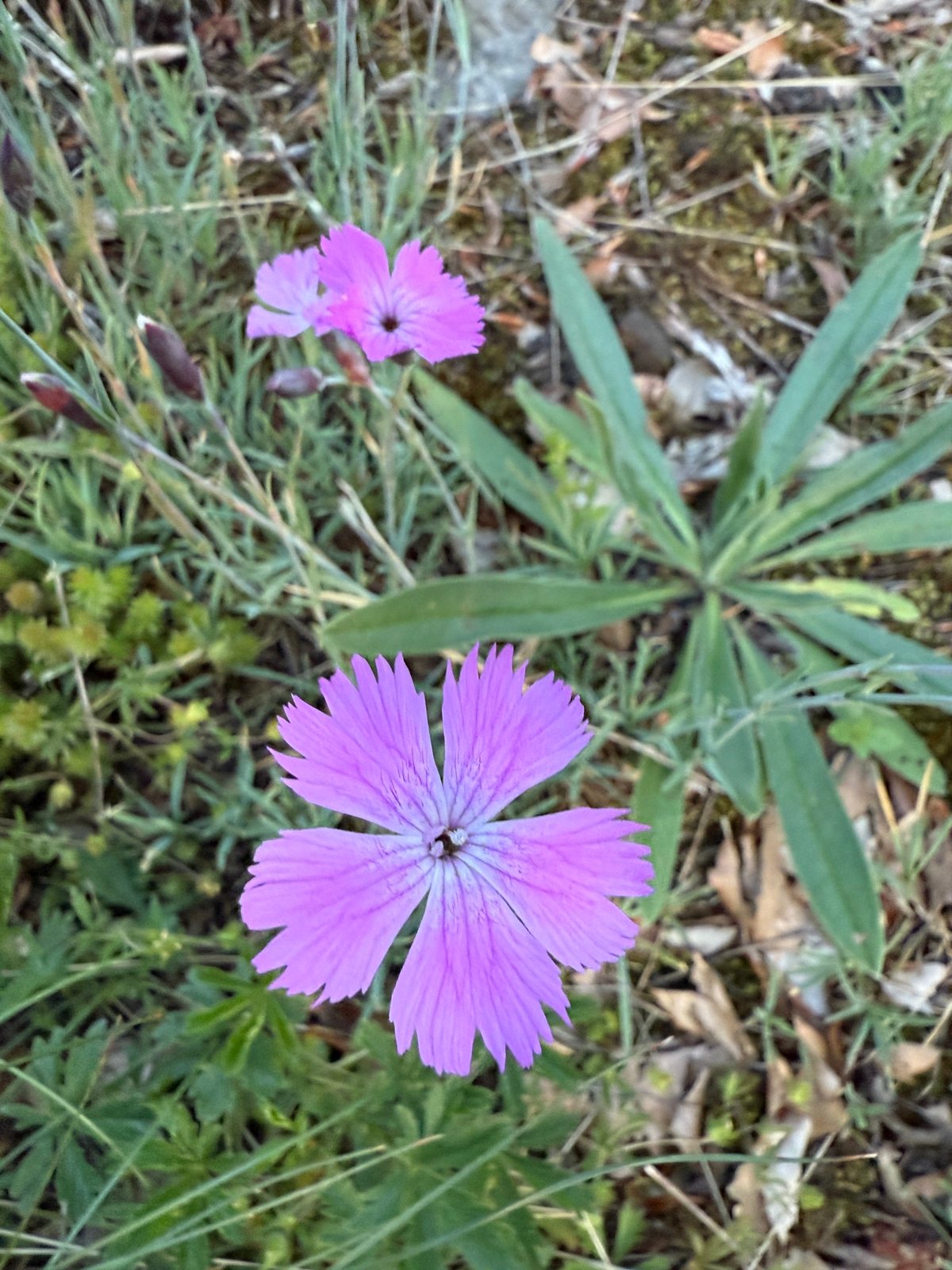
- Main flush in late spring to early summer, with occasional repeat flowers after trimming; single, fringed magenta-pink flowers with a clove-like scent.
- Foliage
- Evergreen. Narrow, blue-grey to silvery-green leaves form a dense, low cushion. Foliage may look weathered after severe winters.
- Growth
- Moderate
- Care needed
- Low
The year at a glance
- Pollinators
- Deer resistant
- Drought tolerant
- Cold hardy
- Low allergen
- Fragrant
| J | F | M | A | M | J | J | A | S | O | N | D | |
|---|---|---|---|---|---|---|---|---|---|---|---|---|
| Flowers | ||||||||||||
| Plant |
Northern hemisphere months. In Australia, shift them by six.
- Difficulty
- Easy
- Toughness
- Very tough
Will it suit your garden?
Pick your zone, country, light and whether you have pets.
Full sun is 6 or more hours of direct sun a day, part shade 3 to 6 hours, shade under 3.
How it grows
Planting day
0.6 ft (0.19 m)
full size
About 3 years to full size.
From a typical nursery size, at an average rate for this kind of plant. A rule of thumb, not a forecast.
Good to know
- Cats and dogs
- Mildly toxic: may upset a stomach
- Native to
- the UK
- Growth rate
- Moderate
Care
Jobs through the year
- WaterApr–May, Sep–Oct, every 21 days
- Water established ground plants only during prolonged dry weather; new plants need more frequent watering.
- WaterJun–Aug, every 14 days
- During drought, soak established ground plants at soil level and let the surface dry between waterings.
- PruneMar
- Remove winter-damaged foliage without cutting deeply into bare, woody growth.
- DeadheadMay–Sep, every 7 days
- Remove faded flower stems; later flowers are usually scattered rather than a full flush.
- PruneJun–Jul
- Lightly shear the leafy cushion after the main flowering flush to encourage compact growth and repeat bloom.
- DivideMar–Apr
- Divide healthy outer sections only when clumps become crowded or develop bare centres.
- FeedApr
- Feed lightly only if growth is weak; avoid high-nitrogen fertilizer.
- MulchApr
- Use a thin gravel mulch and keep the crown exposed.
- ProtectJan–Feb, Nov–Dec
- Keep fallen leaves off the cushion and ensure winter rain drains away.
- Plant with the crown at soil level, not buried, and leave space for air to circulate.
- Water at soil level during establishment and prolonged drought; avoid keeping the foliage and crown constantly wet.
- Feed lightly in spring only if growth is weak; excessive nitrogen produces soft growth and fewer flowers.
- Use a thin gravel mulch rather than piling bark or compost against the crown.
- Divide healthy clumps in spring if they become crowded or develop bare centres.
Pruning. After the main flowering flush, clip off spent flower stems and lightly trim the leafy cushion to keep it compact and encourage some repeat bloom. In early spring, remove dead or damaged foliage without cutting deeply into bare, woody growth.
Through the year
- Early spring
- Remove winter-damaged foliage and check that the crown is not buried under leaves or mulch.
- Spring
- Plant or divide clumps in freely draining soil; water new plants until established.
- Late spring
- Enjoy the main flowering flush and remove faded flowers as they finish.
- Early summer
- Lightly shear after flowering and take non-flowering shoot cuttings.
- Summer
- Water during prolonged drought and check for crown dieback in hot, humid weather.
- Winter
- Keep fallen leaves off the cushion and make sure water drains away from the roots.
In the garden
- Edge a sunny path so the low foliage defines the border and the flower scent is close at hand.
- Plant among rocks or beside gravel, where the blue-grey cushions soften hard surfaces.
- Repeat small groups across the front of a border with lavender and catmint for contrasting foliage and flower shapes.
- Grow in shallow containers with drainage holes, pairing it with compact stonecrops.
Garden styles it suits: Cottage garden, Dry gravel garden, Alpine rock garden, Sensory garden, Low-maintenance and Small-space.
Plant it with: English lavender, Catmint, Creeping thyme, Candytuft, Creeping phlox and Stonecrop.
Wildlife: Flowers attract butterflies and some bees. Deer usually leave the foliage alone, although no plant is completely deer-proof.
Problems to watch for
- Crown or root rot: avoid waterlogged soil, keep mulch away from the crown and remove rotting plants; improve drainage before replanting.
- Sparse growth and poor flowering: move plants into full sun and avoid heavy feeding.
- Aphids on new shoots and buds: rinse off with water or use insecticidal soap according to the label if infestations persist.
- Bare, woody centres: divide healthy outer sections in spring or replace ageing plants with rooted cuttings.
Safety
Dianthus can cause mild poisoning in cats and dogs if eaten, including vomiting, diarrhoea and skin irritation; keep all parts out of reach of pets that chew plants. Contact with foliage or sap may irritate sensitive human skin, and ingestion may cause stomach upset. It is not known to be toxic to horses, but specific information for this cultivar is limited.
Easily confused with
Maiden pink (Dianthus deltoides)
Usually has greener foliage, a looser spreading habit and smaller flowers, often marked with a darker ring around the centre.
Garden pink (Dianthus plumarius)
Typically has taller, looser flowering stems and more deeply feathered petals; cultivated forms vary widely.
Sweet William (Dianthus barbatus)
Has broader green leaves and dense, flat-topped clusters of flowers on taller stems rather than single flowers above a low blue-grey cushion.
The name
Dianthus comes from Greek words meaning 'divine flower', gratianopolitanus refers to Grenoble in France, and the German cultivar name 'Feuerhexe' means 'fire witch'.
Propagation. Take cuttings from short, non-flowering shoots in late spring or early summer, or divide healthy clumps in spring. Seed does not reliably produce plants identical to 'Feuerhexe'.
Checked against open data
- Accepted botanical name
- Dianthus gratianopolitanus
- In the US and Canada
- Introduced in Canada.
- Native range
- Belgium, Czechoslovakia, France, Germany, Great Britain, Poland, Switzerland and Ukraine.
- Measured
- Average height 16 cm.
Sources: GBIF (CC BY 4.0), USDA PLANTS and Trefle (CC BY 4.0). The care and design notes are LandscapeGPT's own.
See it in your own yard.
Upload a photo of your yard and see it redesigned with plants that suit your climate, each checked against your zone.